Vaginitis and vaginal discharge
Causes of vaginal discharge, from BV to atrophic, with focused history and exam, tests, treatment and a stepwise approach.
- Vaginal discharge is a symptom, not a diagnosis. The common causes are bacterial vaginosis (BV), vulvovaginal candidiasis (thrush) and trichomoniasis, with atrophic, inflammatory and irritant causes behind much of the rest.
- A normal vagina is acidic (pH under 4.5) and dominated by lactobacilli. Infection shifts the pH and the microscopy, which is why pH and a wet mount are the first tests worth doing in the clinic. [1]
- BV smells fishy and forms a thin grey-white coat; thrush itches and can produce a thick curd-like discharge at a normal pH; trichomoniasis may be yellow-green, frothy and inflamed. [2][3][4]
- Many women with any of these infections are asymptomatic, so a positive test without symptoms often calls for observation rather than treatment. [5]
- Thrush is treated with a short topical azole course or a 150 mg fluconazole dose; BV with metronidazole or clindamycin; trichomoniasis with a nitroimidazole, with both partners treated. [2][3][4]
By the end of this page you should be able to:
- List the common and the important rarer causes of vaginal discharge by system and by urgency.
- Recognise the red-flag presentations that need urgent assessment.
- Take a focused history and examination that separate infection, atrophy, dermatosis and bleeding.
- Choose and interpret vaginal pH, wet-mount microscopy, Gram stain and nucleic acid tests in the right order.
- Diagnose BV with the Amsel criteria and candidiasis on a normal pH with hyphae.
- Treat each common cause, including in pregnancy, with correct dose, route, duration and follow-up.
- Recognise the common traps: treating a normal discharge, blaming yeast for everything, and missing an STI or a foreign body.
Vaginal discharge is a normal protective fluid. It is produced by the cervical glands, vestibular glands and transudate across the vaginal wall, and it carries away shed epithelial cells and microbes. A healthy woman of reproductive age may notice anything from a few millilitres to about 4 ml of clear or white discharge each day, more around ovulation and in early pregnancy. [8] Most women who seek help are not infected: they are worried about a normal variant. Your first job is always to decide whether there is a real abnormality before hunting for a cause. [1]
The biology is simple. Oestrogen makes the vaginal epithelium thick, glycogen-rich and layered. Lactobacillus species living on it ferment glycogen to lactic acid, keeping vaginal fluid acidic (usually pH 3.8 to 4.5) and suppressing anaerobes and pathogens. [5] When this acidity is lost, whether through oestrogen loss, anaerobic overgrowth (BV) or an introduced organism (trichomonas, candida), the discharge changes and pH rises. Almost every diagnostic step below checks that acidity and what is floating in it. [2]
Table 1 gives the causes in the order a clinician meets them. Infections are commonest in women of reproductive age, but non-infective causes make up a substantial minority, and a retained object or malignancy account for a minority of those.
| Category | Cause | Typical discharge | Features that separate it |
|---|---|---|---|
| Infective (most common) | Bacterial vaginosis (BV) | Thin, grey-white, milk-like, coating the vaginal walls, fishy odour | No itching or soreness, pH over 4.5, clue cells, whiff test positive. [2][5] |
| Infective | Vulvovaginal candidiasis (thrush) | Thick, curd-like, white, non-offensive | Itching, vulval redness, soreness, pH under 4.5, hyphae or buds on KOH. [4] |
| Infective | Trichomoniasis | Profuse, yellow-green, sometimes frothy, offensive | Vulval soreness or burning, sometimes a strawberry cervix, motile flagellates on wet mount, pH over 4.5. [3] |
| Infective | Aerobic (desquamative) vaginitis (DIV) | Purulent, yellow, sometimes bloody | Marked inflammation, pain and dyspareunia, parabasal cells and cocci on microscopy, pH over 6, negative whiff test. [8][9] |
| Infective | Cervicitis (chlamydia, gonorrhoea, Mycoplasma genitalium) | Mucopurulent endocervical discharge, often scant | May be silent; bleeding on contact; test for STIs even when discharge looks mild. [1] |
| Hormonal / atrophic | Atrophic vaginitis (genitourinary syndrome of menopause) | Thin, watery or serosanguineous, variable amount | Post-menopausal or breastfeeding women; dryness, dyspareunia, pale thin mucosa, parabasal cells, pH usually elevated above 4.5 (commonly 5.0 or higher). [8][10] |
| Irritant / allergic / skin | Contact dermatitis, irritants, douching, perfumed products, latex | Variable, often little discharge, more soreness or itch | History of a new product; normal pH and microscopy apart from inflammatory cells. [1] |
| Irritant / skin | Vulval dermatosis (lichen sclerosus, psoriasis, eczema) | Scant or absent | Itch and skin change; may coexist with candida. Biopsy if uncertain. [6] |
| Mechanical / foreign body | Retained tampon, condom, pessary, IUD thread, fistula | Foul-smelling, often brown or blood-stained | A speculum inspection usually solves it. [1] |
| Neoplastic / urgent | Cervical or endometrial cancer, post-menopausal bleeding | Bloody or offensive, persistent | Post-menopausal bleeding is malignancy until proven otherwise; refer. [1] |
| Normal variant | Physiological discharge, mid-cycle mucus, pregnancy, oestrogen-containing contraception | Clear, stretchy or white, odourless, non-irritating | Normal pH, lactobacilli, no clue cells, no symptoms beyond awareness of it. [1][8] |
Three groupings matter in practice: the three common infections; physiological discharge (the single most common reason a woman says she has discharge); and the urgent list. Anything bloody or persistent in an older woman, or post-coital bleeding, moves from the routine list to urgent assessment.
The discharge itself is rarely the danger; it is what it points at. Treat the following as reasons to assess promptly, often the same day:
- Post-menopausal bleeding, even a single spot after 12 months without a period. Arrange pelvic imaging and gynaecology review. [8]
- Post-coital bleeding that recurs, or new intermenstrual bleeding in a woman over 35. [1]
- Severe pain, fever, tachycardia, rigors or a foul discharge in pregnancy or after delivery or instrumentation: think sepsis, pelvic inflammatory disease or retained tissue. Do not wait for a swab result. [1]
- Offensive, profuse discharge with worsening pelvic pain, especially with guarding or rebound, suggests ascending infection or, rarely, a tubo-ovarian abscess. [1]
- Brown, bloody, persistent and worsening discharge in an older woman, particularly with weight loss or an abnormal cervix, is malignancy until excluded. [1]
- Postpartum fever or foul lochia, or a suspected retained sponge or swab after a procedure. [1]
- Immunocompromise (HIV, chemotherapy, high-dose steroids, uncontrolled diabetes) with discharge: infection is more likely to be severe, recurrent and non-albicans. [4][3]
- A child or adolescent with discharge, especially with bleeding or a foreign body: safeguarding takes precedence over a simple prescription. [3]
Discharge with no red flag, no pain and no bleeding, with a normal speculum and pH, is usually a normal variant or simple candidiasis.
A careful history is more useful than guessing from a swab, but history alone is not enough to diagnose vaginitis, so keep examination and testing in the plan. [1]
- What the discharge is like, in her words. Colour (clear/white, grey, yellow-green, brown, bloody), consistency (thin/watery, thick/curd-like, frothy, mucopurulent), amount, and whether it is new or different from her usual. Ask how long and whether it is worse after sex or after a period: semen is alkaline and can worsen BV odour. [1][5]
- Smell. "Fishy" points towards BV or trichomoniasis; thrush is usually odourless. [2][4]
- Itch, soreness, burning, dyspareunia, dryness. Itch and soreness dominate thrush and vulval dermatoses; burning and dyspareunia dominate atrophy and inflammatory vaginitis. Minimal or absent symptoms favour BV, which is symptom-free in roughly half of women. [2][4][5]
- Sexual history. Recent partners, sex of partners, new partner in the last few months, condom use, receptive oral sex (relevant to BV), shared sex toys. This separates likely STI from simple ecological disturbance and determines whether you screen for chlamydia, gonorrhoea and trichomonas. [1][3]
- Cycle and menopausal status. Last menstrual period, regularity, menopause/peri-menopause, breastfeeding, post-partum state: these three completely change the differential. [8][10]
- Pregnancy possibility. Any chance of pregnancy, contraception (a copper IUD is associated with higher BV prevalence), previous preterm birth or late miscarriage. [2][4]
- Vaginal products and hygiene. Douching, perfumed washes, spermicides, self-treatment with over-the-counter creams and pessaries. Douching raises the risk of BV and trichomoniasis. [1][3]
- Self-treatment history. Many women try an azole first. Even women previously diagnosed with thrush are unreliable at self-diagnosing it; a woman whose symptoms persist after an over-the-counter preparation or return within two months needs proper assessment rather than another box of clotrimazole. [4]
- Past infections and recurrences. Three or more episodes of suspected thrush in a year defines recurrent VVC and changes management. BV recurrence is common even after correct treatment. [2][4]
- Red flags, as above. [1]
- Cervical screening. Ask the date of the last screen, because an abnormal cervix can present as discharge. [5]
Ideally every woman with new or troublesome discharge gets at least an external then speculum examination, but the extent follows the history and local practice. In primary care with low STI risk and a classic presentation, a presumptive approach can be appropriate; examine when symptoms are persistent, recurrent or unclear. [1][5]
- Observation first. General condition, fever, signs of sepsis. Inspect the vulva in good light for oedema, fissures, excoriations, erythema, whitening or thinning, lichenified change, petechiae and any malodorous yellow-green discharge at the introitus. [4][8]
- Inspect the glands. Bartholin's and Skene's ducts; swelling, tenderness or pus suggests gonococcal or other infection. [1]
- Speculum examination. Cervical position, discharge colour and consistency, inflamed, friable or bleeding cervix, and a "strawberry" (colpopunctate) cervix suggestive of trichomoniasis. Note retained material, polyps, masses or atrophy. [3][4]
- Bimanual palpation. Tenderness, cervical excitation, adnexal masses, uterine size or irregularity. Pain on moving the cervix with discharge suggests pelvic inflammatory disease. [1]
- Skin elsewhere if dermatosis is suspected: flexures, trunk, scalp, mouth. Vulval lichen sclerosus is often missed. [6]
Figure 1Vaginal wet mount of candidal vulvovaginitis - original
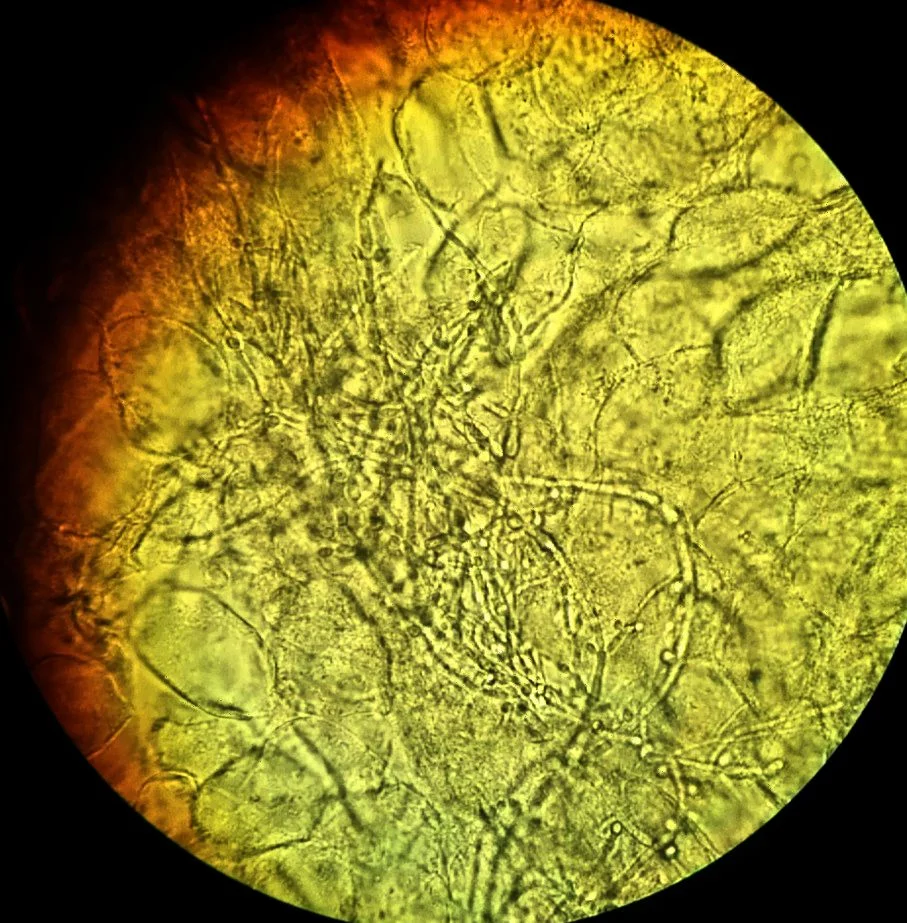
Long description
A vaginal wet mount prepared with potassium hydroxide and viewed by light microscopy at 40x, showing slings of Candida albicans pseudohyphae surrounded by round vaginal epithelial cells in candidal vulvovaginitis.

Figure 2Trichomonas vaginalis
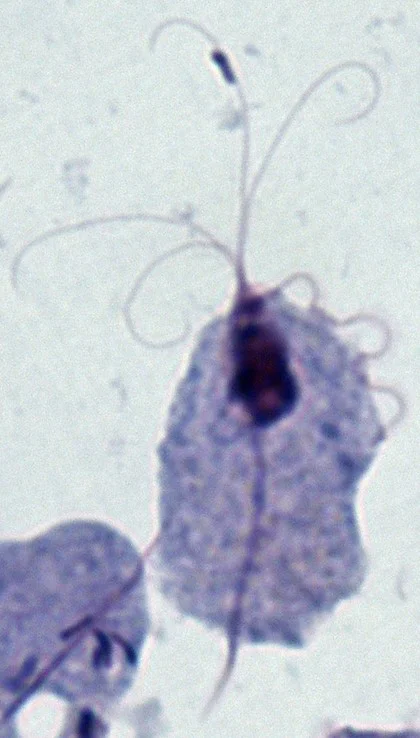
Long description
An annotated Trichomonas vaginalis trophozoite labelled with axostyle, four anterior flagella, undulating membrane and nucleus.

Figure 3Micrograph of a clue cell, annotated
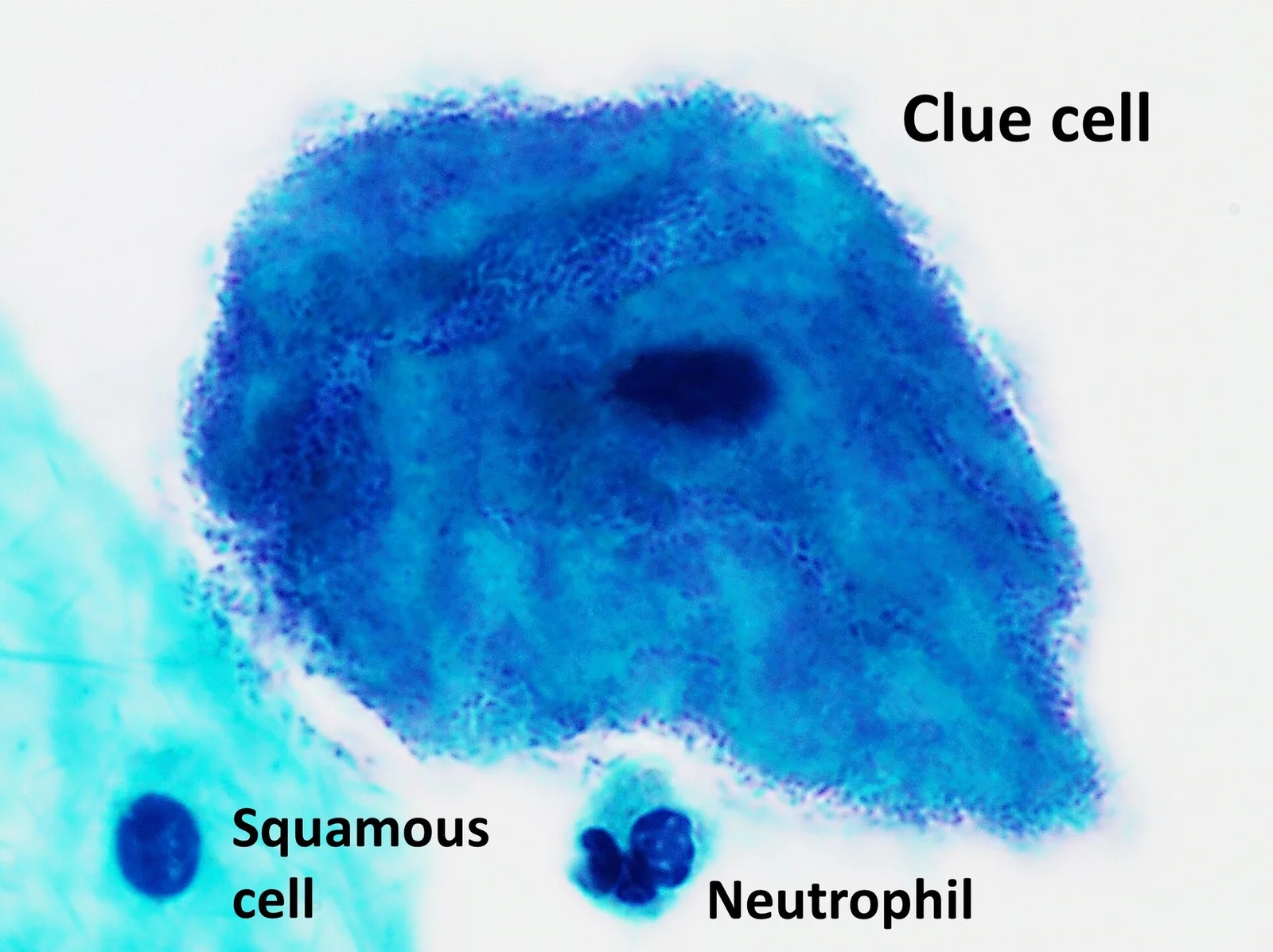
Long description
Pap-stained micrograph showing a central clue cell coated with bacteria, an unremarkable squamous cell at the bottom left, and a neutrophil at the bottom center.

History and bedside tests come first; swabs follow risk.
- pH paper pressed to lateral vaginal wall discharge (avoid cervical mucus). Normal is under 4.5; raised in BV, trichomoniasis, inflammatory and atrophic vaginitis. A normal pH is the single most useful argument against BV and trichomoniasis and for thrush; trichomoniasis can occur with a normal pH, but unusually. [1][2] [4]
- Wet mount in saline, read immediately, for motile trichomonads and clue cells. Motility is lost within an hour, taking much of the sensitivity with it. [3][1]
- 10% potassium hydroxide preparation for hyphae, pseudohyphae and budding yeasts, plus the amine "whiff" test: a distinct fishy odour argues for BV or trichomoniasis. [1][2]
- Gram stain where available, reported as Nugent score (0-3 normal lactobacilli, 4-6 intermediate, 7-10 BV) or by Hay/Ison criteria in UK practice. [2][5]
The wet mount is cheap and immediate but insensitive: roughly 44 to 68 percent for trichomoniasis compared with culture, falling further once the sample has sat. A negative mount does not exclude infection. [3][8]
- High vaginal swab (microscopy, culture, sensitivity) when infection is suspected, bedside microscopy unavailable, or first-line treatment fails. Culture is the reference standard for yeast; candida on a culture in an asymptomatic woman is not grounds for treatment, because 10 to 20 percent of healthy women carry it. [4][8]
- NAATs for BV (Gardnerella, Atopobium, BVAB2, Megasphaera with or without lactobacilli) have high sensitivity and specificity but are meant for symptomatic women; accuracy in asymptomatic women is not well defined. FDA-cleared BV panels include the Max Vaginal Panel and the Aptima BV. [2] [8]
- NAAT for trichomonas (Aptima, BD Probe Tec, Max CTGCTV2, GeneXpert TV) has sensitivity around 95 to 100 percent and is the test of choice when the mount is negative but suspicion remains. [3] [1]
- NAAT or culture for chlamydia and gonorrhoea, plus syphilis and HIV serology, whenever risk exists. [1][3]
- Pap test is not a diagnostic test for trichomoniasis, BV or candida; treat an incidental finding as a pointer to retest. [3] [4]
- Endocrine or cytological tests only when atrophy is likely (parabasal cells and a low maturation index; low oestradiol, raised FSH). [8][10]
- Biopsy of any persistent vulval lesion, patch of thickening or ulceration. [6][9]
A pH over 4.5 is common with BV, trichomoniasis, inflammatory and atrophic vaginitis. A pH under 4.5 points towards candidiasis or a normal discharge. Inflammation matters too: abundant white blood cells are expected with trichomoniasis, atrophy, inflammatory vaginitis and sometimes severe candidiasis, but not with BV. Parabasal cells point to atrophy or inflammation. These distinctions are why bedside microscopy is worthwhile even where molecular tests are available. [1][8] [9]
| Feature | BV | VVC (thrush) | Trichomoniasis |
|---|---|---|---|
| Itching | Absent or mild | Frequent and often severe | Variable |
| Discharge | Thin, grey-white, coats wall, fishy | Thick, curd-like, white | Profuse, yellow-green, sometimes frothy, offensive |
| Odour | Fishy, worse after sex | Usually none | Often offensive |
| Vulval inflammation | Usually absent | Often marked | Often marked |
| Vaginal pH | Over 4.5 (CDC; BASHH: up to 6.0) | Under 4.5 | Over 4.5 (often 5.0 to 6.0) |
| Wet mount | Clue cells (over 20 percent of epithelial cells) | Buds and pseudohyphae on KOH | Motile flagellates, high WBC count [10] |
| Gram stain | Nugent 7 to 10 | Mixed flora, lactobacilli | Not specific |
| First-line treatment | Metronidazole or clindamycin | Topical azole or fluconazole 150 mg once | Metronidazole (dose differs by sex) |
| Recurrence | Common | Recurrent in under 5 percent of women | Reinfection unless partners are treated |
| Sexual partner treatment | Not routinely recommended | Not recommended | Essential (all current partners) |
Approach to a woman with vaginal discharge
- Start: reported vaginal dischargeDecide first whether it is pathological or a normal variant
- History and red flagsPain, fever, bleeding, pregnancy, menopausal status, products, self-treatment
- Question: Any red flag (post-menopausal bleeding, severe pain or fever, immune compromise, child)
Yes
- Urgent assessment and referralDo not wait for swab results; rule out sepsis, PID, malignancy, foreign body
No
- Bedside testsVaginal pH, saline wet mount, KOH mount and whiff test
- Question: What is the pH?
Under 4.5
- Question: Hyphae or buds on KOH?
Yes
- Vulvovaginal candidiasis (thrush)Short-course topical azole or fluconazole 150 mg once
No
- Likely normal variant or irritantReassure, review products and hygiene; consider dermatosis
Over 4.5
- Question: Clue cells or fishy odour (BV)?
Yes
- Bacterial vaginosisMetronidazole or clindamycin per region; treat if symptomatic
Motile trichomonads
- TrichomoniasisNitroimidazole; treat all current partners
Parabasal cells, high WBC, pH 5 to 6, negative whiff
- Atrophic or inflammatory vaginitisTopical oestrogen or clindamycin and hydrocortisone; look for hypo-oestrogenism
- If negative or unclearSend NAAT for BV and trichomonas, STI screen and culture; re-evaluate if symptoms persist
Treat symptomatic women. In pregnancy, benefit is evidence-based for symptomatic disease, while asymptomatic screening is not recommended even when risk factors for preterm birth are present, because trial results have been mixed. [2][5]
United States
CDC (STI Treatment Guidelines 2021, United States) recommended regimens for BV: metronidazole 500 mg by mouth twice daily for 7 days; or metronidazole gel 0.75 percent, one full 5 g applicator intravaginally once daily for 5 days; or clindamycin cream 2 percent, one 5 g applicator intravaginally at bedtime for 7 days. Alternatives include oral clindamycin 300 mg twice daily for 7 days, clindamycin ovules 100 mg intravaginally for 3 nights, secnidazole 2 g oral granules as a single dose, and tinidazole 2 g once daily for 2 days or 1 g once daily for 5 days. [2] [3]
United Kingdom (NICE)
BASHH national guideline (United Kingdom, 2012) recommends: metronidazole 400 mg by mouth twice daily for 5 to 7 days, or metronidazole 2 g as a single dose, or intravaginal metronidazole gel 0.75 percent once daily for 5 days, or intravaginal clindamycin cream 2 percent once daily for 7 days; alternatives are tinidazole 2 g as a single dose or clindamycin 300 mg twice daily for 7 days. The first-line oral dose therefore differs by region, so check the local formulary. [5]
- Clindamycin cream is oil-based and can weaken latex condoms and diaphragms for at least five days after use. [2]
- Recurrences are common and biofilm disruption is ongoing; no data support douching, probiotics or lactobacillus products as treatment. Advise against douching and for consistent correct condom use during treatment. [2]
- HIV and STI testing are recommended for women with BV. [2]
- Male sex partners are not treated routinely; treatment of partners has not been shown to prevent recurrence. [2][5]
- Follow-up is unnecessary if symptoms resolve. For recurrence, a different regimen may be tried; for multiple recurrences, suppressive metronidazole gel or suppository twice weekly for more than three months, or boric-acid-containing plans, may reduce recurrences, but benefit is rarely sustained once stopped. [2]
- In pregnancy, symptomatic women should be treated in the usual way. Metronidazole crosses the placenta but has not been shown to be teratogenic; tinidazole and secnidazole should be avoided. Screening and routine treatment of asymptomatic BV in pregnancy are not recommended, including in women at high preterm risk, because trial results have been mixed. [2][5]
- Lower doses of metronidazole are considered compatible with breastfeeding; with a single 2 g dose some clinicians advise avoiding breastfeeding for 12 to 24 hours. [2]
Uncomplicated candidiasis is treated with short-course topical azoles or a single 150 mg dose of fluconazole. Azole therapy relieves symptoms and gives negative cultures in 80 to 90 percent of women who complete it. [4]
- Short-course topical regimens (1 to 3 days effective for uncomplicated disease): clotrimazole 1 percent or 2 percent cream, miconazole 2 percent cream, terconazole 0.4 percent or 0.8 percent cream, butoconazole 2 percent as a single application, tioconazole 6.5 percent ointment and the corresponding suppositories. Creams and suppositories are oil-based and may weaken latex condoms and diaphragms. [4]
- Oral: fluconazole 150 mg as a single dose. [4]
- Severe VVC (extensive erythema, oedema, fissures): a 7 to 14 day topical azole course, or fluconazole 150 mg repeated 72 hours after the first dose. [4]
- Recurrent VVC (three or more symptomatic episodes in under a year, per CDC 2021; older guidance and much of the literature count four or more per year, so check the definition used locally): a longer initial course (7 to 14 days topical, or fluconazole 100 to 200 mg on days 1, 4 and 7) followed by maintenance fluconazole 100 to 200 mg weekly for 6 months, with culture and susceptibility testing and specialist referral on failure. [4]
- Non-albicans candidiasis: a longer non-fluconazole azole course (7 to 14 days), with boric acid 600 mg intravaginally nightly for 3 weeks (CDC 2021; older tables list 14 days) if recurrence occurs; refer when resistance is suspected. [4]
- In pregnancy only 7-day topical azole courses are recommended; a single 150 mg dose of fluconazole is associated with spontaneous abortion and congenital anomalies and should not be used. [4]
- Partners are not treated for uncomplicated thrush, and there is no evidence for probiotics or homeopathic preparations. [4]
- BASHH guidance (United Kingdom, 2019) takes broadly the same approach with UK dosing and product availability; follow the national edition current in your setting. [6]
Nitroimidazoles are the only class with demonstrated efficacy. Metronidazole and tinidazole differ in half-life (7.3 versus 12.5 hours) and tolerability, and tinidazole resistance appears less common. [3]
- Women: metronidazole 500 mg by mouth twice daily for 7 days, preferred over a 2 g single dose because the latter roughly doubles recurrence; women with HIV also need the 7-day regimen. [3]
- Men: metronidazole 2 g by mouth as a single dose. [3]
- Alternative for both sexes: tinidazole 2 g by mouth as a single dose. [3]
- Metronidazole gel is not recommended, because it does not reach the urethra or perivaginal glands. [3]
- Treat all current sexual partners at the same time, test for other STIs, and advise abstinence for one week or until therapy and any symptoms are complete. [3]
- Retest sexually active women at about 3 months because reinfection is common (current CDC guidance; older AAFP guidance does not require routine test of cure); if the original test was a NAAT, wait 3 weeks before retesting to avoid detecting non-viable nucleic acid. [3]
- Pregnancy: symptomatic pregnant women should be treated (metronidazole is low risk); tinidazole is avoided. The benefit of routine screening in asymptomatic pregnant women has not been established. [3]
- Recurrent or resistant infection: after 7 days of 500 mg twice daily without re-exposure, use metronidazole or tinidazole 2 g once daily for 7 days, escalating to higher-dose or combined topical regimens with susceptibility testing through the reference laboratory. Topical agents such as povidone-iodine and potassium permanganate have very low success rates and are not recommended. Nitroimidazole resistance occurs in 4 to 10 percent of vaginal isolates. [3]
- BASHH (United Kingdom, 2021) provides the UK treatment and partner-management framework for the same infection. [7]
- Atrophic (genitourinary syndrome of menopause) vaginitis affects 10 to 40 percent of women in hypo-oestrogenic states, including during breastfeeding. [10][8]
- Symptoms are dryness, dyspareunia, burning, thin watery or serosanguineous discharge, pale thin mucosa, loss of rugae and petechiae. [8]
- Wet mount shows parabasal cells, decreased lactobacilli and increased cocci and rods, with pH usually elevated above 4.5 (commonly 5.0 or higher); no pathogens are seen. [8]
- Treat with topical oestrogen creams, tablets, pessaries or an estradiol vaginal ring, or systemic oestrogen when appropriate. Oestrogen creams, pessaries, tablets and rings are similarly effective for the local symptoms; non-hormonal moisturisers and lubricants are adjuncts. [10][8]
- Occurs most often in hypo-oestrogenic states, possibly of autoimmune origin. [9]
- Presents with purulent discharge, dyspareunia, dysuria and irritation; pH over 6, negative whiff test, microscopy with predominantly white blood cells and parabasal cells. [9]
- Treatment is clindamycin 2 percent vaginal cream, 5 g nightly for standard disease, with or without vaginal hydrocortisone; severe or persistent disease is treated for longer. [9]
- Aerobic vaginitis is an inflammatory variant with lactobacillus depletion and overgrowth of coliforms and cocci, scored on the Donders criteria by leucocytes, parabasal cells and flora. It is treated with topical clindamycin, topical corticosteroid or, in severe cases, specialist agents. [8]
- Allergic and irritant vulvovaginitis is common and is handled by history and examination: stop the trigger, rinse with water only and use emollients. [1]
- Mixed infections occur, especially candidiasis with BV or with trichomoniasis; treat both. [4][3]
- Urinary tract infection can mimic vaginal discharge (external dysuria without vaginal soreness), so always consider it. [1]
- Unclear, persistent or recurrent symptoms after correct treatment.
- Pelvic pain, intermenstrual or post-coital bleeding, an abnormal cervix, or any suspicion of malignancy.
- Recurrent VVC with suspected resistance, or suspected resistant trichomoniasis.
- Repeated anaerobic vaginitis not responding to standard regimens.
- Severe inflammatory or desquamative vaginitis.
- Any concern for child safeguarding or a foreign body that cannot be removed simply.
- Women with HIV, poorly controlled diabetes or immunocompromise with recurrent or complicated infection, because non-albicans species and resistant disease are more likely. [4][3]
- Pregnancy: BV and trichomoniasis are linked to preterm birth and premature rupture of membranes, yet routine treatment of asymptomatic BV does not clearly prevent preterm birth and is not recommended; treat symptomatic women. Trichomoniasis treatment in pregnancy (metronidazole, avoiding tinidazole) relieves symptoms and may prevent newborn infection. Only 7-day topical azoles are used for candidiasis in pregnancy. [2][3][4]
- Breastfeeding: lower doses of metronidazole are compatible; with a single 2 g dose, 12 to 24 hours off the breast is sometimes advised. [2][3]
- After menopause or during breastfeeding: atrophic causes are common and need local oestrogen rather than antifungals. [8][10]
- HIV infection: screen for trichomoniasis at entry to care and at least annually; use the 7-day metronidazole regimen rather than a single 2 g dose; resistant disease is more common. [3]
- Children and adolescents: discharge often has a non-infective explanation (foreign body, irritant vulvovaginitis); weigh safeguarding. [3]
- Older adults: exclude vulval skin disease and malignancy before attributing discharge to atrophy. [9]
- Treating a normal discharge. If pH, microscopy and examination are normal and there are no symptoms, reassure and review products; prescribing only repeats an expensive placebo. [1]
- "Candida is the cause of everything." Recurrent self-diagnosis is frequently wrong; obtain cultures and consider dermatosis, atrophy, inflammatory vaginitis or a retained object. [4][9]
- Missing trichomoniasis in an asymptomatic woman. It is often silent; a wet mount misses up to half of cases, so a NAAT from a vaginal swab is the right test when risk exists. [3]
- Confusing BV with poor hygiene. BV is not an STI in the usual sense and not a hygiene failure; do not shame or prescribe washing. It is dysbiosis, often recurring. [2]
- Ignoring the speculum. Retained tampons, forgotten pessaries and polyps are instantly visible; a swab cannot see them. [1]
- Prescribing metronidazole gel for trichomoniasis. It does not reach therapeutic levels; use oral nitroimidazoles only. [3]
- Single 2 g metronidazole for women with trichomoniasis. It roughly doubles recurrence compared with 7 days of 500 mg twice daily. [3]
- Treating an asymptomatic positive candida culture. Ten to twenty percent of women carry candida; do not treat the laboratory, treat the patient. [4]
- Forgetting STI screening when risk factors, young age or new partners are present. BV itself raises the risk of acquiring HIV and other STIs. [2][1]
- Applying a US or UK dose without checking. Brand strengths and licensed doses differ; metronidazole 400 mg twice daily (BASHH) versus 500 mg twice daily (CDC) for BV is a real difference. [2][5]
- Attributing a blood-stained discharge in an older woman to atrophy without ruling out malignancy, or dismissing post-menopausal bleeding. [1][9]
Where specula, pH paper, microscopy and molecular tests are limited, a syndromic approach is defensible: vaginal discharge with an elevated pH is likely BV or trichomoniasis. Clue-cell microscopy, the whiff test and a simple pH strip are cheap and massively improve accuracy, and empiric treatment should never replace looking for red flags such as cancer or sepsis. [1][2]
- Normal discharge is acidic (pH under 4.5), Lactobacillus-dominated, scant, odourless and non-irritating; pathological discharge breaks one of these rules.
- BV is a dysbiosis, not a true STI, with vaginal pH over 4.5 (BASHH guidance cites up to 6.0), clue cells and a fishy whiff; about half of women are asymptomatic; treatment is metronidazole or clindamycin; partner treatment is not routine; recurrence is common.
- Thrush (VVC) itches, has a curd-like discharge and a normal pH (under 4.5) with hyphae on KOH; 75 percent of women have at least one episode, 40 to 45 percent have two or more, and 10 to 20 percent have complicated disease. [4]
- Azoles cure 80 to 90 percent of uncomplicated thrush within days; recurrent disease needs a 6-month maintenance plan; pregnancy limits treatment to 7-day topical azoles.
- Trichomoniasis is the most common non-viral STI, often silent, diagnosed by wet mount or, better, NAAT; treat women with 7-day metronidazole 500 mg twice daily and men with a 2 g single dose, treating all partners. [3]
- Atrophic vaginitis produces dryness, dyspareunia and a thin or bloody discharge with pH usually elevated above 4.5 (commonly 5.0 or higher); local oestrogen treats it, not antifungals.
- Three of four Amsel criteria diagnose BV: homogeneous discharge, clue cells, pH over 4.5 and fishy odour after 10 percent KOH. [2]
- Wet mounts lose most of their value if not read within an hour, because trichomonads stop moving.
- A positive candida culture in an asymptomatic woman is not disease.
- Blood-stained or post-menopausal discharge is malignancy until proven otherwise.
- Regional differences in dose and drug (US metronidazole 500 mg twice daily for BV versus UK 400 mg twice daily; pregnancy restrictions on tinidazole and fluconazole) are real differences, so check the local guideline.
Answer each one in your head first, then open the answer.
A 28-year-old woman complains of a smelly discharge for five days but no itch. The discharge is thin, grey-white and coats the vaginal wall. pH is 5.0 and microscopy shows clue cells in over 20 percent of epithelial cells. What is the diagnosis, and how would you treat her in the United States?
Show answerHide answer
Bacterial vaginosis (three of four Amsel criteria). Treat with metronidazole 500 mg by mouth twice daily for 7 days, or metronidazole gel 0.75 percent intravaginally for 5 days, or clindamycin 2 percent cream intravaginally at bedtime for 7 days. Advise against douching and for consistent condom use during treatment; there is no need to treat the partner.
Why is vaginal pH under 4.5 strong evidence against BV and trichomoniasis, and what does a pH of 5.5 with parabasal cells and no clue cells suggest?
Show answerHide answer
BV and trichomoniasis usually make the vagina alkaline (pH over 4.5), while lactobacillus-dominated states stay acidic. A pH of 5.5 with parabasal cells, decreased lactobacilli and no clue cells points to atrophic or inflammatory vaginitis, treated with local oestrogen, or clindamycin and hydrocortisone, rather than antifungals.
A pregnant woman at 10 weeks has a curd-like itchy discharge with a normal vaginal pH. What can you give, and what must you avoid?
Show answerHide answer
Vulvovaginal candidiasis. Use a topical azole (clotrimazole or miconazole cream or suppository) for 7 days. Avoid a single 150 mg dose of fluconazole, associated with spontaneous abortion and congenital anomalies, and avoid oral therapy in pregnancy. Treat the partner only if he has balanitis.
Which is more accurate for trichomoniasis when the wet mount is negative: repeating the wet mount or sending a vaginal NAAT, and when should you retest after treatment?
Show answerHide answer
An older woman with dryness and a thin watery discharge asks for 'more clotrimazole': how do you answer, and what will her pH and wet mount show?
Show answerHide answer
Do not prescribe another azole. Her picture is atrophic vaginitis from oestrogen deficiency, treated with vaginal oestrogen plus moisturisers. Expect pH usually elevated above 4.5 (commonly 5.0 or higher), parabasal cells, fewer lactobacilli and no pathogens. Rule out vulval skin disease and malignancy, particularly with any blood-stained discharge, before attributing it to atrophy.
Why is a single 2 g dose of metronidazole worse than 7 days of 500 mg twice daily for women with trichomoniasis?
Show answerHide answer
Randomised data show the 7-day course cuts 1-month retest positivity by about half compared with the single dose. Women with HIV also need the 7-day regimen. Reserve the single 2 g dose for men.
Gynecology topics covering adjacent problems include contraception, vulval dermatoses, pelvic inflammatory disease, postmenopausal bleeding, recurrent pregnancy loss, pelvic pain, lower urinary tract infection, menopause and hormone therapy, and sexually transmitted infections. Look them up by title in the MedGrasp library as they are published.
- Workowski KA, Bachmann LH, Chan PA, et al. Sexually Transmitted Infections Treatment Guidelines, 2021: diseases characterized by vulvovaginal itching, burning, irritation, odor or discharge. MMWR Recomm Rep 2021;70(4):1-187. Accessed .
- Workowski KA, Bachmann LH, Chan PA, et al. Sexually Transmitted Infections Treatment Guidelines, 2021: bacterial vaginosis. MMWR Recomm Rep 2021;70(4):1-187. Accessed .
- Workowski KA, Bachmann LH, Chan PA, et al. Sexually Transmitted Infections Treatment Guidelines, 2021: trichomoniasis. MMWR Recomm Rep 2021;70(4):1-187. Accessed .
- Workowski KA, Bachmann LH, Chan PA, et al. Sexually Transmitted Infections Treatment Guidelines, 2021: vulvovaginal candidiasis. MMWR Recomm Rep 2021;70(4):1-187. Accessed .
- Clinical Effectiveness Group, BASHH (Hay P, lead author). UK National Guideline for the management of Bacterial Vaginosis 2012. British Association for Sexual Health and HIV, 2012. Accessed .
- Saxon C, Edwards A, Rautemaa-Richardson R, et al. British Association for Sexual Health and HIV national guideline for the management of vulvovaginal candidiasis (2019). Int J STD AIDS 2020;31(12):1124-1144. Accessed .
- Sherrard J, Pitt R, Hobbs KR, et al. British Association for Sexual Health and HIV (BASHH) United Kingdom national guideline on the management of Trichomonas vaginalis 2021. Int J STD AIDS 2022;33(8):740-750. Accessed .
- Hildebrand JP, Carlson K, Kansagor AT. Vaginitis. StatPearls (NCBI Bookshelf NBK470302), last updated 2025-01-19. Accessed .
- Goje O. Inflammatory vaginitis (desquamative inflammatory vaginitis). Merck Manual Professional Edition, reviewed 2023, updated 2025. Accessed .
- Hainer BL, Gibson MV. Vaginitis: diagnosis and treatment. Am Fam Physician 2011;83(7):807-815. Accessed .
Figure credits
- Figure 1: Mikael Häggström. When using this image in external works, it may be cited as: Häggström, Mikael (2014). "Medical gallery of Mikael Häggström 2014". WikiJournal of Medicine 1 (2). DOI:10.15347/wjm/2014.008. ISSN 2002-4436. Public Domain. or By Mikael Häggström, used with permission., via Wikimedia Commons, CC0, CC0.
- Figure 2: Stefan Walkowski, via Wikimedia Commons, CC BY-SA 4.0, CC BY-SA 4.0.
- Figure 3: Mikael Häggström, M.D., via Wikimedia Commons, CC0, CC0. resized.
Educational content for medical students and doctors. It is not a substitute for clinical judgement or local guidelines.