Genital ulcers and lesions
How to sort painful from painless genital ulcers and warts, stage the work-up, and treat first-line, including herpes in pregnancy and HPV vaccination.
- A genital ulcer or lesion is rarely "just an STI": herpes and syphilis together account for most genital ulcers in young sexually active people, but chancroid, lymphogranuloma venereum (LGV) and donovanosis still matter in certain regions, and non-sexually transmitted causes (trauma, fixed drug eruption, Behcet disease, candidiasis, psoriasis, cancer) also produce lesions.
- The first and most useful question is painful or painless: herpes is painful and vesicular, syphilis is classically painless, and chancroid is painful and ragged.
- All patients with genital, anal or perianal ulcers need testing: syphilis serology and dark-field or nucleic acid amplification where available, a NAAT or culture for herpes simplex virus (HSV), type-specific HSV serology when it helps, and HIV testing in everyone not already known to be HIV-positive.
- More than one infection can coexist in a single ulcer, and after a complete evaluation over 25% of patients still have no laboratory-confirmed diagnosis.
- Genital warts (HPV types 6 and 11) and molluscum contagiosum are lesions rather than ulcers; genital warts are linked to cancer prevention through HPV vaccination and cervical screening.
By the end of this page you should be able to:
- List the infectious and non-infectious causes of genital ulcers and lesions and describe each lesion's appearance, typical number, pain and lymph-node findings.
- Choose the correct first-line tests for a patient with a genital ulcer and explain why relying on appearance alone is unsafe.
- Outline syndromic management of genital ulcer disease and its limit in a low-resource clinic.
- Treat a first episode of genital herpes, plan suppressive and episodic therapy, and manage herpes in pregnancy and at delivery.
- Explain the link between genital HPV infection, HPV 6/11 warts, HPV vaccination and cervical screening.
- Prescribe first-line treatment for chancroid, LGV and donovanosis, and say when each needs longer or specialist care.
- State the approach to non-infectious causes and low-resource practice.
A genital ulcer is any break in the skin or mucosa of the genitals, perineum or perianal area: an erosion or ulcer, often with a scab, crust or purulent base. A genital lesion is a broader term used for visible abnormalities that are not necessarily breaks: warts, papules, vesicles, pustules and molluscum papules. The distinction matters because a "ulcer" implies tissue loss and points to different organisms (herpes, syphilis, chancroid, LGV, donovanosis), whereas warts and papules raise HPV and molluscum. The two groups overlap in practice because herpes begins as vesicles, warts can ulcerate and ulcers can be secondarily infected.
Genital lesions are a presentation rather than a diagnosis. Your job is to name the cause, exclude something that threatens fertility or the fetus, and start treatment on the same day when the cause is probable.
Figure 1Penis syphilis
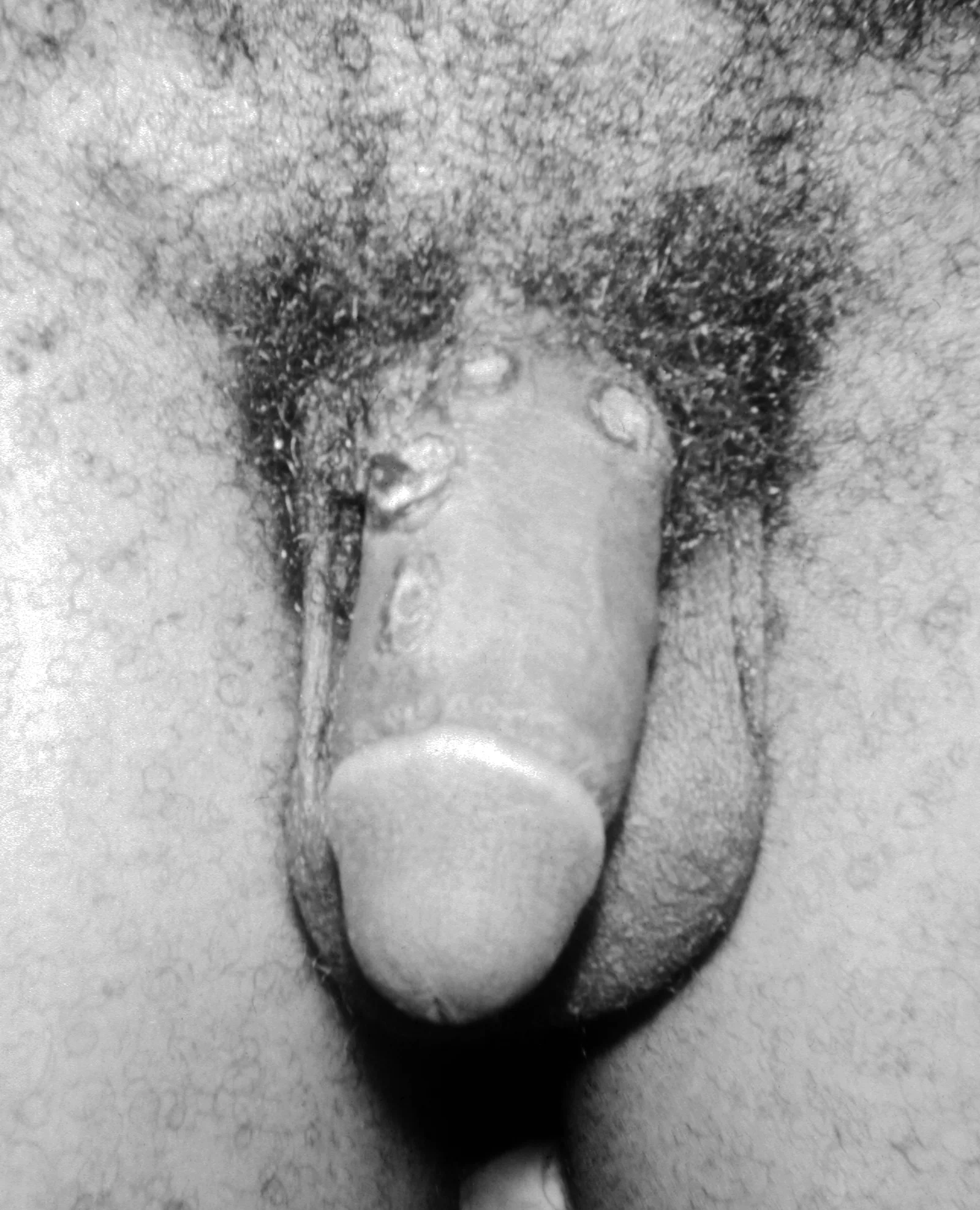
Long description
Clinical photograph of chancres on the penile shaft caused by a primary syphilitic infection with Treponema pallidum (CDC Public Health Image Library image 2354, 1971).

The table compares the main causes. It is a summary, not a diagnosis: lesions are protean and coinfection is common, so use it to guide testing rather than to label the patient.
| Cause | Typical lesion and site | Number | Pain | Lymph nodes | Diagnosis | First-line treatment |
|---|---|---|---|---|---|---|
| Herpes simplex virus (HSV-1/2) | Tight cluster of small vesicles on a red base that rupture into shallow, tender, "punched-out" ulcers, often with a scalloped edge; can be anywhere on the genitals or perianal skin and is often recurrent | Often multiple, grouped | Yes, usually markedly painful | Tender, bilateral inguinal nodes, often mild | NAAT or culture from lesion (typed HSV-1/2); type-specific HSV serology if no active lesion | Aciclovir, valaciclovir or famciclovir for a first episode and for recurrences; suppressive therapy if frequent [2] |
| Syphilis (Treponema pallidum) | Single firm, painless, well-demarcated ulcer with a clean base and indurated "cartilaginous" edge (chancre); primary site of inoculation | Usually single; can be multiple, especially with HIV | No (classically painless) | Enlarged, firm, non-tender ("shotty") regional nodes | Dark-field microscopy or NAAT of lesion; nontreponemal and treponemal serology; biopsy with immunostaining if atypical | Benzathine penicillin G intramuscularly; see the Syphilis topic |
| Chancroid (Haemophilus ducreyi) | Deep, ragged, undermined ulcer with a purulent or grey base and erythematous halo; may be excavated with "overhanging" edges | Often multiple ulcers that can coalesce | Yes, markedly painful | Tender, unilateral or bilateral inguinal nodes; fluctuant buboes in fewer than half of cases [3] | Presumptive clinical diagnosis when culture/NAAT not available; probable criteria: painful ulcer + typical appearance + exclusion of syphilis and HSV | Azithromycin 1 g orally once; or ceftriaxone 250 mg intramuscularly once; or ciprofloxacin 500 mg orally twice daily for 3 days; or erythromycin 500 mg orally three times daily for 7 days [3] [2] |
| LGV (Chlamydia trachomatis L1-L3) | Small, shallow, painless or minimally painful papule/vesicle/ulcer that heals quickly and is often missed; oral or rectal ulcers occur | Usually single | Mild or painless | Tender unilateral inguinal or femoral nodes; can form buboes | NAAT for C. trachomatis from lesion or node; clinical syndrome + exclusion of other causes; LGV-specific PCR if available | Doxycycline 100 mg orally twice daily for 21 days [4] |
| Donovanosis (Klebsiella granulomatis) | Painless, progressive, beefy-red, highly vascular ulcer that bleeds on contact; smooth rolled edge without induration | Single or multiple; slowly enlarging | No (painless) | Usually absent; subcutaneous "pseudobuboes" may mimic nodes | Demonstration of dark-staining Donovan bodies in tissue crush preparation or biopsy | Azithromycin 1 g orally once weekly (or 500 mg daily) for more than 3 weeks until lesions have healed [5] [4] |
| Genital warts (HPV 6/11) | Flat, papular or pedunculated cauliflower-like growths on mucosa; often at introitus, under foreskin, on shaft of circumcised penis; can be intra-anal, perianal, vaginal, cervical | Multiple, confluent | Usually painless; may be pruritic or bleed | None | Clinical by inspection; biopsy if atypical (pigmented, indurated, fixed, bleeding, ulcerated); HPV testing not used for wart diagnosis | Removal for symptoms/cosmesis: provider-administered (cryotherapy, surgical removal, TCA/BCA 80-90%) or patient-applied (imiquimod, podofilox, sinecatechins); can wait for spontaneous resolution [7] |
| Molluscum contagiosum (poxvirus) | Small (2 to 5 mm), pearly, dome-shaped papule with central umbilication that exudes white "cheesy" material; grouped; may be inflamed and red | Multiple, discrete or grouped | Usually painless; inflamed lesions sore | None | Clinical; biopsy/culture not usually needed; HIV testing if risk or widespread | Usually self-limited and resolves in 6 to 12 months (up to 4 years); physical removal or topical podophyllotoxin 0.5% in non-pregnant adults if needed [8] |
| Non-infectious causes | Aphthous ulcers, fixed drug eruption, Behcet disease, psoriasis, candidiasis, trauma, carcinoma; appear as erythematous erosions, ulcers with irregular borders, or scaly plaques | Variable | Variable, often painful | Variable | Clinical and, when needed, biopsy with histology/immunofluorescence; swabs negative for organisms | Treat the underlying condition; biopsy suspicious or non-healing lesions [1] |
A few patterns sharpen the table. Herpes vesicles are tiny and grouped, whereas chancroid ulcers are deep, ragged and undermined. Syphilis chancre is classically single and painless, but it can be multiple and atypical, particularly with HIV coinfection, so it cannot be excluded on appearance alone. Donovanosis is beefy red and bleeds, and it does not produce true inguinal lymphadenopathy despite "pseudobuboes". LGV's first lesion is evanescent, so most patients present with nodes or proctocolitis rather than a visible ulcer. Coinfection is not rare: more than one pathogen can be present in a single ulcer, and in one CDC series over 25% of fully evaluated patients remain without a confirmed cause [1].
- Severe pain with fever, rapidly spreading ulceration or necrosis: possible severe herpes, donovanosis superinfection or, rarely, sexually acquired reactive arthritis alongside an ulcer.
- Ulcer in a person who is immunocompromised: atypical herpes; also consider donovanosis, secondary infection and malignancy.
- A fixed genital ulcer with everted, indurated edges that does not heal: biopsy to exclude carcinoma; squamous cell carcinoma can masquerade as a chronic ulcer or as a wart.
- Genital ulcer plus neurological signs, cranial nerve palsies, or vascular symptoms: think neurosyphilis and treat as syphilis, not as a local skin problem.
- Ulcer or mass obstructing the urethra or causing urinary retention, or in pregnancy: urgent gynaecological/urological and obstetric involvement.
- In infants or children, genital ulcer or wart raises concern for sexual abuse unless an alternative explanation (congenital infection, non-sexual HPV transmission, trauma) is clearly present.
Sexual history and geography. Recent new or anonymous partners, condom use, travel and residence, previous STIs, HIV status, and whether the partner has a genital lesion. Geography matters because chancroid is commoner in parts of Africa and the Caribbean, and donovanosis in India, South Africa and South America. Ask about sexual practices that explain unusual sites (oral ulcers, anal ulcers and proctocolitis in men who have sex with men).
Timing. Incubation varies: herpes 2-12 days, syphilis roughly 3 weeks, chancroid 3-10 days, LGV 3-30 days. A "recurrent" pattern points strongly to herpes, because most other ulcers are single episodes unless reinfection occurs.
Symptoms of the lesion itself. Itching, burning, pain, dysuria, bleeding, and whether vesicles were seen at the start. Pain on micturition when the urethra is involved, and tenesmus, rectal bleeding or discharge with anal exposure.
Constitutional and neurological symptoms. Fever, malaise, rash, joint pains or visual/auditory symptoms raise secondary syphilis; headache, photophobia or neck stiffness raise neurosyphilis.
Examination. Look with good light and, if needed, colposcopy or anoscopy; count and describe lesions (size, depth, base, edge, induration), distribution, and the perianal area. Palpate inguinal nodes for tenderness, fixation, fluctuance and whether the node group is unilateral or bilateral. Examine the mouth, skin and abdomen. Document findings so that the response to treatment can be judged objectively.
Figure 2Tzanck test
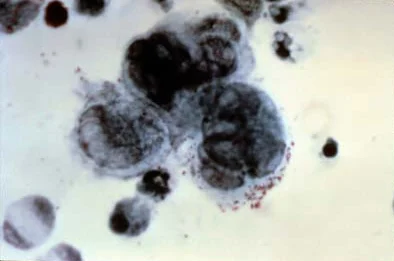
Long description
A positive Tzanck test showing three multinucleated giant cells in the center, credited to the NIH Image Bank entry "Herpes Tzanck Smear".

- Syphilis serology (nontreponemal with titre plus a treponemal test) in every patient; dark-field examination or NAAT from lesion exudate if available; if an ulcer is present and syphilis is suspected clinically, treat presumptively before results return [1].
- NAAT or culture for HSV-1/2 from lesional fluid or swabs; if lesions are older or none are present, type-specific HSV serology can help, especially HSV-2 antibody.
- HIV testing for everyone not known to be HIV-positive; STIs that cause ulcers increase HIV acquisition and transmission risk [1].
- Tests for H. ducreyi (culture on special media, sensitivity under 80%; laboratory-developed NAAT) and biopsy with Donovan bodies where chancroid or donovanosis is suspected. [3]
- NAAT for Chlamydia trachomatis (and LGV genotyping where available) from lesions, rectal or urethral sites; chlamydia serology is not routinely useful.
- Biopsy with immunohistochemistry for atypical, persistent or non-healing ulcers; and
- Cervical or anal screening as appropriate (see HPV and cervical screening below).
Do not use these tests to delay an obvious treatment: early treatment of syphilis and of a first HSV episode reduces transmission, and treatment should be chosen on the clinical presentation plus epidemiology [1].
A diagnosis based only on history and examination is frequently wrong. HSV, syphilis and chancroid all produce "genital ulcer" on inspection, and coinfection is common. Syphilis and HSV can each occur without the textbook picture: a syphilitic chancre can be painful, ragged or multiple, particularly in people with HIV, and HSV can be single and atypical. After a complete evaluation, more than 25% of patients with genital ulcers have no laboratory-confirmed cause [1]. For that reason, send both syphilis and HSV tests in every patient, treat presumptively when a first episode or syphilis is probable, and re-examine at 3-7 days when the diagnosis is uncertain or the lesion is not improving. [3]
Approach to a patient with a genital ulcer or lesion
- Presenting complaintGenital, anal or perianal ulcer, lesion, vesicle or wart; pain, duration, recurrence, sexual history, geography
- Examine and documentNumber, size, depth, base, edge, induration, distribution, perianal and mucosal areas, and inguinal lymph nodes
- Question: Is the lesion ulcerative or non-ulcerative?
Non-ulcerative (warts, papules, molluscum)
- Inspect for typical featuresCauliflower wart, pearly umbilicated papule, or vesicular cluster; biopsy if atypical
- Manage as HPV wart or molluscumAdvise removal options or observation; offer STI screening; give HPV vaccination and cervical/anal screening advice
Ulcerative
- Send tests on every patientSyphilis serology with titre plus dark-field/NAAT of lesion; HSV NAAT or culture (HSV serology if no lesion); chlamydia/NAAT where LGV suspected; HIV test
- Question: Clinical probability and epidemiology?
Probable syphilis or first HSV episode
- Treat presumptively at first visitBenzathine penicillin G for probable syphilis; aciclovir/valaciclovir for probable first HSV episode
Painful ragged ulcer with bubo
- Treat for chancroidAzithromycin 1 g once, or ceftriaxone 250 mg IM once
- Re-examine in 3-7 daysAssess response, drain bubo if needed, reconsider diagnosis
Tender node or proctocolitis
- Treat for LGVDoxycycline 100 mg twice daily for 21 days
Beefy-red painless ulcer
- Confirm Donovan bodies; treat donovanosisAzithromycin 1 g weekly (or 500 mg daily) for more than 3 weeks
- Re-examine and adjustIf no improvement by 7 days, review diagnosis, repeat/extend tests, consider biopsy, HIV care and resistant HSV
- Prevention, partners and follow-upTreat/examine partners within exposure windows; STI and HIV screening; test of cure and serological follow-up; contraception and HPV vaccination
In many settings the laboratory needed to name the organism is not available quickly or at all. The WHO 2021 guidelines therefore support two levels [9]:
- Where molecular testing is available, WHO recommends treatment based on a quality-assured assay of the ulcer (PCR or similar), because clinical diagnosis alone is inaccurate.
- Where laboratory capacity is limited, WHO recommends syndromic treatment: treat on the same day for the conditions the syndrome most likely represents, so that no one leaves untreated while waiting for a result.
For genital ulcer disease the WHO syndromic package is treatment for syphilis unless the person has been treated for syphilis in the preceding 3 months, plus treatment for herpes (multiple-dose antiviral therapy) [9]. The rationale is that syphilis is the most damaging if missed and herpes is the most common ulcer. WHO is gradually moving syndromic programmes toward the incorporation of point-of-care and laboratory testing rather than replacing clinical algorithms abruptly [9]. Clinicians in both well- and low-resourced settings should still send syphilis serology where possible, test for HIV, and biopsy anything that does not fit or does not heal.
Syndromic management is a bridge, not a destination: it is simple, gives same-day care and avoids expensive tests, but it over-treats some patients and can miss chancroid, donovanosis and LGV unless the presentation is recognised. It should be reviewed locally as diagnostics arrive.
Figure 3SOA-Herpes-genitalis-male
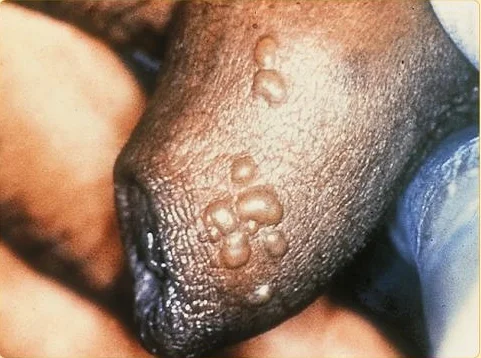
Long description
Clinical photograph in the SOA-AIDS Amsterdam set categorized as genital herpes in men.

Figure 4Genital herpes
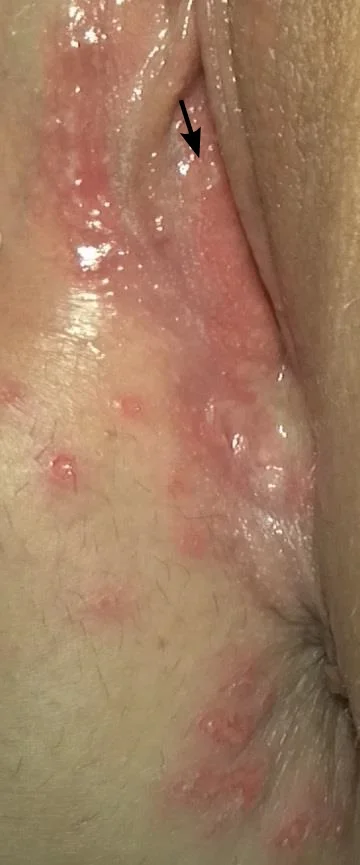
Long description
Clinical photograph of female genital herpes caused by HSV-2 confirmed by PCR, taken two days after onset of symptoms in a 27-year-old, with reddish blisters on the skin and white-brownish blisters on the vaginal epithelium (black arrow).

Genital herpes is usually the most common cause of genital ulcers. It is caused by HSV-1 or HSV-2, both of which can produce anogenital disease; recurrent genital herpes is more often HSV-2, with an estimated prevalence of about 11.9% among people aged 14-49 years in the United States [2].
A first episode can be severe: prolonged painful ulceration, dysuria, tender inguinal nodes and sometimes urinary retention or aseptic meningitis. Even when the first episode is mild, recurrences can be severe later. Therefore all patients with a first clinical episode should receive antiviral therapy [2].
Recommended oral regimens, for 7-10 days (extend if healing is incomplete after 10 days):
- aciclovir 400 mg three times daily;
- valaciclovir 1 g twice daily;
- famciclovir 250 mg three times daily.
Topical antiviral therapy gives minimal benefit and is discouraged [2].
A first episode with complications (disseminated infection, pneumonitis, hepatitis, meningitis or encephalitis) needs intravenous aciclovir 5-10 mg/kg every 8 hours until clinical improvement, followed by oral antiviral to complete at least 10 days of total therapy (10-14 days for meningitis). Impaired renal function requires dose adjustment [2].
Most people with a symptomatic first HSV-2 episode later have recurrences. Management is either suppressive (to prevent outbreaks and reduce transmission) or episodic (to shorten lesions). Episodic treatment works best if started within 1 day of lesion onset or during the prodrome. [2]
Oral episodic regimens include [2]:
- aciclovir 800 mg twice daily for 5 days;
- aciclovir 800 mg three times daily for 2 days; [2]
- valaciclovir 500 mg twice daily for 3 days, or 1 g once daily for 5 days;
- famciclovir 1 g twice daily for 1 day; or 125 mg twice daily for 5 days. [2]
Daily suppressive therapy reduces the frequency of recurrences by 70-80% in people with frequent recurrences and is also suitable for less frequent ones. Suppressive valaciclovir 500 mg daily reduces HSV-2 transmission to susceptible partners in heterosexual couples. Daily therapy is aciclovir 400 mg twice daily, valaciclovir 500 mg once daily (possibly less effective when there are ten or more episodes per year), valaciclovir 1 g once daily, or famciclovir 250 mg twice daily [2]. Review suppressive use annually, because recurrences become less frequent over time, and long-term safety data are reassuring. Valaciclovir 500 mg twice daily is used in a different context: as suppressive dosing in HIV-related disease, where evidence exists, but it did not prevent recurrent HSV-2 meningitis in the dose studied.
If lesions persist or recur during therapy, check viral culture for phenotypic sensitivity. Foscarnet (80-120 mg/kg per day intravenously in two to three divided doses, for example 40 mg/kg every 8 hours) is the treatment of choice for aciclovir-resistant genital herpes; cidofovir (topical 1% gel) and imiquimod 5% are alternatives in specialist hands. Foscarnet and cidofovir are nephrotoxic and require infectious disease input and intensive monitoring [2].
The key facts are these [2]:
- Risk of transmission to the neonate is high (30-50%) if the mother acquires genital herpes near delivery, and low (under 1%) if she has recurrent herpes or acquired it in the first half of pregnancy. [2]
- All pregnant women should be asked about genital herpes history and symptoms; at the onset of labour all women should be questioned about prodromal symptoms and examined for herpetic lesions.
- Women without symptoms or signs of genital herpes (or prodrome) can deliver vaginally. Women with recurrent genital herpetic lesions at the onset of labour should have a caesarean delivery to reduce neonatal risk, although caesarean delivery does not eliminate risk entirely.
- Routine HSV-2 serological screening in pregnancy is not recommended; serology may be useful for counselling when one partner has a known infection.
Oral aciclovir, valaciclovir and famciclovir are considered to pose a low fetal risk, and aciclovir is used for pregnant women with first-episode or recurrent disease; severe disease needs intravenous aciclovir (including HSV hepatitis, which carries high mortality and should be treated empirically). Suppressive aciclovir (400 mg three times daily) or valaciclovir (500 mg twice daily) starting at 36 weeks' gestation reduces recurrences at term and therefore caesarean deliveries. A woman who acquired HSV in the second half of pregnancy should be managed with maternal-fetal medicine and infectious disease input. Neonatal prophylaxis and disease are beyond this page; a neonate receiving systemic aciclovir for known or suspected neonatal herpes gets 20 mg/kg intravenously every 8 hours for 14 days for skin and mucous disease, or 21 days for disseminated or CNS disease [2].
Figure 5Chancroid lesion haemophilus ducreyi PHIL 3728 lores
Long description
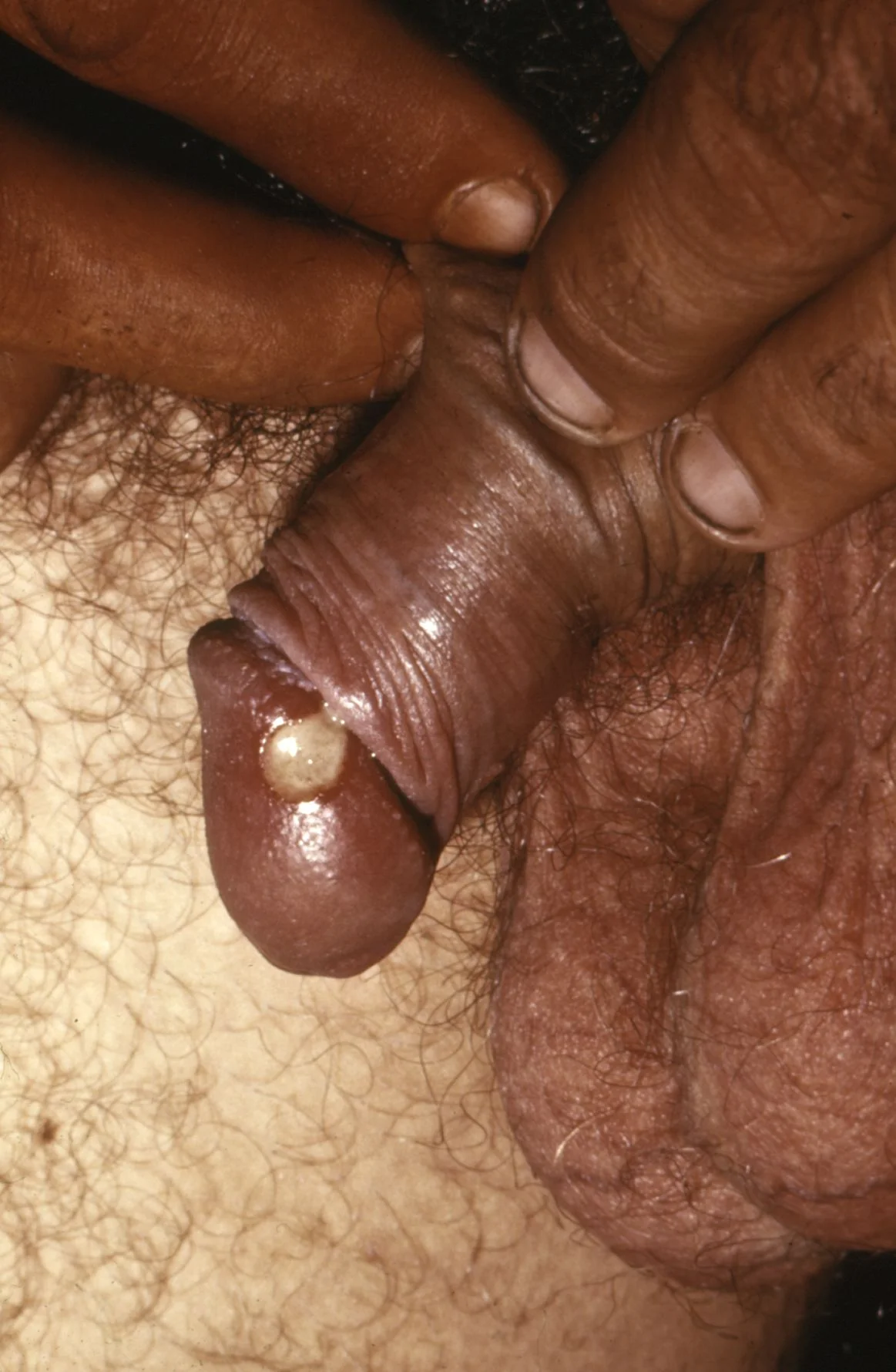
This photograph depicts a patient who presented with a penile chancroid lesion surrounded by a narrow red border (CDC/Joe Miller, 1974).

Chancroid is caused by Haemophilus ducreyi and is uncommon in high-income countries but persists in parts of Africa and the Caribbean. It is a risk factor for HIV acquisition and transmission. The lesion is painful, deep, ragged and undermined, with a purulent base. Inguinal lymphadenopathy is tender and may become fluctuant; it occurs in fewer than half of cases. Culture (sensitivity under 80%) and molecular testing are often unavailable, so diagnosis is clinical with probable criteria that require exclusion of syphilis and HSV [3].
Treatment: azithromycin 1 g orally once, ceftriaxone 250 mg intramuscularly once, ciprofloxacin 500 mg orally twice daily for 3 days, or erythromycin base 500 mg orally three times daily for 7 days; azithromycin and ceftriaxone allow single-dose therapy. Uncircumcised men and people with HIV respond less well and may need repeated or longer courses. Patients should be re-examined at 3-7 days; complete healing of large ulcers may take more than 2 weeks. Buboes may require aspiration or incision and drainage. Ciprofloxacin is avoided in pregnancy and breastfeeding. Partner tracing covers sexual contacts in the 10 days before symptom onset [3]. [4][5]
LGV is caused by Chlamydia trachomatis serovars L1, L2 and L3 and differs from ordinary chlamydia in being invasive and potentially destructive. Presentation depends on the site:
- a small, transient, often unnoticed genital papule or ulcer followed by tender inguinal or femoral lymphadenopathy, usually unilateral, sometimes with fluctuant buboes (heterosexual presentation);
- proctocolitis after rectal exposure: mucoid or haemorrhagic discharge, anal pain, constipation, fever and tenesmus, which can mimic inflammatory bowel disease; this is the commonest presentation in men who have sex with men;
- oral ulceration with cervical lymphadenopathy in oral exposure.
Diagnosis uses a C. trachomatis NAAT from the symptomatic site, clinical suspicion and exclusion of other causes; LGV-specific genotyping is definitive but often unavailable. A rectal Gram stain with more than 10 white cells per field has been associated with LGV. Serology is not routinely useful [4].
Treatment: doxycycline 100 mg orally twice daily for 21 days, with estimated cure over 98.5%. Alternatives are azithromycin 1 g orally once weekly for 3 weeks (short-course azithromycin is not validated, though one small series reported 97% cure) and erythromycin base 500 mg orally four times daily for 21 days. Longer courses may be needed with fistulas or severe disease; a 7-day course of doxycycline covers asymptomatic infection. Asymptomatic contacts within the preceding 60 days should be treated with a 7-day doxycycline chlamydia regimen. HIV coinfection may need prolonged therapy [4]. Doxycycline is avoided in pregnancy; azithromycin 1 g weekly for 3 weeks or erythromycin may be used, with a test of cure at 4 weeks. [3][5]
Donovanosis is caused by Klebsiella granulomatis and occurs sporadically in India, South Africa and South America. It produces painless, progressive, beefy-red, highly vascular ulcers that bleed on contact, with a smooth rolled edge and no true regional lymphadenopathy; subcutaneous "pseudobuboes" may appear. Diagnosis requires demonstration of dark-staining Donovan bodies in tissue crush preparations or biopsy. Ulcers heal slowly from the margins and relapse can occur 6-18 months after apparently effective therapy [5].
Treatment: azithromycin 1 g orally once weekly (or 500 mg daily) for more than 3 weeks and until all lesions have completely healed; alternatives are doxycycline 100 mg twice daily, erythromycin base 500 mg four times daily or trimethoprim-sulfamethoxazole double-strength (160/800 mg) twice daily, each for at least 3 weeks and until healing. A second antibiotic can be added if there is no improvement in the first few days. Pregnant and lactating women should receive a macrolide because of doxycycline and sulfonamide safety concerns [5]. All patients need HIV testing and follow-up until resolution. [2]
Figure 6Feigwarzen
Long description
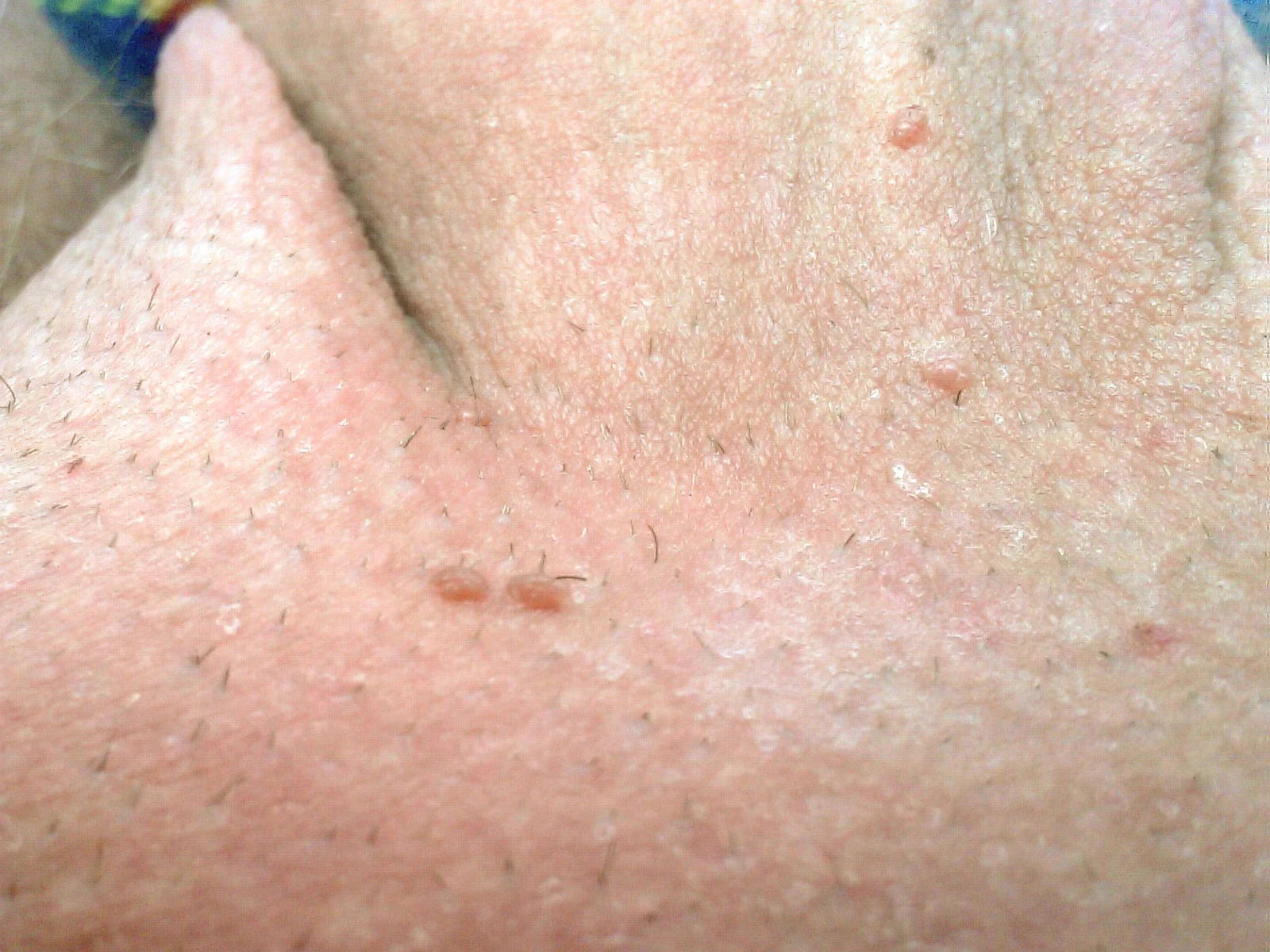
Shaved base of a penis with genital warts.

Genital (anogenital) warts are caused by HPV types 6 and 11, which account for over 90% of genital warts, in contrast with high-risk types 16 and 18 (plus 31, 33, 45, 52 and 58), which cause most cervical cancers. Anogenital warts are common, usually asymptomatic and present as flat, papular or pedunculated growths; they are usually diagnosed clinically, with biopsy for atypical (pigmented, fixed, bleeding or ulcerated) lesions. HPV testing is not used for wart diagnosis [6][7].
Treatment aims at symptom and cosmetic relief rather than cure of the virus: warts can resolve spontaneously. Shared decision-making is important and no single treatment is best for every patient. Options include patient-applied imiquimod, podofilox and sinecatechins, and provider-administered cryotherapy, surgical removal and trichloroacetic or bichloroacetic acid 80-90%. Treatment reduces but does not eradicate viral infectivity, and recurrence (especially in the first 3 months) is common. HPV vaccines do not treat existing warts; they prevent them in those not already exposed to wart-causing types [7].
Current HPV vaccination guidance includes routine vaccination of all adolescents at age 11-12 years (can start at age 9), catch-up vaccination through age 26 years when not previously vaccinated, and shared clinical decision-making for selected adults aged 27-45 years who were not vaccinated. A two-dose schedule (at 0 and 6-12 months) applies when vaccination starts before the 15th birthday; a three-dose schedule (at 0, 1-2 and 6 months) applies to immunocompromised people at any age. The vaccine is not recommended in pregnancy. Only the 9-valent vaccine is available in many countries, including the United States [6].
Cervical screening link. Cervical cancer is the only HPV-associated cancer for which routine screening is recommended. Women who receive HPV vaccine should still attend routine cervical screening, because the vaccine does not cover all oncogenic types and vaccination status does not replace screening. HPV tests are used in the context of cervical cancer screening to detect oncogenic types; they are not for general STI testing, for men, or for women under 25 years, and not for diagnosing genital warts [6]. HPV types 16 and 18 cause about 66% of cervical cancers, and the five additional types in the 9-valent vaccine account for about 15% of cervical cancers; types 6 and 11 cause more than 90% of genital warts [6].
This area overlaps with Gynecology (cervical screening, colposcopy and HPV-related precancer management); the content of the two topics should be aligned so that patients are not advised inconsistently across the site.
Molluscum contagiosum is a benign, contagious poxviral infection that presents as small (2-5 mm), pearly, dome-shaped papules with central umbilication containing cheesy material. It is usually self-limited, with papules resolving spontaneously within 6-12 months (and occasionally taking up to 4 years). Immunocompromised people may have larger and more numerous lesions and more secondary bacterial infection [8].
In children the infection is usually on the trunk and limbs; in adults it often follows sexual contact and may be genital. The patient should be advised not to scratch or squeeze papules, because autoinoculation and scarring result. Treatment is usually unnecessary in healthy people; removal (cryotherapy, curettage, or laser by a trained provider) or topical podophyllotoxin 0.5% for non-pregnant adults may be used for genital lesions, cosmetic concerns, or in people who are immunocompromised. Cimetidine, potassium hydroxide, salicylic acid and tretinoin are alternative topical measures. Imiquimod is available for adults but has not been shown to work in children. Molluscum is a reason to recommend provider assessment of genital lesions and STI screening; podophyllotoxin is not recommended in pregnancy [8].
A list, not a trickle: aphthous ulcers, Behcet disease, fixed drug eruption, psoriasis, trauma, post-surgical or inflammatory conditions, candidal erosions and verrucous carcinoma or squamous cell carcinoma can all present as genital "ulcers" or "warts". Points that help:
- Symmetry, Sharply bordered erosions in Behcet; aphthae that recur in the mouth and genitals.
- A "target" or pigmented plaque after a drug suggests fixed drug eruption.
- Psoriatic plaques are scaly and on the glans or vulva rather than ulcerated.
- Red scaly velvety plaques of erythroplasia of Queyrat-like appearance, or any indurated, non-healing, bleeding lesion, needs biopsy to exclude malignancy.
- Candidiasis can erode skin in folds and mimic an ulcer; look for satellite pustules.
When swabs, serology and NAAT are negative and the lesion does not respond to appropriate antimicrobials, or when it is atypical from the outset, biopsy early rather than repeating courses of antibiotics [1].
Pregnancy. Management aims to prevent neonatal infection and reduce caesarean delivery where appropriate. Herpes suppression from 36 weeks is described above. Syphilis in pregnancy requires penicillin only and serial screening (see the Syphilis topic). Chancroid is treated with a macrolide or ceftriaxone rather than ciprofloxacin; donovanosis with a macrolide; LGV with azithromycin or erythromycin rather than doxycycline. Anogenital warts should not be treated with podofilox, podophyllin or sinecatechins in pregnancy; imiquimod is avoided until more data exist. Caesarean delivery is not performed solely to prevent HPV transmission, because it is not clear that it prevents neonatal disease; caesarean is indicated if the pelvic outlet is obstructed or vaginal delivery would cause excessive bleeding. HSV is the usual reason for caesarean in this group, when recurrent herpetic lesions are present at the onset of labour [2][7].
Children with genital ulcers or warts. Consider congenital or perinatally acquired infection (including syphilis and HSV), molluscum and non-sexual HPV transmission in very young children; sexual abuse must be considered and handled through appropriate safeguarding channels. HSV IgM testing is not recommended; serology and multidisciplinary input are preferred.
HIV. People with HIV are more likely to have severe, atypical or persistent ulcers and a larger HPV disease burden, and may need longer or repeated courses. HSV suppression benefits patients with low CD4 counts around ART initiation, and suppressive aciclovir can reduce GUD in this window, but HSV antivirals do not reduce HSV or HIV transmission to partners. Donovanosis, chancroid and LGV regimens are broadly the same as in HIV-negative patients, but cure is slower and repeated therapy may be needed; people with HIV and chancroid respond less well to single-dose regimens. Test everyone with a genital ulcer for HIV, and offer HIV prevention (pre-exposure prophylaxis where indicated) after a negative test [1][2][3][4][5].
- Syphilis: serological follow-up as per stage, with a fourfold change in nontreponemal titre regarded as the smallest clinically significant change.
- HSV: no routine test of cure; review pain, healing and recurrences; persisting lesions need resistance testing and treatment.
- Chancroid: re-examine at 3-7 days; assess that ulcers are improving; large ulcers may need more than 2 weeks to heal.
- LGV: patients followed clinically until resolution; retest for chlamydia around 3 months after treatment; test of cure is not routinely needed for simple chancroid/GUD.
- Donovanosis: follow to complete healing; watch for relapse at 6-18 months.
- HPV warts: assess response after about 3 months; change modality if there is no substantial improvement or severe side effects; patients should abstain from sexual activity with new healing tissue until re-epithelialised; no increase in cervical screening frequency is needed for women with warts.
- Molluscum: advise expected course (6-12 months) and when to be reviewed.
Global STI burden is concentrated where access to care is weakest, and syndromic management is often the only practical approach.
- Use the WHO chain: treat on the same day, including treatment for syphilis in anyone not treated in the preceding 3 months and an antiviral course for herpes [9]. Low cost and immediate, even if some over-treatment occurs.
- Send syphilis serology and HIV testing wherever a laboratory exists; an RPR-class nontreponemal test is cheap and robust and can be used as a screening tool; treponemal confirmation can follow.
- Dark-field microscopy is inexpensive but needs a trained microscopist and fresh exudate; if unavailable, rely on clinical probability plus serology.
- Drug choice by availability: benzathine penicillin G is cheap and treats most non-neurological syphilis; doxycycline, ceftriaxone and azithromycin are inexpensive for chancroid and donovanosis; aciclovir may be the only feasible oral antiviral in many countries.
- Avoid overtreatment harm: give doxycycline and azithromycin appropriately, avoid doxycycline in pregnancy and children, reserve ciprofloxacin in pregnancy, and avoid sulfonamides in late pregnancy and breastfeeding.
- Partner notification, contact tracing and basic counselling (safer sex, condom use, abstinence during lesions) are the highest-yield actions where drugs are available but follow-up is hard.
- Biopsy and surgical care may require referral (carcinoma, destructive donovanosis, large donovanosis lesions, surgical wart removal, severe HSV needing intravenous therapy, neurosyphilis).
- Pregnancy and congenital prevention depend on screening at the first visit and at delivery in high-prevalence settings, treating partners and presumptively treating high-probability infection.
- Genital ulcers and lesions are a presentation: take a history, examine carefully and test; do not trust appearance alone.
- HSV and syphilis account for most genital ulcers in young sexually active people; chancroid, LGV and donovanosis remain important in some regions; non-STI causes (especially carcinoma) must be excluded.
- Core tests in every patient: syphilis serology (with lesion testing when possible), HSV NAAT/serology, HIV testing; chlamydia and biopsy as indicated.
- Painful vesicular lesions: herpes; painless indurated chancre: syphilis; painful ragged ulcer: chancroid; evanescent papule then nodes or proctocolitis: LGV; beefy-red, bleeding painless ulcer: donovanosis; warts: HPV 6/11; pearly umbilicated papules: molluscum.
- Treat a first HSV episode fully; use suppressive therapy for frequent recurrences and episodic therapy for occasional ones; topical antivirals should not be used.
- Pregnancy: HSV suppression from 36 weeks; caesarean for recurrent herpetic lesions at labour; other key drugs adjusted for pregnancy; continued cervical screening despite HPV vaccination.
- Warts are removed for symptoms/cosmesis, not to eradicate HPV; no routine screening is triggered by warts alone.
- Syndromic management is the pragmatic answer in low-resource settings: treat for syphilis unless recently treated, plus an antiviral course for herpes, same day.
- Partners and sexual health follow-up are part of treatment, not an optional extra.
Answer each one in your head first, then open the answer.
A 23-year-old has a painful cluster of small blisters on the vulva that have broken down into shallow ulcers. Which diagnosis is most likely, which test best confirms it, and what is the first-line treatment for a first episode?
Show answerHide answer
Herpes simplex virus infection; confirm with NAAT or culture from the lesion and type the virus (HSV-1 or HSV-2). Treat the first clinical episode with oral aciclovir 400 mg three times daily, valaciclovir 1 g twice daily, or famciclovir 250 mg three times daily for 7-10 days, extending treatment if healing is incomplete. Topical antivirals should not be used. [2]
Which ulcerating sexually transmitted infection is classically painless, single and indurated, and what is the catch that makes presumptive treatment sensible before results return?
Show answerHide answer
Primary syphilis, although the chancre can be painful, multiple or atypical, especially in people with HIV, so appearance alone is unreliable. Because early treatment reduces transmission and presumptive treatment is recommended when syphilis is suspected, treatment is often started after tests are taken but before results are available. Benzathine penicillin G intramuscularly is the drug of choice (see the Syphilis topic).
What is the recommended regimen for LGV, how long is it given, and how does this compare with routine chlamydial infection?
Show answerHide answer
LGV is treated with doxycycline 100 mg orally twice daily for 21 days, with an estimated cure over 98.5%. Routine uncomplicated chlamydial infection is treated with doxycycline 100 mg twice daily for 7 days (or azithromycin 1 g once). LGV needs the longer course because it is invasive; fluoroquinolones and shorter azithromycin courses have not been validated for LGV.
A pregnant woman at 34 weeks has had recurrent genital herpes. What should be done before delivery, at the onset of labour and if herpetic lesions are present at delivery?
Show answerHide answer
Offer suppressive aciclovir 400 mg orally three times daily or valaciclovir 500 mg twice daily from 36 weeks' gestation to reduce recurrences at term. At the onset of labour, question her about prodromal symptoms and examine carefully for herpetic lesions. If recurrent herpetic lesions are present at delivery, perform a caesarean delivery; if she has no symptoms or signs, vaginal delivery is appropriate.
What is the syndromic treatment package for genital ulcer disease recommended by WHO for settings without point-of-care molecular testing?
Show answerHide answer
Treat on the same day. Include treatment for syphilis unless the patient has been treated for syphilis within the preceding 3 months, plus multiple-dose antiviral therapy for herpes simplex virus infection. Send syphilis serology and test for HIV wherever possible, review the diagnosis if lesions do not improve, and treat individuals with these syndromes as high priority because of their increased HIV risk.
A patient has flat, moist, warty growths around the anal margin. What is the cause, what follow-up cancer screening does this diagnosis not change, and how is it treated?
Show answerHide answer
Anogenital warts, almost all caused by HPV types 6 and 11. They do not change cervical screening: women with genital warts do not need Pap tests more often than other women, and HPV vaccination does not treat existing warts. Treatment is optional and chosen jointly: patient-applied imiquimod, podofilox or sinecatechins, or provider-administered cryotherapy, surgical removal, or TCA/BCA 80-90%; observation is acceptable while awaiting spontaneous resolution.
A man has several small pearly dome-shaped papules with central dimples on the shaft of the penis. They have been present for 8 weeks. What is the likely diagnosis, expected course and management?
Show answerHide answer
Molluscum contagiosum, caused by a poxvirus. The papules often resolve spontaneously within 6-12 months (and up to 4 years), so observation is reasonable in a healthy adult. Advise no scratching (autoinoculation and scarring). Genital molluscum should prompt STI screening. If removal is wanted, use trained-provider cryotherapy, curettage or (for non-pregnant adults) topical podophyllotoxin 0.5%; podophyllotoxin is avoided in pregnancy. [8]
What are the key HPV vaccination rules that relate to genital warts and cervical cancer prevention?
Show answerHide answer
Routine vaccination at age 11-12 (can start at age 9); catch-up to age 26; shared decision-making for selected adults aged 27-45. Two doses if started before the 15th birthday (0 and 6-12 months), three doses if immunocompromised (0, 1-2 and 6 months). The vaccine is not given in pregnancy and does not treat existing infection. Women who are vaccinated continue routine cervical screening, because the vaccine does not remove the need for it.
Genital ulcers and lesions overlap with Syphilis, HIV infection, gonorrhoea and chlamydia, contraception and pregnancy care, and with Gynecology, which covers cervical screening and HPV-related precancer. Links between these pages are added as the topics are verified.
- Centers for Disease Control and Prevention. Diseases Characterized by Genital, Anal, or Perianal Ulcers. Sexually Transmitted Infections Treatment Guidelines, 2021 (reviewed 22 July 2021). Accessed .
- Centers for Disease Control and Prevention. Genital Herpes. Sexually Transmitted Infections Treatment Guidelines, 2021 (reviewed 21 September 2022). Accessed .
- Centers for Disease Control and Prevention. Chancroid. Sexually Transmitted Infections Treatment Guidelines, 2021 (reviewed 22 July 2021). Accessed .
- Centers for Disease Control and Prevention. Lymphogranuloma Venereum (LGV). Sexually Transmitted Infections Treatment Guidelines, 2021 (reviewed 22 July 2021). Accessed .
- Centers for Disease Control and Prevention. Granuloma Inguinale (Donovanosis). Sexually Transmitted Infections Treatment Guidelines, 2021 (reviewed 22 July 2021). Accessed .
- Centers for Disease Control and Prevention. Human Papillomavirus (HPV) Infection. Sexually Transmitted Infections Treatment Guidelines, 2021 (reviewed 22 July 2021). Accessed .
- Centers for Disease Control and Prevention. Anogenital Warts. Sexually Transmitted Infections Treatment Guidelines, 2021 (reviewed 22 July 2021). Accessed .
- Centers for Disease Control and Prevention. Clinical Overview of Molluscum Contagiosum. Molluscum Contagiosum (updated 15 April 2025). Accessed .
- World Health Organization. Genital Ulcer Disease Syndrome. Guidelines for the Management of Symptomatic Sexually Transmitted Infections, 2021 (NCBI Bookshelf chapter). Accessed .
Figure credits
- Figure 1: CDC/Susan Lindsley, via Wikimedia Commons, Public domain, Public domain.
- Figure 2: National Institute of Allergy and Infectious Diseases (NIAID), via Wikimedia Commons, Public domain, Public domain.
- Figure 3: SOA-AIDS Amsterdam, via Wikimedia Commons, CC BY-SA 3.0, CC BY-SA 3.0.
- Figure 4: Mikael Häggström, uploaded with permission from patient, via Wikimedia Commons, CC0, CC0.
- Figure 5: CDC/Joe Miller, via Wikimedia Commons, Public domain, Public domain.
- Figure 6: Rrreeewww, via Wikimedia Commons, CC BY-SA 3.0, CC BY-SA 3.0. resized.
Educational content for medical students and doctors. It is not a substitute for clinical judgement or local guidelines.