Benign prostatic hyperplasia
Benign, non-cancerous growth in the transition zone of the prostate that blocks urine flow; symptoms, diagnosis, treatment, and when surgery is needed.
- Benign prostatic hyperplasia (BPH) is a non-cancerous proliferation of glandular and stromal tissue in the transition zone of the prostate, the small ring of gland that wraps around the upper (prostatic) urethra.
- It is a histological diagnosis; the trouble it causes comes from benign prostatic obstruction and the bladder's reaction to it, felt as lower urinary tract symptoms (LUTS): a weak stream, hesitancy and incomplete emptying (obstructive), and frequency, urgency and nocturia (irritative/storage). [3]
- It is immensely common and rises with age: roughly half of men have histological BPH by 60 years and approaching 90% by 80 years; about one in four men over 40 have LUTS. [3][4]
- Diagnosis rests on the story and a flow of tests from a urinalysis upward; the International Prostate Symptom Score (IPSS) measures bother, and prostate size is best measured by ultrasound.
- Treatment is stepped: watchful waiting, then alpha-blockers or phosphodiesterase-5 inhibitors, then 5-alpha reductase inhibitors (with or without an alpha-blocker) for larger prostates, then surgical or minimally invasive options. [1]
- Red flags that push toward surgery are renal impairment, refractory retention, recurrent infection or stones, recurrent haematuria, and symptoms that progress despite drugs.
By the end of this page you should be able to:
- Describe where BPH arises in the prostate and explain how it turns into bladder outlet obstruction.
- Name the obstructive, storage and post-micturition symptoms of LUTS and grade them with the IPSS.
- Take a focused history and examination, including digital rectal examination, and choose the right first-line investigations.
- Interpret a PSA in a man with suspected BPH, including the effect of 5-alpha reductase inhibitors.
- Match a patient to the right level of management: watchful waiting, drugs (with dose, benefit and adverse effects), or a procedure.
- State the indications for surgery and the complications of BPH and of its treatment. [2]
- Summarise what the EAU and AUA guidelines agree on and where they differ, and adapt care in a low-resource setting.
DefinitionBenign prostatic hyperplasia
Benign prostatic hyperplasia (BPH) is the non-cancerous proliferation of stromal and glandular epithelial cells in the transition zone of the prostate. It is a histological diagnosis. It is not a precursor of prostate cancer. [5]
Three related words are often used interchangeably, and keeping them separate makes the subject much easier:
- Benign prostatic hyperplasia (BPH): the tissue change in the transition zone. It may cause no symptoms at all.
- Benign prostatic enlargement (BPE): the imaging finding of a bigger prostate.
- Benign prostatic obstruction (BPO): the urodynamic finding that the prostate is actually blocking urine flow. The EAU guidelines treat BPO, not the histology, as the condition to be managed. [5]
- Lower urinary tract symptoms (LUTS): what the patient feels. LUTS can be produced by bladder, prostate and urethral problems, by neurological disease and by drugs, so the symptoms alone do not prove BPH. [4]
Clinicians therefore speak of LUTS secondary to BPH/BPO. This page is about the common and important case where LUTS are produced by prostatic obstruction.
A group often called clinical BPH is defined as a man having at least two of three features: moderate to severe LUTS (IPSS above 8), an enlarged prostate with total prostatic volume above 30 mL, and a peak urinary flow rate (Qmax) below 15 mL per second. [4] This definition is helpful because it separates prostatic from non-prostatic causes of symptoms.
BPH becomes almost universal with age, but symptoms are far less common than the tissue change. Nearly all men develop histological BPH by 90 years of age, and LUTS due to BPH rise steeply with age. [3] LUTS are a common problem for older men: lower urinary tract symptoms affect one in four U.S. men, and more than half of those have at least moderate symptoms. [1] Globally, at least one in four men older than 40 years has LUTS, with subtle ethnic differences. [4]
Specific age figures:
- Nearly 50% of men have histological BPH at 60 years, rising to about 90% by 80 years. [4]
- Moderate to severe LUTS are reported by about 26% of men aged 40 to 49 years, roughly doubling in men aged 70 years or older. [4]
- Nocturia is the third most bothersome LUTS; its prevalence reaches about 80% in patients over 80 years. [4]
The impact is not trivial: in men with severe LUTS the annual risk of having at least one fall is increased by about 33% compared with men who have mild symptoms. [4] BPH is also associated with a four times higher risk of prostate cancer and three times higher risk of bladder cancer in observational studies; prostate cancer screening recommendations are not changed by the presence of BPH. [1]
The exact cause is incompletely understood. BPH needs functioning testes and androgens: men castrated before puberty do not develop it. [3] Testosterone is converted in the prostate to dihydrotestosterone (DHT) by the enzyme 5-alpha reductase, and DHT drives growth of the epithelial and stromal cells in the transition zone.
Other identified risk factors are ageing, genetics, growth factors, inflammation and lifestyle. [4] A genetic contribution seems strongest in men younger than 60 years, and first-degree relatives of a man with clinical BPH are more likely to develop it. Chronic inflammation is commonly found on prostate biopsy and correlates with prostate volume. The metabolic syndrome and its parts (obesity, low HDL cholesterol, diabetes, hypertension) are associated with a larger prostate volume, and heavy smoking, low physical activity, high protein and alcohol intake are associated with symptomatic disease. [4] Evidence from reviews is inconsistent on whether these factors change symptom scores as well as volume.
Exam trapNot a cancer
BPH is not generally considered a precursor lesion to prostate cancer, even though both can coexist and both can raise the PSA. Prostate cancer must be excluded when the story or examination suggests it, but a man does not "turn into" cancer by having BPH. [3]
Figure 1Prostate zones
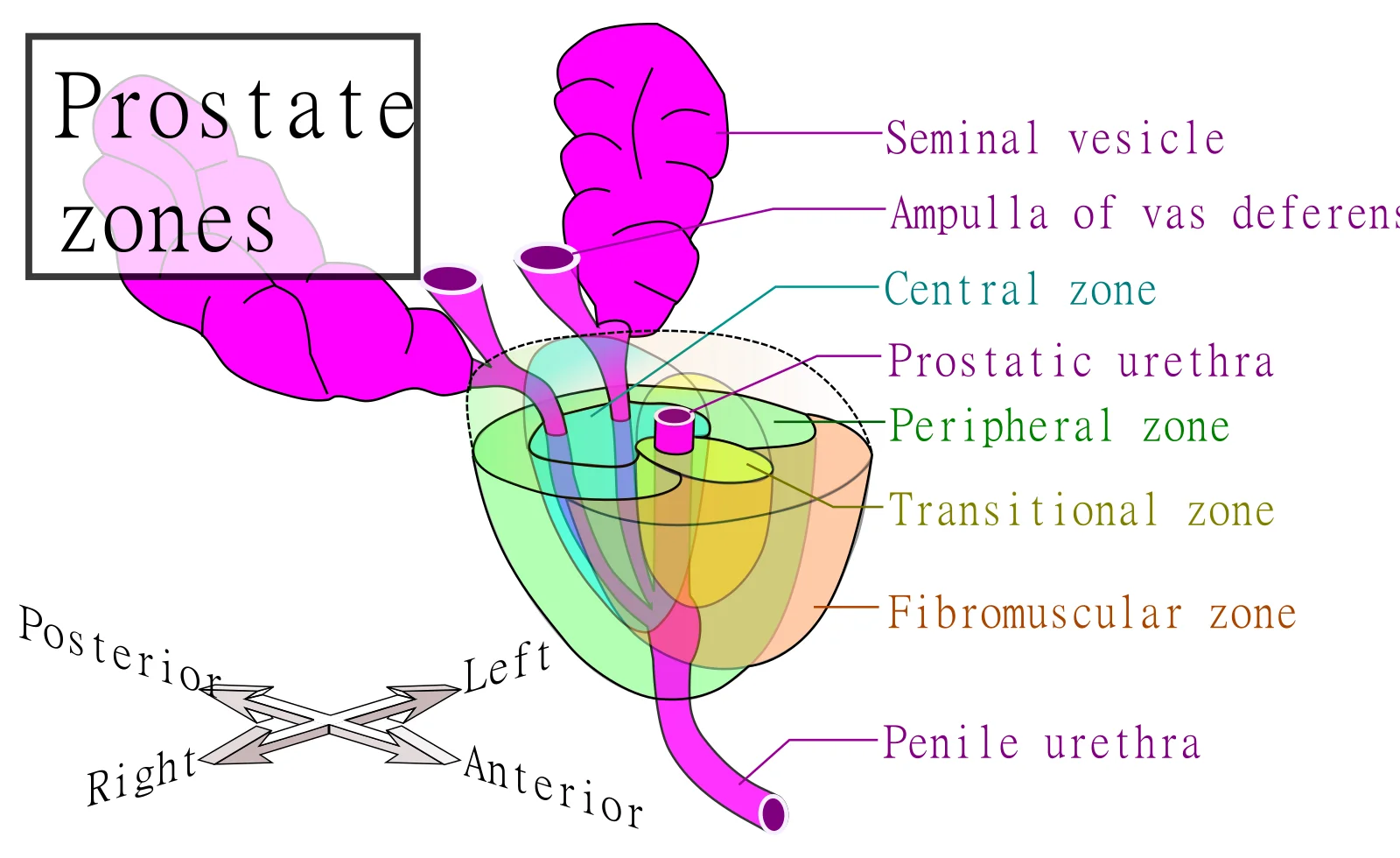
Long description
SVG diagram of a prostate with labelled seminal vesicle, ampulla of vas deferens, prostatic and penile urethrae, and central, peripheral, transitional and fibromuscular zones, with anterior/posterior and right/left orientation.

McNeal's description of the prostate, the standard anatomical map, divides the gland into three zones. The peripheral zone is the largest and is the common site of cancer and of prostatitis. The central zone surrounds the ejaculatory ducts and is relatively spared. The transition zone is a small glandular ring around the prostatic urethra between the bladder and the verumontanum; in the normal gland it makes up only about 5% of the prostate mass. [3]
BPH is a nodular hyperplasia of the epithelial and stromal (fibromuscular) tissue in this transition zone. The nodules begin near the urethra and grow outward. Because the prostate is enclosed in a capsule, continued growth cannot expand outward freely; it compresses the urethra from the outside and increases urethral resistance. [4] That is the static component of obstruction. [3]
There is also a dynamic component: the smooth muscle in the capsule and transition zone, rich in alpha-1 adrenergic receptors, can contract and tighten the urethra. This is why alpha-blockers, which relax that muscle, work within days, while 5-alpha reductase inhibitors, which shrink tissue, take months. [1]
Obstruction alone does not explain every symptom. The bladder responds to outflow resistance by working harder: the detrusor hypertrophies, may become unstable, and may eventually fail. This explains the two symptom groups:
- Voiding (obstructive) symptoms come from impaired emptying: weak stream, hesitancy, intermittency, straining, prolonged voiding, and a sensation of incomplete emptying with terminal dribble.
- Storage (irritative) symptoms come from detrusor overactivity and a sensitised bladder: frequency, urgency, urge incontinence (overactive bladder), and nocturia. Some men have problems after voiding: post-micturition dribble and a feeling of residual urine. [4]
Storage symptoms are often more bothersome than voiding symptoms, and they may not improve after a successful operation if the bladder has changed permanently. Many men with LUTS have no urodynamic obstruction, so symptoms are a poor predictor of blockage. [4] A useful pair of concepts: bladder outlet obstruction (BOO) is a high-pressure, low-flow pattern on urodynamics; in a study of men without BOO who had LUTS, peak flow (Qmax) reached about 20 mL per second with a mean voided volume of 290 mL. [4]
A flow-algorithm for LUTS in men should therefore ask first whether the patient has actual obstruction, especially before an invasive procedure. Between 5% and 35% of patients with BPH-related LUTS do not improve after TURP when obstruction was not present beforehand. [4]
Early on the bladder compensates: wall thickens, contraction force rises, symptoms are mild. Later the bladder decompensates: emptying worsens, residuals rise, infections and stones become likely, and back-pressure can injure the kidneys. This timeline, and not the size of the prostate alone, is what determines complications.
Ask about the classic symptoms listed above, their duration, how much they bother him, and their impact on sleep, work, and continence. Ask about fluid and caffeine or alcohol intake, recent changes in medication (diuretics, anticholinergics, decongestants, antidepressants, antihistamines, opioids), and problems suggesting diabetes, heart failure, sleep apnoea, chronic kidney disease, or neurological disease. [1]
A standard clinical question in an older man: "Is this BPH, or is it something else that just looks like BPH?" The LUTS differential is wide and is worth scanning every time:
| Category | Examples |
|---|---|
| Anatomic | Urethral or bladder neck strictures, foreign body |
| Infection | Urinary tract infection, prostatitis, sexually transmitted infection |
| Inflammatory | Chronic pelvic pain syndrome, chronic prostatitis |
| Malignancy | Prostate cancer, bladder cancer, urothelial cancer |
| Medications | Anticholinergics, antihistamines, bronchodilators, diuretics, opioids, sympathomimetics, tricyclic antidepressants |
| Neurological | Neurogenic bladder, overactive bladder (detrusor overactivity), Parkinson disease, stroke, spinal disease |
| Metabolic/other | Diabetes mellitus, heart failure, sleep apnoea, high fluid or caffeine intake, constipation |
Also ask directly about erectile function, because it is common in the same age group and the drugs for one condition can help or harm the other. [2]
A general examination is usually normal. Look for a distended bladder above the pubic symphysis, which suggests significant retention. Neurological examination of the perineum and lower limbs looks for a cause of neurogenic bladder.
The digital rectal examination (DRE) is central: a prostate affected by BPH is typically smooth, rubbery and symmetrically enlarged, and the median groove may be less distinct. Tenderness suggests prostatitis; a hard, nodular or asymmetric gland raises concern for cancer and should trigger further investigation. The main limitation is accuracy: DRE reliably identifies only prostates larger than about 50 mL, and underestimates size in many men. [1]
The routine work-up is intentionally limited. The goal is to confirm that LUTS are due to BPH, to exclude cancer and other causes, and to establish a baseline.
Assessment of lower urinary tract symptoms in a man aged 40 or older
- History and examination (including DRE)Symptom scores (IPSS), bother, comorbidities, medications, erectile function
- Basic testsUrinalysis (and culture if needed); PSA only after shared decision; renal function if insufficiency suspected
- Measure prostate size if 5-alpha reductase inhibitor or surgery is being consideredTransrectal ultrasound (preferred over DRE) (Ref 1, 2)
- Question: Red flags or diagnostic uncertainty?
Yes
- Refer or investigate furtherCystoscopy, uroflowmetry, post-void residual, urodynamics, upper tract imaging as indicated
No
- Grade LUTS with IPSS; agree a management planMatch to watchful waiting, medical or surgical pathway (see Management)
Urinalysis is mandatory and looks for glucosuria, proteinuria, haematuria and infection. [1][2] If there is infection, treat it and reassess the symptoms. Haematuria needs a full urological work-up before it is blamed on BPH.
PSA is the test with the most pitfalls in BPH. Important points:
- PSA is not required for every man with LUTS; it is a limited predictor of prostate volume, of future retention and of the need for surgery. [1]
- It is, however, a useful surrogate marker of prostate size in a man without cancer and predicts the long-term risk of BPH progression: symptomatic men with a PSA of 1.5 ng/mL or more are at higher risk. [2][4]
- PSA rises with the total volume of transition-zone tissue, so an enlarged prostate alone raises PSA. It also rises with prostatitis, with recent ejaculation, after a urinary tract infection, and with prostate cancer. A single raised value needs interpretation, not panic.
- Screening for prostate cancer is a separate, shared decision. Discuss the risks and benefits before testing in men aged 55 to 69 years; testing is discouraged in men aged 70 years or older. [1]
- The AUA recommends offering PSA to men with at least a 10-year life expectancy in whom finding cancer would change management, and in whom knowing PSA would change the management of voiding symptoms (because PSA estimates prostate volume). [2]
- 5-alpha reductase inhibitors halve PSA by up to 50%. In a man on finasteride or dutasteride, the PSA expected for a given prostate volume is about half, so many clinicians double the measured PSA before comparing it with normal ranges. Men on these drugs also have a delayed diagnosis of prostate cancer and a slightly higher risk of high-grade cancers, which is why PSA must be followed regularly. [1]
Renal function (creatinine) is recommended only when renal insufficiency is a concern (raised creatinine, large residuals, hydronephrosis on imaging). [1][2] Do not order creatinine or upper-tract imaging for every patient: the AUA Choosing Wisely list advises against it for typical cases. [1]
Uroflowmetry and post-void residual (PVR) are optional and reserved for uncertainty, preoperative planning or postoperative review. Uroflowmetry is not useful for the initial evaluation of LUTS in primary care, and PVR is a poor routine screen (positive predictive value about 63% and negative predictive value about 52% for obstruction). [1] Ultrasound (transabdominal or transrectal) is more accurate than DRE for measuring prostate volume and is recommended before starting a 5-alpha reductase inhibitor or surgery. [1][2] Cystoscopy is not needed routinely; use it when there is haematuria, a raised suspicion of cancer or stricture, poor response to drugs, or surgical planning. [2]
The International Prostate Symptom Score (IPSS) is the best way to grade symptoms and follow them over time; the AUA recommends it and it is the only symptom score that significantly predicts retention and obstruction. [1] It has seven symptom items scored 0 to 5 plus a quality-of-life item, giving a total from 0 to 35. [2]
- Mild: under 7
- Moderate: 8 to 18
- Severe: 19 to 35 [2]
An IPSS of 20 or higher (severe symptoms) has a positive likelihood ratio of 1.5 for bladder outlet obstruction; an IPSS below 20 has a negative likelihood ratio of 0.8. [1]
Severity alone does not dictate treatment: a man with a high score who is not bothered may need only watchful waiting, while a man with a moderate score and strong bother, or any red flag, needs active treatment. [2]
The goals are to relieve symptoms, prevent progression, and prevent complications such as retention and renal impairment. A suggested stepping approach is:
Stepped management of lower urinary tract symptoms due to BPH
- Mild or non-bothersome symptomsWatchful waiting with lifestyle measures
- Bothersome moderate to severe symptomsOffer an alpha-blocker or a PDE5 inhibitor; add a 5-alpha reductase inhibitor if the prostate is enlarged (about 30 to 40 mL or more, depending on the guideline)
- Question: Predominantly storage (irritative) symptoms?
Yes
- Add an antimuscarinic or a beta-3 agonistWith caution if BOO is significant or residual urine is high
No
- Continue or adjust voiding therapyReassess IPSS, adverse effects and PVR
- Question: Failure of drugs, complication, or patient choice?
Yes
- Surgery or minimally invasive therapyMatch procedure to prostate size (see Surgical therapy)
No
- Continue and monitorYearly IPSS; PSA follow-up on 5-alpha reductase inhibitors
Men with mild symptoms (IPSS below 7) should be counselled on lifestyle change and watchful waiting. [2] Many symptoms fluctuate, and about one third of men with symptoms seek treatment, so conservative care is a legitimate first step.
Lifestyle measures with reasonable evidence: limit evening fluids; reduce caffeine and alcohol; bladder training with timed voiding, double voiding and urethral milking; pelvic floor exercises; sitting to urinate for frail or older men (it may reduce post-void residual); and treat constipation and sleep apnoea. [1]
Complementary therapies: saw palmetto is not effective in the best-quality evidence. Small, short trials suggest that Pygeum africanum and beta-sitosterol may improve symptoms and flow, but long-term effectiveness is unknown, and phytotherapies are not recommended as standard treatment. [1][2]
Alpha-blockers relax prostatic and bladder-neck smooth muscle and improve flow within days. They are first-line for most men. Symptom improvement is 2 to 4 IPSS points; alpha-blockers do not alter the natural history of BPH (little effect on growth, retention, or need for surgery). [1][2]
- Tamsulosin 0.4 mg by mouth once daily, taken about 30 minutes after the same meal each day; if there is no response after 2 to 4 weeks the dose may be increased to 0.8 mg. [6]
- Alfuzosin extended-release 10 mg by mouth once daily, taken with food and at the same meal each day; tablets should not be chewed or crushed. [9]
- Doxazosin and terazosin are non-selective alpha-1 blockers: they lower blood pressure more, require dose titration and blood-pressure monitoring, and cause more dizziness (2 to 10% of users). [1][2]
- Tamsulosin and alfuzosin are uroselective: less effect on blood pressure, little or no titration, but more ejaculatory dysfunction (retrograde or reduced ejaculation). [1][2]
Adverse effects common to the class: orthostatic hypotension and dizziness with non-selective agents; ejaculatory dysfunction with selective agents. A small trial found that taking a selective alpha-blocker every other day may improve ejaculatory dysfunction while maintaining benefit. [1] Floppy iris syndrome can complicate cataract surgery in men taking alpha-blockers, especially tamsulosin; if cataract surgery is being considered, avoid starting an alpha-blocker until an ophthalmologist has been told, and continue the drug only with their awareness. [1][2]
For acute urinary retention, start an alpha-blocker at catheterisation (tamsulosin, alfuzosin or silodosin), then leave the catheter for 3 days before attempting removal. [1][2]
5-alpha reductase inhibitors (5-ARIs) block the conversion of testosterone to DHT and slowly shrink the prostate. They are disease-modifying: they reduce the risk of acute retention and of surgery, but the benefit builds over months. [2]
Indications: an enlarged prostate (volume of about 30 to 40 mL or more on imaging, depending on the guideline) (or an enlarged prostate on examination), or PSA above 1.5 ng/mL, or both. [1][2] The mechanisms by which they work explain the dosing caveats: full symptom improvement can take up to a year; prostate volume falls by roughly 15 to 30% depending on the source and the duration of treatment; benefits are maintained for up to 10 years. [1][2] Finasteride decreases BPH progression at 4 years with a number needed to treat of 20 (95% confidence interval 13 to 50) and also decreases the risk of retention and surgery. [1] Dutasteride decreases serum DHT by over 90%. [8]
Adverse effects of 5-ARIs: erectile dysfunction, decreased libido, abnormal ejaculation, gynaecomastia, and rarely a persistent post-finasteride syndrome. [1][2] Finasteride has been reported to reduce BPH-related haematuria. [2]
Two PSA points must be remembered for every man starting a 5-ARI: the drug halves PSA by up to 50% (so double the measured PSA for screening purposes) and delays the diagnosis of prostate cancer, with a slightly higher risk of high-grade disease, so PSA must be followed at 6 to 12 months after reaching a new nadir. [1][2]
Combination therapy (an alpha-blocker plus a 5-ARI) is more effective than either drug alone after one year, and finasteride plus doxazosin reduced symptom progression more than either drug alone in the MTOPS trial. [1][2][4] It is the right strategy for a man with symptomatic LUTS and an enlarged prostate of more than 30 mL. [2] Prognostic factors that identify men likely to progress, and who therefore most need combination therapy, are PSA above 1.4 ng/mL, age above 50 years and gland volume above 30 mL. [2] Once symptoms are well controlled, many men can stop the alpha-blocker after 6 to 9 months of combination therapy and continue the 5-ARI alone. [2]
Antimuscarinic (anticholinergic) drugs such as solifenacin, oxybutynin, tolterodine and fesoterodine are for storage-predominant symptoms, used alone or combined with an alpha-blocker. The evidence of benefit is of very low certainty, and the combination (tamsulosin 0.4 mg plus solifenacin 5 mg, or tolterodine extended-release 4 mg, or tamsulosin 0.4 mg plus mirabegron 50 mg) improves storage symptoms without a significant change in flow. [1][2] They should be avoided, or used very cautiously, in older men and in anyone with significant bladder outlet obstruction, because of the risk of acute retention, dementia and mental-status change; guidelines advise caution when the post-void residual is large (thresholds quoted range from about 150 to 300 mL), and the combination trials excluded men with a residual above 200 mL or prior retention. [1][2]
Beta-3 agonists (mirabegron) are viewed differently in the guidelines: the Canadian guideline considers mirabegron (and tolterodine) useful for storage LUTS, while the AAFP review found that mirabegron did not improve LUTS more than placebo. Evidence is genuinely mixed and choices should be individualised. [1][2]
Phosphodiesterase-5 inhibitors. Tadalafil 5 mg once daily is approved for LUTS/BPH and is a first-line option, particularly for a man who also has erectile dysfunction, because it improves both conditions. PDE5 inhibitors have similar effectiveness to alpha-blockers even in men without erectile dysfunction; adding one to an alpha-blocker gives only slight extra benefit at the price of more headache and muscle pain. [1][2]
Desmopressin is reserved for troublesome nocturia driven by nocturnal polyuria (night-time urine output of about one third or more of the daily output; some definitions also use a volume above about 900 mL). Serum sodium must be checked at baseline, at 4 to 8 days, and at 30 days after starting treatment in older men or in those on melt or high doses. [2][4]
Indications for surgery include: failure of lifestyle measures and medical therapy; a patient's wish to avoid daily medication; intolerable drug adverse effects; or signs of poor control such as renal insufficiency, urinary retention, recurrent urinary tract infections, bladder stones, or recurrent gross haematuria. [1][2] Only about 1% of men treated for LUTS from BPH eventually need a surgical or procedural intervention. [1]
Procedure selection is driven mainly by prostate size:
- Prostate under 30 mL: TURP or transurethral incision of the prostate (TUIP). TUIP gives similar improvement to TURP in small prostates with fewer complications, but a higher retreatment rate. [1][2]
- Prostate 30 to 80 mL: monopolar or bipolar TURP is the standard first-line surgical treatment. It gives a 70% reduction in symptoms by IPSS and is the most effective option, at the cost of an inpatient procedure, bleeding, incontinence and sexual adverse effects (retrograde ejaculation in about 65%). [1][2] Canadian data report TURP complications as bleeding 2 to 9%, capsule perforation 2%, TUR syndrome 0.8%, urinary retention 4.5 to 13%, infection 3 to 4% (sepsis 1.5%), incontinence under 1%, bladder neck contracture 3 to 5%, retrograde ejaculation 65%, erectile dysfunction 6.5%, and re-treatment 2% per year. [2]
- Prostate over 80 mL: simple (open, laparoscopic or robotic) prostatectomy, or an enucleation procedure such as holmium laser enucleation (HoLEP) or other anatomic endoscopic enucleation (AEEP). [1][2]
- Middle option: photoselective vaporisation (green-light PVP) has similar effectiveness to TURP with less bleeding, and is useful in men on anticoagulation; AEEP can be performed in men on anticoagulants and has very low re-treatment rates. [2]
Minimally invasive office-based therapies (prostatic urethral lift, convective water vapour thermal therapy such as Rezum, prostatic artery embolisation, temporary nitinol device, transurethral microwave therapy) preserve erectile and ejaculatory function and suit men who want to avoid general anaesthesia, but many have higher retreatment rates and less robust long-term data. [1][2] Prostatic stents and prostate arterial embolisation have a narrow role and are usually restricted to special situations. [2]
Complications of BPH itself, mostly from chronic obstruction and retention:
- Acute or chronic urinary retention.
- Recurrent urinary tract infection.
- Bladder stones.
- Bladder wall damage: trabeculation, diverticula, worsening detrusor function.
- Renal impairment or renal failure from back-pressure, especially with a large residual or a bilateral hydronephrosis.
- Recurrent haematuria of prostatic origin. [1][2]
The risk of progression is not the same for every man. Men with a larger prostate, a higher PSA, a lower flow rate, older age, and higher baseline symptoms progress faster and are the ones in whom early, disease-modifying therapy (a 5-ARI, with or without an alpha-blocker) is most useful. [2] About 20% of men with BPE/BPH still experience prostate-related retention and may require surgery within 1 year of starting drug treatment. [4]
Complications of treatment (drug side effects listed under each drug; surgical complications under the TURP section above) should be counselled explicitly, including sexual function: alpha-blockers cause ejaculatory change, 5-ARIs cause erectile dysfunction, reduced libido and ejaculation change, and TURP causes retrograde ejaculation in most men.
Watchful-waiting patients should be seen periodically, with IPSS for bother and, if needed, uroflowmetry or post-void residual for objective worsening. [2] Men on drugs should have follow-up for efficacy and adverse effects and, once stable, can be shared with primary care. Men having surgery should be reviewed 4 to 6 weeks after catheter removal with a symptom assessment and, if indicated, flow and PVR. [2]
IPSS should be used to track improvement and progression. [1] BPH is not associated with a change in prostate cancer screening practice: guidelines still apply independently of the BPH diagnosis. [1]
- Pregnancy is not applicable to male LUTS/BPH, but the principle of excluding prostate cancer before treating BPH with 5-ARIs applies to all men: a man can have BPH and prostate cancer at the same time. [7]
- Younger men (under 60) with bothersome LUTS need careful exclusion of other causes (strictures, bladder neck dysfunction, prostatitis, neurological disease) and a search for a genetic or metabolic contribution when the prostate is enlarged. [4]
- Men with detrusor underactivity (poor bladder contraction) do not respond well to outlet surgery: the data suggest that underactivity is not a contraindication to TURP or enucleation, but outcome is worse and counselling must be honest. Behavioural measures and catheterisation are the realistic alternatives if the detrusor does not work. [2]
- Men with overactive bladder and BOO do well with an alpha-blocker plus an antimuscarinic rather than with an antimuscarinic alone. [4]
- Haematuria of prostatic origin can be treated with a trial of a 5-ARI after other causes have been excluded. [2]
- Nocturnal polyuria should be sought and treated with desmopressin in men whose main complaint is nocturia that is not relieved by other therapy. [2][4]
East Africa
Where laboratory and imaging facilities are limited, a competent history, a digital rectal examination, a urinalysis and a single catheterisation to measure residual urine (where no bladder scanner is available) remain the backbone of assessment. Creatinine and imaging of the upper tract should be reserved for men with renal risk factors, a large residual urine or a concern about back-pressure.
Practical adaptations:
- Where ultrasound is unavailable, prostate size must be estimated clinically from DRE, which is imprecise; therefore drug choice by size is less certain, and a trial of an alpha-blocker alone is the most defensible first step when a 5-ARI's benefit cannot be confirmed.
- Where PSA testing is unavailable, LUTS can still be treated symptomatically; the caveat is that prostate cancer may go undetected, so a rising level of clinical concern (hard or nodular gland, haematuria, weight loss, bone pain) should prompt referral.
- Where only older, non-selective alpha-blockers are stocked, they work but must be titrated and blood pressure monitored because of orthostatic hypotension. Extended-release formulations that are taken with food are preferable if absorption depends on food.
- Where 5-ARIs or surgery are not available locally, men with retention can be managed with intermittent or indwelling catheterisation and an alpha-blocker, and referred early. Where a urology service exists, it can review the patient for the available procedural option.
- TURP is not the only safe operation: transurethral incision for small prostates, or simple prostatectomy where endoscopic equipment is absent, are acceptable alternatives. [1][2]
- Every prostate resected should be sent for histology wherever possible, because cancer and BPH coexist. [2]
- BPH is a non-cancerous nodular hyperplasia of the transition zone; the trouble comes from obstruction (static from the enlarged gland plus dynamic from smooth muscle) and from the bladder's response, not from the histology alone.
- Histological BPH is present in about 50% of men at 60 years and 90% at 80 years; only a minority have bothersome LUTS, and LUTS are a poor predictor of obstruction.
- LUTS split into voiding (weak stream, hesitancy, intermittency, straining, incomplete emptying) and storage (frequency, urgency, nocturia, urge incontinence) symptoms.
- The IPSS grades symptoms (mild under 7, moderate 8 to 18, severe 19 to 35) and is the standard for follow-up. [2]
- DRE in BPH is smooth, rubbery and symmetrically enlarged; it reliably detects only prostates above about 50 mL.
- Urinalysis is mandatory; PSA is optional but, when used, must be interpreted for prostate size and cancer risk, and halved in men on a 5-alpha reductase inhibitor.
- Renal function and imaging are reserved for men with risk factors or a complication.
- Alpha-blockers improve symptoms within days; 5-alpha reductase inhibitors shrink the prostate and are disease-modifying but need up to a year; together they are superior after one year in enlarged glands.
- Tadalafil 5 mg daily treats both LUTS and erectile dysfunction; antimuscarinics help storage symptoms but need caution in obstruction; desmopressin helps nocturnal polyuria.
- Surgery is needed for about 1% of men, mainly after drug failure or for a complication; TURP is standard for 30 to 80 mL glands, with different options for smaller and larger glands.
- Indications for surgery include renal impairment, retention, recurrent infection, stones and recurrent haematuria, besides failed medical therapy.
- BPH is not a precursor of prostate cancer, but the two coexist; PSA screening decisions are independent.
- EAU and AUA guidelines agree on stepwise, symptom-driven care, measuring size before disease-modifying drugs, and avoiding unnecessary testing; the EAU framework prefers the broader LUTS/BPO terminology.
Answer each one in your head first, then open the answer.
A 64-year-old man complains of a weak stream, hesitancy starting to void, nocturia twice and urgency. He passes 200 mL each time and has no residual on examination. His DRE shows a smooth, enlarged, rubbery prostate. What is the most likely diagnosis and the best first objective measure of severity?
Show answerHide answer
Benign prostatic hyperplasia producing lower urinary tract symptoms, predominantly bladder outlet obstruction. The best measure of severity and the standard for follow-up is the International Prostate Symptom Score (IPSS), a seven-item score from 0 to 35; if the score is below 7 he may start with watchful waiting, and if it is 8 or more with bother he is a candidate for an alpha-blocker. A urinalysis is still needed to exclude infection and haematuria.
Why does tamsulosin relieve symptoms within days while finasteride may take up to a year to give its full benefit?
Show answerHide answer
Tamsulosin is a selective alpha-1 adrenergic antagonist: it relaxes the smooth muscle of the prostatic capsule and bladder neck and lowers the dynamic component of obstruction immediately. Finasteride is a 5-alpha reductase inhibitor that blocks the conversion of testosterone to dihydrotestosterone and slowly reduces the epithelial and stromal bulk of the transition zone, addressing the static component but requiring months of tissue remodelling before flow and symptoms change.
A 68-year-old man on dutasteride for 6 months has a PSA of 2.0 ng/mL, similar to his baseline on the drug. How should this be interpreted for cancer screening, and what follow-up is needed?
Show answerHide answer
5-alpha reductase inhibitors reduce PSA by up to 50%, so the screening-adjusted PSA is roughly double the measured value, about 4.0 ng/mL, which would need evaluation on its own merits. Because these drugs delay the diagnosis of prostate cancer and are associated with a slightly higher risk of high-grade disease, PSA should be checked regularly and a rising PSA 6 to 12 months after a new nadir reached should prompt assessment for high-grade prostate cancer. The decision must be made in shared discussion with the patient. [2]
What are the accepted indications for surgery in benign prostatic hyperplasia?
Show answerHide answer
Failure of lifestyle measures and drug therapy, a patient's wish to avoid daily medication, intolerable drug adverse effects, or signs of poor control: renal insufficiency, urinary retention (recurrent or refractory), recurrent urinary tract infection, bladder stones, recurrent gross haematuria, and symptom deterioration despite medical therapy. A bladder diverticulum is not by itself an indication unless infection or progressive bladder dysfunction accompanies it. [2]
A 72-year-old man has severe LUTS with an IPSS of 26 and a prostate measured at 70 mL on ultrasound. His free-flow rate is low, he is bothered, and he has no retention. What management would you choose and why?
Show answerHide answer
Start an alpha-blocker (for rapid relief) and add a 5-alpha reductase inhibitor such as finasteride 5 mg or dutasteride 0.5 mg daily, because his prostate is well above 30 mL and he has severe, bothersome symptoms: combination therapy is superior to either drug alone after one year and is disease-modifying. Review him for symptom change, adverse effects and PSA; if symptoms stay severe despite adequate medical therapy, or if he develops retention, infection, stones or renal impairment, offer TURP, which is the standard surgical option for 30 to 80 mL glands. [1][2]
What would make you suspect prostate cancer rather than BPH on examination, and what would you do?
Show answerHide answer
A hard, nodular or asymmetric gland, especially with an elevated or rising PSA, should raise concern for cancer rather than the smooth, rubbery, symmetrically enlarged gland typical of BPH. The next steps are shared decision-making about biopsy or referral, independent of the BPH diagnosis, and BPH does not change the rules for prostate cancer screening.
Plain text (topics are linked elsewhere by the site): acute kidney injury; urinary tract infection; prostate cancer; chronic kidney disease; erectile dysfunction; overactive bladder; nocturia; urinary retention; urodynamics.
- Arnold MJ, Gaillardetz A, Ohiokpehai J. Benign Prostatic Hyperplasia: Rapid Evidence Review. American Family Physician 2023;107(6):613-622. Accessed .
- Elterman D, Aubé-Peterkin M, Evans H, Elmansy H, Meskawi M, Zorn KC, Bhojani N. UPDATE – Canadian Urological Association guideline: Male lower urinary tract symptoms/benign prostatic hyperplasia. Canadian Urological Association Journal 2022;16(8):245-256. Accessed .
- Aaron L, Franco O, Hayward SW. Review of Prostate Anatomy and Embryology and the Etiology of BPH. Urologic Clinics of North America 2016;43(3):279-288. Accessed .
- Lee CL, Kuo HC. Pathophysiology of benign prostate enlargement and lower urinary tract symptoms: Current concepts. Tzu Chi Medical Journal 2017;29(2):79-83. Accessed .
- Cornu JN, et al., European Association of Urology Guidelines Panel. Non-neurogenic Male Lower Urinary Tract Symptoms (EAU Guidelines). Uroweb online guideline, updated 2026. Accessed .
- DailyMed (National Library of Medicine). Tamsulosin hydrochloride capsules (DailyMed label). FDA drug label, U.S. National Library of Medicine. Accessed .
- DailyMed (National Library of Medicine). Finasteride tablets USP, 5 mg (DailyMed label). FDA drug label, U.S. National Library of Medicine. Accessed .
- DailyMed (National Library of Medicine). AVODART (dutasteride) capsules, 0.5 mg (DailyMed label). FDA drug label, U.S. National Library of Medicine. Accessed .
- DailyMed (National Library of Medicine). UROXATRAL (alfuzosin HCl) extended-release tablets, 10 mg (DailyMed label). FDA drug label, U.S. National Library of Medicine. Accessed .
Figure credits
Educational content for medical students and doctors. It is not a substitute for clinical judgement or local guidelines.