Acne vulgaris, folliculitis and pilonidal disease
How acne develops and how folliculitis and pilonidal disease differ in cause, treatment and prevention.
- Acne vulgaris is a chronic inflammatory disorder of the pilosebaceous unit (the hair follicle plus its oil gland), driven by androgen-sensitive sebum, follicular plugging, Cutibacterium acnes and inflammation.
- It is usually treated in steps: skin care, then topical combinations, then oral antibiotics if needed, and oral isotretinoin for severe or scarring disease.
- Folliculitis is inflammation or infection centred on a hair follicle; it may be bacterial, fungal, viral or non-infectious, and it does not produce true comedones.
- Pilonidal disease is a sinus or cyst in the natal cleft or buttock fold associated with embedded hair and local inflammation, not a follicular disease of the face.
- All three can leave scars or pigment change, so prevention and early treatment matter, especially in children, pregnant people and anyone psychologically affected.
By the end of this page you should be able to:
- Define acne vulgaris, folliculitis and pilonidal disease, and classify acne by severity, using the lesion counts that determine management.
- Explain the sequence from androgen-stimulated sebum to a comedone, and how C. acnes propagates inflammation.
- Examine a patient with acne-prone skin and record the first-line, maintenance and referral decisions from current guidelines.
- Choose topical and oral acne treatments, give standard doses, and state who must not receive retinoids or tetracyclines.
- Distinguish acne from acneiform eruptions, rosacea, perioral dermatitis, folliculitis and pilonidal disease.
- Recognise when acne needs urgent or specialist referral, including acne fulminans and isotretinoin initiation.
Acne vulgaris is one of the most common reasons a young person seeks medical help, yet it is still often dismissed as cosmetic. Folliculitis and pilonidal disease are less common but share the underlying theme of the hair follicle and its responses to microbes, friction and hormones. This topic treats them together because the skin examination begins in the same way: identify the lesion, identify the follicle, and decide whether the problem is inflammatory, infectious or structural. The treatment and prevention of each is very different.
DefinitionAcne vulgaris
A chronic inflammatory disorder of the pilosebaceous unit (the hair follicle and its associated sebaceous gland), producing open or closed comedones (blackheads and whiteheads), papules, pustules, nodules or cysts, mainly on the face, chest and back.
NICE guideline NG198 covers management in primary and specialist care and was developed with the British Association of Dermatologists (BAD) [1]. The American Academy of Dermatology (AAD) 2024 guideline covers adults, adolescents and preadolescents aged 9 years or older and updates the 2016 AAD guideline; it presents 18 evidence-based recommendations and 5 good practice statements [2]. NICE Clinical Knowledge Summaries (CKS) cover the condition in primary care and were last revised in February 2026 [3].
Acne vulgaris is a disease of pilosebaceous units, not merely "dirty skin". The basic lesion is the comedone, formed when the follicle is occluded by retained corneocytes and sebum. From this, inflammatory lesions arise. The AAD defines acne vulgaris as a chronic inflammatory disease of the pilosebaceous unit whose main lesions are open or closed comedones, papules, pustules and nodules [2].
Severity is described practically rather than by a single universal score. NICE NG198 uses the following cut-offs [1]:
- Mild to moderate acne: predominantly non-inflammatory lesions with few inflammatory lesions; the guideline's severity table uses up to 34 inflammatory lesions, with or without non-inflammatory lesions, and up to 2 nodules. [1][3]
- Moderate to severe acne: 35 or more inflammatory lesions, with or without non-inflammatory lesions, or 3 or more nodules. [1]
NICE NG198 also names two severe variants [1]:
- Acne conglobata: a severe form of nodulo-cystic acne with interconnecting sinuses and abscesses. [1]
- Acne fulminans: a very serious form of acne conglobata associated with systemic symptoms, which requires urgent same-day referral.
CKS describes the same continuum as mild, moderate and severe, noting that severe acne shows widespread inflammatory papules, pustules and nodules or cysts and may scar [3].
Folliculitis is inflammation or infection of a hair follicle, usually presenting as a pustule or erythematous papule at the mouth of a follicle on hair-bearing skin [5]. It is generally benign and often self-limited, but it can be extensive in immunocompromised people and can progress [5]. Bacterial causes are the most common, especially Staphylococcus aureus; Gram-negative, fungal, parasitic and viral causes also occur, including Malassezia folliculitis and Pseudomonas "hot-tub" folliculitis [5]. Unlike acne, folliculitis does not usually produce comedones and can be diagnosed quickly with cytology or a Gram stain when the cause is uncertain [5].
Pilonidal disease is an inflammatory condition of the natal cleft and buttock fold in which hair penetrates the skin and produces a sinus, cyst or abscess [6]. It is a soft-tissue, mechanical problem rather than a disorder of the facial pilosebaceous unit [6]. The name means "nest of hair"; the condition is relatively common and affects both children and adults [6]. It often starts after adolescence and is more common in young men with coarse hair [6].
StatPearls reports that acne is the eighth most prevalent disease worldwide and is estimated to affect approximately 85% of teenagers, but it can affect all ages and often persists into adulthood [4]. There is no single universally accepted severity score; the relevant cut-offs are the NICE ones listed above [1].
Acne vulgaris is driven by sebaceous hypersensitivity to normal levels of circulating androgens [4]. It is therefore not a disease of androgen excess alone; in most teenage patients androgen levels are normal. Risk factors and aggravators include:
- Age and pubertal status: onset with adrenarche and puberty.
- Family history: strong familial clustering.
- Hormonal factors: polycystic ovary syndrome (now often called polyendocrine metabolic ovarian syndrome, PMOS), hyperandrogenism, and the premenstrual worsening many patients describe.
- Medication: anabolic steroids, some progestogens, ciclosporin and lithium may precipitate acneiform eruptions.
- Occlusion and friction: headbands, helmets, tight collars and heavy cosmetics.
- Local factors: comedogenic skin-care products and oil-based make-up.
Diet is often blamed. NICE NG198 advises that evidence is insufficient to support specific diets for treating acne, while general balanced-diet advice still applies [1].
Folliculitis is very common in hot, humid conditions, in people who sweat heavily, after waxing or shaving, in people who use occlusive clothing or oils, and in those with Staphylococcus aureus nasal carriage. Gram-negative folliculitis is a recognised complication of long-term oral antibiotic treatment for acne [4].
Pilonidal disease occurs mainly in the natal cleft of healthy young adults. Recognised risk factors include coarse hair, a deep natal cleft, prolonged sitting (drivers and programmers are classic patients), obesity, local friction and sweating, and familial tendency. It presents from adolescence to early middle age and is much more common in men than in women.
The pilosebaceous unit is an androgen-responsive skin organ. Sebum lubricates and waterproofs the skin and hair. In acne, four processes interact, in roughly this order [4]:
- Sebum overproduction. Androgens bind receptors in the sebaceous gland and stimulate lipid synthesis. The gland enlarges and sebum accumulates.
- Follicular hyperkeratinisation. Corneocytes in the follicular infundibulum fail to separate normally, so a plug of keratin and sebum forms. The follicle enlarges and a microcomedone appears before anything is visible on the surface.
- Microbial colonisation. The plugged follicle is a low-oxygen environment that favours Cutibacterium acnes (formerly Propionibacterium acnes), a normal skin commensal. Bacteria proliferate and form biofilms.
- Inflammation. C. acnes antigens and enzymes trigger innate immune responses through Toll-like receptors and activate inflammasomes. Neutrophils migrate in, the wall of the follicle breaks down, and a papule, pustule or nodule forms. In cystic lesions the follicle is destroyed and healing leaves scars.
The earliest visible lesion is usually a closed comedone (whitehead). If the plug reaches the surface and oxidises, it becomes an open comedone (blackhead). Subsequent inflammation turns comedones into papules and pustules; deep inflammation produces nodules and cysts.
StatPearls summarises the result as sebaceous hypersensitivity to normal levels of circulating androgens, rather than a disease of androgen excess [4]. This matters clinically: hormonal therapy aims to reduce sebum and androgen signalling, not to normalise laboratory androgens that are usually within the reference range.
Folliculitis is best understood as an acute or chronic reaction in and around the hair follicle. Bacterial folliculitis follows colonisation through a breach in the skin. Pseudomonal infection of water-exposed follicles produces tender papules and pustules. Fungal folliculitis, particularly due to Malassezia, produces monomorphic itchy pustules on the trunk and shoulders. Viral folliculitis includes herpes simplex, which produces grouped punched-out erosions, and molluscum contagiosum, with central umbilication. Non-infectious folliculitis includes mechanical irritation from friction or occlusion and drug-induced eruption; CKS notes that acneiform eruptions lack comedones, which separates them from acne [3].
In pilonidal disease, coarse hair in the natal cleft is driven into the skin by friction and negative pressure; the body treats the hair as a foreign body, producing inflammation, abscess formation and epithelialised sinus tracts. The sinus may discharge chronically. Thus the condition is acquired rather than congenital in most cases, and hair removal plus hygiene are central to prevention.
Figure 1Folliculitis post shaving SV1
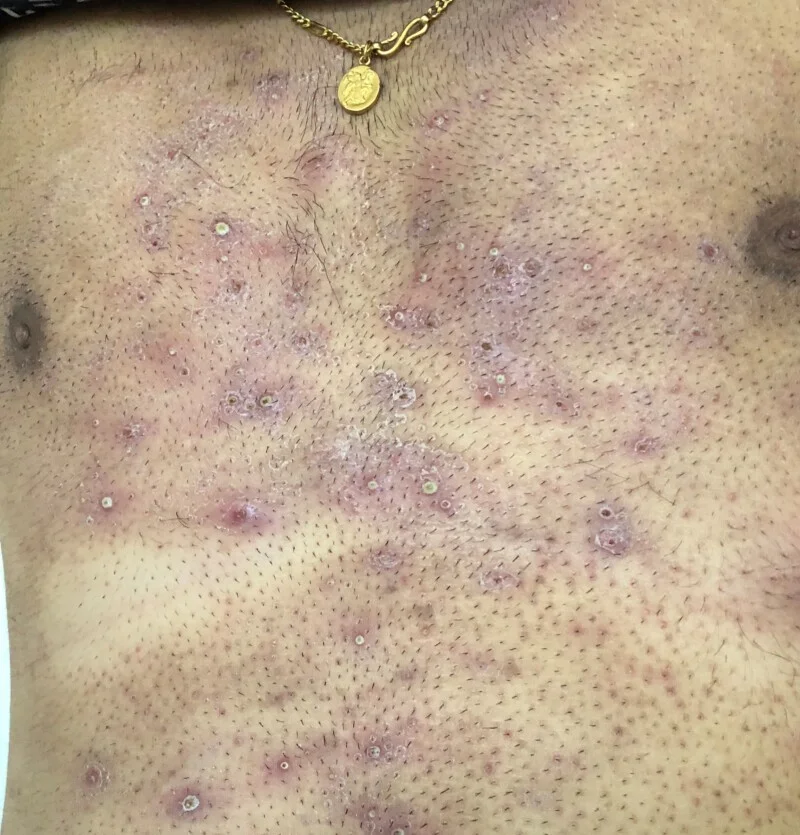
Long description
A clinical photograph of folliculitis after shaving, showing multiple erythematous pustules around hair follicles.

CKS advises that acne affects skin with a high density of pilosebaceous glands, mainly the face, chest and back, and that comedones must be present for the diagnosis to be made [3]. If comedones are absent, reconsider the diagnosis. Typical lesions are:
- Non-inflammatory: open comedones (blackheads) and closed comedones (whiteheads).
- Inflammatory: erythematous papules and pustules.
- Deep: nodules and cysts, often painful.
- Scarring: atrophic "ice-pick" scars, rolling scars, hypertrophic or keloid scars.
- Pigmentary change: post-inflammatory hyperpigmentation, especially in darker skin.
Mild acne is predominantly non-inflammatory with few inflammatory lesions; moderate acne is more widespread with increased inflammatory papules and pustules; severe acne has widespread inflammatory lesions, nodules or cysts, sometimes with scarring [3].
- Map lesions by type and site; count inflammatory lesions and nodules rather than estimating severity.
- Look for acne mechanica under helmets and straps.
- Examine women with persistent or relapsing acne for signs of hyperandrogenism (hirsutism, acne along the jawline and lower cheeks, alopecia) and for features of PMOS.
- Inspect for scarring and pigment change; these alone can justify earlier escalation.
- Ask directly about psychological impact, including anxiety, depression and suicidal ideation, because this is as much a clinical feature as the lesions.
Red flags are [1]:
- Acne fulminans: sudden onset of inflammatory nodules and ulcers with systemic features such as fever, arthralgia, myalgia or malaise.
- Nodulo-cystic or conglobate acne: deep, interconnected lesions with scarring.
- Severe psychosocial distress, especially with suicidal thoughts, linked to the acne.
Folliculitis presents as small pustules or papules, often with a hair in the centre, on hair-bearing skin. Itching or mild burning is common. Pseudomonal folliculitis often follows hot tub use and has a pustule with a surrounding erythematous halo. Malassezia folliculitis produces monomorphic, very itchy pustules on the trunk and shoulders and often fails to respond to antibacterial acne therapy. Deeper folliculitis becomes a furuncle; clusters of furuncles form a carbuncle, most often caused by S. aureus.
The patient is usually a young adult with pain, swelling and intermittent discharge in the natal cleft. Examination with the patient prone shows:
- Pits or enlarged pores in the midline natal cleft.
- A tuft of hair emerging from a pit.
- Erythema, swelling or an abscess at the sacrococcygeal area.
- Long-standing disease may show multiple secondary openings and granulating sinus tracts.
- Perianal pilonidal disease exists but is rare and can be confused with fistula-in-ano.
Acne is a clinical diagnosis in the great majority of patients. CKS notes that most people with acne need no investigations [3]. Blood tests are not diagnostic; hormones are reserved for patients with features of hyperandrogenism or treatment-resistant adult female acne.
| Condition / severity | Diagnostic cut-off or defining feature | Clinical notes |
|---|---|---|
| Acne vulgaris (general) | Comedones must be present | If absent, reconsider acneiform eruptions, rosacea or folliculitis [3] |
| Mild to moderate acne | Up to 34 inflammatory lesions; up to 2 nodules; predominantly non-inflammatory lesions | Topical first-line treatment; avoid antibiotics where possible [1] |
| Moderate to severe acne | 35 or more inflammatory lesions, or 3 or more nodules | Combination topical plus oral antibiotic, or other option containing an oral antibiotic [1] |
| Acne conglobata | Nodulo-cystic acne with interconnecting sinuses and abscesses | Refer to specialist dermatology [1] |
| Acne fulminans | Very serious variant with systemic symptoms | Urgent same-day referral to on-call hospital dermatology [1] |
| Folliculitis | Pustule or erythematous papule centred on a follicle; no comedones | Gram stain or cytology can identify cause; culture if recurrent [5] |
| Pilonidal disease | Pits, hair, sinus or abscess in the natal cleft | Usually clinical; imaging reserved for atypical, deep or perianal cases |
Investigations in acne are "as needed", not routine:
- Hormone studies only when there are clinical features of hyperandrogenism or treatment-resistant adult acne.
- Microbiology for atypical or treatment-resistant folliculitis, including smear or culture for Malassezia.
- Histology of any pilonidal sinus specimen excised, to exclude rare malignancy in chronic disease.
Where sources differ on grading, clinicians usually manage on the observed lesion count plus scarring and psychological impact rather than on a single score alone. NICE's cut-offs above are the operational ones for UK practice [1].
Approach to acne vulgaris
- Confirm acneComedones must be present; record inflammatory lesions, nodules, scars, pigment change and distress
- Assess severity and distributionFace, chest, back; note site difficult for topicals (such as the back)
- Question: Severity classification
Mild to moderate
- First-line topical for 12 weeksAdapalene plus benzoyl peroxide, tretinoin plus clindamycin, or benzoyl peroxide plus clindamycin; benzoyl peroxide monotherapy if retinoids or antibiotics are unsuitable
- Review at 12 weeksIf mild to moderate but not cleared, offer another table-1 option
Moderate to severe
- Topical combination plus oral antibioticAdapalene plus benzoyl peroxide with doxycycline 100 mg or lymecycline 408 mg daily, or azelaic acid plus antibiotic
- Review at 12 weeksIf not responding to oral antibiotic, consider referral to dermatology
Red flag
- Urgent referral the same dayAcne fulminans; nodulo-cystic or conglobate acne; dangerous psychosocial distress
- Question: Severe or scarring, refractory acne?
Yes
- Consider oral isotretinoinAge over 12 years; 0.5 to 1 mg/kg/day; cumulative 120 to 150 mg/kg; follow pregnancy prevention programme
No
- Maintenance and relapse planContinue tolerable topical; azelaic acid, adapalene or benzoyl peroxide as maintenance
NICE NG198 recommends skin care that reduces irritation and oil: use a non-alkaline (skin-pH neutral or slightly acidic) synthetic detergent cleanser twice daily; avoid oil-based and comedogenic moisturisers and sunscreens; remove make-up at the end of the day; and avoid repeated picking or scratching, which increase scarring [1]. AAD guidance places similar emphasis on multimodal therapy and skin care [2].
NICE NG198 offers one of the following as a 12-week first-line course, taking account of severity, preferences and safety, in a shared decision [1]:
- Fixed combination adapalene plus benzoyl peroxide, once daily in the evening, for any severity.
- Fixed combination tretinoin plus clindamycin, once daily in the evening, for any severity.
- Fixed combination benzoyl peroxide plus clindamycin, once daily in the evening, for mild to moderate acne.
- Fixed combination adapalene plus benzoyl peroxide plus oral lymecycline or doxycycline, for moderate to severe acne.
- Azelaic acid plus oral lymecycline or doxycycline, for moderate to severe acne.
Concentrations used in these combinations are [1]:
- Adapalene 0.1% or 0.3% with benzoyl peroxide 2.5%. [1]
- Tretinoin 0.025% with clindamycin 1%. [1]
- Benzoyl peroxide 3% or 5% with clindamycin 1%. [1]
- Adapalene monotherapy 0.1%.
- Azelaic acid 15% or 20%. [1]
- Benzoyl peroxide monotherapy 5%.
Doses for the oral antibiotics are 408 mg lymecycline daily or 100 mg doxycycline daily [1]. NICE NG198 also allows replacement of a tetracycline with trimethoprim or an oral macrolide (for example erythromycin) when tetracyclines are contraindicated or poorly tolerated [1].
These NICE options are broadly consistent with the AAD 2024 guideline, which gives strong recommendations for benzoyl peroxide, topical retinoids, topical antibiotics and oral doxycycline, and conditional recommendations for clascoterone, salicylic acid, azelaic acid, oral minocycline, sarecycline, combined oral contraceptive pills and spironolactone [2]. AAD 2024 also recommends combining topical therapies with multiple mechanisms of action, limiting systemic antibiotic use and combining systemic antibiotics with topical therapy as good practice statements [2]. The BAD partnered with NICE in developing NG198, so its recommendations are reflected in the NICE guidance above [1].
Important prescribing rules that reduce resistance and harm [1]:
- Do not use topical antibiotic monotherapy, oral antibiotic monotherapy, or a combination of topical plus oral antibiotic.
- Systemic antibiotics should be given with benzoyl peroxide and topical therapy, and reviewed regularly.
- Positive effects from a course usually take 6 to 8 weeks to become noticeable, so patients need this expectation and support with adherence. [1]
- Review at 12 weeks; if the acne has completely cleared in a person on oral antibiotics, consider stopping the antibiotic and continuing topical treatment.
- If acne has improved but not cleared, oral antibiotics may be continued with topical treatment for up to 12 further weeks. [1]
- Antibiotic-containing treatment should usually not continue beyond 6 months; review at least 3-monthly and stop as soon as possible. These limits exist because of antimicrobial resistance. [1]
Topical retinoids (adapalene, tretinoin, and tazarotene where available) are comedolytic and anti-inflammatory; they address two of the main pathogenic steps, follicular plugging and inflammation. CKS identifies their principal adverse effects as local irritation, dryness and photosensitivity, and advises caution with concomitant irritants [3]. Benzoyl peroxide is antibacterial and comedolytic but bleaches fabrics and hair and can irritate. Azelaic acid is comedolytic and anti-inflammatory and is often better tolerated in sensitive or darker skin; it is a conditional AAD recommendation [2].
To reduce irritation, NICE advises starting with alternate-day or short-contact application, for example washing off after an hour, then increasing to standard use as tolerated [1]. Retinoids and benzoyl peroxide should not be applied to the periocular skin or mucous membranes. NICE states that topical retinoids and oral tetracyclines are contraindicated in pregnancy and when planning pregnancy; people with childbearing potential using these drugs must use effective contraception or choose an alternative [1].
For women with persistent acne, hormonal therapy reduces sebum. NICE NG198 gives a specific pathway for people with PMOS: treat the acne first with a first-line option, then if this is not effective consider adding ethinylestradiol with cyproterone acetate (co-cyprindiol) or an alternative combined oral contraceptive pill; review co-cyprindiol at 6 months and discuss continuation or alternatives [1]. AAD 2024 gives a conditional recommendation for combined oral contraceptive pills and spironolactone [2].
NICE also states that if a person with acne wishes to use hormonal contraception, the combined oral contraceptive pill should be considered in preference to the progestogen-only pill when oral isotretinoin is likely to be used [1]. Spironolactone is widely used off-label for women with persistent acne; initiate and monitor with attention to pregnancy contraindication, hyperkalaemia risk factors and drug interactions, following local formularies. The evidence for hormonal antiandrogens in men is not established in these guidelines.
Oral isotretinoin is the most effective drug for severe acne but is reserved for people older than 12 years with severe forms that are resistant to adequate courses of standard therapy with systemic antibiotics and topical therapy, such as nodulo-cystic acne, acne conglobata, acne fulminans or acne at risk of permanent scarring [1]. MHRA requirements mean that adequate standard therapy must have been tried before isotretinoin, so early treatment choices should be made with this future possibility in mind [1].
NICE prescribing rules are [1]:
- Standard daily dose 0.5 to 1 mg/kg. [1]
- Reduced daily dose less than 0.5 mg/kg for people at increased risk of, or experiencing, adverse effects. [1]
- Continue until a total cumulative dose of 120 to 150 mg/kg is reached, but consider stopping sooner if there has been an adequate response and no new lesions for 4 to 8 weeks. [1]
- Add a course of oral prednisolone if an acne flare occurs after starting isotretinoin; consider prednisolone when starting isotretinoin in acne fulminans to prevent flare. [1]
Safety rules are non-negotiable. Topical retinoids and oral tetracyclines are contraindicated in pregnancy and when planning pregnancy; isotretinoin causes serious harm to a developing baby if taken during pregnancy [1]. People with the potential to become pregnant who may need isotretinoin must follow the MHRA pregnancy prevention programme and sign an acknowledgement of risk form, and they need reliable contraception. Combined oral contraception is usually preferred to progestogen-only contraception in this setting [1]. Isotretinoin is also associated with neuropsychiatric and sexual side effects, so NICE recommends counselling, baseline and ongoing mental health and sexual function assessment, and a low threshold to refer for mental health support before or during treatment [1]. Monitoring, laboratory follow-up and accredited prescribing are mandatory under the MHRA guidance, so oral isotretinoin should not be started in primary care outside the specified pathways.
Maintenance treatment is not always necessary after successful treatment, but it is useful for people with a history of frequent relapse. NICE suggests a fixed combination of topical adapalene and benzoyl peroxide for maintenance, or monotherapy with adapalene, azelaic acid or benzoyl peroxide if the combination is not tolerated or contraindicated, and review after 12 weeks [1]. Relapse after first-line treatment can be treated with another 12-week course of the same or an alternative option. Relapse after isotretinoin that is currently mild to moderate is treated with table-1 options; moderate to severe relapse after isotretinoin may need retreatment or re-referral [1].
Photodynamic therapy may be considered in people aged 18 years and over with moderate to severe acne when other treatments are ineffective, not tolerated or contraindicated [1]. Low-dose oral corticosteroids as an adjunct to isotretinoin have been considered for severe inflammatory acne flares [1]. Comedone extraction, chemical peels and laser or light treatments are adjuncts rather than first-line therapy.
- Same day for acne fulminans.
- Specialist dermatology for diagnostic uncertainty, acne conglobata, nodulo-cystic acne, scarring, pigmentary change that persists, or significant psychological distress.
- Consider referral for mild to moderate acne unresponsive to 2 completed courses, or moderate to severe acne not responding after oral antibiotic. [1]
- Refer for scarring management when acne-related scarring is severe and persists a year after the acne has cleared.
Management depends on cause and severity, and most mild cases resolve with general measures.
- Skin hygiene: gentle cleansing; avoid occlusive oils and greasy pomades; change out of sweaty clothing; reduce friction.
- Localised bacterial folliculitis: antiseptic washes (chlorhexidine) and topical antibacterial or antibiotic preparations according to local formulary; warm compresses.
- Extensive or recurrent bacterial disease: consider short-course oral antibiotics guided by culture; seek and treat S. aureus carriage when recurrent.
- Fungal (Malassezia) folliculitis: responds to topical or oral antifungals; antibacterial acne drugs are ineffective.
- Pseudomonal folliculitis: usually self-limited; manage hydration and hygiene; escalate if systemic.
- Severe nodes or abscesses: incision and drainage, with systemic antibiotics when indicated.
- Associated conditions such as eosinophilic pustular folliculitis or folliculitis decalvans need specialist care.
There are no NICE NG198 doses specific to folliculitis; use local formularies and microbiology guidance.
Management follows the anatomy and chronicity rather than a single drug.
- Acute abscess: incision and drainage plus analgesia; antibiotics only if there is surrounding cellulitis or systemic upset.
- Chronic disease: simple excision or fistulotomy with marsupialisation, local flap procedures, or other closure techniques, chosen by the surgeon; postoperative care focuses on wound hygiene and hair control.
- Conservative care: sitz baths, dressings, hair removal and hygiene may control minor disease.
- Prevention of recurrence: meticulous hygiene, hair removal from the natal cleft and surrounding area (shaving or laser hair removal), and weight management; reduce prolonged sitting and friction where possible.
- Histology should be performed on excised tissue in chronic disease.
The evidence for choosing among operations varies by recurrence and healing time; recurrence is common if hair control is neglected.
- Scarring (atrophic and hypertrophic) and post-inflammatory hyperpigmentation.
- Psychological morbidity: anxiety, depression, reduced self-esteem, social withdrawal and suicidal ideation.
- Secondary infection of nodules and, rarely, severe nodulo-cystic and conglobate disease.
- Gram-negative folliculitis during long-term systemic antibiotic therapy.
- Rare severe variants (acne fulminans, pyoderma faciale) [1].
- Progression to furuncle, carbuncle or cellulitis.
- Post-inflammatory pigment change and scarring.
- Permanent hair loss in folliculitis decalvans.
- Recurrent abscess, chronic sinus discharge, pain and reduced mobility.
- Rare longstanding squamous cell carcinoma in neglected chronic disease.
Acne vulgaris usually improves over time, but it can persist for years and may leave permanent scars. Longer duration and greater severity increase scarring risk [1]. Folliculitis is usually benign and self-limited, though it may recur with friction, sweating or microbial carriage. Pilonidal disease can be cured surgically, but recurrence is common without hair and hygiene control. Psychological prognosis is improved by early, effective treatment and reassurance.
- Acne: acne-friendly skin care, avoidance of comedogenic products, early effective treatment to prevent scars, and mood screening. Diet-specific advice is not supported by evidence [1].
- Folliculitis: reduce friction, sweat, occlusion and irritant shaving; treat predisposing skin diseases.
- Pilonidal disease: keep the natal cleft clean, remove hair, avoid prolonged pressure and consider weight management.
There is no population screening programme for any of these disorders; clinical vigilance and accurate diagnosis at first presentation are the preventive tools.
Pregnancy changes skin care and prescribing. Topical retinoids and oral tetracyclines are contraindicated in pregnancy and when planning pregnancy; isotretinoin is teratogenic [1]. NICE advises that the benzoyl peroxide plus clindamycin combination can be used with caution in pregnancy and breastfeeding, and that pregnancy planning must be discussed before retinoid or tetracycline use [1]. NICE also recommends considering combined oral contraceptive approaches before isotretinoin where appropriate [1]. For pilonidal abscess in pregnancy, drainage and good analgesia take precedence and surgery is deferred where possible.
AAD 2024 applies to patients aged 9 years and over [2]. Infantile and paediatric acne are uncommon and should prompt assessment for underlying endocrine causes. Avoid tetracyclines in children under 12 years. Isotretinoin is only for those older than 12 years [1]. Folliculitis in children may be caused by friction, Malassezia or bacterial infection; pilonidal disease occurs from adolescence onward.
Acne is uncommon as a new diagnosis in older adults and usually reflects drug-induced or endocrine causes. Folliculitis may worsen with chronic disease, diabetes or immunosuppression. Pilonidal disease in older adults is more likely to be chronic or to present with abscess.
When few treatments or tests are available, priorities are:
- Make the diagnosis clinically; comedones and lesion distribution are sufficient for acne.
- Start with benzoyl peroxide where affordable, plus non-irritating skin care; add topical clindamycin only if resistance is not a problem and access allows.
- Reserve oral antibiotics for clear moderate to severe disease, and avoid prolonged courses.
- Avoid retinoids and isotretinoin where reliable contraception and monitoring are unavailable; if isotretinoin must be used, ensure the pregnancy prevention programme is followed.
- Treat folliculitis with appropriate cleansing, antiseptics and targeted antibiotics chosen from local formularies and susceptibility.
- Drain pilonidal abscess promptly and teach hygiene and hair control.
- Refer promptly for any abscess, systemic illness, scarring acne, or psychological distress.
| Condition | What separates it |
|---|---|
| Acne vulgaris | Comedones are required; polymorphous mixture of comedones, papules, pustules, nodules; face/chest/back |
| Acneiform eruption | Acne-like papulopustules but no comedones; often drug-induced or due to Malassezia |
| Rosacea | No comedones; central facial redness and flushing, telangiectasia, ocular symptoms |
| Perioral dermatitis | Small papules around mouth, nose or eyes with spared lip margin; no comedones |
| Folliculitis | Pustules centred on individual follicles; may follow shaving, hot tubs or occlusion; no comedones |
| Pilonidal disease | Natal cleft pits, hair, sinus or abscess; not facial, no comedones |
Acne must be distinguished from conditions that can mimic it. CKS reminds clinicians that comedones must be present for acne, and that absent comedones should raise alternative diagnoses [3]. The AAD guideline is a disease-focused skin guideline and does not apply to acneiform drug eruptions [2].
Exam trapNo comedones, not acne
An eruption of uniform papules and pustules without comedones is usually folliculitis, an acneiform eruption or rosacea, not acne vulgaris. Check the drug history and the distribution.
Clinical pearlIsotretinoin only after standard therapy
NICE does not consider isotretinoin before adequate courses of systemic antibiotics and topical therapy. Plan initial treatment with that requirement in mind.
Red flagSame-day referral
Acne fulminans needs urgent specialist review within 24 hours. It can present with fever, arthralgia and sudden ulcerative nodules.
- Acne vulgaris is a chronic inflammatory disease of the pilosebaceous unit. Comedones are required for the diagnosis.
- Severity is practical: mild to moderate is up to 34 inflammatory lesions and up to 2 nodules; moderate to severe is 35 or more inflammatory lesions or 3 or more nodules.
- NICE NG198 and AAD 2024 both support benzoyl peroxide, topical retinoids and combination therapy; AAD 2024 gives strong recommendations for benzoyl peroxide, topical retinoids, topical antibiotics and oral doxycycline.
- Oral antibiotics should always be combined with topical therapy, especially benzoyl peroxide, and limited in duration because of resistance.
- Retinoids and tetracyclines are contraindicated in pregnancy and when planning pregnancy; isotretinoin is teratogenic and requires the MHRA pregnancy prevention programme.
- Isotretinoin dosing is 0.5 to 1 mg/kg/day to a cumulative 120 to 150 mg/kg, with dose reduction if adverse effects. [1]
- Referral is needed for acne fulminans, conglobate or nodulocystic acne, scarring, persistent pigmentary change, or significant psychological distress.
- Folliculitis may be bacterial, fungal, viral or non-infectious; identify and treat the cause.
- Pilonidal disease is a natal-cleft sinus caused by embedded hair; drainage, surgery and hair control are its treatments.
- Prevention focuses on skin care, avoiding comedogenic products, reducing friction and early treatment to prevent scarring.
- Psychological impact is part of the condition and should be assessed directly.
Answer each one in your head first, then open the answer.
A 17-year-old woman has 28 inflammatory facial lesions and 1 nodule. What severity does NICE NG198 assign, and what first-line treatment should be offered?
Show answerHide answer
Mild to moderate acne. NICE counts up to 34 inflammatory lesions and up to 2 nodules as mild to moderate. Offer a 12-week first-line course such as adapalene with benzoyl peroxide, tretinoin with clindamycin, or benzoyl peroxide with clindamycin, depending on preference and tolerance.
Why is Gram-negative folliculitis more likely in someone who has taken oral antibiotics for acne for many months?
Show answerHide answer
Long-term systemic antibiotics alter skin flora. Gram-negative organisms can overgrow in the follicles, producing folliculitis that does not respond to standard antibacterial acne treatment and may need culture-directed therapy.
A 22-year-old man now has painful nodules and fever 2 weeks after starting isotretinoin. What has happened and what should be added?
Show answerHide answer
He has an acne flare. NICE recommends considering a course of oral prednisolone for an acne flare that occurs after starting isotretinoin, with dermatology review and psychological assessment.
Which feature is required before a diagnosis of acne vulgaris can be made?
Show answerHide answer
The presence of comedones. If comedones are absent, other diagnoses such as rosacea, folliculitis or an acneiform eruption should be considered.
A pregnant patient with moderate acne asks for treatment. Which first-line option from NICE is most suitable?
Show answerHide answer
A topical combination such as benzoyl peroxide with clindamycin can be used with caution. Topical retinoids and oral tetracyclines are contraindicated in pregnancy, and oral isotretinoin is teratogenic, so the risks and options must be discussed and documented.
A young driver presents with intermittent discharge and midline pits in the natal cleft. What is the most likely diagnosis, and what non-surgical measures help prevent recurrence?
Show answerHide answer
Pilonidal disease. Hair removal, hygiene of the natal cleft and avoidance of prolonged sitting and friction reduce recurrence.
Seborrhoeic dermatitis; hormonal disorders and PMOS management; acne scarring; mental health and acne; skin of colour considerations in acne.
- National Institute for Health and Care Excellence. Acne vulgaris: management (NICE guideline NG198). NICE; published 2021, last updated 03 August 2026. Accessed .
- Reynolds RV, Yeung H, Cheng CE, et al. Guidelines of care for the management of acne vulgaris. J Am Acad Dermatol 2024;90(5):1006.e1-1006.e30. Accessed .
- NICE. Acne vulgaris (NICE Clinical Knowledge Summaries). CKS; last revised February 2026. Accessed .
- Saleh HM, Masood S, Sutaria AH, Schlessinger J. Acne vulgaris (StatPearls). StatPearls [Internet]. Treasure Island (FL): StatPearls Publishing; 2026. Accessed .
- Winters RD, Mitchell M. Folliculitis (StatPearls). StatPearls [Internet]. Treasure Island (FL): StatPearls Publishing; 2023. Accessed .
- Nixon AT, Garza RF. Pilonidal cyst and sinus (StatPearls). StatPearls [Internet]. Treasure Island (FL): StatPearls Publishing; 2023. Accessed .
Figure credits
Educational content for medical students and doctors. It is not a substitute for clinical judgement or local guidelines.