Atopic dermatitis
Chronic, relapsing, itchy inflammation of the skin: barrier failure, Th2 inflammation, diagnosis, stepwise treatment, and complications such as eczema.
- Atopic dermatitis (eczema) is a chronic, relapsing, itchy inflammation of the skin. It starts with a weakened skin barrier and a skewed immune response dominated by T helper 2 (Th2) cells.
- It is the commonest chronic inflammatory skin disease, usually starting in infancy; most children have their first signs in early life.[2]
- The two big ideas to hold are barrier failure (classically linked to filaggrin) and the atopic march (eczema leading on to food allergy, allergic rhinitis and asthma).[4]
- Diagnosis is clinical. In children, NICE CG57 uses an itchy rash plus 3 or more of 5 listed features.[1]
- Treatment is stepwise: emollients every day for everyone, then topical corticosteroids matched to severity, then topical calcineurin inhibitors, then systemic or biologic therapy for severe disease.[1][3]
- A medical emergency in this topic is eczema herpeticum: widespread painful clustered blisters that need systemic aciclovir and same-day specialist advice.[1]
By the end of this page you should be able to:
- Explain why atopic dermatitis is both a barrier disease and an immune disease, and how filaggrin and the atopic march fit together.
- Describe the age pattern of eczema and the typical distribution in infants, children and adults.
- Apply the NICE CG57 clinical diagnostic criteria and assess severity holistically.
- Choose and explain a stepwise treatment plan: emollients, topical corticosteroids by potency, topical calcineurin inhibitors, phototherapy and systemic therapy including dupilumab and JAK inhibitors.
- Recognise eczema herpeticum and secondary infection and arrange the right immediate management.
- Distinguish atopic dermatitis from scabies, psoriasis, contact dermatitis, impetigo and other look-alikes.
DefinitionAtopic dermatitis
The disease is defined clinically, not by a blood test. There is no single biomarker or histological feature that proves it; total immunoglobulin E (IgE) and specific IgE tests may be raised, but they only support a picture that the clinician builds from the history and skin examination. The 2023 American Academy of Dermatology (AAD) guideline on topical therapies in adults found strong evidence for moisturisers, topical corticosteroids (TCS), topical calcineurin inhibitors (TCI), topical phosphodiesterase-4 inhibitors and topical Janus kinase (JAK) inhibitors, and recommended against routine topical antimicrobials, antiseptics and antihistamines.[3]
Clinicians use simple categories because they drive treatment:
- Age at presentation: infantile (usually under 2 years), childhood and adult/adolescent. The same disease changes its sites as the child grows. [1]
- Severity: clear, mild, moderate or severe, assessed on the skin (redness, dryness, thickening, oozing, bleeding) and on quality of life (sleep, daily activities, psychosocial impact). NICE CG57 (section 1.2.1.1) treats these two dimensions separately, because severe eczema and severe life impact do not always match.[1]
- Distribution: flexural (elbows, knees, neck, wrists, ankles), extensor in infants and (in some children) in people of Asian, Black Caribbean or Black African ancestry, facial, hand or generalised.
- Complicated versus uncomplicated: with or without secondary infection, eczema herpeticum, erythroderma or a key differential diagnosis.
Atopic dermatitis usually develops in infancy.[2] It is a lifelong, relapsing condition for many people, although NICE CG57 advises children and carers that the condition often improves with time, not all children grow out of eczema, and it may worsen in teenage or adult life.[1] It coexists with other IgE-associated disorders, including allergic rhinitis, asthma and food allergy, which is the clinical basis of the atopic march.[2][4]
Regional figures from recent international studies are not cited here beyond the source statements above; published point prevalences vary widely with age, country and case definition, and the safest teaching point is that eczema is one of the most common chronic diseases of childhood worldwide, with a sustained rise reported over recent decades.[2]
The cause is multifactorial. Inherited barrier defects and environmental triggers both matter, and neither alone explains the disease.
- Filaggrin (FLG) loss-of-function mutations are among the most consistently identified genetic risk factors. FLG encodes a structural protein that is essential for epidermal barrier integrity. When it is deficient, trans-epidermal water loss rises and allergens penetrate the skin more easily.[4]
- FLG mutations are neither necessary nor sufficient: many carriers never develop eczema. Disease severity varies, so genetics alone does not determine who gets sick.[4]
- Family history of atopy: a first-degree relative with asthma, allergic rhinitis or eczema. The NICE CG57 diagnostic criteria include "history of atopic disease in a first-degree relative of children aged under 4 years".[1]
- Other risk factors commonly quoted in the literature: urban living, smaller family size, higher socioeconomic status in some studies, early antibiotic use and altered skin and gut microbiomes. These are associations rather than proven causes; the value of each is debated.
- Environmental modulation: epigenetic changes driven by microbial exposure, diet, antibiotics and pollutants appear to modulate barrier and immune genes, including FLG, and help explain why genetically similar individuals differ in phenotype.[4]
Atopic dermatitis is best understood as a loop between a leaky barrier and an overactive immune system.
- Barrier failure. The stratum corneum loses its ability to hold water and exclude irritants and allergens. Reduced FLG expression is one mechanism; Th2 cytokines such as interleukin-4 (IL-4) and IL-13 can further repress FLG, loricrin and involucrin, so inflammation itself worsens the barrier.[4]
- Sensitisation through the skin. Allergens and microbes cross the damaged barrier and activate keratinocytes, which release alarmins such as thymic stromal lymphopoietin (TSLP) and IL-33. These drive dendritic cells to promote a Th2 immune response.[4]
- Th2 inflammation. Th2 cytokines (IL-4, IL-5, IL-13) produce IgE class switching, eosinophil recruitment, itch and inflammation. IL-31 is a major itch cytokine in eczema.
- Itch-scratch cycle. Itch leads to scratching, which damages the barrier further, admits more allergens and microbes, and sustains inflammation. Lichenification (skin thickening) is the physical footprint of chronic scratching.
- The atopic march. Barrier vulnerability and epicutaneous sensitisation in infancy are thought to set up immune responses that later present as food allergy, allergic rhinitis and asthma.[4]
So treatment works on both arms: repair the barrier (emollients) and dampen the immune drive (anti-inflammatories).
Figure 1Atopic dermatitis child 1
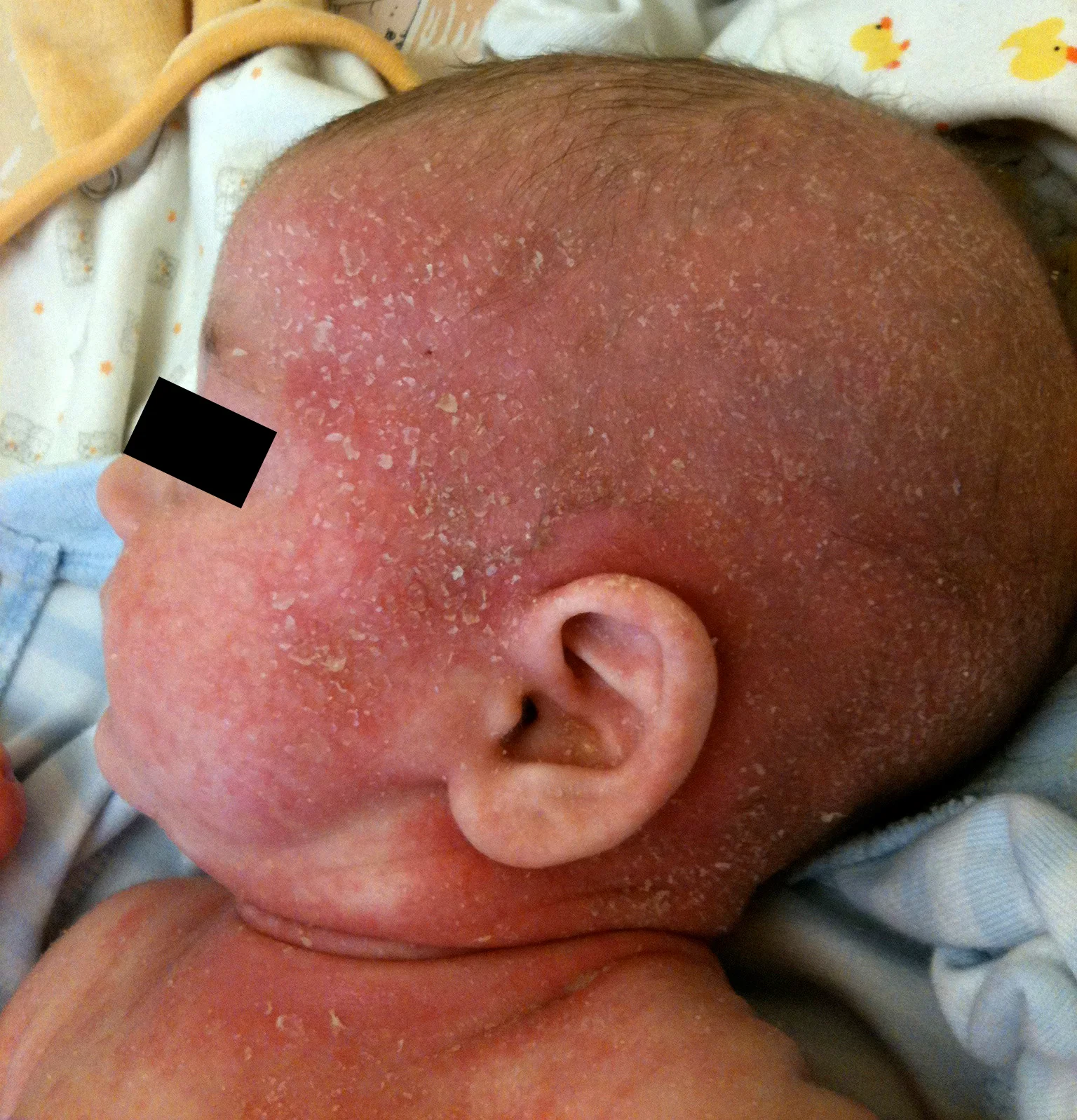
Long description
Inflamed atopic dermatitis on the head of a 2-month-old child.

Figure 2Atopy2010
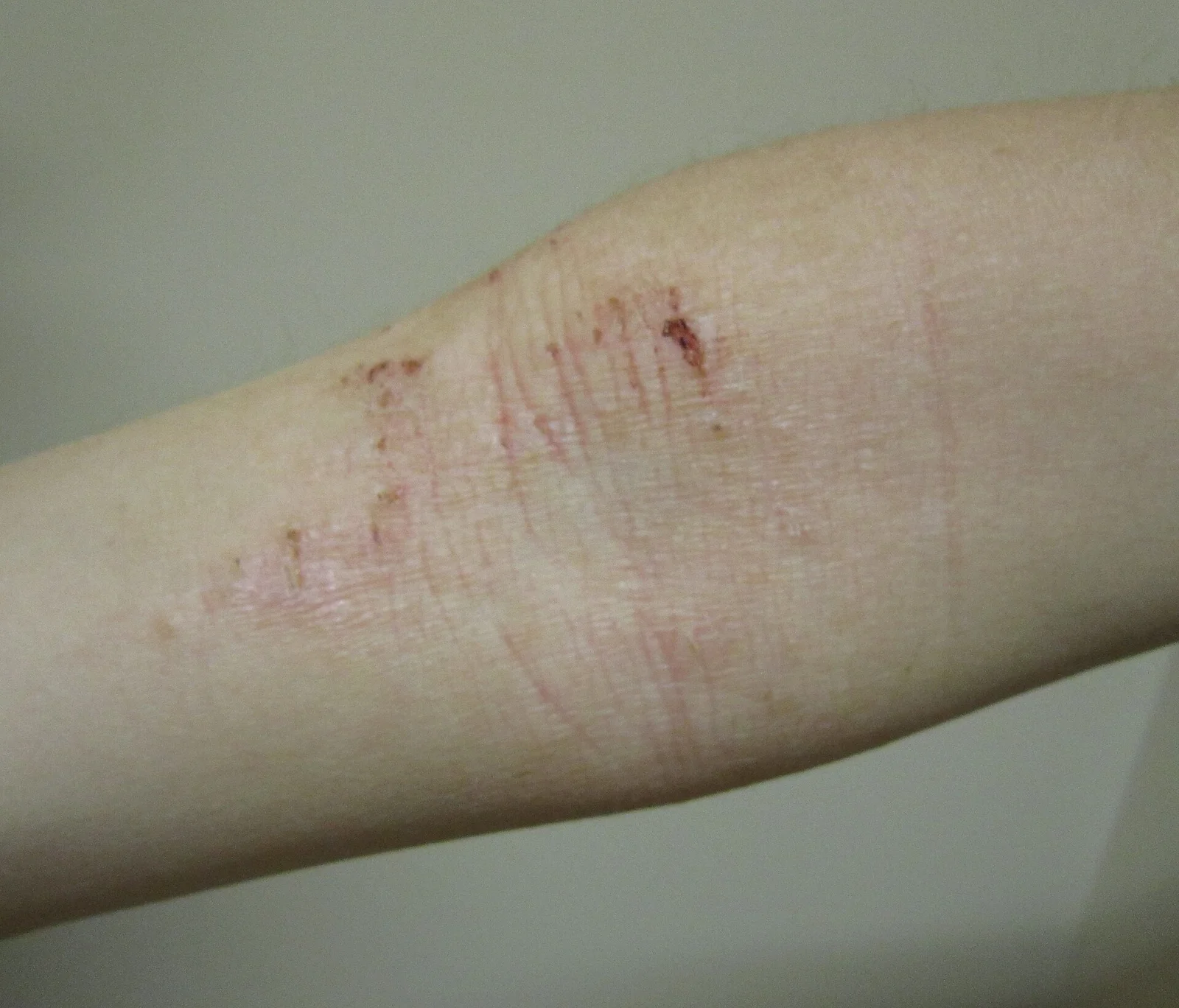
Long description
Clinical photograph captioned "Atopy of the flexure crease of the elbow" showing atopic dermatitis in an elbow flexure.

- Pruritus (itch) is the defining symptom. In infants it may appear as irritability, rubbing and disturbed sleep rather than a stated itch.
- Dry skin (xerosis) is almost universal and often predates visible eczema.
- Eczematous rash: red, scaly, sometimes oozing or weeping, with scratch marks. In coloured skin the rash may be brown, grey or purple rather than bright red, and inflammation can be harder to see; follicular (around hair follicles) and discoid (coin-shaped) patterns are more common in Asian, Black Caribbean and Black African children.[1]
- Sleep disturbance is a major marker of severity and family impact.
- Flares and triggers: soaps, detergents, wool, sweat, heat, cold, friction, infection, stress and allergens.
- Personal or family atopy: asthma, hay fever, food allergy.
- Impact on quality of life: school attendance, self-esteem, family stress.
Age changes where eczema appears:
- Infants (birth to about 2 years): cheeks, forehead, scalp, trunk; the napkin area is often spared; extensor surfaces (backs of limbs) rather than flexures.
- Children: flexural eczema in the elbow and knee creases, behind the ears, on the wrists and ankles; lichenification from rubbing.
- Adults: flexural disease still, but also head and neck, hands (often occupational or irritant), eyelids and sometimes generalised. Lichenification and dry, cracked skin are common.
Signs to look for:
- Dryness, scaling, erythema, excoriations (scratch marks), fissuring and lichenification.
- ** Dennie-Morgan folds**: extra lines under the lower eyelids.
- Hyperlinear palms: very prominent palmar skin creases.
- Pityriasis alba: pale scaly patches, often on the face.
- Signs of secondary infection: honey-coloured crusts, pustules, weeping (bacterial); clustered vesicles or punched-out erosions (herpetic); scaling and satellite lesions (fungal).
Diagnosis is clinical. NICE CG57 gives a practical rule for children: an itchy skin condition plus 3 or more of the listed features.[1] No laboratory test is diagnostic; tests are used to support the diagnosis, find triggers or exclude mimics.
| Criterion | Key points |
|---|---|
| Itchy skin condition | Prerequisite. In infants this may present as irritability and sleep disturbance. |
| Visible flexural dermatitis (or cheeks/extensors in infants 18 months or under) | Skin creases such as elbows and knees. |
| Previous flexural dermatitis (or cheeks/extensors in infants 18 months or under) | Past flares count. |
| Dry skin in the last 12 months | Patient-reported and on examination. |
| Asthma or allergic rhinitis (or atopic disease in a first-degree relative if child under 4 years) | Captures the atopic background. |
| Onset under age 2 years (not used under age 4 years) | Age-related onset marker. |
Atopic dermatitis needs few investigations. The table lists the tests that are used in practice, and what each result means.
| Test | When it is used | What the result means |
|---|---|---|
| Skin (age-appropriate) examination | Every consultation | Severity scoring: clear, mild, moderate, severe. |
| Bacterial culture / swab | Suspected secondary infection | Staphylococcus aureus colonisation or infection; guides antibiotic choice. |
| HSV PCR or viral swab | Suspected eczema herpeticum or local herpes | Herpes simplex virus as the cause of painful erosions. |
| Scabies scrape or dermatoscopy | Itch with burrows, atypical distribution | Excludes scabies, a common mimic. |
| Total serum IgE and specific IgE | Suspected atopy or food allergy work-up | May be raised; supports atopic background; a normal IgE does not exclude eczema. |
| Patch testing | Sudden worsening of previously stable eczema, or facial/hand eczema | Finds contact allergens such as fragrance, preservatives or topical drugs. |
| Skin biopsy | Diagnosis uncertain, to exclude psoriasis, cutaneous T-cell lymphoma or lichen planus | Shows spongiotic dermatitis acutely; chronic changes of lichenification; nonspecific. |
| Growth assessment (height, weight) | Children with moderate or severe disease | NICE CG57 recommends referral if growth is off the expected UK trajectory.[1] |
NICE CG57 (table 1 of the guideline) scores skin severity and quality-of-life impact separately, with clear, mild, moderate and severe categories for each.[1] It also suggests visual analogue scales (0 to 10) for severity, itch and sleep loss over the previous 3 days and nights, and validated tools such as the Patient-Oriented Eczema Measure (POEM) and the Children's Dermatology Life Quality Index (CDLQI), Infants' Dermatitis Quality of Life Index (IDQoL) or Dermatitis Family Impact (DFI) questionnaire.[1]
| Condition | Feature that separates it from atopic dermatitis |
|---|---|
| Scabies | Nocturnal itch, burrows, web spaces and genital area, household contacts affected. |
| Seborrhoeic dermatitis | Greasy yellow scale, scalp and nappy area in infants; often spares the flexures. |
| Psoriasis | Well-defined plaques with silvery scale, extensor predominance, nail pitting; less itch. |
| Irritant or allergic contact dermatitis | Sharp history of exposure; localised to site of contact; patch tests may be positive. |
| Impetigo | Honey-coloured crusts, localised bacterial infection, often starts on broken skin. |
| Tinea (ringworm) | Annular scaly plaque with central clearing; KOH or culture positive. |
| Pityriasis rosea | Herald patch, Christmas-tree distribution on trunk; self-limiting. |
| Cutaneous T-cell lymphoma (mycosis fungoides) | Persistent plaques in adults, often in non-sun-exposed areas; biopsy needed. |
| Lichen planus | Pruritic purple polygonal papules and plaques; Wickham striae on close inspection. |
| Eczema herpeticum | Painful clustered vesicles or punched-out erosions 1-3 mm, uniform, with fever and malaise. |
Stepwise approach to atopic dermatitis
- Suspected atopic dermatitisItchy skin + compatible history and examination
- Exclude or treat mimicsScabies, psoriasis, contact dermatitis, fungal infection
- Assess severity and impactSkin severity (clear/mild/moderate/severe) and quality of life (sleep, activities) as separate dimensions
- Identify triggers and infectionIrritants, allergens, secondary bacterial or viral infection
- Question: Severity category
Mild
- Emollients for the whole body every day, even when clearLarge quantities (250-500 g per week in children) prescribed for home and school
- Mild-potency topical corticosteroid to active areasOnce or twice daily; 7-14 days for flares; continue roughly 48 hours after symptoms settle
Moderate or severe
- Emollients plus matched-potency TCSModerate potency for moderate disease; potent for severe; face and neck stay mild except a 3-5 day moderate course for a severe facial flare
- If not controlled in 7-14 daysExclude bacterial/viral infection; children over 12 months may use potent TCS for up to 14 days away from face/neck
- Step up problem areas (especially face/neck) to topical calcineurin inhibitorsSecond-line, with specialist advice, from age 2 years in children; tacrolimus for moderate-severe, pimecrolimus for moderate facial/neck disease
Frequent flares
- Proactive maintenanceTopical corticosteroid on problem areas on 2 consecutive days per week once controlled; review within 3-6 months
- Wet wraps/bandagesShort-term add-on (7-14 days) for lichenified or flaring areas; specialist initiation
- Consider phototherapy or systemic therapyFor severe disease with significant quality-of-life impact after other options have failed, under specialist supervision
- Systemic and biologic therapyDupilumab or a JAK inhibitor for moderate-severe refractory disease; follow dosing and safety notes below
- Red flags and referralEczema herpeticum, severe infection, poor growth, uncertain diagnosis: specialist dermatology (same day for herpeticum)
NICE CG57 sets out a stepped ladder: emollients are the basis of management and should always be used, even when the skin is clear; management is then stepped up or down by severity.[1]
| Severity | Step options |
|---|---|
| Mild | Emollients; mild-potency topical corticosteroids. |
| Moderate | Emollients; moderate-potency topical corticosteroids; topical calcineurin inhibitors; bandages. |
| Severe | Emollients; potent topical corticosteroids; topical calcineurin inhibitors; bandages; phototherapy; systemic therapy. |
- Emollients are the foundation. Prescribe unperfumed leave-on emollients and offer a choice (one product for all uses, or a combination). In children, prescribe large quantities, 250 g to 500 g weekly, available at home, nursery, pre-school and school.[1] Apply to the whole body, even when the eczema is clear and alongside all other treatments, smoothing rather than rubbing in.[1] Emollient bath additives are not offered.[1]
- Washing. Use leave-on emollients or emollient soap substitutes instead of soaps and detergent washes; leave-on emollients can be added to bath water. Avoid anti-bacterial washes for routine care.[1][3]
- Trigger control. Identify and avoid irritants (soaps, detergents, shampoos, bubble baths), known allergens, extremes of heat or cold, and wool friction. Consider food allergy in young children with moderate or severe uncontrolled eczema plus gut symptoms or poor growth.[1]
- Bathing. The 2023 AAD guideline gives a conditional recommendation for bathing and wet wrap therapy as part of a general skin-care plan.[3]
- Education and adherence. Give verbal and written instruction, including practical demonstration, on how much to use, how often, stepping treatment up and down, and how to treat flares; reinforce at every visit.[1]
TCS remain the first-line anti-inflammatory treatment. Their benefit outweighs possible harm when they are applied correctly, and most harms come from prolonged or over-potent use on thin skin.[1]
NICE CG57 tailors potency to severity and site:[1]
- Mild potency for mild eczema; moderate potency for moderate; potent for severe.
- Mild potency on the face and neck, except a short (3 to 5 days) course of moderate potency for severe facial flares. [1]
- Moderate or potent preparations on vulnerable sites (axillae, groin) for short periods only (7 to 14 days). [1]
- Very potent preparations are not used in children without specialist dermatological advice.
- If mild or moderate potency has not controlled eczema within 7 to 14 days, exclude infection; children aged 12 months or over may use potent preparations for no longer than 14 days and not on the face or neck; if still uncontrolled, review the diagnosis and refer.[1]
Application rules from NICE CG57:[1]
- Apply TCS once or twice daily, only to areas of active eczema, or eczema active within the previous 48 hours.
- Treat a flare as soon as it appears and continue for about 48 hours after symptoms subside.
- Once control is achieved, problem areas may be treated with TCS on 2 consecutive days per week to prevent flares in children with frequent flares (2 or 3 per month), reviewing the strategy within 3 to 6 months. [1]
- If tachyphylaxis is suspected, consider an alternative TCS of the same potency.
- Dispense with potency class labels on the container (tube), not the outer box.
The 2023 AAD guideline supports TCS, with a strong recommendation, as part of adult AD topical therapy.[3]
Tacrolimus and pimecrolimus are second-line agents. NICE CG57, through the 2004 technology appraisal (TA82) that it incorporates, does not recommend TCIs for mild eczema or as first-line for any severity.[1]
- Tacrolimus is recommended for second-line treatment of moderate to severe atopic eczema in children aged 2 years and older not controlled by TCS, where further TCS use carries serious risk of adverse effects such as irreversible skin atrophy.[1] [5]
- Pimecrolimus is recommended second-line for moderate eczema on the face and neck in children aged 2 years and older not controlled by TCS, where further TCS carries the same risk.[1]
- Start treatment only with specialist dermatological advice after discussion of risks and benefits.[1]
- TCIs are applied only to areas of active eczema and are not used under occlusion (bandages or dressings) without specialist advice.[1]
- Where facial eczema needs frequent or long-term mild TCS, consider stepping up to a TCI.[1]
- The AAD 2023 guideline makes a strong recommendation for TCIs in adult AD.[3]
- Dupilumab prescribing information notes that topical calcineurin inhibitors may be used with the drug but should be reserved for problem areas only, such as the face, neck, intertriginous and genital areas.[5]
The 2023 AAD guideline gives strong recommendations for topical phosphodiesterase-4 (PDE-4) inhibitors and topical JAK inhibitors as part of adult AD topical therapy.[3] These include crisaborole (PDE-4) and ruxolitinib cream (topical JAK). The same guideline recommends against topical antimicrobials, antiseptics and antihistamines.[3]
Systemic treatment is reserved for severe disease with significant quality-of-life impact, after other options have failed or are inappropriate, under specialist dermatological supervision.[1]
Dupilumab is a human monoclonal antibody against the interleukin-4 receptor alpha subunit (blocking IL-4 and IL-13). Label indications and dosing for atopic dermatitis:[5]
- Adults: initial 600 mg by subcutaneous injection (two 300 mg injections), then 300 mg every 2 weeks.
- Age 6 months to 5 years: 200 mg (one 200 mg injection) every 4 weeks (body weight 5 to under 15 kg), or 300 mg every 4 weeks (15 to under 30 kg); no loading dose. [5]
- Age 6 to 17 years: 600 mg then 300 mg every 4 weeks (15 to under 30 kg); 400 mg then 200 mg every 2 weeks (30 to under 60 kg); 600 mg then 300 mg every 2 weeks (60 kg or more). [5]
- Indicated from 6 months of age for moderate-to-severe AD not adequately controlled with topical prescription therapy or when such therapy is not advisable; can be used with or without topical corticosteroids.[5]
- Practical cautions: avoid live vaccines during treatment, treat pre-existing helminth infections first, monitor for conjunctivitis and keratitis (patients should report new or worsening eye symptoms), and do not stop systemic, topical or inhaled corticosteroids abruptly.[5]
Janus kinase (JAK) inhibitors are oral options for refractory moderate-to-severe disease:
- Upadacitinib (RINVOQ): 15 mg by mouth once daily for patients aged 12 years or older weighing at least 40 kg and adults under 65; consider 30 mg once daily if the response is inadequate. Adults 65 years and older: 15 mg once daily. It is not recommended with other JAK inhibitors, biologic immunomodulators or other immunosuppressants, and not in severe renal or severe hepatic impairment.[7]
- Abrocitinib (CIBINQO): 100 mg by mouth once daily, rising to 200 mg once daily if the response to 100 mg is inadequate; 50 mg once daily is used with moderate renal impairment or in CYP2C19 poor metabolisers; not recommended with severe renal or severe hepatic impairment.[6]
- Both carry boxed warnings common to JAK inhibitors: serious infection, malignancy, major adverse cardiovascular events and thrombosis. Screen for tuberculosis and hepatitis before starting, and keep vaccinations up to date, avoiding live vaccines around treatment.[6][7]
Other systemic options: phototherapy (narrowband UVB) and, in specialist practice, ciclosporin, methotrexate and azathioprine. NICE CG57 keeps these for severe disease in children under specialist supervision; the NICE CG57 referral rules and the NICE CKS and BAD guidance apply to the setting in which they are used.[1][8][9]
- Eczema herpeticum is the most dangerous complication. It is widespread, often painful (or not in very young children) herpetic infection on eczematous skin: areas of rapidly worsening painful eczema, clustered blisters like early cold sores, and punched-out erosions 1 mm to 3 mm that are uniform. Fever, lethargy and distress may occur.[1]
- Treat with systemic aciclovir, plus systemic antibiotics if secondary bacterial infection is suspected, and refer for same-day specialist dermatological (and ophthalmological if periorbital) advice.[1]
- If a lesion is localised to a probable single herpes simplex cold sore, treat with oral aciclovir even if infection is localised.[1]
- Secondary bacterial infection (usually Staphylococcus aureus, sometimes Streptococcus) presents with weeping, pustules, crusts, fever, malaise and failure to respond to usual therapy. Treat guided by culture and local policy.[1]
- Exfoliative (erythrodermic) eczema, poorly controlled disease, and contact allergic dermatitis (suspect with persistent, facial or hand eczema) are other reasons to seek specialist advice.
- Refer urgently when severe eczema has not responded to optimal topical therapy after 1 week, or when infected eczema has not responded to treatment.[1]
The condition often improves with time, but not all children grow out of eczema and it may worsen again in teenage or adult life.[1] Children with atopic dermatitis often develop asthma and or allergic rhinitis.[1] Food allergy is sometimes associated, particularly in very young children.[1] Most patients can be managed with emollients and intermittent anti-inflammatory treatment; severe disease needs specialist care and sometimes lifelong follow-up.
- There is no screening test for atopic dermatitis. Diagnosis is clinical.
- The most reliable preventive strategy is skin-barrier care: regular emollients from infancy, avoidance of irritants and early treatment of flares to reduce inflammation-driven barrier damage.[1][3]
- Where a child's eczema is moderate or severe and uncontrolled, and there is suspected food allergy, referral for specialist investigation is appropriate.[1]
- Maternal diet changes in breastfeeding have unproven benefit; suspected food allergy in infants needs a supervised exclusion trial, not unsupervised restriction.[1]
- A small number of infants with moderate or severe eczema not controlled on optimal treatment may benefit from a trial of an extensively hydrolysed or amino-acid formula where cow's milk formula is in use, for 6 to 8 weeks, with specialist dietary advice.[1]
- NICE CG57 applies directly to children under 12 years. Diagnostic criteria, the stepped treatment ladder, emollient quantities, TCS potency limits by site, TCI age limits (2 years and over), aciclovir for herpes and referral rules all come from it.[1]
- Growth is monitored; poor growth trajectory is a referral trigger.[1]
- Potent TCS are not used in infants under 12 months without specialist supervision, and very potent TCS not without specialist advice.[1]
- Atopic dermatitis often persists or flares in pregnancy because of skin dryness and hormonal change. Management rests on emollients, appropriate TCS potency by site, and the safety notes for any systemic drug. Most topical agents are considered compatible with pregnancy at appropriate doses, but individual choices belong to the treating clinician and local maternity guidance. Biologic and JAK inhibitor therapy in pregnancy is guided by the product label and specialist input rather than by fixed rules in the sources used here.
- NICE CG57's predecessor concepts and the BAD and NICE CKS routes emphasise multidisciplinary care where systemic therapy is considered.[8][9]
- Older adults with refractory disease are treated with the same principles; dose reduction rules exist for some drugs. For example, upadacitinib dosing above the age of 65 is limited to 15 mg once daily.[7]
- Comorbidity, frailty, infection risk and skin atrophy are greater concerns than in younger adults; lower-potency TCS and generous emollient use are preferred, and systemic therapy decisions are made case by case.
- Most management is possible without advanced tests: recognise eczema clinically, start emollients in large quantities, match TCS potency to severity and site, avoid prolonged very-potent steroids, and identify eczema herpeticum early by its painful clustered vesicles or punched-out erosions with fever.[1]
- Dupilumab and JAK inhibitors, phototherapy and patch testing may not be available; referral to a skin or allergy service is then the best route.
The differential table above covers the main mimics. The three exam points to remember:
- Scabies itches at night and affects web spaces and genitals; eczema of the flexures spares these unless eczema overlap is present.
- Psoriasis has sharp borders and silvery scale on extensor surfaces; atopic dermatitis is poorly demarcated and flexural, with far more itch.
- Contact dermatitis starts where the offender touched, with a matching exposure history.
- Atopic dermatitis is a chronic, relapsing, pruritic inflammatory skin disease driven by a damaged barrier plus Th2 inflammation.[2]
- FLG loss-of-function mutations are a major genetic risk factor, but are not required to develop disease; inflammation itself represses barrier genes.[4]
- The atopic march links infantile eczema to later food allergy, allergic rhinitis and asthma.[4]
- Diagnosis is clinical; in children the NICE CG57 rule (itchy skin plus 3 of 5 features) applies.[1]
- Severity of skin and impact on life are scored separately.[1]
- Emollients are the foundation at every step: unperfumed, whole body, every day, in large quantities, with no bath additives.[1]
- TCS are first-line anti-inflammatories; potency is matched to severity and site, with facial/neck and vulnerable site limits.[1]
- TCIs are second-line, for problem areas (especially face/neck) in children 2 years and older not controlled by TCS, started with specialist advice.[1]
- Phototherapy and systemic therapy are reserved for severe disease under specialist supervision.[1]
- Dupilumab (from 6 months, with weight-based dosing) and JAK inhibitors (upadacitinib, abrocitinib, dosed by label) are effective modern options.[5][6][7]
- Eczema herpeticum needs systemic aciclovir, possible antibiotics and same-day specialist referral.[1]
- The AAD 2023 topical therapy guideline supports moisturisers, TCS, TCIs, topical PDE-4 and topical JAK inhibitors, and recommends against routine topical antimicrobials, antiseptics and antihistamines.[3]
- NICE CG57 is the most specific up-to-date reference for children, and should be read alongside the NICE CKS, BAD and AAD routes for adults.[8][9]
Answer each one in your head first, then open the answer.
A 6-month-old has dry, scaly eczema on both cheeks and the extensor arms, with an itchy rash. The mother has hay fever. What diagnosis fits and what three NICE CG57 criteria are met?
Show answerHide answer
Atopic dermatitis. The criteria met are: visible dermatitis on the cheeks and extensor areas in a child aged 18 months or under; dry skin in the last 12 months; and history of atopic disease in a first-degree relative (the mother's hay fever) in a child under 4 years, plus the prerequisite itchy skin condition. Reference: NICE CG57 recommendation 1.1.1.2. [1]
A 4-year-old has moderate facial eczema controlled only by repeated courses of mild topical corticosteroid. What should be considered next, and what age and severity criteria apply?
Show answerHide answer
Step up the facial areas to a topical calcineurin inhibitor. NICE CG57 recommends pimecrolimus for second-line treatment of moderate eczema on the face and neck in children aged 2 years or older not controlled by topical corticosteroids, where further TCS use carries a serious risk of important adverse effects such as skin atrophy. Tacrolimus is the corresponding option for moderate to severe eczema. Start only with specialist dermatological advice. Reference: NICE CG57 1.5.1.22-1.5.1.24 and 1.5.1.27. [1]
An 8-month-old has a rapidly worsening painful eczema with clustered small blisters and a fever, in a child with known atopic dermatitis. What is the likely diagnosis and the immediate management?
Show answerHide answer
Eczema herpeticum. Give systemic aciclovir immediately, add systemic antibiotics if secondary bacterial infection is also suspected, and arrange same-day specialist dermatological (and ophthalmological if near the eyes) advice. Recognised features: areas of rapidly worsening painful eczema, clustered blisters like early cold sores, punched-out erosions 1-3 mm with possible fever and lethargy. Reference: NICE CG57 1.5.1.40-1.5.1.41. [1]
A 25 kg 7-year-old has moderate-to-severe atopic dermatitis not controlled on optimal topical therapy. What is the dupilumab dose and route, and what simple caution applies to vaccines?
Show answerHide answer
Dupilumab 600 mg initial subcutaneous dose (two 300 mg injections), then 300 mg subcutaneously every 4 weeks. Avoid live vaccines during treatment. Reference: DailyMed DUPIXENT prescribing information, dosage table for paediatric patients 6 to 17 years, 15 to less than 30 kg. [5]
Why does a filaggrin mutation raise the risk of eczema and later asthma without guaranteeing that either disease occurs?
Show answerHide answer
FLG encodes a structural protein essential for epidermal barrier integrity. Loss of function increases water loss and allergen penetration, which promotes sensitisation and the atopic march, but many carriers remain asymptomatic, and epigenetic and environmental factors determine whether and how severely disease is expressed. Reference: Tajanlangit and Tajanlangit, 2026. [4]
Which topical agents does the 2023 AAD guideline strongly support in adults, and which three does it recommend against?
Show answerHide answer
Strong recommendations: moisturisers, topical corticosteroids, topical calcineurin inhibitors, topical phosphodiesterase-4 inhibitors and topical JAK inhibitors. Recommended against: routine topical antimicrobials, antiseptics and antihistamines. Reference: Sidbury and colleagues, J Am Acad Dermatol 2023 (AAD guidelines of care for adults with topical therapies). [3]
Dermatology and allergy topics relevant to this page include contact dermatitis, psoriasis, scabies, impetigo, asthma, allergic rhinitis, food allergy and urticaria. Skin infection decision support and phototherapy are also closely related. Atopic dermatitis: approach to the child with an acute flare, and topical corticosteroid potency counselling, are useful skills topics alongside this one.
- National Institute for Health and Care Excellence (NICE). Atopic eczema in under 12s: diagnosis and management (Clinical guideline CG57, last updated 22 September 2025). NICE guideline CG57. recommendations (diagnosis, assessment, trigger factors, treatment, referral).. Accessed .
- Kolb L, Villarreal LA, Sathe NC. Atopic Dermatitis (StatPearls). StatPearls Publishing, Treasure Island (FL). Bookshelf NBK448071, updated 4 March 2026.. Accessed .
- Sidbury R, Alikhan A, Bercovitch L, Cohen DE, Darr JM, Drucker AM, Eichenfield LF, Frazer-Green L, Paller AS, Schwarzenberger K, Silverberg JI, Singh AM, Wu PA, Davis DMR. Guidelines of care for the management of atopic dermatitis in adults with topical therapies. J Am Acad Dermatol 2023;89(1):e1-e20. doi:10.1016/j.jaad.2022.12.029. Accessed .
- Tajanlangit PS, Tajanlangit SM. Shared epigenetic mechanisms in atopic dermatitis and food allergy: a review of immune dysregulation at the skin-gut axis. Skin Health Dis 2026;6(5):659-667. Published by Oxford University Press on behalf of the British Association of Dermatologists. doi:10.1093/skinhd/vzag093. Accessed .
- Sanofi-Aventis U.S. LLC (Regeneron). DUPIXENT (dupilumab) injection, for subcutaneous use: prescribing information. DailyMed (U.S. National Library of Medicine). Label updated 22 April 2026.. Accessed .
- Pfizer Laboratories Div Pfizer Inc. CIBINQO (abrocitinib) tablets, for oral use: prescribing information. DailyMed (U.S. National Library of Medicine). Label updated 9 September 2026.. Accessed .
- AbbVie Inc. RINVOQ (upadacitinib) extended-release tablets / RINVOQ LQ oral solution: prescribing information. DailyMed (U.S. National Library of Medicine). Label updated 30 June 2026.. Accessed .
- British Association of Dermatologists. British Association of Dermatologists (BAD) guidelines for the management of atopic eczema. BAD clinical guidance (reviewed against the NICE CG57 and AAD 2023 recommendations).. Accessed .
- National Institute for Health and Care Excellence (NICE). Clinical knowledge summary (CKS): Eczema - atopic. NICE CKS online topic, accessed in summary form via the CG57 recommendation set.. Accessed .
Figure credits
Educational content for medical students and doctors. It is not a substitute for clinical judgement or local guidelines.