Cutaneous viral infections: herpes, molluscum and warts
Cutaneous herpes, molluscum and warts: presenting features, diagnosis, management and prevention.
- Cutaneous viral infections of the skin are usually caused by three unrelated groups of viruses: herpes simplex virus (HSV), molluscum contagiosum virus (a poxvirus) and human papillomavirus (HPV).
- Herpes simplex causes grouped, painful vesicles on an erythematous base that recur; cold sores sit on the lips and face, while genital herpes affects the anogenital skin and mucosa.
- Molluscum contagiosum shows small, dome-shaped, pearly, umbilicated papules that clear on their own in most children. [4]
- Warts are hyperkeratotic papules and plaques with disrupted epidermal architecture; they may be common, plantar, flat, filiform or anogenital.
- Most lesions are diagnosed clinically. Management is a stepped ladder: confirm the diagnosis, control symptoms, treat lesions or let self-resolution work, and reduce transmission; guidelines differ on which drug is first line for each lesion type.
By the end of this page you should be able to:
- Classify the common cutaneous viruses and state where each one has its reservoir and its characteristic lesion.
- Explain the basic biology of HSV latency and recurrence, and how it drives the management of herpes.
- Recognise herpes simplex, molluscum contagiosum, warts, varicella and zoster on inspection, and list the conditions that mimic each.
- Choose and justify first-line and second-line management for cold sores, genital herpes, molluscum contagiosum and warts, including doses, durations and referral triggers.
- Interpret a Tzanck smear and an HSV PCR or typing result, and know why PCR is preferred.
- Explain prevention measures, including hygiene, contact precautions and vaccination, and how they differ by virus.
DefinitionCutaneous viral infection
A condition of the skin or mucous membranes caused by a virus that replicates in the epidermis or mucosa. Three families dominate clinical practice: the herpesviruses (HSV-1, HSV-2 and varicella-zoster virus), the poxvirus molluscum contagiosum virus, and the human papillomaviruses (HPV). [1] [8] [10]
HSV-1 and HSV-2 are two serotypes of herpes simplex virus. HSV-1 is classically the cause of oro-labial infection, although it is now the most common cause of new genital herpes in the United Kingdom; HSV-2 was historically the dominant genital pathogen and is the type more likely to cause recurrent anogenital symptoms. Varicella-zoster virus (VZV, also called human herpesvirus 3) causes chickenpox as its primary infection and shingles as its reactivation. Molluscum contagiosum is caused by a large double-stranded DNA poxvirus that replicates in the cytoplasm of epidermal cells. Warts are caused by HPV, of which there are over 200 genotypes; they fall broadly into cutaneous types (such as common, plantar, plane and filiform warts) and mucosal or anogenital types (condylomata). Genotypes also separate by risk: low-risk types such as 6 and 11 are the usual cause of benign warts, whereas high-risk types such as 16 and 18 drive cervical and oropharyngeal dysplasia and cancer. [6] [11] [10] [1]
HSV infection is common and often asymptomatic. In the BASHH 2024 anogenital herpes guideline, about one third of people with HSV-2 show symptoms at the time of acquiring infection, and incubation from acquisition to first signs ranges from 2 days to 2 weeks. Only about 20% of patients presenting to clinicians with genital symptoms receive a correct diagnosis of genital herpes on clinical inspection alone, because infection is often atypical. HSV-1 and HSV-2 type-specific antibody tests therefore support, rather than replace, direct testing. [1]
Molluscum contagiosum is predominantly a disease of children in most series, and it is more common in warm, humid climates. Transmission is by direct skin-to-skin contact or via fomites such as towels, sponges and bath water. In adults, genital molluscum is usually acquired sexually and its background prevalence rises in the setting of atopic dermatitis and immunosuppression. In a systematic review of 89 treatment studies involving 12,955 participants, about 26% of those with recorded comorbidity had atopic dermatitis and 6% had HIV infection. Reported lesions numbered between 1 and 165 per patient in clinical series. [4]
Warts are among the commonest skin infections of children and young adults. Reported lifetime prevalence of cutaneous warts in school-aged children is high; spread is by direct contact or autoinoculation, and by transmission on communal surfaces such as swimming pools and changing rooms. Immunosuppression, for example after solid organ transplantation or with advanced HIV infection, favours recalcitrant and numerous lesions.
Varicella (chickenpox) is highly contagious: up to 90% of susceptible contacts become infected. It takes about 10 to 21 days (roughly 2 weeks) after exposure for symptoms to appear. Illness typically lasts 4 to 7 days and a patient may carry as many as 500 vesicles. Since the introduction of varicella vaccination in the United States, cases have fallen by over 97%. Shingles (herpes zoster) is caused by reactivation of VZV in sensory ganglia and becomes more common with age; detailed staging, antiviral treatment and vaccination are cross-checked in the infectious disease topic for this system. [5]
HSV is a double-stranded DNA virus. After inoculation of mucosa or abraded skin, it replicates in epidermal cells, destroys them and produces the characteristic grouped vesicle. The virus then ascends sensory nerves to the corresponding dorsal root or trigeminal ganglion, where it establishes lifelong latency. Periodic reactivation leads to replication in the skin, with or without symptoms, producing recurrent vesicles at or near the original site. Type 2 HSV recurs more often than type 1: in the BASHH 2024 guideline the median recurrence rate after a symptomatic first episode with HSV-2 is 0.34 recurrences per month, which is approximately four recurrences per year, about four times the rate seen with HSV-1. Prior infection with one HSV type modifies first infection with the other, usually reducing severity. [1] [8]
Molluscum contagiosum virus replicates in the cytoplasm and produces 2 to 5 mm dome-shaped papules with central umbilication. Immune evasion depends partly on viral proteins that interfere with host immunity, but it does not establish neuronal latency; infections therefore behave as a local, time-limited eruption that eventually clears by immune-mediated cytolysis. [10]
HPV infects the basal layer of squamous epithelium through microabrasions and stimulates proliferation of keratinocytes. Viral oncoproteins from high-risk types disrupt cell-cycle checkpoints; low-risk types produce benign hyperproliferation with little malignant potential. Failure to clear because of defective T-cell immunity explains why warts are plentiful and treatment-resistant in immunocompromised hosts. Warts are self-limiting in immunocompetent children because an adaptive response eventually recognises the infected cells. [11] [6]
After a first episode the patient usually has preceding tingling, burning or pruritus for 6 to 24 hours. Vesicles appear on an erythematous base, rupture into shallow erosions or crusts, and heal within about 10 days without scarring if uncomplicated. Triggers include ultraviolet light, febrile illness, stress, menstruation and local trauma. Children may present with primary gingivostomatitis rather than a single lip blister. [7] [12]
In a first episode, bilateral painful papules, vesicles and ulcers appear on the vulva, penis, perianal skin or cervix, with tender bilateral inguinal lymphadenopathy, dysuria, discharge and, in primary infection, systemic fever and myalgia. In recurrent disease the lesions are usually unilateral and limited to the infected dermatome, often clustered, with a prodrome about a day earlier. Herpetic whitlow is the same infection on the distal finger, acquired by direct inoculation; it is occupational in health care workers and dentists and presents as a deeply painful, tense vesicle on the fingertip pulp. Eczema herpeticum is widespread, painful herpes superimposed on inflamed skin and is a dermatological emergency. A small proportion, about 3%, of what appear to be typical genital herpes lesions are actually caused by herpes zoster, so typing is important. [1] [9]
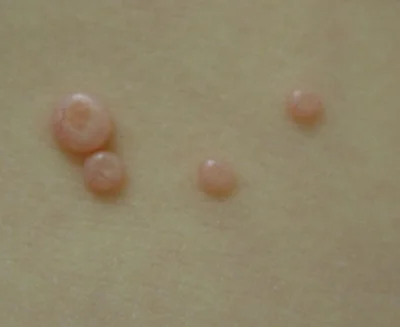
The lesions are pearly, dome-shaped, skin-coloured or pink papules, 2 to 5 mm across, each with a central dell (umbilication) from which a white, caseous core can be expressed. In children they favour the trunk, limbs and face; in adults they favour the lower abdomen, thighs and genitals. They may be few or hundreds in number. Itching and dermatitis around lesions, koebnerisation after scratching, and a late inflammatory or necrotic reaction, the "beginning of the end" (BOTE) sign, precede spontaneous resolution. HIV-associated disease is more numerous, larger and less likely to regress without treatment. [10]
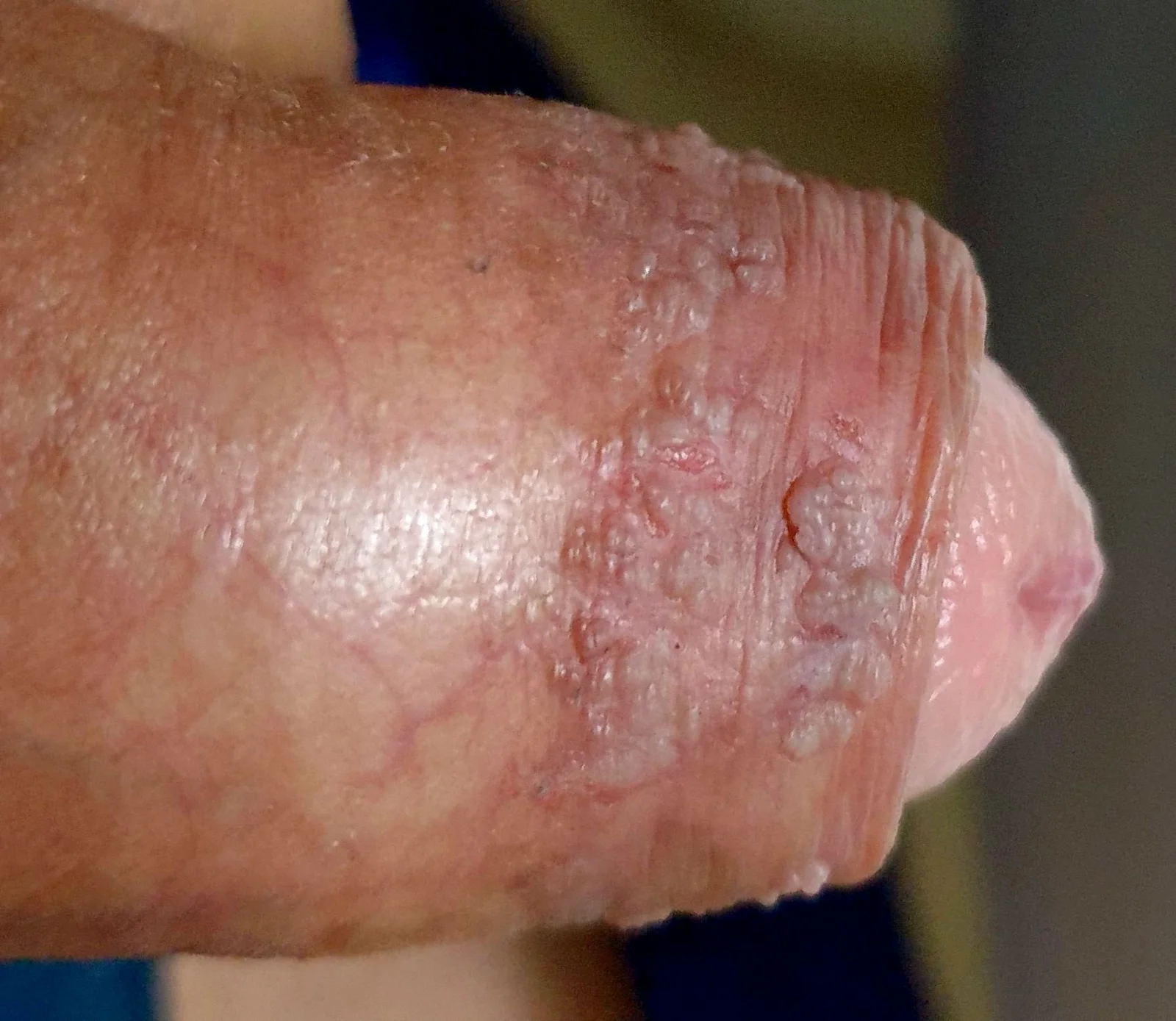
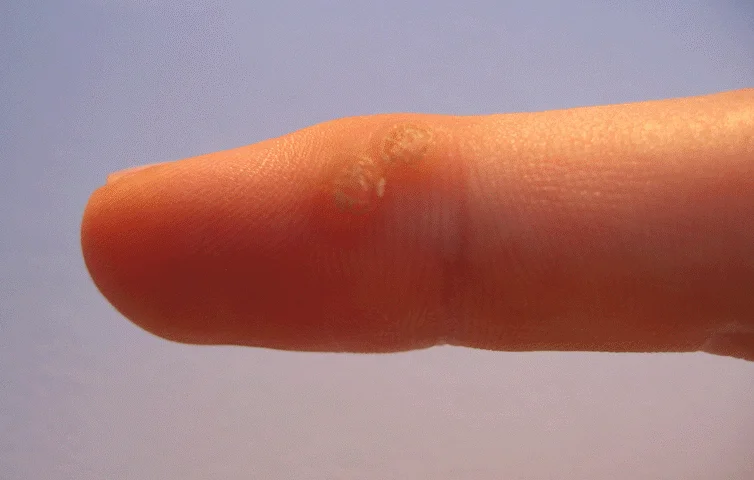
Common warts (verruca vulgaris) are hyperkeratotic, rough-surfaced papules or plaques, often on the fingers, hands and knees, with interrupted skin lines and punctate bleeding when pared. Plantar warts (verruca plantaris) are flattened, endophytic under pressure on the sole, often with black thrombosed capillaries. Flat (plane) warts are smooth, slightly raised, tan to brown papules, usually on the face and hands, and may be numerous in children. Filiform warts are finger-like projections on the face and neck. Anogenital warts (condylomata acuminata) are soft, moist, often papillomatous or verrucous, coalitional lesions in the anogenital region. [11]
Primary VZV infection (chickenpox) produces a centripetal, polymorphic rash of macules, papules and vesicles ("dew drops on a rose petal") with fever and malaise. Herpes zoster produces a dermatomal, unilateral, painful vesicular eruption with all lesions in one or more adjacent dermatomes, often preceded by neuropathic pain. Detailed disease staging, antiviral treatment and vaccination are covered in the infectious disease topic and should be read there.
Figure 1Penile warts
Long description
Clinical photograph of penile warts in the foreskin.

Figure 2Wart ASA animated
Long description
An animated photographic sequence showing two viral warts on a middle finger during treatment with a mixture of acids (e.g. salicylic acid).

Figure 3Molluscum bumps
Long description
Close-up clinical view of typical molluscum contagiosum skin bumps.

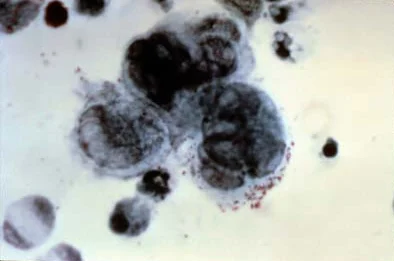
Figure 4Tzanck test
Long description
NIH Image Bank 'Herpes Tzanck Smear' image whose Commons caption reads 'Positive Tzanck test, showing three multinucleated giant cells in center.'

Figure 5Herpes(PHIL 1573 lores)
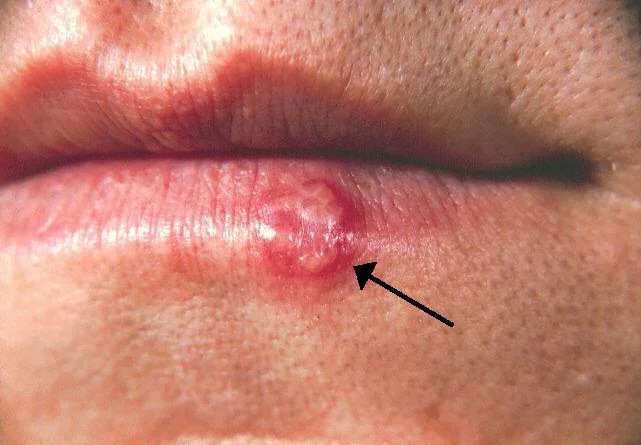
Long description
CDC Public Health Image Library photograph whose Commons caption reads 'A cold sore on the lower lip', filed in the Herpes labialis category, with a Commons file-history note that an arrow was added to the image.

The diagnosis of cutaneous viral disease is usually clinical; investigations are confirmatory, particularly when the presentation is atypical, when management depends on type (HSV-1 versus HSV-2), or when the immunocompromised patient is being worked up.
| Test | What it tells you | Key points |
|---|---|---|
| Clinical inspection | Lesion morphology and distribution | First-line; usually sufficient for warts, molluscum and classic herpes simplex |
| HSV PCR (NAAT) from a swab of the lesion base | Viral DNA and typing | Most sensitive test; preferred by the BASHH 2024 guideline; increases detection rates by 11 to 71% compared with virus culture [1] |
| Virus culture | Isolation of HSV | Misses approximately 30% of PCR-positive samples; no longer recommended as routine where PCR is available [1] |
| Tzanck smear (scraping from the base of a vesicle) | Multinucleated giant cells | Rapid office test; confirms a herpesvirus infection but cannot distinguish HSV from VZV; negative or non-diagnostic results are common |
| HSV type-specific IgG serology | Past infection with HSV-1, HSV-2 or both | Cannot tell when or where infection occurred; useful in selected serodiscordant-couple and pregnancy scenarios; results are tricky in low-prevalence clinics. At assay sensitivities of 91.2 to 100% for HSV-1 and 90.6 to 100% for HSV-2, with false positive results more common in low-prevalence clinics. [1] |
| Histology of a typical wart | Epidermal hyperplasia with koilocytes | Used only for diagnostic uncertainty or suspected malignancy, including persistent genital warts |
| HPV testing or typing | Genotype group | Not needed for most skin warts; used in cervical and anogenital dysplasia work-up, which is a separate pathway |
For molluscum contagiosum and most warts, biopsy is not usually required. A shave or punch biopsy under local anaesthesia is reserved for lesions that persist, change rapidly, bleed, or occur in high-risk sites, where squamous cell carcinoma or other diagnoses must be excluded. In genital disease, always consider syphilis, mpox and HIV testing in appropriate contexts and coexisting infections. [6] [11]
| Condition | Feature that separates it from a cutaneous viral infection |
|---|---|
| Aphthous ulceration and trauma | Single, recurrent, idiopathic ulcers with clean bases; no vesicular precursor, no virus on PCR |
| Behcet disease, Crohn disease with vulvar ulcers | Multiple ulcers with systemic or gastrointestinal disease; herpes PCR negative |
| Syphilis (chancre) | Usually single, indurated, painless ulcer with clean base; positive treponemal serology |
| Chancroid | Soft, painful, purulent ulcers with ragged edges; endemic in resource-poor settings |
| Mpox | Deep-seated pustules and ulcers in sexual networks; PCR typing separates it from HSV |
| Impetigo | Honey-coloured crusts on an erythematous base; bacterial swab positive for Staphylococcus aureus or Streptococcus pyogenes |
| Tinea pedis and hand | Annular scaly plaques with central clearing, not vesicular clusters; KOH preparation positive |
| Keratoacanthoma and SCC | Rapidly growing, firm nodule or scale that does not clear; biopsy to exclude malignancy |
| Seborrhoeic keratosis | Warty plaques in older adults, with horn cysts on examination and histology |
| Contact dermatitis and urticaria | Erythematous, itchy, non-vesicular or annular plaques; no viral PCR |
| Lichen planus and pemphigus | Mucosal erosions with purple polygonal papules or flaccid bullae; biopsy diagnostic |
Molluscum contagiosum is most often confused with small warts, closed comedones, folliculitis and (in adults) basal cell carcinoma; warts are confused with corns, calluses and (on the sole) black heel or other keratoses.
Approach to a suspected cutaneous viral infection
- Single or recurrent painful vesiclesThink herpes simplex: confirm with swab PCR from the lesion base; ask about contacts and pregnancy
- Pearly umbilicated papulesThink molluscum contagiosum; usually self-limiting in children
- Hyperkeratotic or exophytic papulesThink wart; classify the type and site; biopsy if any uncertainty
- Question: Vesicular and acutely painful?
Yes
- Primary or first genital episodeOral antivirals are indicated within five days of the start of the episode, while new lesions are still forming, or if systemic symptoms persist. Offer saline bathing, analgesia and 5% lidocaine gel if micturition is painful
- BASHH 2024 regimens (five days)Aciclovir 400 mg three times daily, or valaciclovir 500 mg twice daily; alternatives are aciclovir 200 mg five times daily or famciclovir 250 mg three times daily
- Severe, complicated or non-oralRefer for intravenous therapy only if the patient cannot swallow or tolerate oral medication because of vomiting. Check for urinary retention, meningism and secondary infection
No
- Question: Dominant wart, molluscum or uncertain lesion?
Wart
- Match treatment to the wart type, number and the patientCommon and plantar warts: start with salicylic acid or cryosurgery. Flat warts: salicylic acid or gentle cryotherapy. Recalcitrant: cantharidin, trichloroacetic acid, 5-fluorouracil, bleomycin, imiquimod, intralesional immunotherapy or laser
Molluscum
- Most childrenWatch and wait with hygiene counselling; expect the 'beginning of the end' inflammatory sign before resolution
- Active treatment when neededCurettage is most effective in pooled series (clearance up to 97.8%). Cryotherapy, potassium hydroxide, cantharidin, podophyllotoxin, autoinoculation, imiquimod or laser may be used depending on age, site and availability
- Recurrent episodesFor recurrent genital herpes, BASHH 2024 short-course regimens are aciclovir 800 mg three times daily for two days, valaciclovir 500 mg twice daily for three days or famciclovir 1 g twice daily for one day
- Suppressive therapyFor patients with at least six recurrences per year whose episodes are frequent or painful despite episodic treatment: aciclovir 400 mg twice daily or 200 mg four times daily, valaciclovir 500 mg once daily or famciclovir 250 mg twice daily
- Reassess and referRefer for complications, suspected malignancy, diagnostic doubt, immunosuppression, pregnancy-related herpes or extensive disease
Saline bathing, simple analgesia, petroleum jelly and lidocaine ointment help with dysuria in genital herpes. For cold sores, patients should avoid skin-to-skin contact with others, avoid kissing babies, and use antiviral cream from the pharmacy as soon as tingling begins; antiviral tablets from a clinician may help very large, painful or frequently recurring cold sores. The NHS view is that cold sores usually heal within 10 days and are contagious from the first tingling until the skin has healed completely. Patients must not rub cream into a cold sore: dab instead, wash hands before and after, and avoid acidic or salty foods that sting. [7] [12]
The AAD public treatment guidance (last updated 8 May 2025) describes a graded menu of treatments for non-genital warts that dermatologists select by wart type, number, patient age and immune status: [3]
- Salicylic acid, applied daily to a softened wart, is the common starting point for common, plantar and flat (non-facial) warts; results take weeks. It is often combined with occlusion or with cryosurgery.
- Cryosurgery (freezing) is commonly used for common, plantar, flat and filiform warts. The treated area heals in 4 to 7 days, may crust or blister, and treatment is repeated every 2 to 4 weeks. Most patients need more than one treatment. It is mostly used for older children and adults. [3]
- Cantharidin ("beetle juice") is painted on in the clinic and causes a blister under the wart; it often needs repeat visits and at-home care. Cantharidin (brand name Ycanth) is FDA-approved for molluscum contagiosum in patients 2 years and older. [3]
- Trichloroacetic acid (TCA) is applied after paring; it treats common (especially palmar and plantar), flat and genital warts. Side effects include pain, burning and post-inflammatory darkening.
- Electrosurgery (burning) plus curettage (scraping) is useful for common, plantar and filiform warts and usually needs one treatment, with expected soreness, swelling and redness afterwards.
- Excision under local anaesthetic removes the wart immediately but may scar.
- Bleomycin is injected or applied and pricked into very resistant warts.
- 5-fluorouracil (5-FU) slows the wart-causing virus; it is used for common, plantar and flat warts, applied daily for 4 to 12 weeks for resistant or extensive disease. [3]
- Imiquimod (Aldara, Zyclara) is an immunomodulatory cream applied at home, and other immunotherapies such as intralesional Candida antigen or MMR vaccine are reserved for stubborn warts. Antiviral medicines (for example aciclovir and cidofovir) are occasional last-resort options.
For anogenital warts the same principles apply, but these lesions lie in an STI pathway: partners need notification, screening for HIV and other STIs is appropriate, and destructive treatment must avoid damaging the urethra and anal canal. The British Association for Sexual Health and HIV does not produce a current separate 2024 guideline for anogenital warts in the sources used here, so local STI service guidance and the HPV vaccination and screening programmes guide care. [3] [6]
The British Association of Dermatologists treats molluscum through its NICE-accredited guideline process, and the systematic review by Wang and colleagues (2026) summarises modern efficacy data. [2] [4] Useful teaching numbers from that pooled analysis include: curettage (complete response in up to 97.8% of cases after up to three or more treatments), curettage (up to 93% clearance after one session in another series, with relapse in up to 34% of cases), cryotherapy (up to 93.6% clearance in two visits, but pain in 89% and hypopigmentation in 70%), curettage satisfaction (92% in a paediatric cohort), KOH (consistently high clearance and low cost), autoinoculation (around 80% clearance over one session, with few side effects), cantharidin (FDA-approved in the Ycanth formulation; complete response up to 54% in two pooled phase 3 trials), podophyllotoxin 0.5% (92% complete response without recurrence at 9 months), imiquimod 5% (91.8% complete response when used 5 days per week for 16 weeks), berdazimer 10.3% gel (FDA-approved for patients 6 months and older, with 51.7 to 76% lesion reduction over 12 weeks) and intralesional Candida antigen or MMR vaccine as useful for persistent lesions.
Active treatment is not mandatory in immunocompetent children. Management weighs lesion burden, embarrassment, swimming and contact sports, and the risk of secondary dermatitis. In adults, anogenital molluscum is usually treated because it is sexually transmitted; curettage, cryotherapy, cantharidin, podophyllotoxin, TCA or laser are all reasonable, and HIV testing may be appropriate in high-risk presentations. [4]
Herpes simplex complications include secondary bacterial cellulitis, candidal superinfection in the second week, urinary retention from autonomic neuropathy, aseptic meningitis and transverse myelitis, disseminated visceral and central nervous system disease in neonates and immunocompromised hosts, and severe ocular disease. Autoinoculation to adjacent skin and fingers causes whitlow and can produce "zosteriform" recurrence patterns. Eczema herpeticum requires systemic aciclovir, possible antibiotics and same-day specialist review. [1]
Molluscum contagiosum in immunocompromised patients can behave as a marker of advanced immunosuppression; giant or treatment-resistant lesions are red flags. Warts may rarely harbour dysplasia, particularly anogenital warts in long-standing disease, and subungual or periungual lesions can distort the nail. Complications of wart treatment include pain, blistering, pigmentary change and, rarely, scarring. [4]
Varicella complications include secondary bacterial skin infection, pneumonia, encephalitis and, rarely, death in adults, pregnant women and immunocompromised people. Zoster complications include post-herpetic neuralgia, ophthalmic zoster and, in immunosuppression, disseminated disease.
Cutaneous herpes lesions heal in about 10 to 14 days, while recurrences last 7 to 10 days. After a first genital episode, HSV-2 recurs roughly four times more often than HSV-1 and rates usually decline slowly over years. Molluscum contagiosum in children is self-limiting, but watchful waiting may last many months. Cutaneous warts in children often clear without treatment over one to two years, so treatment shortens morbidity rather than preventing it. Varicella is usually benign in childhood; shingles is usually self-limited but post-herpetic pain may persist for months. [1]
Prevention rests on three planks: hygiene, behaviour and vaccination.
Hygiene and behaviour:
- Wash hands after touching lesions; avoid autoinoculation by not picking or scratching.
- Cover active cold sores and avoid kissing and oral sex until the skin has healed completely.
- In genital herpes, abstain during prodrome and lesions, use condoms outside of lesions (partial protection because of subclinical shedding and of skin not covered by condoms), and consider suppressive antiviral therapy to reduce transmission.
- Do not share towels, sponges or bath water in households with molluscum; wash and dry lesions before play and exclude from swimming pools and from close contact sports while lesions are visible, because transmission is by skin-to-skin contact and via fomites.
- Avoid direct contact with plantar warts by wearing flip-flops in shared wet areas and drying feet well; nail-care and pedicure sessions should be carried out with disinfected tools.
Vaccination:
- Varicella vaccination is the standard prevention, with two doses in childhood. It has reduced US cases by over 97%, with hospitalisation and death now rare. Vaccination is not routinely used to treat an active infection. [5]
- HPV vaccination prevents genital warts and HPV-related cancers; consult the national (or regional) immunisation programme for age and eligibility. [6]
- No licensed vaccine exists for HSV or molluscum contagiosum in routine clinical use.
Screening: there is no screening test for cutaneous herpes, molluscum or warts. Histology is used when a lesion does not behave as expected. In genital disease, follow local STI testing guidelines and screen for HIV and co-infections as indicated.
Children. Warts, molluscum and (less often) herpetic infections are common. Parents need reassurance about self-resolution. Cryosurgery for warts is typically reserved for older children and adults because it is painful. Tzanck testing and PCR remain accurate in children; type-specific HSV serology is interpreted with caution because maternal antibodies persist for months. Molluscum in very young children is usually benign and does not indicate an underlying disease. [3] [4]
Pregnancy. Genital herpes in pregnancy is managed under the joint BASHH/RCOG pregnancy pathway, with third-trimester decisions about suppressive aciclovir and mode of delivery because peripartum transmission can be fatal. Neonatal herpes usually stems from first-episode genital infection at delivery; cold sores in household members should be covered and the infant not kissed. Varicella in a non-immune pregnant woman can cause severe maternal disease and congenital infection, so post-exposure passive immunisation and antiviral treatment are considered urgently. Molluscum and warts are benign in pregnancy: trichloroacetic acid has been reported as safe for molluscum in pregnant patients in small series, and destructive wart treatment should be gentle and avoid cytostatic or systemic drugs unless specially indicated. [1] [5] [4]
Older adults. Shingles becomes more common with age. Comorbid skin atrophy and frailty make destructive wart and molluscum treatment more likely to cause pain and scarring; curettage and cryotherapy should be used sparingly and with good analgesia. HSV recurrences in older adults are usually milder.
Immunocompromised patients. Chronic, numerous, treatment-resistant warts and giant molluscum lesions are recognised. Biopsy of persistent or atypical lesions is mandatory to exclude malignant change. Specialist dermatology, infectious disease input and (for HIV) reconstitution of immunity are required. [4] [11]
Low-resource settings. Clinical diagnosis carries almost all the load. Potassium hydroxide (KOH) and cryotherapy are low-cost, effective treatments for molluscum and warts. Salicylic acid, urea preparations and careful curettage are usually available. Hospital-grade IV aciclovir, PCR testing, lasers and HPV vaccination may not be. If a PCR laboratory is unavailable, treat clinically and send referral swabs when possible.
- The three common groups of cutaneous viruses have very different biology: HSV establishes latency, molluscum runs a self-limiting local course, and HPV stimulates squamous proliferation; management follows from that. [1] [4] [11]
- HSV blistering recurs because of neuronal latency; PCR is preferred to culture and Tzanck testing, and HSV-2 recurs roughly four times more often than HSV-1. [1] [8]
- Molluscum contagiosum forms umbilicated papules that usually clear without treatment after months; curettage, cryotherapy, potassium hydroxide, cantharidin, podophyllotoxin, autoinoculation and newer topical agents all work in some patients. [4]
- Warts are driven by HPV, mostly low-risk types; cryotherapy is repeated every 2 to 4 weeks, heals in 4 to 7 days, and usually needs more than one treatment. Salicylic acid is a practical first-line start for many patients. [3]
- Varicella carries up to 90% transmission in susceptible contacts and an incubation of 10 to 21 days; zoster is reactivation and becomes more common with age. [5]
- Antiviral drugs (aciclovir, valaciclovir, famciclovir) shorten but do not cure HSV disease; systemic aciclovir within five days is recommended for first genital episodes, and long-term suppression can reduce both recurrences and transmission. [1]
- Prevention combines hygiene, avoiding contact while lesions are active, and vaccination against varicella and HPV; there is no routine vaccine for HSV or molluscum. [5] [6]
- Pregnancy, childhood and immunosuppression change both the diagnosis and the safety profile of every destructive treatment.
Answer each one in your head first, then open the answer.
A woman attends on day 3 of a first episode of painful genital blisters with tender inguinal nodes and dysuria. What is the diagnosis, how do you confirm it, and which regimen and duration do current guidelines recommend?
Show answerHide answer
Genital herpes simplex infection, with HSV-1 or HSV-2. Confirm by PCR from a swab of the base of the lesion (BASHH 2024: PCR preferred, culture may miss about 30% of positive samples). For a first episode, the BASHH 2024 guideline recommends oral antivirals within five days while new lesions are forming, or if systemic symptoms persist, for five days: aciclovir 400 mg three times daily or valaciclovir 500 mg twice daily, or the alternatives aciclovir 200 mg five times daily or famciclovir 250 mg three times daily, plus saline bathing, analgesia and 5% lidocaine gel if micturition hurts. [1]
A scraping from the base of a vesicle shows multinucleated giant cells within one hour, but viral typing is not available. What has been proven, what has not, and what is the next laboratory step?
Show answerHide answer
A positive Tzanck smear confirms a herpesvirus infection (HSV or VZV can both produce multinucleated giant cells), but it does not prove which virus is present and can neither type HSV nor confirm a specific clinical diagnosis. The next step is a swab for HSV PCR, which detects viral DNA and types HSV-1 from HSV-2 with much higher sensitivity than culture. [1] [8]
A child has multiple dome-shaped, pearly, umbilicated papules on the trunk and a sister with atopic dermatitis. What is the diagnosis, what is the natural history, and when is treatment justified?
Show answerHide answer
Molluscum contagiosum. It is self-limiting in immunocompetent children and often resolves after an inflammatory or necrotic 'beginning of the end' sign. Active treatment is justified for large or numerous lesions, for symptomatic or secondarily eczematous lesions, for embarrassment or for sports exclusion; curettage gives the highest pooled clearance, while curettage, cryotherapy, potassium hydroxide, cantharidin, podophyllotoxin, autoinoculation and imiquimod all have supportive evidence. Atopic dermatitis is a frequent comorbidity and should be managed in parallel. [4] [10]
A middle-aged man has a painful hyperkeratotic plantar plaque with black dots. He asks for one quick treatment. Why is a single cryotherapy visit unlikely to be enough, and what is a practical home-based alternative?
Show answerHide answer
Plantar warts (verruca plantaris) present as an endophytic, hyperkeratotic plaque with thrombosed capillaries (black dots). Cryosurgery for warts usually requires more than one treatment, is repeated every 2 to 4 weeks, and freezes heal in 4 to 7 days. A practical home alternative is daily salicylic acid after softening the wart, often with occlusion, continued patiently over weeks. [3]
An older adult has a unilateral, painful, dermatomal vesicular rash on the left thorax. What complication and management considerations does this raise?
Show answerHide answer
Herpes zoster (shingles), caused by reactivation of varicella-zoster virus in a sensory ganglion. Local pain and post-herpetic neuralgia increase with age; disease staging, antiviral treatment and vaccination are detailed in the infectious disease topic. Immunocompromised patients, ophthalmic involvement and disseminated disease need urgent assessment. [5]
Which pairs of answers are correct for this topic?
Show answerHide answer
- BASHH 2024 says oral antivirals for a first episode of genital herpes are most useful within five days, while new lesions are still forming.
- A Tzanck smear is useful when a quick bedside answer is needed, but it cannot type an HSV infection.
- Cryosurgery for a wart is usually repeated every 2 to 4 weeks and heals in 4 to 7 days.
- Varicella transmits to roughly 90% of susceptible contacts and incubates over 10 to 21 days. [5] All statements are consistent with the cited guideline and review sources. The short-course recurrent genital herpes regimens in BASHH 2024 are aciclovir 800 mg three times daily for two days, valaciclovir 500 mg twice daily for three days or famciclovir 1 g twice daily for one day.
Dermatology and infectious disease topics that usefully follow this page include atopic dermatitis, scabies and other parasitic skin infections, impetigo and cellulitis, psoriasis, contact dermatitis and drug eruptions, urticaria and pregnancy-associated skin conditions. The infectious disease resource covers varicella, zoster and their vaccines in greater depth, and the relevant sexual health services cover anogenital warts, HIV testing and HPV vaccination and screening programmes.
- Patel R, Green J, Moran B, Clarke E, Seneviratne K, Evans C, Young F, Nicholson M, Pelosi E, Kingston M, Foley E. British Association of Sexual Health and HIV UK national guideline for the management of anogenital herpes, 2024. Int J STD AIDS 2025;36(2):90-105. doi:10.1177/09564624241282396. Accessed .
- British Association of Dermatologists. Clinical guidelines, British Association of Dermatologists. Clinical guidelines landing page, accessed 2026-11-01. Accessed .
- American Academy of Dermatology (AAD) patient education. Warts: diagnosis and treatment. AAD public site, last updated 8 May 2025. Accessed .
- Wang OJE, Shergill M, Saed Aldien A, Mukovozov I. Treatments for molluscum contagiosum: a systematic review. J Dtsch Dermatol Ges 2026;24(9):e1204-e1211. doi:10.1111/ddg.70100. Accessed .
- Centers for Disease Control and Prevention. About chickenpox (varicella). CDC public page, updated 24 April 2024. Accessed .
- Centers for Disease Control and Prevention. About genital HPV infection. CDC STI fact sheet, updated 31 January 2025. Accessed .
- National Health Service (NHS). Cold sores. NHS Health A to Z, page last reviewed 19 February 2024. Accessed .
- Saleh D, Yarrarapu SNS, Sharma S. Herpes Simplex Type 1 Infection (StatPearls). StatPearls Publishing, Treasure Island (FL). Updated 28 August 2023. Bookshelf NBK482197. Accessed .
- Betz D, Fane K. Herpetic Whitlow (StatPearls). StatPearls Publishing, Treasure Island (FL). Updated 31 July 2023. Bookshelf NBK482379. Accessed .
- Kumar G, Stern JM, Daley SF. Molluscum Contagiosum (StatPearls). StatPearls Publishing, Treasure Island (FL). Updated 13 December 2025. Bookshelf NBK441898. Accessed .
- Leslie SW, Sajjad H, Kumar S. Condylomata Acuminata (Genital Warts) (StatPearls). StatPearls Publishing, Treasure Island (FL). Updated 13 December 2025. Bookshelf NBK441884. Accessed .
- National Institute for Health and Care Excellence (NICE). Cold sores (NICE Clinical Knowledge Summaries topic). NICE CKS topic guidance, accessed 2026-11-01. Accessed .
Figure credits
- Figure 1: Jmarchn, via Wikimedia Commons, CC BY-SA 3.0, CC BY-SA 3.0. resized.
- Figure 2: Steven Fruitsmaak, via Wikimedia Commons, CC BY-SA 3.0, CC BY-SA 3.0.
- Figure 3: Dave Bray, MD, Walter Reed Army Medical Center, via Wikimedia Commons, Public domain, Public domain.
- Figure 4: National Institute of Allergy and Infectious Diseases (NIAID), via Wikimedia Commons, Public domain, Public domain.
- Figure 5: CDC Public Health Image Library (PHIL 1573), via Wikimedia Commons, Public domain, Public domain.
Educational content for medical students and doctors. It is not a substitute for clinical judgement or local guidelines.