Psoriasis
How plaque psoriasis presents and how plaque, guttate, pustular and erythrodermic forms differ; how PASI scores severity and how guidelines treat it.
- Psoriasis is a chronic, immune-mediated inflammatory skin disease that is incurable but controllable; it affects roughly 2 to 4% of people in Western populations, with a worldwide prevalence of 0.51 to 11.43%. [2] [6]
- Plaque (psoriasis vulgaris) is the commonest type and accounts for about 80 to 90% of cases; guttate, pustular (generalised or localised), inverse, erythrodermic and nail forms make up the rest. [2] [3]
- It declares itself with well-demarcated, salmon-pink plaques carrying silvery white scale, usually on the extensor elbows and knees, scalp, trunk and lower back; pinpoint bleeding on scraping is Auspitz sign, and new plaques after injury are the Koebner phenomenon. [2]
- The Psoriasis Area and Severity Index (PASI) plus body surface area (BSA) score severity, and treatment escalates from topical agents to phototherapy (narrowband UVB), then conventional systemics led by methotrexate, then biologics. [1]
- About one person in five with psoriasis develops psoriatic arthritis, so everyone with psoriasis needs an annual screen for joints, especially in the first 10 years. [4] [1]
By the end of this page you should be able to:
- Define psoriasis and list its main subtypes with the feature that separates each.
- Recognise the classic signs of plaque psoriasis, including Auspitz sign and the Koebner phenomenon, and distinguish it from its mimics.
- Explain why psoriasis happens, from keratinocyte injury through the IL-23/IL-17 axis, and why it can follow infections, trauma and certain drugs.
- Assess severity with PASI and BSA and know the cut-offs that change management.
- Plan management in order: topical treatment, phototherapy, conventional systemic drugs with doses, then biologics, following named guidelines.
- Screen for psoriatic arthritis and common comorbidities, and manage psoriasis in pregnancy, children and older adults.
Psoriasis is usually noticed as "the condition with silvery scales", but it is more than a skin disease. It is a systemic, immune-driven inflammation that writes itself on the skin, scalp, nails and joints, and it travels with cardiovascular, metabolic and psychiatric comorbidities. The reason to learn it well is that it is common (roughly 2 to 4% of most Western populations), chronic, and very treatable if the right rung of the treatment ladder is reached at the right time. [2] [6]
A psoriatic plaque is the clinical end product of a fixed sequence: injured keratinocytes release alarm signals, plasmacytoid dendritic cells release IL-12 and IL-23, the IL-23 pushes T helper 17 (Th17) cells to release IL-17 (with some role for Th1 and IL-22), and the resulting burst of keratinocyte proliferation and dermal angiogenesis produces the scaling plaque. That is why the IL-17 and IL-23 pathways are the targets of modern biologics. [2]
Classification is by morphology and distribution, and a patient can change from one form to another.
| Subtype | Appearance and distribution | Notes |
|---|---|---|
| Plaque (vulgaris) | Well-demarcated salmon-pink or erythematous plaques with silvery white scale on extensor surfaces (elbows, knees), scalp, trunk, lower back, sacrum. | Commonest type, about 80 to 90% of cases. [2] [3] |
| Guttate | Small (under 1 cm), round, salmon-pink, scaly papules scattered on trunk and limbs. | Mainly in children and adolescents after streptococcal infection, viral illness or stress; about 40% later develop chronic plaque psoriasis. [2] |
| Pustular (localised) | Coalescing sterile pustules, usually on palms and soles (palmoplantar pustulosis) or fingers and toes (acrodermatitis continua of Hallopeau). | Often tender; may run a relapsing course. [5] |
| Pustular (generalised) | Widespread sterile pustules on erythematous, tender skin with fever and systemic upset (von Zumbusch pattern). | Rare, severe; can be precipitated by abrupt withdrawal of oral corticosteroids. Think IL-36 autoinflammatory drive. [5] |
| Inverse (flexural) | Smooth, mildly erosive red patches without scale in axillae, groins, inframammary and genital folds. | Easily mislabelled as candida or intertrigo. [2] |
| Erythrodermic | Confluent erythema covering almost the whole body. | Medical emergency: can lead to hypoalbuminaemia and high-output cardiac failure. [2] |
| Nail | Pitting, oil-drop spots, onycholysis, subungual hyperkeratosis, splinter haemorrhages, onychodystrophy. | Present in 20 to 50% of people with psoriasis and in about 80% of those with psoriatic arthritis. [2] |
Two special nail points matter. Nail disease is itself a diagnostic and referral criterion under NICE CG153 when it has major functional or cosmetic impact, and nail changes are a strong pointer to psoriatic arthritis. [1] [2]
Prevalence varies strikingly by geography: a 2023 narrative review puts the worldwide prevalence between 0.51 and 11.43%. [6] In most Western series psoriasis affects about 2 to 4% of people. [2] Plaque psoriasis is the dominant form, accounting for about 80% of cases in one educational case series and about 80 to 90% in StatPearls. [2] [3]
Age of onset is bimodal, with peaks at 15 to 25 years and 50 to 60 years, and the disease is more common in people with white skin; men and women are affected at similar rates. [2] Genetic susceptibility is strong: HLA-C*06:02 (HLA-Cw6) is present in 85.3% of people with early-onset disease and 14.7% of those with late-onset disease, and is carried by 10.5 to 77.2% of people with psoriasis overall, more often in white than in Asian patients. [2]
Psoriatic arthritis develops in a substantial minority of adults with psoriasis; guidelines differ on how common this is, with a pooled (StatPearls) estimate of 19.7% (95% confidence interval 18.5 to 20.9) and NICE (TA199) citing up to 30%, and estimates ranging from 3% to 42% by setting. [4] [1] Skin lesions almost always precede the arthritis, which is one reason annual joint screening inside the first 10 years of psoriasis is recommended. [2] [1]
There is no single cause; psoriasis emerges when a polygenic background meets an environmental trigger.
- Genetic factors. Beyond HLA-Cw6, more than 100 non-HLA susceptibility loci have been implicated, many shared with other immune-mediated diseases. [2]
- Infection. Streptococcal throat infection is the classic trigger of guttate psoriasis in children and young adults. [2]
- Trauma. The Koebner phenomenon: plaques form at sites of skin injury, friction, scratching or surgery. [2]
- Drugs. Beta-blockers are the most frequent drug trigger or aggravator; lithium, tetracyclines, ACE inhibitors and several others are also implicated, often after weeks of use. [2]
- Lifestyle. Obesity, dyslipidaemia, insulin resistance, smoking and heavy alcohol intake are both more common in people with psoriasis and predict worse, biologic-resistant disease. [2]
- Stress. Major life stress and skin trauma are common precipitants of flares. [3]
- Comorbidities. Psoriasis clusters with cardiovascular disease, hypertension, type 2 diabetes, dyslipidaemia, depression, anxiety and inflammatory bowel disease, especially Crohn disease. [2]
The mechanism explains the treatment ladder, so it is worth following in causal order.
- Trigger and injury. Trauma, infection, drugs or stress injure keratinocytes, which release antimicrobial peptides such as LL37 and S100 proteins. [2]
- Innate activation. Those peptides activate plasmacytoid dendritic cells, which secrete tumour necrosis factor alpha (TNF-alpha), IL-12 and IL-23. [2]
- Adaptive amplification. IL-12 drives a Th1 response (interferon-gamma). More importantly, IL-23 drives Th17 differentiation; Th17 cells and the related IL-22 axis release IL-17 and IL-22, which are the dominant cytokines of psoriasis. [2]
- Keratinocyte and vascular consequences. Together TNF-alpha, IL-17 and IL-22 cause epidermal hyperplasia, neutrophil recruitment and abnormal angiogenesis. That angiogenesis is what produces Auspitz sign: the dilated papillary dermal capillaries bleed when the overlying scale is scraped off. [2]
- A different axis in pustular disease. While chronic plaque psoriasis is driven mainly by the adaptive IL-17/IL-23 axis, pustular psoriasis is characterised by hyperactivation of innate immunity, especially through IL-36, and presents with sterile neutrophilic pustules. [5]
Genes contribute but do not fully determine: HLA-Cw6 accounts for a striking slice of early-onset disease, which is one reason psoriasis is familial but not inevitable. [2]
- Itch and discomfort are variable; many patients describe psoriasis as "not itchy, but embarrassing" or complain of soreness and cracking, especially on the palms, soles and digits.
- Scaling, flaking and shed skin on clothes and bedding.
- Nail changes: pitting noticed when running a hand over the nails, lifting or splitting.
- Joint symptoms: morning stiffness, swollen fingers or toes (dactylitis), a painful heel (enthesitis), low back pain.
- Triggers: a sore throat a few weeks ago, new medication, a skin injury, major stress.
- Impact: sleep, work, social withdrawal, mood. Under NICE CG153, the impact on daily living, mood and distress should be asked about in every case, and not only when severe. [1]
- Skin. Well-demarcated, salmon-pink or erythematous plaques with a silvery white scale on the extensor surfaces of the elbows and knees, the scalp, the trunk, the sacrum and the gluteal cleft. Plaques are often symmetrical and can coalesce. [2]
- Auspitz sign. Gently scrape a plaque with a spatula: the scale comes away like candle wax, revealing a shiny red surface; further scraping produces pinpoint bleeding from the dilated capillaries beneath. [2]
- Koebner phenomenon. A plaque can develop at a site of skin injury, scratch, scar or pressure two to six weeks later; a helpful pointer when the diagnosis is in doubt. [2]
- Nails. Pitting, oil-drop discoloration, onycholysis (lifting), subungual hyperkeratosis, splinter haemorrhages and dystrophy. [2]
- High-impact and difficult-to-treat sites. Scalp, face, ears, flexures, genitals, palms, soles, and nails; these drive distress and referrals even when the overall BSA is small. [1]
- Joints. Swollen, warm, tender metacarpophalangeal, distal interphalangeal and knee joints, enthesitis, dactylitis; axial symptoms. [4]
- Severity recording (NICE CG153). Record the static Physician's Global Assessment (clear, nearly clear, mild, moderate, severe, very severe), the patient's own global assessment, the BSA affected, and any nail, high-impact site or systemic upset involvement (fever and malaise point to unstable disease such as erythroderma or generalised pustular psoriasis). [1]
- Children. BSA and PASI are not validated in children and adolescents, and erythema may be underestimated in skin types 5 and 6 on the Fitzpatrick scale. [1]
Histology, when a biopsy is required, shows hyperkeratosis, regular acanthosis, confluent parakeratosis, Munro microabscesses (neutrophils in the stratum corneum) and Kogoj pustules, hypogranulosis, perivascular lymphocytes, thinning of suprapapillary plates and dilated capillaries. [2]
Figure 1Luszczyca paznokcia
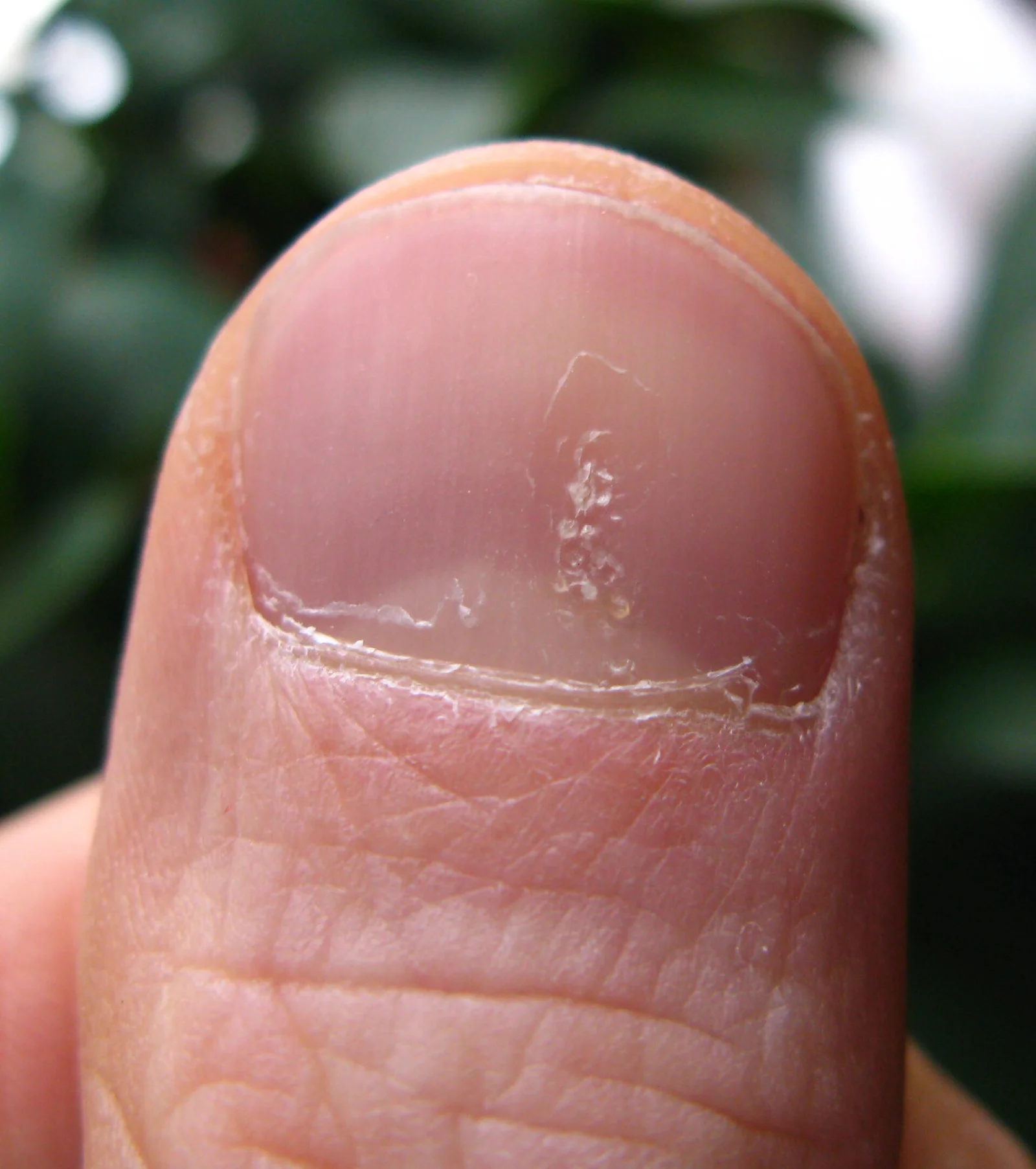
Long description
A clinical photograph of a nail displaying the characteristic pitting of psoriasis.

Figure 2Psoriasis on Human shins
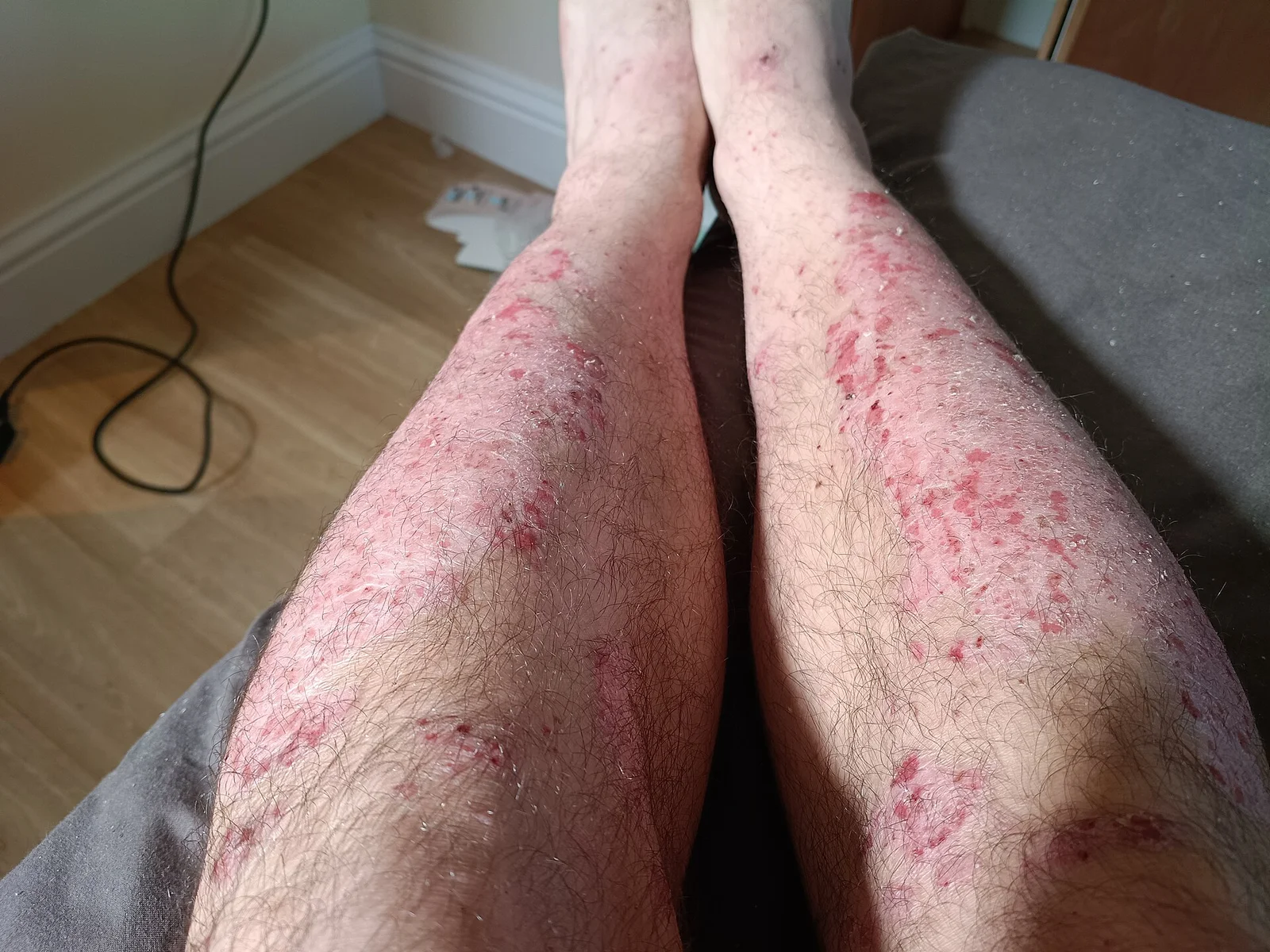
Long description
A clinical photograph titled 'Psoriasis on shins', showing psoriasis on human shins.

Psoriasis is usually a clinical diagnosis. Under NICE CG153 the BSA and impact are recorded at presentation; in specialist settings PASI and nail scores (Nail Psoriasis Severity Index) are added. [1]
| Test or measure | What it is for | Key cut-off or note |
|---|---|---|
| Clinical assessment (BSA, static PGA) | First-line measure in all settings. | Refer when disease is severe or extensive, for example BSA greater than 10% affected, OR not controlled with topical treatment, OR high-impact. [1] |
| PASI (Psoriasis Area and Severity Index) | Validated severity score used in specialist settings, in addition to BSA. | Extensive disease defined as more than 10% BSA or PASI score greater than 10, which feeds the systemic treatment criteria. [1] [2] |
| DLQI / CDLQI | Impact on quality of life (adults/children). | Severe impact supports systemic treatment. [1] |
| Psoriasis Epidemiological Screening Tool (PEST) | Annual screening for psoriatic arthritis in adults. | Validated primary-care tool; it does not detect axial arthritis or inflammatory back pain. [1] |
| Skin biopsy with histology | Confirm diagnosis when there is doubt or an atypical course. | Spongiotic dermatitis, lichenoid change and lymphoma should be excluded. [2] |
| Throat culture / ASOT | Useful in guttate psoriasis when streptococcal infection is suspected. | Supportive but not diagnostic. |
| Cardiovascular risk assessment | Severe psoriasis is a vascular risk factor. | Offer at presentation and at least every 5 years in severe disease (needing phototherapy, systemic treatment or hospital admission). [1] |
| Tuberculosis / hepatitis B and C screening | Before biologic therapy. | Standard practice noted in the psoriasis literature; follow local biologic pathways. [2] |
The practical cut-offs that change management (per NICE CG153) are:
- Body surface area greater than 10% - extensive disease, refer and consider second- or third-line therapy.
- PASI greater than 10 - extensive disease for systemic treatment criteria.
- Scalp, face, flexure or genital disease, or nail disease with major impact - supports escalation even with small BSA. [1]
There is no laboratory test for psoriasis. Diagnosis is clinical, sometimes supported by histology. Classification of severity is a combination of measurable signs (BSA, PASI), a clinician rating (static PGA) and impact (DLQI). Under NICE CG153, conventional systemic treatment is offered only when:
- the psoriasis cannot be controlled with topical treatment, and
- it has a significant impact on physical, psychological or social wellbeing, and
- one of the following holds: psoriasis is extensive (greater than 10% BSA or PASI greater than 10), or localised but with significant functional impairment or high levels of distress, or phototherapy has been ineffective, cannot be used, or has resulted in rapid relapse (more than 50% of baseline disease severity within 3 months). [1]
Systemic and biologic treatment eligibility is also summarised in UK dermatology practice and in the AAD-NPF and BAD pathways (2019 and 2020). [7] [8]
Follow the person, not the plaque. Treatment should meet the person's own goals for control; age, disease phenotype, severity, psoriatic arthritis, comorbidities and treatment history should shape every decision, and risks should be discussed in absolute terms (NICE CG153 section 1.1). [1] NICE CKS provides the primary-care summary of referral and chronic management for psoriasis and is a useful outline of the same pathway. [9]
- Teach and support application of treatments; offer a supply to keep at home. [1]
- Advise on gentle removal of scale with emollients or oil and on avoiding trauma and scratching (to limit the Koebner response).
- Screen for and treat comorbidities: cardiovascular risk, obesity, diabetes, hypertension, depression and anxiety. NICE CG153 supports annual depression assessment in all types of psoriasis. [1]
- Weight reduction can reduce severity and improve biologic response. [2]
- Offer referral to psychological support when distress is high.
- Encourage smoking cessation and moderation of alcohol. [1]
Topical treatment is first-line for all types of psoriasis. [1] Review 4 weeks after starting in adults and 2 weeks after starting in children. [1] If there is little or no improvement at that review, move to the next option. [1]
- Trunk and limbs (adults): potent corticosteroid once daily plus vitamin D (or an analogue) once daily, applied separately (one morning, one evening), for up to 4 weeks. If no clearance or satisfactory control after a maximum of 8 weeks, switch to vitamin D alone twice daily. If still unsatisfactory after 8 to 12 weeks, use a potent corticosteroid twice daily for up to 4 weeks, or coal tar once or twice daily. Very potent corticosteroids in adults only in specialist settings, after other topicals fail, for a maximum of 4 weeks. [1]
- Scalp: potent corticosteroid once daily for up to 4 weeks first. If unsatisfactory after 4 weeks, consider a different formulation or scale-softening agents; if still unsatisfactory, combined calcipotriol and betamethasone once daily for up to 4 weeks, or vitamin D alone, or a very potent corticosteroid up to twice daily for 2 weeks in adults only. [1]
- Face, flexures and genitals: short-term mild or moderate potency corticosteroid once or twice daily for a maximum of 2 weeks; never potent or very potent steroids in these sites. Topical calcineurin inhibitors twice daily for up to 4 weeks are an option when steroid side-effect risk is a concern. [1]
- Children and young people (trunk and limbs): calcipotriol once daily (over 6 years), or a potent corticosteroid once daily (over 1 year). [1]
- Steroid safety: very potent steroids are not used in children and young people; no very potent steroid continuously for more than 4 weeks at any site; no potent steroid continuously for more than 8 weeks; aim for a 4-week break between courses of potent or very potent steroids; in face, flexure or genital disease limit corticosteroids to 1 to 2 weeks per month; review at least annually for steroid atrophy during intermittent or short courses. [1]
- Combined calcipotriol and betamethasone, or vitamin D analogues alone, during steroid breaks. [1]
Narrowband UVB (NB-UVB) is offered for plaque or guttate psoriasis that cannot be controlled with topicals alone, given 2 or 3 times a week depending on patient preference, with faster response at 3 times weekly. [1] Offer the next line when there is unsatisfactory response, poor toleration, rapid relapse (greater than 50% of baseline disease severity within 3 months), difficult access, or high skin-cancer risk. [1]
- PUVA (psoralen with UVA) is considered for localised palmoplantar pustulosis. [1]
- PUVA is avoided after 150 treatments, and in anyone with a personal history of skin cancer, and in children; lifetime skin-cancer surveillance is offered above 150 treatments or after skin cancer. [1]
- Do not routinely co-treat with acitretin during PUVA. [1]
- Phototherapy is not routinely used as maintenance. [1]
- Equipment and dosimetry follow BAD service guidance. [1]
NB-UVB phototherapy is widely combined with topical adjuncts at resistant or covered sites. [1]
Systemic treatment is reserved for when topical or phototherapy has failed or is impractical: typically greater than 10% BSA or PASI greater than 10, high distress or functional impairment, or rapid relapse. [1]
- Methotrexate is the first choice in most adults, unless circumstances below apply. [1]
- Ciclosporin is first choice when rapid or short-term control is needed (for example a flare), in palmoplantar pustulosis, or when conception is planned and a conventional systemic drug cannot be avoided. [1]
- If the first agent is inadequate, switch between methotrexate and ciclosporin. [1]
- Acitretin (an oral retinoid) is considered in adults, and in exceptional cases in young people, if methotrexate and ciclosporin are unsuitable or have failed, or for pustular disease. [1]
- In anyone with both active psoriatic arthritis and skin disease, choose the conventional agent in discussion with a rheumatologist. [1]
Doses and monitoring from NICE CG153
- Methotrexate: start 5 to 10 mg once weekly, increase incrementally to an effective dose, with a maximum of 25 mg weekly. Assess response after 3 months at target dose; stop (or change) if there is less than 75% reduction in PASI, or less than 50% reduction in PASI plus less than 5 points on DLQI. Use the lowest dose that maintains remission. Monitor liver function and serum procollagen III; test accuracy is unreliable in psoriatic arthritis, and the procollagen test is not used in children and young people. [1]
- Ciclosporin: 2.5 to 3 mg per kg per day, escalating to 5 mg per kg per day after 4 weeks if there is no response or rapid control is needed. Assess response after 3 months at optimum dose; stop if less than 75% PASI reduction, or less than 50% PASI reduction with less than 5 DLQI points. Use the lowest dose to maintain remission for up to 1 year only, unless disease is severe or unstable and other options (including targeted therapies) cannot be used. [1]
- Acitretin: incremental dosing in adults to a target of 25 mg daily, with escalation up to 50 mg daily if other options are exhausted. Assess response at 4 months; in plaque disease stop if less than 75% PASI reduction, or less than 50% reduction plus less than 5 DLQI points; in pustular disease stop if clear or nearly clear is not reached on the static PGA. [1]
Pregnancy-conception planning influences the choice (see Special groups). [1]
- Targeted immunomodulatory (biologic) treatments are initiated and supervised only by consultant dermatologists experienced in psoriasis, following AAD-NPF joint guidelines and the BAD 2020 rapid update. [1] [7] [8]
- Classes, by the cytokine they block: [2]
- TNF-alpha inhibitors: adalimumab, etanercept, infliximab, certolizumab pegol.
- IL-17 pathway: secukinumab, ixekizumab, brodalumab, bimekizumab.
- IL-23 inhibitors: guselkumab, tildrakizumab, risankizumab.
- IL-12/23 inhibitor: ustekinumab.
- They are highly effective in moderate-to-severe plaque psoriasis; screening for tuberculosis and hepatitis, and appropriate vaccinations, are standard before starting. [2]
- Dosing and switching are drug-specific and follow the licensed schedule and guideline algorithms (AAD-NPF 2019, BAD 2020). [7] [8]
- Biologics also improve comorbidity burden; the choice should be tailored to the comorbidity pattern (for example inflammatory bowel disease favours anti-TNF; a history of inflammatory bowel disease raises considerations with IL-17 agents). Tailoring like this is recommended by the same AAD-NPF and BAD guidance. [7] [8]
- Offer an annual assessment for psoriatic arthritis to everyone with psoriasis, especially within the first 10 years of onset. [1]
- Use a validated tool (for example PEST) in primary and specialist care. [1]
- As soon as psoriatic arthritis is suspected, refer to rheumatology for assessment and planning of care. [1]
- In a person with both active psoriatic arthritis and skin disease that meets conventional systemic criteria, the choice of agent should be made jointly with a rheumatologist. [1]
- Psoriatic arthritis manifests as peripheral oligoarthritis or polyarthritis, distal interphalangeal joint disease, dactylitis, enthesitis and axial (spondylitic) disease; prevalence estimates differ between sources, with a pooled (StatPearls) estimate of 19.7% (95% confidence interval 18.5 to 20.9) and NICE (TA199) citing up to 30%, with overall estimates ranging from 3% to 42% by setting. [4] [2]
- Record severity and impact before and after each change in treatment. [1]
- Reassess systemic response after 3 months for methotrexate and ciclosporin and after 4 months for acitretin against the PASI and DLQI thresholds. [1]
- Offer a review 4 weeks after starting a new topical treatment in adults, 2 weeks in children. [1]
- Avoid unstructured changes; escalate to the next rung rather than add ad hoc drugs. [1]
- If stable on a systemic or biologic, monitor for complications and comorbidities; registration with a biologic registry (such as BADBIR) is encouraged. [1]
Approach to a person with suspected psoriasis
- Assess the personHistory and examination, BSA, static PGA, nails and high-impact sites, impact (DLQI/CDLQI), joints, comorbidities
- Question: Uncertainty or atypical course?
Yes
- Skin biopsy and exclude mimicsAtopic dermatitis, lichen planus, secondary syphilis, tinea, mycosis fungoides
No
- Proceed to treatment ladder
- Question: BSA greater than 10%, or moderate PGA, or nail with major impact?
No
- Topicals first-lineSteroid plus vitamin D for trunk and limbs, potent steroid for scalp, mild or moderate steroid for face, flexures and genitals; review at 4 weeks (adults) or 2 weeks (children)
- Question: After an adequate course
Yes
- EscalateChange topical formulation or agent; consider phototherapy if topical fails
No
- Maintain and review
Yes
- Add or start second-lineNarrowband UVB 2 to 3 times weekly for plaque or guttate disease not controlled topically
- Question: After a full course of phototherapy
Yes
- Conventional systemic therapyMethotrexate first choice (start 5 to 10 mg weekly, max 25 mg weekly); ciclosporin for rapid control or pustulosis; acitretin for pustular disease
- Question: After 3 months at target dose
Yes
- Biologic therapyAnti-TNF, anti-IL-17, anti-IL-23 or anti-IL-12/23 per AAD-NPF and BAD guidance
No
- Continue and monitor
No
- Continue phototherapy and topicals
- Joint screen every yearPEST and referral to rheumatology at suspicion of psoriatic arthritis
- Special casesGeneralised pustular psoriasis or erythroderma: same-day specialist assessment; children: refer at presentation
- Psoriatic arthritis in a substantial minority of adults (pooled (StatPearls) estimate 19.7%, 95% confidence interval 18.5 to 20.9; NICE (TA199) cites up to 30%, with overall estimates ranging from 3 to 42% by setting), with dactylitis, enthesitis and axial disease, causing joint damage if untreated. [2] [4]
- Nail disease with functional and cosmetic impact; present in 20 to 50% of people and in about 80% of those with psoriatic arthritis. [2]
- Erythroderma and generalised pustular psoriasis are dermatological emergencies, the latter with fever, systemic illness and possible precipitant (abrupt steroid withdrawal). [2] [5]
- Cardiovascular disease, hypertension, type 2 diabetes, dyslipidaemia and obesity are more common; severe psoriasis increases vascular risk and the risk of venous thromboembolism. [1] [2]
- Psychiatric comorbidity: depression and anxiety are common and should be screened for. [1] [2]
- Inflammatory bowel disease: psoriasis carries a substantially raised risk of Crohn disease and vice versa. [2]
- Skin cancer risk from long-term PUVA, especially beyond 150 treatments. [1]
- Drug triggers can cause flares: beta-blockers most often, then lithium and tetracyclines. [2]
Psoriasis is a lifelong, relapsing-remitting disease. Many patients have a benign, intermittent course; flares are common after infection, stress, trauma and drug changes. Guttate disease evolves into chronic plaque in about 40% of patients. [2] Without attention to joints and comorbidities, disability and vascular risk accumulate, but early escalation to NB-UVB, methotrexate and then biologics usually gives durable control. [1] [2]
- There is no primary prevention or vaccine for psoriasis; prevention means controlling triggers and comorbidities.
- Annual screening for psoriatic arthritis (especially in the first 10 years) with a validated tool such as PEST. [1]
- Cardiovascular risk assessment at presentation and at least every 5 years in severe disease (defined as needing treatment with phototherapy or systemic agents, or hospital admission) under NICE CG153, plus advice on smoking, weight, alcohol and activity. [1]
- Annual review for depression. [1]
- Skin surveillance after more than 150 PUVA treatments. [1]
- Before biologics: screening for tuberculosis and hepatitis, and staying up to date with vaccinations. [2]
Children and young people with any type of psoriasis should be referred to a specialist at presentation (NICE CG153). [1] PASI and BSA are not validated in this group, and very potent corticosteroids are not used; potent steroids or calcipotriol are used only in specified ages. [1] Doses and durations should follow the BNF for children. [1] Guttate disease is common and is often triggered by streptococcal infection. [2]
Systemic therapy in pregnancy and conception planning requires specialist care. Under NICE CG153, ciclosporin is the conventional systemic first choice when rapid control is needed, or when conception (for men and women) is planned and a systemic drug cannot be avoided; acitretin carries serious teratogenic risk (MHRA pregnancy-prevention requirements); methotrexate must be avoided around conception. [1] Retinoid handling and contraceptive advice follow the current regulatory guidance referenced in CG153. [1] Pustular psoriasis in pregnancy (impetigo herpetiformis) is a severe variant requiring urgent care. [5] Biologic use in pregnancy is planned with dermatology and obstetrics; certolizumab may suit some patients, but individual decisions are guideline- and label-based. [7] [8]
Assessment thresholds and drug choices follow the same principles, with added attention to drug interactions (notably beta-blockers may worsen disease), kidney function for methotrexate, blood pressure for ciclosporin, fall risk on stairs if light and phototherapy are used, and polypharmacy. NICE CG153 calls for tailoring by age and comorbidity. [1]
- BSA and static PGA assessment needs no technology; teach clinicians to recognise the distribution, scale and Auspitz sign. [2]
- When print or product availability is limited, emollients plus potent topical corticosteroids and vitamin D give useful control; step up to methotrexate where monitoring is possible. [1]
- Phototherapy requires equipment and trained staff; maintain and calibrate it properly, which is emphasised even in resource-rich settings. [1]
- Access to biologics varies enormously; formation of care pathways with regional dermatology and rheumatology is essential. [6]
Most inflammatory skin diseases can look psoriasiform when flared. The table lists the feature that usually separates each.
| Condition | How it usually differs from psoriasis |
|---|---|
| Atopic dermatitis (eczema) | Itchy, exudative or lichenified patches in flexures, often from childhood, associated with atopy; spongiosis on biopsy rather than regular acanthosis. [2] |
| Lichen planus | Purple, polygonal, itchy papules with Wickham striae on wrists and mucous membranes; Koebner-positive but different histology. [2] |
| Secondary syphilis | Papulosquamous rash involving palms and soles, sexual history or systemic features; spirochete stains positive. [2] |
| Tinea corporis | Annular scaly plaque with central clearing and a raised active edge; positive fungal studies. |
| Seborrhoeic dermatitis | Greasy scale on scalp, eyebrows, nasolabial folds and mid-chest; usually less well demarcated. |
| Pityriasis rosea | Herald patch, then a "Christmas tree" truncal eruption that resolves in weeks. |
| Mycosis fungoides | Patches or plaques in sun-protected sites that enlarge slowly, with atypical lymphocytes and an increased CD4 to CD8 ratio. [2] |
| Napkin psoriasis | Well-demarcated plaques in the nappy area in infants; often confused with candidal dermatitis or irritant contact dermatitis. |
Psoriasis also differs from these in its natural history: it is often triggered by distant infection, improves and relapses for life, and involves the nails and joints. The differential should be broad in the first presentation. [2]
- Psoriasis is a chronic immune-driven disease with systemic associations; it affects about 2 to 4% in Western populations and 0.51 to 11.43% worldwide. [2] [6]
- Plaque (vulgaris) psoriasis accounts for about 80 to 90% of cases; guttate, pustular, inverse, erythrodermic and nail variants are the rest. [2] [3]
- Auspitz sign and the Koebner phenomenon are classic, mechanism-driven signs; Auspitz sign comes from dilated papillary capillaries revealed by scraping. [2]
- Thoughtful severity assessment (BSA, PASI, static PGA, DLQI and nails) is essential; PASI greater than 10 or BSA greater than 10% marks extensive disease. [1]
- Topical treatment is first-line; systemic therapy is reserved for failure, impact or extensive disease, following NICE CG153. [1]
- NB-UVB is given 2 or 3 times weekly; avoid PUVA beyond 150 treatments or in children. [1]
- Methotrexate is the conventional first choice (start 5 to 10 mg weekly, maximum 25 mg weekly, assess at 3 months); ciclosporin (2.5 to 3 mg per kg per day, up to 5 mg per kg per day) is for rapid control, palmoplantar pustulosis and conception plans; acitretin (target 25 mg daily, maximum 50 mg) is for adults, or pustular disease. [1]
- Biologics (anti-TNF, anti-IL-17, anti-IL-23, anti-IL-12/23) are initiated by consultant dermatologists only, per AAD-NPF 2019 and BAD 2020 guidance. [1] [7] [8]
- Annual screening for psoriatic arthritis is mandatory; a substantial minority of adults with psoriasis develop it (pooled (StatPearls) estimate 19.7%, 95% confidence interval 18.5 to 20.9; NICE (TA199) cites up to 30%, with overall estimates ranging from 3 to 42% by setting). [1] [4]
- Comorbidities (cardiovascular, metabolic, psychiatric, inflammatory bowel disease) must be assessed and treated alongside the skin disease. [1] [2]
- Children are referred to a specialist at presentation; involve rheumatology as soon as arthritis is suspected; pregnancy planning should drive drug choice. [1]
- Topical steroid safety rules (maximum 4 weeks for very potent, 8 weeks for potent, 4-week breaks, 1 to 2 weeks per month on sensitive sites, and no very potent steroids in children) protect the patient. [1]
Answer each one in your head first, then open the answer.
A 24-year-old man has had a sore throat two weeks ago and now has many small scaly pink spots across his trunk. What type of psoriasis is this, what triggered it, and what proportion of such patients later develop chronic plaque psoriasis?
Show answerHide answer
Guttate psoriasis, triggered by streptococcal infection; about 40% go on to develop chronic plaque psoriasis. [2]
What is Auspitz sign, why does it happen, and how does it differ from the simple erythema of a plaque?
Show answerHide answer
Scraping a psoriatic plaque produces pinpoint bleeding. It happens because the disease dilates the papillary dermal capillaries, so they rupture when the overlying scale is removed. [2]
Under NICE CG153, which PASI or body-surface-area cut-offs move a person from topical-only management to conventional systemic treatment?
Show answerHide answer
Extensive disease is defined as more than 10% of body surface area affected or a PASI greater than 10, usually with inadequate control on topicals or a significant impact on wellbeing. [1]
A patient has severe plaque psoriasis affecting 15% BSA but cannot attend the hospital three times a week for phototherapy. What are the next evidence-based options?
How common is psoriatic arthritis among adults with psoriasis, and what screening should be done?
Show answerHide answer
Pooled estimate 19.7% (95% confidence interval 18.5 to 20.9), with estimates ranging from 3% to 42% by setting and NICE citing up to 30%. Annual screening with a validated tool (such as PEST), especially within the first 10 years of onset, and prompt rheumatology referral when arthritis is suspected. [4] [1]
A pregnant woman with psoriasis needs systemic treatment. How does NICE CG153 influence the choice, and which oral retinoid is contraindicated?
Show answerHide answer
Ciclosporin is the conventional first choice when conception is planned and a systemic drug cannot be avoided; acitretin is teratogenic and subject to strict pregnancy-prevention requirements. [1]
Related topics listed by title (links will appear once those topics are verified): atopic dermatitis; lichen planus; tinea and superficial fungal infection; secondary syphilis; contact dermatitis; seborrhoeic dermatitis; pityriasis rosea; psoriatic arthritis and spondyloarthritis; rheumatoid arthritis; juvenile idiopathic arthritis; hidradenitis suppurativa; inflammatory bowel disease; cardiovascular risk assessment; depression and anxiety; nail disorders; emollients and topical corticosteroids; antirheumatic and immunomodulatory drugs; phototherapy services; pregnancy and skin disease.
- National Institute for Health and Care Excellence (NICE). Psoriasis: assessment and management (clinical guideline CG153). NICE clinical guideline CG153; published 24 October 2012, last updated 01 September 2017. Accessed .
- Saal RC, Van Voorhees AS, Conran RM. Educational Case: Psoriasis. Academic Pathology 2025;12(1):100154. doi:10.1016/j.acpath.2024.100154. Accessed .
- Mehta S, Sathe NC. Plaque Psoriasis (StatPearls). StatPearls [Internet]. Treasure Island (FL): StatPearls Publishing; 2025. Accessed .
- Deeb M, Maher L. Psoriatic Arthritis (StatPearls). StatPearls [Internet]. Treasure Island (FL): StatPearls Publishing; 2026. Accessed .
- Saleh HM, Sathe NC. Generalized Pustular Psoriasis (StatPearls). StatPearls [Internet]. Treasure Island (FL): StatPearls Publishing; 2026. Accessed .
- Girolomoni G, Savage L, Gisondi P, et al. Increasing Access to Effective Systemic Treatments in Patients with Moderate-to-Severe Psoriasis: Narrative Review. Dermatol Ther (Heidelb) 2023;13(10):2171-2185. doi:10.1007/s13555-023-01014-x. Accessed .
- Menter A, Strober BE, Kaplan DH, et al. Joint AAD-NPF guidelines of care for the management and treatment of psoriasis with biologics. J Am Acad Dermatol 2019;80(4):1029-1072. doi:10.1016/j.jaad.2018.11.057. Accessed .
- Smith CH, Yiu ZZN, Bale T, et al. British Association of Dermatologists guidelines for biologic therapy for psoriasis 2020: a rapid update. Br J Dermatol 2020;183(4):628-637. doi:10.1111/bjd.19039. Accessed .
- National Institute for Health and Care Excellence (NICE). Psoriasis: primary care management and referral (Clinical Knowledge Summaries). NICE Clinical Knowledge Summaries (CKS) topic: psoriasis. Accessed .
Figure credits
Educational content for medical students and doctors. It is not a substitute for clinical judgement or local guidelines.