Hyperthyroidism and thyrotoxicosis
Thyroid hormone excess: how it differs from thyrotoxicosis, its causes, presentation, tests, treatment, storm and pregnancy.
- Thyrotoxicosis means the tissues are exposed to too much thyroid hormone. Hyperthyroidism means the thyroid gland itself is overproducing it.
- Graves disease is the most common cause in iodine-adequate areas and is driven by thyroid-stimulating hormone receptor antibodies.
- The presenting picture comes from a raised metabolic rate and heightened sensitivity to catecholamines: heat intolerance, weight loss, tremor, anxiety, palpitations and, often, atrial fibrillation.
- First tests are TSH, free T4 and free T3. A suppressed TSH with raised free T4 or free T3 confirms thyrotoxicosis; TRAb and thyroid imaging then identify the cause.
- Management is a thionamide or definitive treatment with radioactive iodine or surgery, a beta blocker for symptoms, and hospital care with a fixed treatment sequence if thyroid storm occurs.
By the end of this page you should be able to:
- Distinguish thyrotoxicosis, hyperthyroidism, subclinical hyperthyroidism and thyroid storm.
- List the causes of thyrotoxicosis and use clinical clues and investigations to tell them apart.
- Explain the mechanism of Graves disease, including its antibodies and extrathyroidal features.
- Describe the clinical features of thyrotoxicosis by system and the red flags of thyroid storm.
- Plan the investigations needed in suspected thyrotoxicosis: TSH, free T4, free T3, TRAb, thyroglobulin and uptake imaging.
- State the initial and maintenance doses of methimazole (carbimazole) and propylthiouracil, and their major cautions.
- Compare radioactive iodine and surgery as definitive treatment, including the caution in Graves orbitopathy.
- Manage thyroid storm, including the Burch-Wartofsky score and the treatment sequence.
- Adapt treatment for pregnancy, children, older adults and low-resource settings.
DefinitionThyrotoxicosis and hyperthyroidism
Thyrotoxicosis is the clinical state that results when the body's tissues are exposed to excess thyroid hormone. Hyperthyroidism is the narrower term for thyrotoxicosis caused by an overactive gland that synthesises and secretes too much hormone. A patient who takes too much levothyroxine therefore has thyrotoxicosis without hyperthyroidism, and a patient with subacute thyroiditis has thyrotoxicosis from released hormone without sustained overproduction.
Two other forms need precise names. Subclinical hyperthyroidism is a suppressed serum TSH with normal free T4 and free T3, often found on routine testing. Thyroid storm is severe thyrotoxicosis with decompensation of one or more organ systems; there is no serum thyroid hormone level that separates ordinary severe thyrotoxicosis from storm, so it is a clinical diagnosis [3].
Thyrotoxicosis can be classified by cause into three broad groups: overproduction of hormone by the thyroid, thyroid destruction with release of preformed hormone, and exogenous or ectopic hormone. Graves disease is the single most common cause in iodine-adequate populations [2].
Hyperthyroidism is common. Population data give a total prevalence of 1.2-1.6%, with 0.5-0.6% overt and 0.7-1.0% subclinical [2]. Graves disease is the most prevalent cause where iodine supply is adequate, with 20-30 new cases per 100,000 people per year [2]. It affects about 1-1.5% of the population, about 3% of women and 0.5% of men develop it in their lifetime [2], and its incidence is higher in women and in people of African ancestry [2]. The peak incidence is between 30 and 60 years [2]. Toxic nodular goitre is the other frequent cause and is more prominent where iodine intake is low or where multinodular goitre is long-standing.
The causes of thyrotoxicosis and their distinguishing features are summarised in the table.
| Cause | Mechanism and clues | Typical radioactive iodine uptake pattern |
|---|---|---|
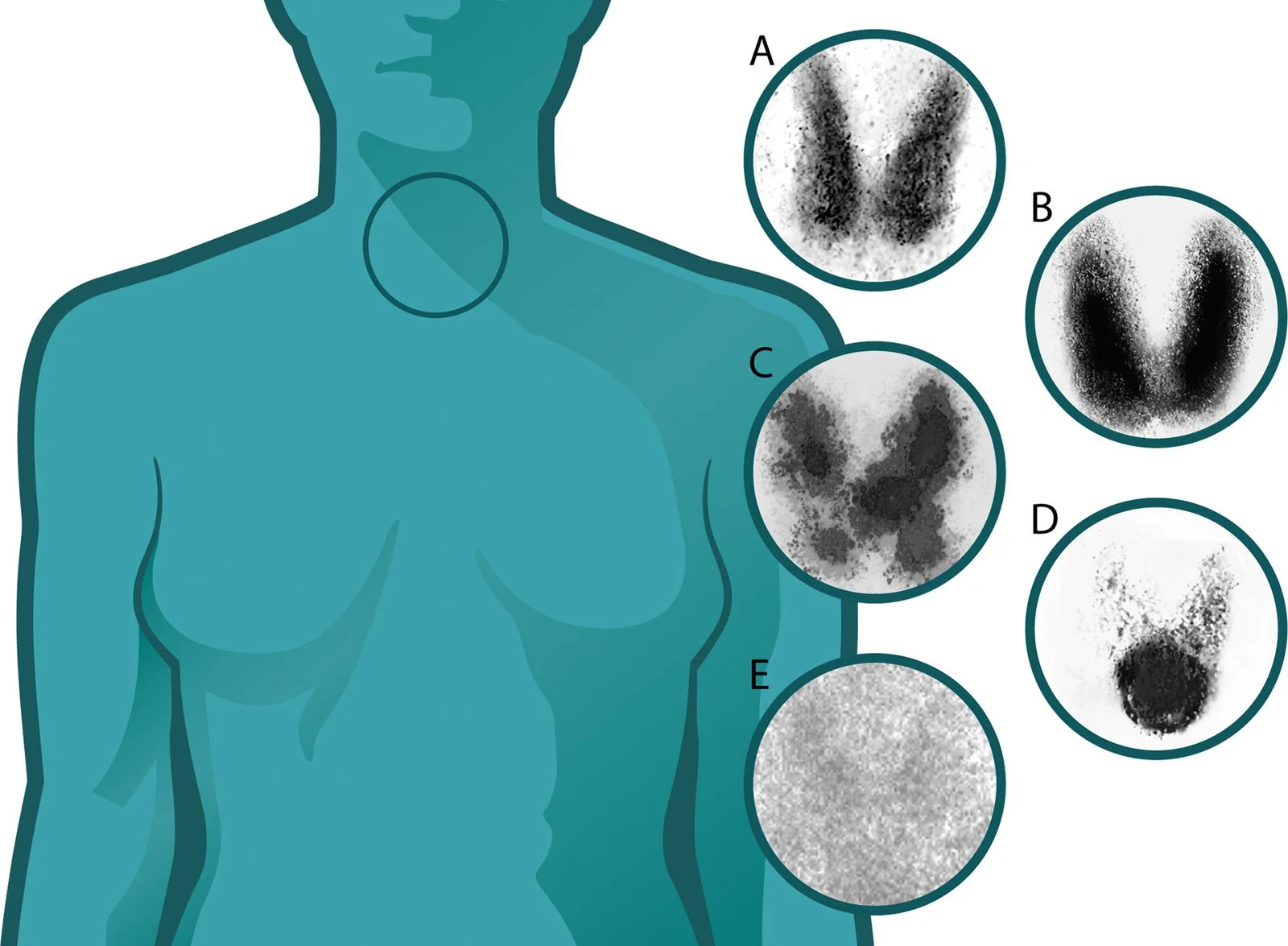
| Graves disease | Autoimmune stimulation of the TSH receptor by TRAb; diffuse goitre, sometimes a thyroid bruit, ophthalmopathy, pretibial myxoedema | Diffuse high uptake |
| Toxic multinodular goitre | Autonomous nodules in a long-standing goitre; usually in older adults; in iodine-deficient or previously deficient areas | Heterogeneous uptake with multiple hot foci |
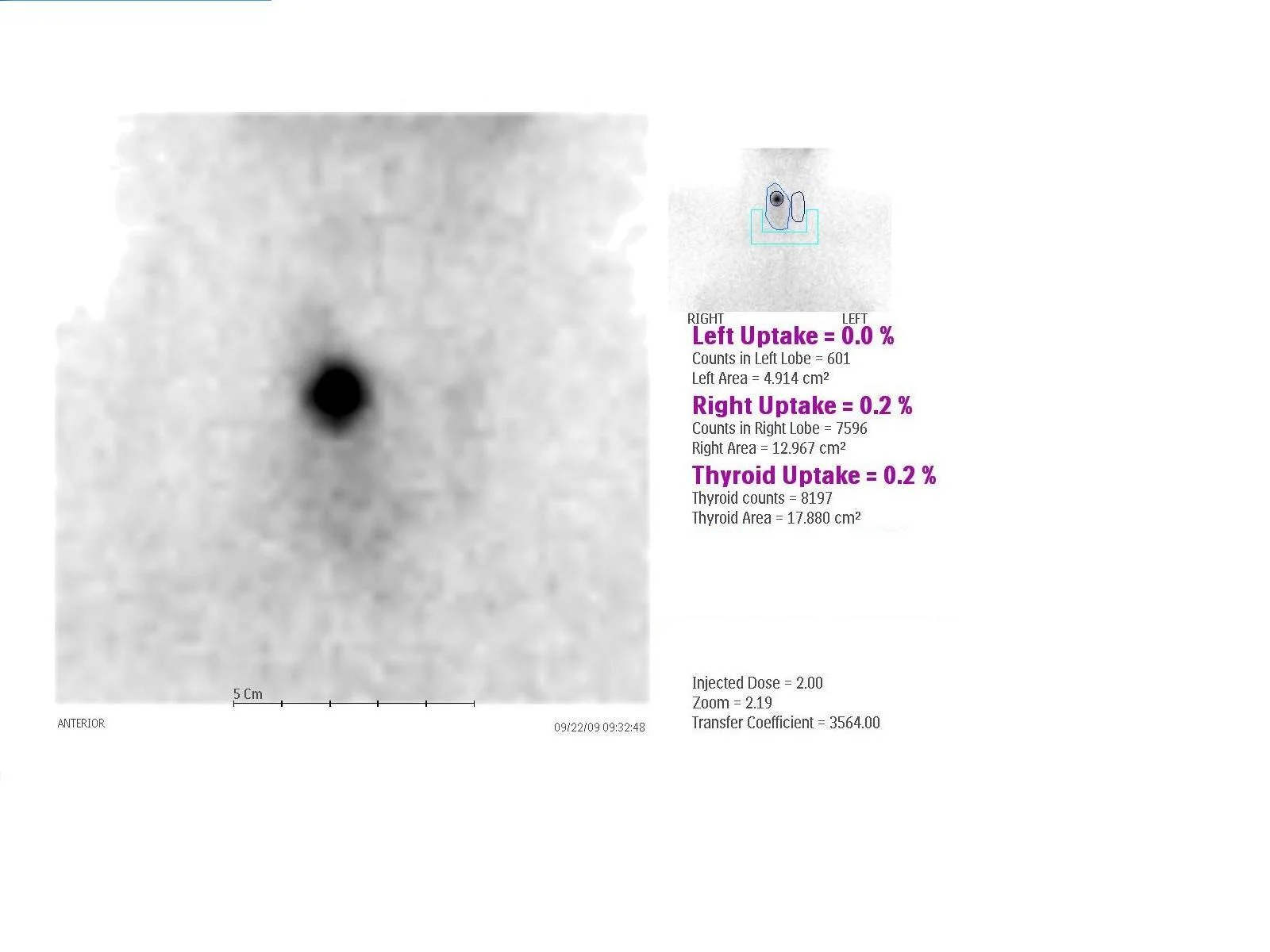
| Toxic adenoma | Single autonomously functioning nodule | One hot nodule with suppression of surrounding thyroid tissue |
| Destructive thyroiditis (subacute, painless or postpartum, drug-related) | Inflammation damages follicles and releases stored hormone; neck pain in subacute disease, transient course | Low uptake |
| Iodine-induced causes (Jod-Basedow, type 1 amiodarone thyrotoxicosis) | Excess iodine drives new hormone synthesis in susceptible glands | Low or absent uptake because the gland is iodine-loaded |
| Amiodarone type 2 thyrotoxicosis | Destructive thyroiditis from amiodarone | Low uptake |
| Exogenous thyroid hormone | Over-replacement or factitious ingestion; low thyroglobulin | Low uptake |
| TSH-secreting pituitary adenoma | TSH is inappropriately normal or high despite raised thyroid hormones | Normal or high uptake |
| Struma ovarii | Functioning thyroid tissue in an ovarian teratoma; thyrotoxicosis without a palpable goitre | Low cervical uptake, tracer uptake in the pelvis |
| Gestational and hCG-mediated thyrotoxicosis | High human chorionic gonadotrophin in the first trimester stimulates the TSH receptor | Not usually needed; resolves as hCG falls |
Graves disease is autoimmune. TSH receptor antibodies (TRAb) stimulate the receptor and drive hormone synthesis, thyroid growth and, through shared antigenic targets, the orbital and skin changes. Risk factors include female sex, family history and the inherited HLA and CTLA-4 associated susceptibility loci described in major reviews. Environmental triggers include cigarette smoking, high iodine intake and stress [2]. Around 30% of patients have a family member with Graves disease or Hashimoto thyroiditis [2].
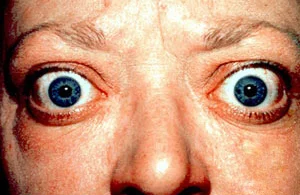
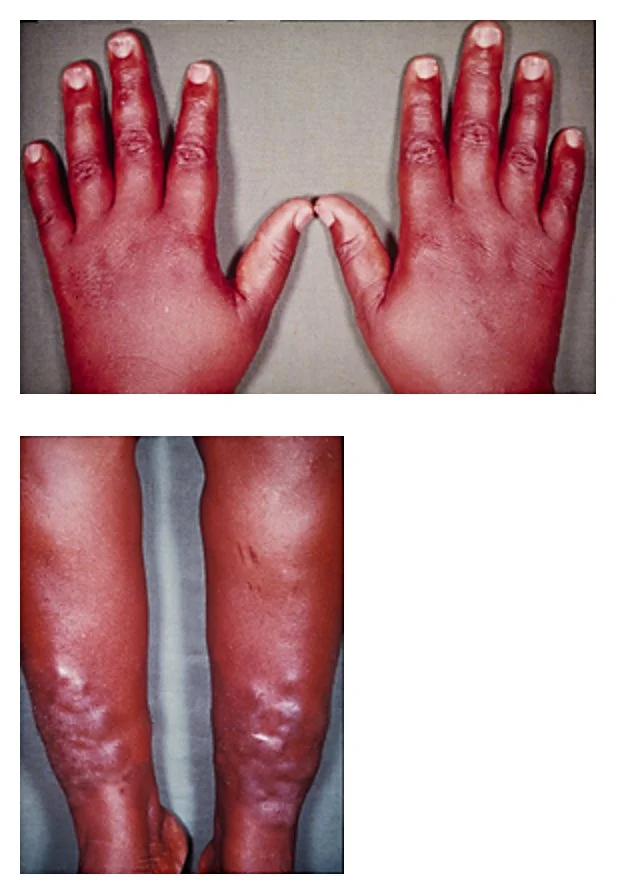
For Graves disease associated with goitre, there may be eye disease ranging from lid retraction and conjunctival irritation to inflammatory orbitopathy with diplopia or optic neuropathy, and rarely pretibial myxoedema (thickened skin over the shins). These extrathyroidal features matter because they change management: orbitopathy is a reason to be cautious with radioactive iodine.
Thyroid hormone increases thermogenesis, basal metabolic rate and cardiac output, and decreases systemic vascular resistance. In hyperthyroidism the tissues are sensitised to catecholamines, which is why symptoms such as tremor, palpitations and anxiety precede and outlast the hormone rise. The untreated state drives catabolism, bone resorption, tachycardia and atrial fibrillation, and cardiovascular decompensation [2].
Patients describe heat intolerance, sweating, weight loss despite increased appetite, tremor, anxiety, restlessness, insomnia, palpitations and diarrhoea or increased stool frequency. Women may have oligomenorrhoea or amenorrhoea and reduced fertility. Proximal muscle weakness, dyspnoea on exertion and palpitations dominate the cardiorespiratory story.
Older adults often have few classic adrenergic features and may instead present with unexplained weight loss, neurocognitive change or cardiovascular complications such as atrial fibrillation [5].
Look for tachycardia (often out of proportion to fever), fine tremor, warm moist skin, palmar erythema, lid retraction and lid lag, a stare, proximal weakness and hyperreflexia. The thyroid may be diffusely enlarged in Graves disease, sometimes with an audible bruit; it may be nodular in toxic multinodular goitre or a single nodule in toxic adenoma. Ophthalmopathy, if present, ranges from mild inflammation to sight-threatening optic neuropathy.
Red flagThyroid storm red flags
Fever above 38.5 degrees Celsius, marked tachycardia, atrial fibrillation, heart failure, altered consciousness, agitation, delirium, vomiting, diarrhoea or jaundice in a thyrotoxic patient indicate possible thyroid storm. Precipitants include infection, surgery, trauma, myocardial infarction, stroke, childbirth, diabetic ketoacidosis and iodinated contrast. [3]
Figure 1Proptosis and lid retraction from Graves' Disease
Long description
Photograph showing a classic finding of Graves' Disease, proptosis and lid retraction.

Figure 2Myxedema
Long description
Pretibial myxedema and thyroid acropachy accompanying hyperthyroidism in a 33-year-old woman with painless swelling of her fingers and lower legs of about four months' duration.

The hormone drive in Graves disease is TSH receptor stimulation rather than pituitary TSH. Antibodies can be measured in two ways: binding assays (reported as TSH receptor binding inhibitory immunoglobulins) give good sensitivity and specificity for Graves disease, about 97% and 98% respectively in a meta-analysis of 21 studies [2]; functional bioassays distinguish stimulating from blocking antibodies. The stimulating antibodies are also useful in pregnancy and in predicting relapse. Ophthalmopathy and pretibial myxoedema are tissue effects of the same autoimmune process.
The clinical differential is wider than the gland itself. Anxiety disorders, phaeochromocytoma, menopause, malabsorption, chronic infection, malignancy and drug effects (sympathomimetics, excess replacement hormone) can all resemble thyrotoxicosis. Endocrine causes in the differential include destructive thyroiditis, painless or postpartum thyroiditis, iodine-induced thyrotoxicosis and a TSH-secreting pituitary adenoma. A TSH-secreting adenoma is especially important not to miss because it will not respond to antithyroid drugs alone: the TSH is inappropriately normal or high. Distinction is made by high-resolution pituitary imaging and dynamic testing in specialist hands.
Among cardiac masses on echocardiography, thyrotoxicosis is not a competing mass, but many patients are first seen because of atrial fibrillation; in an older patient with new atrial fibrillation, thyroid function tests should be checked.
Serum TSH has the highest sensitivity and specificity of any single blood test in suspected thyrotoxicosis and is the usual first screen [2]. When the diagnosis is likely, measuring TSH and free T4 together at first contact improves accuracy. Serum TSH and free T4 are inversely related on a log-linear scale, so small changes in thyroxine produce large shifts in TSH [2].
In overt thyrotoxicosis both free T4 and free T3 are raised with a suppressed TSH. In milder disease free T4 may be normal and only free T3 raised (T3 thyrotoxicosis) [2]. Following starting antithyroid treatment TSH can stay suppressed for several months, so TSH is not a sensitive early marker of response. Free T4 and free T3 should guide dose adjustment, with tests repeated 3-4 weeks after starting treatment, and the dose reduced as levels normalise [2].
Figure 3Thyroid scintigraphy
Long description
Five thyroid scintigrams: normal, Graves disease with diffuse increased uptake in both lobes, toxic multinodular goitre, toxic adenoma, thyroiditis.

Figure 4Nodulo caliente
Long description
A thyroid scintiscan showing a hypercaptating autonomous nodule with suppression of the rest of the thyroid tissue.

TRAb testing confirms Graves disease in most patients and is recommended before stopping antithyroid drugs and during pregnancy [2]. Thyroid ultrasound with colour or power Doppler supports the diagnosis and detects nodules; in Graves disease there is often diffuse enlargement, hypoechogenicity and greatly increased vascularity, sometimes called the thyroid inferno [2]. Scintigraphy is useful when nodules coexist with thyrotoxicosis or before radioactive iodine, and the uptake pattern distinguishes causes: diffuse high uptake in Graves disease, focal uptake in toxic adenoma, heterogeneous uptake in toxic multinodular goitre, and low uptake in destructive thyroiditis, iodine-induced disease and exogenous hormone [2][3].
Pregnancy should be excluded early in any woman of childbearing age. Baseline full blood count and liver function tests are sensible because antithyroid drugs can affect both, but routine frequent testing is not useful since agranulocytosis is abrupt [2]. Thyroglobulin is high in glandular causes and low with exogenous hormone and factitious ingestion. ECG looks for atrial fibrillation; echocardiography is reserved for suspected heart failure or a cardiac complication.
Approach to suspected thyrotoxicosis
- Suspected thyrotoxicosisSymptoms and signs of a raised metabolic rate
- First tests: TSH, free T4 and free T3Suppressed TSH plus raised free T4 and/or free T3 confirms thyrotoxicosis
- Look for the cause clinicallyGoitre, bruit, eye disease, nodules, neck pain, postpartum timing, drugs, pregnancy, ovarian mass
- Question: Is Graves disease likely and is TRAb positive?
Yes
- Graves hyperthyroidismBegin treatment and assess orbitopathy
- Choose ATD, RAI or surgery
No or uncertain
- Thyroid ultrasound and uptake scanDiffuse high uptake = Graves; focal or heterogeneous = toxic nodule or multinodular goitre; low uptake = thyroiditis, iodine or exogenous cause
- Manage the cause identified
Subclinical hyperthyroidism is a TSH below the reference range with normal free T4 and free T3. If it is due to Graves disease the progression rate to overt disease is high, and antithyroid drug treatment should be the first choice for most such patients [4]. Treatment is recommended in patients over 65 years with a persistently low TSH below 0.1 mIU/L, may be considered in over-65s with TSH between 0.1 and 0.39 mIU/L, and is reasonable in symptomatic patients under 65 years with TSH below 0.1 mIU/L who have risk factors or comorbidity [2]. These thresholds are guideline values; exact cut-offs differ between assays and guidelines.
Thyroid storm scoring uses the Burch-Wartofsky point scale as an adjunct to clinical judgement, not as a definitive diagnostic test [3].
| Criterion | Points |
|---|---|
| Temperature 38.0-38.5 C | 5 [3] |
| Temperature 38.6-39.0 C | 10 [3] |
| Temperature 39.1-39.5 C | 15 [3] |
| Temperature 39.6-40.0 C | 20 [3] |
| Temperature 40.1-40.6 C | 25 [3] |
| Temperature above 40.6 C | 30 [3] |
| Central nervous system: mild (agitation) | 10 [3] |
| Central nervous system: moderate (delirium, psychosis, extreme lethargy) | 20 [3] |
| Central nervous system: severe (seizure, coma) | 30 [3] |
| Gastrointestinal-hepatic: moderate (diarrhoea, abdominal pain, nausea or vomiting) | 10 [3] |
| Gastrointestinal-hepatic: severe (jaundice) | 20 [3] |
| Heart rate 90-109 beats per minute | 5 [3] |
| Heart rate 110-119 beats per minute | 10 [3] |
| Heart rate 120-129 beats per minute | 15 [3] |
| Heart rate 130-139 beats per minute | 20 [3] |
| Heart rate 140 beats per minute or above | 25 [3] |
| Congestive heart failure: mild (pedal oedema) | 5 [3] |
| Congestive heart failure: moderate (bibasilar rales) | 10 [3] |
| Congestive heart failure: severe (pulmonary oedema) | 15 [3] |
| Atrial fibrillation present | 10 [3] |
| Precipitating event present | 10 [3] |
| Total under 25: storm unlikely | |
| Total 25-44: impending storm | |
| Total 45 or more: highly suggestive of storm |
The shared decision between antithyroid drugs, radioactive iodine and surgery is central. None of the three is ideal, so the choice is based on patient age, goitre size, the degree of thyrotoxicosis, TRAb concentration, orbitopathy, plans for pregnancy and local availability [4]. The two guidelines most often quoted in modern practice are the 2016 American Thyroid Association guideline and the 2018 European Thyroid Association guideline for Graves hyperthyroidism [1][2].
A beta blocker is recommended for all suitable patients with Graves hyperthyroidism to control adrenergic symptoms such as tremor and palpitations, especially early in treatment before antithyroid drugs take effect [2]. Propranolol 20-40 mg every 6 hours is commonly used, and high doses of propranolol (40 mg four times daily) also reduce peripheral conversion of T4 to T3 [2]. Cardioselective beta blockers are an alternative, particularly with asthma. In thyroid storm much higher doses are used and described later. Anticoagulation should be considered for patients with atrial fibrillation.
Thionamides reduce hormone synthesis. Carbimazole is converted in the liver to methimazole, which is the active drug; propylthiouracil also inhibits peripheral T4 to T3 conversion, which is of minor benefit in ordinary disease but useful in severe thyrotoxicosis [2].
| Drug | Initial dose | Usual maintenance | Key points |
|---|---|---|---|
| Methimazole (from carbimazole) | 10-30 mg once daily (carbimazole 15-40 mg daily) | 2.5-10 mg daily | Preferred first-line for most non-pregnant adults [2]; once-daily dosing and rapid control |
| Propylthiouracil | 100 mg every 8 hours | 50-100 mg daily | Used in first-trimester pregnancy and in thyroid storm; shorter half-life and higher hepatotoxicity risk [2] |
Block-and-replace therapy, giving methimazole 30 mg daily plus levothyroxine, was devised to avoid hypothyroidism, but it does not improve remission rates and the titration regimen is usually preferred in order to minimise the drug dose [2].
Treatment duration with the titration regimen is 12-18 months, after which the drug can be stopped if TSH and TRAb are normal. Maximum remission rates of 50-55% are achieved by 12-18 months [2]. Checking TRAb before stopping predicts remission: lower values mean a greater chance of success [2]. If TRAb is still high at 12-18 months, either continue methimazole and repeat TRAb after a further 12 months, or move to radioactive iodine or surgery [2]. Relapse is most likely within the first 6-12 months after stopping, but can occur years later. Patients who relapse can take long-term low-dose methimazole (for example 2.5-7 mg daily) or have definitive treatment [2].
Common minor effects, such as rash, urticaria, arthralgia and transient mild leucopenia, occur in roughly 1-5% and may respond to antihistamines or a change of drug. Serious effects include agranulocytosis, which occurs in about 0.1-1.0% of patients (methimazole about 0.6%, propylthiouracil 1-1.5%), and hepatotoxicity. Agranulocytosis tends to occur abruptly, usually within 3 months of starting, so routine blood counts do not reliably predict it [2]. Patients should be warned to stop the drug and seek urgent care if they develop fever, sore throat, mouth ulcers, jaundice, dark urine or pale stools. In serious reactions the drug should not be restarted, and the alternative thionamide should not be used after a major allergic reaction.
Pregnant patients require special caution because methimazole in the first trimester carries a risk of embryopathy in about 2-4% of exposed pregnancies, while propylthiouracil has a milder spectrum of defects but more hepatotoxicity [2].
Radioactive iodine is an effective definitive treatment but often causes hypothyroidism. It can be used for recurrent disease after a course of drugs, for cardiac arrhythmias or thyrotoxic periodic paralysis, and when patients prefer it [2]. Fixed activities such as 185, 370 or 555 MBq are widely used [2]. Thyroid function normalises in 3-12 months in 50-90% of patients; hypothyroidism occurs in 5-50% during the first year and about 3-5% per year thereafter [2]. [3]
Thionamides should be paused about a week before and after radioactive iodine so that uptake is not reduced [2]. Conception should be postponed for at least 6 months afterwards in both men and women, and treatment is absolutely contraindicated in pregnancy and breastfeeding [2]. In children, if used, ablative doses aiming at rapid hypothyroidism are given [2].
Graves orbitopathy is the main caution. Radioactive iodine can cause new or worsening orbitopathy in 15-33% of cases [2]. It should be avoided in moderate-to-severe active orbitopathy, and patients with mild active disease or other risk factors should receive steroid prophylaxis [2]. The table summarises the interaction.
| Orbitopathy | ATD | RAI | Surgery |
|---|---|---|---|
| Mild and inactive | Yes | Yes (steroid prophylaxis in selected cases) | Yes |
| Mild and active | Yes (selenium for 6 months) | Yes (steroid prophylaxis warranted) | Yes |
| Moderate-to-severe and inactive | Yes | Yes (steroid prophylaxis unless no other risk factors) | Yes |
| Moderate-to-severe and active | Yes | No | No |
| Sight-threatening | Yes | No | No |
Thyroidectomy is the least selected option for newly diagnosed Graves disease, first-line in less than 1% of North American and about 2% of European surveys, but it is effective when the goitre is large, nodules are suspicious, hyperparathyroidism coexists, radioactive iodine is unavailable or the patient prefers it [2]. Total thyroidectomy is the procedure of choice, with a lower recurrence rate than subtotal thyroidectomy for a similar complication rate [2]. It should be performed by a high-volume surgeon. Euthyroidism should be restored with antithyroid drugs beforehand, and potassium iodide (SSKI) can be given for 10 days beforehand to reduce vascularity [2]. Postoperative hypoparathyroidism and recurrent laryngeal nerve injury are the complications to consent for.
Thyroid storm treatment is based on recent consensus guidance and the ATA guidelines it cites [1][3]. It aims to reduce the peripheral action of hormone, block new synthesis and release, remove precipitants and support the patient in an intensive care setting.
- Supportive care and precipitant removal. Cool the patient and give paracetamol; targeted intravenous fluids; treat sepsis; avoid aspirin, which can raise free hormone levels, and use a pregnancy test in women of childbearing age. Chlorpromazine may be used for sedation if needed.
- Beta blockade. Propranolol 60-80 mg every 4 hours, or intravenous propranolol, labetalol or esmolol in an unstable patient [3]. Avoid high-dose beta blockade in hypotension or suspected cardiomyopathy, where a short-acting agent and early echocardiography are safer.
- Antithyroid drugs. Give methimazole 60-80 mg daily or carbimazole 80-100 mg daily, or propylthiouracil as a 500-1000 mg loading dose followed by 250 mg every 4 hours [3]. Use propylthiouracil with caution in liver dysfunction, and reduce to maintenance doses once stable (propylthiouracil 400 mg, methimazole 30 mg or carbimazole 40 mg daily).
- Corticosteroids. Hydrocortisone 100 mg intravenously then 50 mg four times daily; this reduces T4 to T3 conversion and treats possible relative adrenal insufficiency [3].
- Iodine, given at least one hour after the antithyroid drug. Lugol's iodine 8 drops four times daily or saturated potassium iodide 5 drops four times daily [3]. Iodine is effective when synthesis is high, as in Graves disease, but not when thyrotoxicosis comes from thyroid destruction, including amiodarone type 2 disease.
- Adjuncts and escalation. Cholestyramine 4 g three times daily; lithium in refractory disease under specialist guidance; plasmapheresis; emergency thyroidectomy in specialist centres; and venoarterial ECMO for refractory cardiogenic shock. Thyroid storm usually improves within 24-72 hours. [3]
Reported mortality in thyroid storm ranges from about 8-30% in published series, with 17% in-ICU mortality in one French cohort [3]. [2]
Untreated hyperthyroidism leads to osteoporosis and fragility fractures, atrial fibrillation, embolic stroke, heart failure, and thyrotoxic periodic paralysis [2]. Atrial fibrillation in thyrotoxicosis often reverts to sinus rhythm once euthyroidism is restored, but anticoagulation should be guided by stroke risk, most commonly with the CHA2DS2-VASc score, balanced against bleeding risk [3]. Patients with bone loss or prolonged disease should be assessed for osteoporosis: a probably overlooked but important part of care.
Graves hyperthyroidism has a substantial relapse rate after a course of antithyroid drugs, quoted at about 52.7% in one meta-analysis, compared with 15% after radioactive iodine and 10% after surgery [2]. Relapse risk is higher with severe disease, large goitre, high TRAb, smoking and orbitopathy. Long-term drug therapy remains a safe alternative for some patients who do not achieve remission.
Graves disease is the main cause in children. A longer course of methimazole (about 24-36 months) is recommended, and many need eventual definitive treatment [2][4]. Children are at higher risk of drug side effects; agranulocytosis, although rare, is most important to detect early.
Older adults often have masked, apathetic thyrotoxicosis with weight loss, confusion or atrial fibrillation and few adrenergic symptoms [5]. The elevated risk of atrial fibrillation and cardiovascular complications in this group makes prompt diagnosis important. Amiodarone and iodinated contrast are common iatrogenic causes of thyrotoxicosis in older adults [5].
Preconception counselling and stable euthyroidism before pregnancy are advised. For a patient on methimazole who is planning pregnancy, switching to propylthiouracil for pregnancy and the first trimester is recommended, and block-and-replace regimens should not be used [2]. In pregnancy, initial antithyroid doses are small: methimazole 5-15 mg daily, carbimazole 10-30 mg daily, or propylthiouracil 50-200 mg daily, titrated to keep free T4 at the upper end of the pregnancy-specific range [2]. Maternal free T4 (or total T4) and TSH should be checked every 2 weeks after starting treatment and every 4 weeks once stable [2].
TRAb should be measured at the first pregnancy visit and, if raised, again at 18-22 weeks. Monitoring of the fetus is needed if TRAb remains more than three times the cut-off, because neonatal thyrotoxicosis is a risk [2][6]. Neonatal Graves disease occurs in only 1-5% of infants born to mothers with Graves disease but is dangerous; infants of mothers with current or past Graves disease may be affected regardless of the mother's present thyroid status [6]. In pregnancy, a short beta blocker course (propranolol 10-40 mg three to four times daily) may help symptoms, but prolonged use can restrict fetal growth and cause neonatal bradycardia and hypoglycaemia [2]. Surgery, if needed, is safest in the second trimester [2]. If delivery occurs in a mother with high TRAb, the neonate may need early testing and treatment.
There is no case for population screening for thyrotoxicosis in asymptomatic adults. The main preventable contributor is iodine: too much or too little iodine both worsen thyroid autonomy. Risk of Graves disease is increased by smoking, so smoking cessation advice is a practical prevention message. In low-resource settings, prevention is mostly about iodine nutrition and early recognition.
In settings where radioactive iodine and specialist surgery are limited, a thionamide used for a planned course is the realistic first approach for many patients, with clear written instructions about fever and sore throat. Where even that is hard to sustain, a low, stable maintenance dose with periodic review is better than no treatment. Thyroid function tests may be unavailable or costly: clinical follow-up of pulse, weight and goitre size still helps, and a pregnancy test is important before any treatment in women of childbearing age. Referral pathways for the uncommon patient with sight-threatening orbitopathy, heart failure, or storm should be agreed before they are needed.
- Thyrotoxicosis is hormone excess in the tissues; hyperthyroidism is overproduction by the gland.
- Graves disease is the commonest cause in iodine-adequate areas and is driven by TSH receptor antibodies.
- The metabolic and catecholamine picture explains heat intolerance, weight loss, tremor, anxiety, palpitations and weakness.
- Older adults can have apathetic thyrotoxicosis without classic adrenergic features.
- TSH, free T4 and free T3 establish thyrotoxicosis; TRAb and uptake imaging identify the cause.
- T3 thyrotoxicosis occurs when only free T3 is raised, and TSH may stay suppressed for months after starting treatment.
- Methimazole 10-30 mg daily, or carbimazole 15-40 mg daily, is first-line in most non-pregnant adults; propylthiouracil starts at 100 mg every 8 hours.
- Beta blockers control symptoms, and propranolol also reduces T4-to-T3 conversion.
- Agranulocytosis is abrupt and rare but serious; patients need written instructions and urgent testing if fever or sore throat occurs.
- Block-and-replace therapy does not improve remission; titration, over 12-18 months, is preferred.
- Radioactive iodine is effective but causes hypothyroidism; avoid or protect with steroids in Graves orbitopathy.
- Surgery is total thyroidectomy by a high-volume surgeon after euthyroidism is restored.
- Thyroid storm is clinical: fever, marked tachycardia, atrial fibrillation, heart failure, delirium; Burch-Wartofsky 45 or more is highly suggestive. [3]
- Storm treatment is supportive care, beta blockade, high-dose antithyroid drug, steroids, then iodine after at least one hour, with escalation if needed.
- Pregnancy: switch to propylthiouracil for the first trimester, use low doses, check TRAb and monitor mother and fetus.
- Complications include atrial fibrillation, heart failure, embolic stroke and osteoporosis.
Answer each one in your head first, then open the answer.
A 32-year-old woman has heat intolerance, 6 kg weight loss with increased appetite, tremor and a diffuse goitre. TSH is less than 0.01 mIU/L and free T4 is raised; TRAb is strongly positive. What is the diagnosis and what is the likely uptake scan appearance?
Show answerHide answer
Graves disease. The scan would show diffuse high uptake. Treatment choices are a thionamide, radioactive iodine or surgery, with orbitopathy status checked before choosing radioactive iodine.
A patient with thyrotoxicosis has neck tenderness, a normal scan with very low uptake and no eye disease. What is the most likely cause, and why is iodine not helpful?
Show answerHide answer
Destructive (subacute) thyroiditis. The thyrotoxicosis comes from released preformed hormone, not new synthesis, so iodine or antithyroid drugs act on the wrong mechanism. Beta blockers and anti-inflammatory treatment are used and thyroid function usually recovers.
Which antithyroid drug is preferred for most non-pregnant adults, and what are its typical initial and maintenance doses?
Show answerHide answer
Methimazole (given as carbimazole 15-40 mg daily) is first-line. The usual initial dose is 10-30 mg daily and maintenance is 2.5-10 mg daily. Propylthiouracil 100 mg every 8 hours is the alternative in first-trimester pregnancy, in thyroid storm and where methimazole is not tolerated. [2]
A patient on carbimazole develops fever and sore throat. What has happened, what is the immediate action, and why are routine blood counts not preventive?
Show answerHide answer
Possible carbimazole-induced agranulocytosis. Stop the drug at once, take urgent neutrophil and liver tests, and arrange hospital care. Routine blood counts do not prevent it because the drop is abrupt, usually within 3 months of starting.
A pregnant patient at 8 weeks gestation still has thyrotoxicosis on methimazole 10 mg daily. What drug change and monitoring are appropriate?
Show answerHide answer
Switch to propylthiouracil for the first trimester because of the lower embryopathy risk, use the lowest effective dose, and then change to methimazole after about 16 weeks. Check free T4 about every 2 weeks. Avoid block-and-replace regimens in pregnancy.
A thyrotoxic patient has a fever of 40.5 degrees Celsius, heart rate 150, atrial fibrillation, confusion and jaundice. Calculate a likely Burch-Wartofsky score and state the management priorities.
Show answerHide answer
Points: temperature 25, tachycardia 25, atrial fibrillation 10, central nervous system 30, gastrointestinal-hepatic 20; plus any precipitant 10. The total is well above 45, so thyroid storm is highly likely. Priorities are high-dependency care, cooling and paracetamol, beta blockade, high-dose antithyroid drug, hydrocortisone 100 mg then 50 mg four times daily, and iodine given one hour later.
- Atrial fibrillation and flutter (coming soon as a connected topic)
- Osteoporosis
- Goitre and thyroid nodules
- Hypothyroidism
- Amiodarone and other drugs affecting thyroid tests
- Thyroid eye disease
Measured or claimed numbers above are taken from the sources listed in the front matter and saved in the accompanying claims ledger.
- Ross DS, Burch HB, Cooper DS, et al. 2016 American Thyroid Association Guidelines for Diagnosis and Management of Hyperthyroidism and Other Causes of Thyrotoxicosis. Thyroid 2016;26(10):1343-1421. doi:10.1089/thy.2016.0229. Accessed .
- Kahaly GJ, Bartalena L, Hegedus L, et al. 2018 European Thyroid Association Guideline for the Management of Graves' Hyperthyroidism. European Thyroid Journal 2018;7(4):167-186. doi:10.1159/000490384. Accessed .
- Taylor P, Okosieme O, Effraimidis G, et al. Management of thyroid emergencies: joint consensus statement on management of thyroid storm. European Thyroid Journal 2026;15(4):ETJ260043. Accessed .
- Pearce SHS, Cheetham TD, Wood CL, Gan EH, Perros P. Diagnosis and Treatment of Graves' Disease (Endotext chapter). Endotext [Internet]. South Dartmouth (MA): MDText.com. Accessed .
- Samuels MH. Hyperthyroidism in Aging (Endotext chapter). Endotext [Internet]. South Dartmouth (MA): MDText.com. Accessed .
- Aaron MS, Smith JR. Neonatal Hyperthyroidism (Endotext chapter). Endotext [Internet]. South Dartmouth (MA): MDText.com. Accessed .
Figure credits
- Figure 1: Jonathan Trobe, M.D. - University of Michigan Kellogg Eye Center, via Wikimedia Commons, CC BY 3.0, CC BY 3.0.
- Figure 2: Herbert L. Fred, MD and Hendrik A. van Dijk, via Wikimedia Commons, CC BY 2.0, CC BY 2.0.
- Figure 3: Petros Perros, via Wikimedia Commons, CC BY-SA 3.0, CC BY-SA 3.0. resized.
- Figure 4: Sincefalastrum, via Wikimedia Commons, Public domain, Public domain.
Educational content for medical students and doctors. It is not a substitute for clinical judgement or local guidelines.