Lyme disease
Lyme disease, a tick-borne Borrelia infection: stages, rash-based diagnosis, two-tier serology, and antibiotic treatment.
- Lyme disease is a bacterial infection with the spirochete Borrelia burgdorferi (and, rarely, B. mayonii in the United States), spread to people by the bite of an infected blacklegged tick, also called a deer tick; it is the most common tick-borne disease in humans in the temperate northern hemisphere.
- It is recognised as three clinical stages: early localised disease with a spreading erythema migrans (EM) rash; early disseminated disease with multiple EM lesions, facial nerve palsy, meningitis or other neurological features, or Lyme carditis with atrioventricular block; and late disease with arthritis of one or a few large joints and, sometimes, a subtle encephalopathy.
- Diagnosis is clinical when a typical EM rash is present in a person with plausible tick exposure; otherwise it rests on two-tiered serology for antibodies to B. burgdorferi, which is often negative in the first 4 to 6 weeks of infection.
- Treatment is a course of oral antibiotics, most often doxycycline, amoxicillin or cefuroxime: 10 to 14 days for EM, 14 to 21 days for neurological disease or Lyme carditis, and 28 days for Lyme arthritis, with intravenous ceftriaxone for severe manifestations.
- A first bite in a highly endemic area from an identified Ixodes tick attached for at least 36 hours can be treated with a single dose of oral doxycycline within 72 hours of removal; otherwise the approach is watchful waiting and prompt treatment if symptoms develop.
By the end of this page you should be able to:
- Describe the organism, vector and transmission of Lyme disease, and name the three clinical stages with their characteristic findings.
- Recognise erythema migrans, multiple EM and early disseminated neurological or cardiac disease, and judge when a presentation fits and when it does not.
- Choose the right diagnostic test at the right time, interpret two-tiered serology (including false negatives and persistent positives), and say when PCR of joint fluid adds information.
- Prescribe stage-appropriate antibiotic therapy, including drug, dose, route, duration, and second-line and parenteral regimens, and manage Lyme carditis and arthritis when the first course fails.
- Decide who qualifies for post-exposure prophylaxis after a tick bite and how to prevent tick bites.
- Adapt this approach when tests, antibiotics, cardiac monitoring or specialist care are not available.
DefinitionLyme disease
It is not a single illness but a sequence that can be interrupted at the skin stage. The way it is staged matters, because the stage fixes both the diagnosis and the treatment:
- Early localised Lyme disease: a single erythema migrans lesion at the site of the tick bite, with or without mild constitutional symptoms (fever, malaise, headache, myalgia, arthralgia) in the first days to weeks.
- Early disseminated Lyme disease: infection has spread haematogenously, producing multiple EM lesions at distant sites, or objective neurological disease (cranial nerve palsy, especially facial, meningitis or radiculoneuropathy) or Lyme carditis with atrioventricular (AV) block, usually weeks to a few months after the bite.
- Late Lyme disease: months later, persistent arthritis of one or a few large joints, and, in a minority, a subtle encephalopathy with memory, concentration and mood disturbance. Late neurological disease involving the brain or spinal cord (parenchymal disease) is distinct and is treated with intravenous antibiotics.
There is also a related skin manifestation in Eurasia not expected after travel unless mentioned: borrelial lymphocytoma and acrodermatitis chronica atrophicans, the latter a late dermatological form seen in Europe. [1] These conditions are treated with antibiotics too, but they are rare outside their endemic areas.
Lyme disease is the most common vector-borne infectious disease of humans in the temperate northern hemisphere, affecting hundreds of thousands of people each year in North America and Eurasia. [1] In the United States it is the leading cause of tick-borne disease, with an estimated 476,000 infections diagnosed and treated annually. [9] Most of these infections occur in the Northeast, mid-Atlantic and upper-Midwest regions, with some cases on the Pacific Coast; many people are exposed in their own yards and neighbourhoods rather than in woodland. [4][9]
Outside the United States, endemic foci exist across Europe and into Asia, with somewhat different Borrelia species and with additional manifestations such as borrelial lymphocytoma and acrodermatitis. Africa and much of the tropics do not have endemic Lyme disease; the ticks and reservoirs are absent there, and migrants or travellers who fall ill in the tropics with fever and rash should be evaluated for malaria, typhoid and other local infections first. [1][4]
The illness is strongly seasonal: most cases are reported in the summer, although ticks are active whenever winter temperatures rise above freezing and bites occur year round. [9] Reinfection is possible: prompt treatment of early disease may prevent the later immune response from maturing, so a later bite can produce another erythema migrans. [1]
Organism. B. burgdorferi is a thin, motile spirochete that cannot be grown on routine culture and is not visible on standard light microscopy. With a strong reaction to heat and desiccation, it dies quickly outside a host. [4]
Vectors. Transmission to humans is by two ticks in North America:
- the blacklegged or deer tick, Ixodes scapularis, in the northeastern, mid-Atlantic and north-central United States; and
- the western blacklegged tick, Ixodes pacificus, along the Pacific Coast. [4]
The American dog tick, lone star tick and Rocky Mountain wood tick do not transmit Lyme disease bacteria, although they transmit other illnesses. [4]
Life cycle and infection of ticks. Blacklegged ticks take 2 to 3 years to develop through egg, larva, nymph and adult stages. Larvae and nymphs acquire the infection by feeding on an infected rodent reservoir; the bacteria pass to the next life stage, and nymphs or adults then pass it to humans during a later blood meal. Female ticks do not pass the infection to their eggs, and deer are not infected at all: they are simply hosts that support tick survival and movement. [4]
Nymphal ticks are the dangerous stage. They are tiny (about the size of a poppy seed), abundant in spring and early summer, and often not noticed at all. In endemic areas they account for most transmission. Adult females (about the size of a sesame seed) are larger and more likely to be seen and removed before transmission. [4][9]
Duration of attachment. A tick must be attached for more than 24 hours before B. burgdorferi can be transmitted; removing a tick within 24 hours greatly reduces the risk. [4] The IDSA 2020 guideline uses a stricter cut-off of 36 hours or more of attachment, together with an identified Ixodes vector and a highly endemic area, to define a high-risk bite warranting prophylactic antibiotic. [1] These two figures answer different questions (transmission biology versus who gets prophylaxis) and both are used in practice. The proportion of ticks carrying the infection varies from none to over 50% by area and life stage; in much of the southeastern United States, blacklegged ticks are almost never infected. [4]
What does not spread it. There is no credible evidence for spread by touching, kissing, sexual contact, air, food, water, mosquitoes, fleas or lice. Untreated infection during pregnancy can infect the placenta (maternal-to-fetal transmission is possible but extremely rare), but with appropriate antibiotics there is no increased risk of adverse birth outcomes. No cases have been linked to breast milk. [4]
After injection by the tick, spirochetes multiply locally in the skin and then spread through blood and lymph. In the first days to weeks they reach skin, nervous system, heart and joints; their outer surface molecules vary, allowing them partly to evade early immune recognition, which is why the infection can disseminate before symptoms appear. [1]
The host response evolves in stages:
- Innate and early adaptive response. Antibodies appear only after days to weeks; until then there is no serologic evidence of infection.
- Early disseminated disease. Bacteria seed new skin sites, the meninges and nerve roots, the myocardium (where they disturb cardiac conduction) and synovium.
- Late disease. An inflammatory and autoimmune-type reaction in joints and, less often, a subtle neurological syndrome dominate, sometimes persisting even after the organisms have been cleared. [6][8]
Early disease usually appears days to a few weeks after the bite.
Figure 1Erythema migrans - erythematous rash in Lyme disease - PHIL 9875
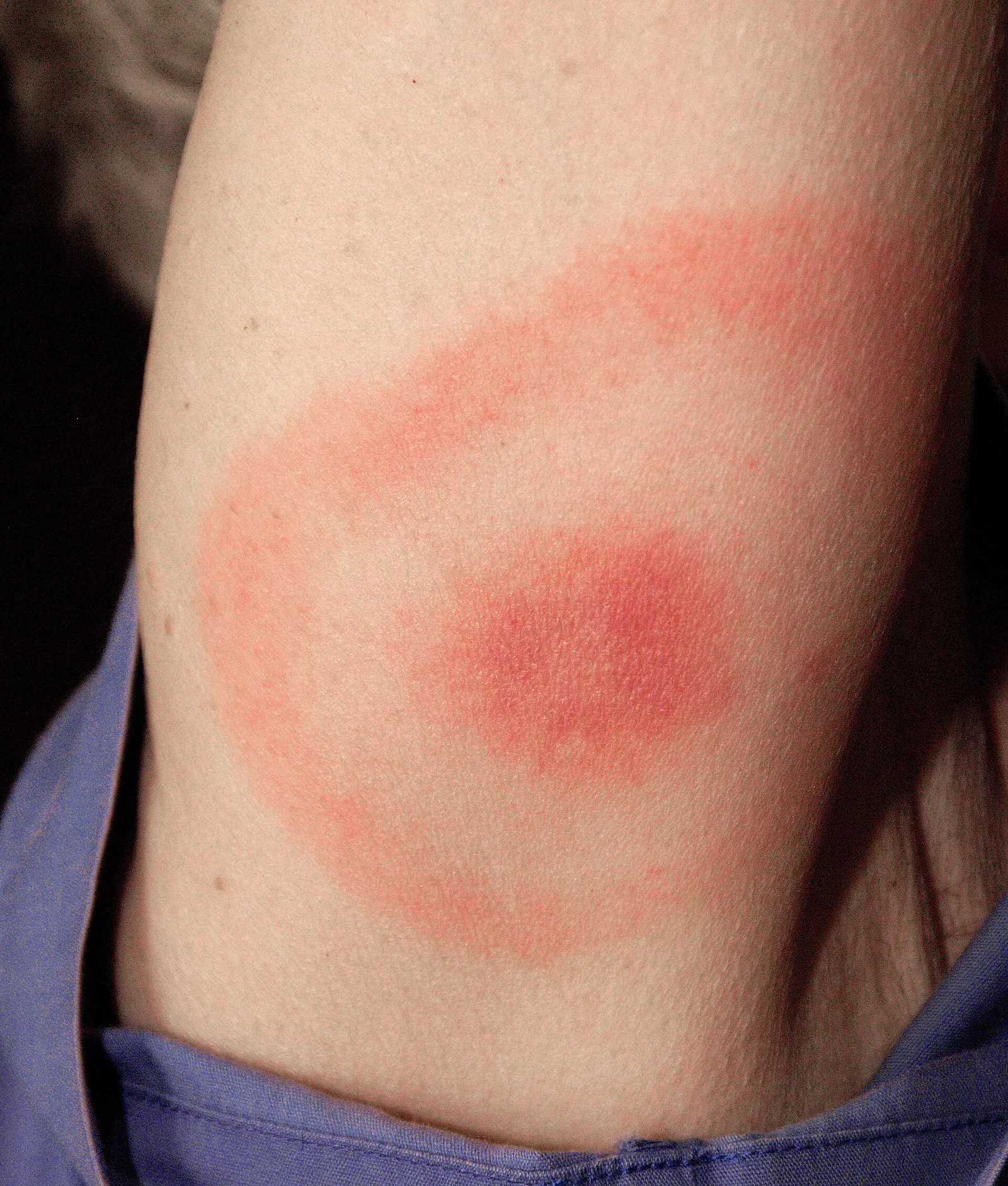
Long description
A 2007 clinical photograph of a pathognomonic bull's-eye erythema migrans rash on a Maryland woman's posterior right upper arm at the site of a tick bite after she contracted Lyme disease.

The hallmark is the erythema migrans rash: a single expanding erythematous skin lesion developing at the bite site and sometimes with central clearing (the so-called bull's-eye, which is helpful when present but not required). It is usually not painful or itchy, warms with the inflammatory response, and slowly enlarges over days. Many patients cannot recall a tick bite. [5] Patients may also have fever, chills, fatigue, headache, myalgia or arthralgia.
Importantly, a clinically compatible EM rash in a person with possible tick exposure in an endemic area is reason to diagnose and treat immediately, before any laboratory result. Waiting for serology wastes the window in which cure is simplest. [1][5]
- Multiple erythema migrans: secondary, smaller EM lesions remote from the bite; the rash is more numerous and sometimes coalesces.
- Facial palsy (facial nerve palsy, often bilateral in Lyme disease), sometimes with meningitis symptoms (fever, severe headache, stiff neck, photophobia) and radiculoneuropathy (numbness, tingling or shooting pain in a limb or trunk).
- Lyme carditis, affecting electrical conduction and producing AV block, palpitations, chest pain, light-headedness, syncope or dyspnoea.
Out of every 100 patients whose cases are reported, 9 have facial palsy, 4 have radiculopathy, and 3 have meningitis or encephalitis. [7] Lyme carditis occurs in roughly 1 in every 100 reported cases. [6] These proportions come from surveillance reporting and probably overstate how often clinicians see them, but they tell you it is common enough to look for.
- Lyme arthritis: large-joint, typically knee, swelling with little pain at rest and no fever, often intermittent and migratory. Knees are most often affected; other large joints such as shoulder, ankle, elbow, jaw, wrist and hip can be involved. Joint swelling can come and go or move between joints and may be hard to detect in deep joints. It usually develops within 1 to a few months after infection. [8]
- Encephalopathy with disturbance of memory, concentration, mood and sleep, and (in Europe) acrodermatitis chronica atrophicans.
Lyme arthritis accounts for approximately 1 in every 4 reported Lyme disease cases, and permanent joint damage can occur if it is untreated. [8]
The differential changes with the stage.
Erythema migrans or STARI (southern tick-associated rash illness): both can produce an expanding rash after a lone star tick bite; in areas where both occur they may not be separable clinically unless the tick is identified. If both occur, treat against Lyme. [1]
Multiple EM or febrile illness: influenza, a viral exanthem, drug eruption, urticaria, cellulitis, staphylococcal or streptococcal skin infection, and secondary syphilis (rash with palm/sole involvement).
Facial palsy: idiopathic Bell's palsy is more common but usually unilateral; think Lyme when there is a bilateral palsy, summer season, endemic area exposure, or meningism. Ramsay Hunt syndrome (herpes zoster) usually has vesicles in the ear and severe pain. [7]
Lyme carditis: viral myocarditis, acute coronary syndrome, other causes of AV block (drug toxicity, rheumatic fever, sarcoidosis, congenital heart block, myocardial infarction).
Lyme arthritis: septic arthritis (fever, a single hot joint, often worse pain, and urgent; lateral to Lyme), reactive arthritis, juvenile idiopathic arthritis, osteoarthritis flare, crystal arthritis, and autoimmune arthritides. Unlike septic arthritis, Lyme arthritis usually does not need surgery. [8]
Chronic fatigue, pain and cognitive complaints after treated Lyme disease: depression, deconditioning, sleep disorders, fibromyalgia, autoimmune disease, thyroid disease, other infection. These are not treated with more antibiotics. [1][2]
Laboratory diagnosis rests on detecting antibodies to B. burgdorferi; CDC recommends a two-step testing process using FDA-cleared assays, performed on one blood sample. [3] The overall result is positive only when the first test is positive (or equivocal) and the second is positive (or equivocal for some assays).
- Standard two-tier testing (STTT): enzyme immunoassay (EIA) first, then western blot for IgM and IgG.
- Modified two-tier testing (MTTT): both steps are EIAs run sequentially or concurrently, with no immunoblot. [3]
General principles that govern interpretation: [1][3]
- Serology is unnecessary for early erythema migrans with plausible exposure; the diagnosis there is clinical.
- Antibodies take time. Serologic assays are frequently negative for the first 4 to 6 weeks after infection, when early disease is most common; patients may test negative if recently infected, and a negative test at that stage does not exclude Lyme disease. [1][3][5]
- One positive test is not enough. Both steps must be positive (or equivocal in the second step for STTT); a single positive screening test is not diagnostic.
- False positives can occur, particularly in relapsing fever, syphilis, rheumatoid arthritis and Epstein-Barr virus infection, and in people without relevant exposure. [3]
- IgM is misleading later. Some assays report IgM and IgG; positive IgM results should be disregarded once the patient has been ill for more than 30 days. [3]
- Titres stay high. Once raised, antibody levels remain elevated for months to years, so they cannot be used to judge cure, and a positive result in a person with past, treated infection does not prove active disease. [3]
- Early antibiotics may blunt seroconversion. Patients treated in the first weeks are less likely to develop detectable antibodies at all. [3]
- Serology is highly sensitive for extra-cutaneous disease (weeks to months after infection), and IgG seronegativity in an untreated patient with months or years of symptoms essentially rules out Lyme disease, barring laboratory error or a rare humoral immune deficiency. [1]
PCR and culture are not first-line for diagnosis, but PCR of joint fluid or tissue is a useful adjunct when a seropositive patient's diagnosis is uncertain and management decisions require more certainty: PCR on synovial fluid has excellent sensitivity in Lyme arthritis, whereas blood or CSF PCR is not reliable. [1][8] For people with suspected Lyme meningitis, cerebrospinal fluid (CSF) examination is not required but can exclude bacterial meningitis; when CSF is taken, the CSF-to-serum antibody index (validated assay) is the useful CSF test, and routine CSF PCR or single CSF serology without the index is not recommended. [1]
For atypical skin lesions of uncertain diagnosis, test with an acute serum sample and, if that is negative, a convalescent sample at least 2 to 3 weeks later. [1]
There is no numeric score. The diagnosis is stage-based:
- Early localised: clinically compatible EM rash with plausible exposure, with or without serology; serology often negative.
- Early disseminated: multiple EM, or objective neurological disease or Lyme carditis, supported by positive or rising two-tiered serology.
- Late: positive two-tiered serology with months of large-joint arthritis (or parenchymal neurologic disease, supported by serology and CSF antibody index); IgG seronegativity in untreated prolonged illness makes the diagnosis very unlikely. [1][2][3]
Because the illness unfolds over time, re-stage rather than re-diagnose: a patient with apparently long-standing symptoms often needs careful exclusion of alternative diagnoses before being labelled with Lyme disease.
Treat promptly. Drug and duration (IDSA 2020 and CDC): [1][5]
| Group | Drug | Dose | Duration |
|---|---|---|---|
| Adults | Doxycycline or | 100 mg orally twice daily | 10 to 14 days (IDSA 10 days preferred) |
| Amoxicillin or | 500 mg orally three times daily | 14 days | |
| Cefuroxime axetil | 500 mg orally twice daily | 14 days | |
| Children | Doxycycline or | 4.4 mg/kg/day orally, divided into 2 doses (max 100 mg per dose) | 10 to 14 days |
| Amoxicillin or | 50 mg/kg/day orally, divided into 3 doses (max 500 mg per dose) | 14 days | |
| Cefuroxime axetil | 30 mg/kg/day orally, divided into 2 doses (max 500 mg per dose) | 14 days |
Comment on the choice: doxycycline, amoxicillin and cefuroxime are all effective; the shorter duration is preferred to reduce adverse effects. Amoxicillin or cefuroxime are the agents used in pregnancy and in young children where doxycycline is not used. For people intolerant of all three, azithromycin is an alternative (5 to 10 days; 7 days preferred in the United States), but it is less effective and should be used with close monitoring. [1][5]
The IDSA and the CDC agree on the following: facial palsy is treated with oral antibiotics, while meningitis or radiculoneuritis can be treated orally or intravenously depending on severity. [1][7]
- Facial palsy: doxycycline 100 mg orally twice daily in adults, or 4.4 mg/kg/day orally in two divided doses (maximum 100 mg per dose) in children of any age; 14 to 21 days.
- Meningitis or radiculoneuritis: doxycycline 200 mg/day orally (divided into 1 or 2 doses) or ceftriaxone 2 g intravenously once daily in adults; in children, doxycycline 4.4 mg/kg/day (in 1 or 2 divided doses, maximum 100 mg per dose) or ceftriaxone 50 to 75 mg/kg intravenously once daily (maximum 2 g per day); 14 to 21 days. Oral therapy can replace intravenous therapy once the patient is stabilised or discharged to complete the course. [1][7]
- For parenchymal brain or spinal cord disease (rare), the IDSA recommends intravenous rather than oral antibiotics. [1]
- CSF serology without an antibody index is not recommended, and corticosteroids are not routinely recommended alongside antibiotics for facial palsy (the evidence gap is acknowledged). [1]
- Eye care matters: patients with facial palsy who cannot close one or both eyes need lubricating drops or patching to prevent corneal damage. [7]
Lyme carditis presents with various degrees of AV block, palpitations, chest pain, syncope or dyspnoea. Outpatients get oral therapy; hospitalised or high-grade block gets intravenous therapy first, then conversion to oral. Total duration 14 to 21 days. [1][6]
Mild (1st degree AV block, PR interval under 300 milliseconds): oral doxycycline 100 mg twice daily, amoxicillin 500 mg three times daily, or cefuroxime 500 mg twice daily in adults; children of any age get doxycycline 4.4 mg/kg/day in 2 divided doses (maximum 100 mg per dose), amoxicillin 50 mg/kg/day in 3 divided doses (maximum 500 mg per dose), or cefuroxime 30 mg/kg/day in 2 divided doses (maximum 500 mg per dose); 14 to 21 days. [6]
Severe (symptomatic, 1st degree AV block PR 300 milliseconds or greater, 2nd or 3rd degree block): adults ceftriaxone 2 g intravenously once daily; children ceftriaxone 50 to 75 mg/kg intravenously once daily (maximum 2 g per day); 14 to 21 days, then transition to oral agents to complete the course. [6]
Admission with continuous ECG monitoring is recommended for PR interval greater than 300 milliseconds, other arrhythmias or clinical evidence of myopericarditis. [1] Symptomatic bradycardia that cannot be controlled medically needs temporary pacing, not a permanent pacemaker. [1] Patients generally recover within 1 to 6 weeks; some need a temporary pacemaker. [6] The IDSA recommends ECG only for patients with symptoms or signs consistent with Lyme carditis, not for everyone with Lyme disease. [1]
Initial episode: a full 28-day course of oral antibiotics. [1][8]
| Group | Drug | Dose | Duration |
|---|---|---|---|
| Adults | Doxycycline or | 100 mg orally twice daily | 28 days |
| Amoxicillin or | 500 mg orally three times daily | 28 days | |
| Cefuroxime axetil | 500 mg orally twice daily | 28 days | |
| Children 8 years and over | Doxycycline or | 4.4 mg/kg/day orally, divided into 2 doses (max 100 mg per dose) | 28 days |
| Amoxicillin or | 50 mg/kg/day orally, divided into 3 doses (max 500 mg per dose) | 28 days | |
| Cefuroxime axetil | 30 mg/kg/day orally, divided into 2 doses (max 500 mg per dose) | 28 days | |
| Children under 8 | Amoxicillin or | 50 mg/kg/day orally, divided into 3 doses (max 500 mg per dose) | 28 days |
| Cefuroxime axetil | 30 mg/kg/day orally, divided into 2 doses (max 500 mg per dose) | 28 days |
For patients with improving but persistent symptoms after the first course, a second course of the same oral antibiotic or observation may be considered. For those with no or minimal response, the IDSA suggests 2 to 4 weeks of intravenous ceftriaxone over a second oral course. [1][8]
Parenteral course for arthritis (no response to oral): adults ceftriaxone 2 g intravenously once daily; children ceftriaxone 50 to 75 mg/kg intravenously once daily (maximum 2 g per day); 14 to 28 days. [8] There is no value in antibiotics beyond 8 weeks in total, provided at least one course was given intravenously. [1] Patients who have failed one oral and one intravenous course should be referred to a rheumatologist for consideration of disease-modifying anti-rheumatic drugs, biologics, intra-articular steroids or arthroscopic synovectomy, because lingering inflammation is then thought to be immune-driven rather than active infection. [1][8]
Most patients recover fully after standard antibiotic therapy. For prolonged symptoms such as fatigue, body aches and difficulty thinking where there is no objective evidence of active infection (arthritis, meningitis or neuropathy), further antibiotics are not recommended and do not help; evaluate for other causes and support the patient. [1][2]
Approach to a patient with possible Lyme disease
- Assess exposure and presentationTick exposure in an endemic area; fever, rash, neurologic, cardiac or joint symptoms
- Question: Typical erythema migrans present?
Yes
- Diagnose clinically and treatDoxycycline, amoxicillin or cefuroxime by table above; no need to wait for serology
- Follow upExpect resolution within days to weeks; re-evaluate if not improving
No
- Question: Early disseminated features (multiple EM, facial palsy, meningitis, radiculoneuritis, carditis)?
Yes
- Order two-tiered serologyTreat empirically if carditis or meningitis suspected, without waiting for results
- Treat by manifestationOral or IV agents and durations as above
No
- Question: Months of large-joint swelling or parenchymal neurological features?
Yes
- Two-tiered serology and, if arthritis, synovial fluid PCR adjunctExclude septic and other arthritis
- Treat Lyme arthritisOral 28 days; IV 14-28 days if no response; refer if persistent
No
- Consider alternativesProlonged symptoms without objective signs are not treated with more antibiotics
Pregnancy. Transmission from mother to fetus is possible but extremely rare, and with appropriate antibiotic treatment there is no increased risk of adverse birth outcomes. [4] Doxycycline is avoided in pregnancy; manage EM with amoxicillin or cefuroxime, and treat disseminated disease with an intravenous beta-lactam such as ceftriaxone when indicated, under obstetric and infectious-diseases supervision. There is no evidence of transmission through breast milk, but a breastfeeding mother should tell her clinician so that a safe antibiotic is chosen. [4]
Children. Doses are by weight as in the tables. For EM and arthritis, amoxicillin or cefuroxime are used for children under 8 years, in whom doxycycline is avoided. [5][8] For carditis and neurological disease, the CDC tables allow doxycycline for children of any age at 4.4 mg/kg/day. [6][7] Lyme arthritis can be mistaken for septic arthritis in children, but (unlike septic arthritis) it rarely needs surgery. [8]
Older adults. Presentation may be atypical and co-morbidities (renal impairment, polypharmacy) require care with ceftriaxone hydration and drug interactions, but the antibiotic principles are unchanged.
- AV block, myopericarditis and, rarely, sudden cardiac death in untreated carditis.
- Facial palsy or meningitis; residual deficits are uncommon after appropriate treatment.
- Lyme arthritis with possible permanent joint damage if untreated; post-infectious persistent arthritis despite adequate antibiotics.
- Secondary disseminated infection of the placenta in pregnancy (rare, preventable with treatment).
After appropriate antibiotics most patients recover completely; carditis usually resolves over 1 to 6 weeks. [6] Involvement of two or more sites is managed by the most severe manifestation's regimen. Reinfection can occur, particularly after prompt early treatment. [1]
Prevention is by avoiding tick bites and removing attached ticks promptly. [9]
- Avoid grassy, brushy and wooded areas where ticks live; stay near the centre of paths. [9]
- Use EPA-registered repellents (DEET, picaridin, IR3535, oil of lemon eucalyptus, PMD or 2-undecanone) on skin, and clothing or gear treated with 0.5% permethrin. [1][9]
- Wear long sleeves and trousers tucked in; light colours make ticks easier to see. [9]
- Check the body, clothing, gear and pets during and after outdoor activity, including in your own back garden; shower soon after coming indoors; use a lint roller on skin and clothes. [9]
- Remove attached ticks as soon as possible without waiting for a clinician. [9]
- In the garden, place a 3-foot barrier of wood chips or gravel between lawn and woodland, keep grass short, remove leaf litter, trim branches to admit sunlight, and keep play equipment away from brush. [9]
- Ticks can be active whenever winter temperatures are above freezing. [9]
- Pets should carry a veterinary tick preventive; check them daily. Cats are sensitive to many chemicals, so ask the veterinarian. [9]
Antibiotic prophylaxis is not given for every bite. The IDSA 2020 guideline recommends a single dose of oral doxycycline only for an identified high-risk bite: [1]
- an identified Ixodes species,
- in a highly endemic area, and
- attached for 36 hours or more.
It must be given within 72 hours of tick removal: adults 200 mg as a single dose, children 4.4 mg/kg (maximum 200 mg). [1] If the bite cannot confidently be classified as high-risk, a watch-and-wait approach is recommended, with prompt treatment if symptoms develop; in certain circumstances a single dose of doxycycline is used after a bite in an area where disease is common. [1][9]
The CDC additionally gives practical tick-removal advice (fine-tipped tweezers close to the skin, steady upward pressure; do not burn or apply chemicals or petroleum products) and advises submitting the tick for species identification. [1]
Lyme disease (and the infections it is confused with) can be managed in settings with limited resources by relying on clinical diagnosis and the cheapest effective drugs: [1][4][5]
- Diagnosis without serology. In an endemic area, a typical EM rash in a person with possible exposure should be treated without waiting for laboratory tests, which may be unavailable or delayed; serology is often negative in the first few weeks anyway.
- Use the cheapest effective oral agents. Doxycycline, amoxicillin and cefuroxime are standard, widely available drugs. Shorter effective durations reduce cost and side effects.
- Match the regimen to severity. Most disease, including facial palsy, can be treated orally; oral doxycycline is a recognised option for meningitis or radiculoneuritis, so transfer to hospital or intravenous therapy is reserved for high-grade AV block, parenchymal neurological disease or sepsis-level illness.
- Cardiac care. High-grade block needs monitoring and temporary pacing, which may require referral; oral therapy continues during transfer.
- Arthritis. Treat 28 days orally; if there is no response, intravenous ceftriaxone is preferred and referral for persistent arthritis follows.
- Missed and late diagnosis. Lyme arthritis is easily confused with septic arthritis in children; the latter needs urgent surgical evaluation.
- Prevention is cheapest. Tick avoidance, protective clothing, prompt removal, and garden maintenance cost far less than treating disseminated disease, and these work without laboratory support.
- Do not over-investigate prolonged symptoms. Fatigue and pain after treatment are not cured by more antibiotics; address other causes.
- For co-infection, a patient with Lyme disease who develops high fever, cytopenias or haemolysis in an area where these infections are endemic needs assessment for anaplasmosis or babesiosis. [1]
- Lyme disease is a tick-borne Borrelia infection transmitted by Ixodes ticks in northeastern, mid-Atlantic, upper-Midwestern and Pacific Coastal areas of North America and parts of Europe and Asia.
- Early localised disease is a single spreading erythema migrans rash; diagnose and treat clinically without waiting for serology.
- Early disseminated disease produces multiple EM lesions, facial nerve palsy (often bilateral), meningitis/radiculopathy, and Lyme carditis with AV block.
- Late disease is large-joint arthritis (often the knee) and, sometimes, subtle encephalopathy; 1 in 4 reported cases is arthritis.
- Two-tiered serology is the laboratory mainstay: frequently negative in the first 4 to 6 weeks; a positive result does not indicate cure; do not use IgM after 30 days ill.
- EM is treated with 10 to 14 days of doxycycline or 14 days of amoxicillin/cefuroxime; neurological or cardiac disease 14 to 21 days; arthritis 28 days; IV ceftriaxone for severe carditis, IV-indicated arthritis and parenchymal neurological disease.
- Amoxicillin or cefuroxime are used in pregnancy and young children where doxycycline is avoided; azithromycin is a less effective alternative for intolerant patients.
- Carditis with PR interval greater than 300 milliseconds, arrhythmia or myopericarditis needs hospitalisation, monitoring and IV therapy, then switch to oral; temporary pacing for symptomatic bradycardia.
- Prolonged subjective symptoms after adequate treatment are not an indication for more antibiotics.
- Prophylaxis is a single 200 mg dose of doxycycline within 72 hours for an identified Ixodes bite in a highly endemic area with at least 36 hours of attachment.
- Prevention depends on tick avoidance, repellents and protective clothing, thorough tick checks, prompt removal and garden maintenance.
Answer each one in your head first, then open the answer.
A 32-year-old woman in Vermont removes a blacklegged tick from her thigh. The tick is identified as Ixodes scapularis and was attached for about 48 hours. It is early June and she lives in a highly endemic county. She feels well. What is appropriate?
Show answerHide answer
A single oral dose of doxycycline 200 mg within 72 hours of tick removal (about 4.4 mg per kg, maximum 200 mg, for children) is recommended because this is a high-risk bite: identified Ixodes vector, highly endemic area, attachment of at least 36 hours. She should also be told to watch for fever or a rash and to seek care promptly if these develop, since prophylaxis reduces but does not abolish risk.
A 45-year-old man develops a single expanding erythematous patch on the thigh 8 days after hiking in Wisconsin. He is afebrile and well. ELISA is ordered but pending. What should be done?
Show answerHide answer
Diagnose and treat clinically: erythema migrans with plausible tick exposure in an endemic area does not require laboratory confirmation. Start oral antibiotics now (doxycycline 100 mg twice daily for 10 to 14 days, or amoxicillin or cefuroxime for 14 days). Serology is often falsely negative in the first weeks and should not delay treatment.
Why must a positive two-tiered serologic test never be read as proof of active or cured Lyme disease?
Show answerHide answer
Antibody titres remain elevated for months to years after infection and cannot indicate live organisms or cure. A positive result may reflect past, treated infection, and people treated early may never seroconvert at all. The test therefore has to be interpreted with the clinical picture and exposure history, and a negative IgG result in an untreated patient with months of symptoms makes Lyme disease unlikely.
A man with confirmed Lyme disease presents with light-headedness, a PR interval of 320 milliseconds and occasional 2:1 AV block. How is this managed?
Show answerHide answer
Admit for continuous ECG monitoring, begin intravenous ceftriaxone (2 g once daily) for 14 to 21 days with transition to oral agents after improvement and resolution of high-grade block, and use temporary pacing for symptomatic bradycardia if needed. Permanent pacemaker implantation is not required; patients generally recover within 1 to 6 weeks.
A 7-year-old child presents with 6 weeks of knee swelling in Connecticut, no fever, and a positive two-tiered serologic test. Synovial fluid grows no organism. The first course of amoxicillin for 28 days did not resolve it. What is the next step?
Show answerHide answer
Treat as Lyme arthritis with a course of intravenous ceftriaxone (50 to 75 mg/kg once daily, maximum 2 g per day, for 14 to 28 days). Because swelling persisted after one oral course, IV therapy is preferred over a second oral course. If there is still no response after one oral and one IV course, refer to a rheumatologist for consideration of disease-modifying therapy, since persistent post-antibiotic arthritis is thought to be immune-mediated. Total antibiotic exposure beyond 8 weeks (including one IV course) adds no benefit.
A patient continues to have fatigue, arthralgia and poor concentration 8 months after documented and treated Lyme disease, but has no arthritis, meningitis or neuropathy and normal inflammatory markers. Re-treatment with 3 months of antibiotics would be appropriate?
Show answerHide answer
No. In patients with persistent or recurring nonspecific symptoms but no objective evidence of reinfection or active disease, further antibiotics are recommended against and do not improve symptoms. Re-evaluate for sleep, mood, thyroid, autoimmune, other infective and deconditioning causes, and offer supportive care.
For a bite in an endemic area, what tick-related and patient factors move a patient from watchful waiting to antibiotic prophylaxis?
Show answerHide answer
A bite qualifies only when all three are present: an identified Ixodes species, a highly endemic location, and attachment for at least 36 hours. Doxycycline must be given within 72 hours of removal. Otherwise, remove the tick promptly (tweezers, steady upward traction), identify the species if possible, and watch for signs of illness, treating any erythema migrans promptly.
Lyme disease sits alongside the other tick-borne and infectious diseases covered on MedGrasp, including meningitis, infectious mononucleosis, malaria, tuberculosis, and syphilis. Cross-links between these topics are added as the relevant pages are verified.
- Lantos PM, Rumbaugh J, Bockenstedt LK, et al. Clinical Practice Guidelines by the Infectious Diseases Society of America (IDSA), American Academy of Neurology (AAN), and American College of Rheumatology (ACR): 2020 Guidelines for the Prevention, Diagnosis and Treatment of Lyme Disease. Clinical Infectious Diseases 2021;72(1):e1-e48. Accessed .
- Centers for Disease Control and Prevention. Clinical Care of Lyme Disease. Lyme Disease: Clinical Care and Treatment (for health care providers). Accessed .
- Centers for Disease Control and Prevention. Clinical Testing and Diagnosis for Lyme Disease. Lyme Disease: Clinical Testing and Diagnosis (for health care providers). Accessed .
- Centers for Disease Control and Prevention. How Lyme Disease Spreads. Lyme Disease: Causes and How It Spreads (for everyone). Accessed .
- Centers for Disease Control and Prevention. Clinical Treatment of Erythema Migrans Rash. Lyme Disease: Clinical Care of Erythema Migrans (for health care providers). Accessed .
- Centers for Disease Control and Prevention. Clinical Care and Treatment of Lyme Carditis. Lyme Disease: Lyme Carditis (for health care providers). Accessed .
- Centers for Disease Control and Prevention. Clinical Care and Treatment of Neurologic Lyme Disease. Lyme Disease: Neurologic Lyme Disease (for health care providers). Accessed .
- Centers for Disease Control and Prevention. Clinical Care and Treatment of Lyme Arthritis. Lyme Disease: Lyme Arthritis (for health care providers). Accessed .
- Centers for Disease Control and Prevention. Preventing Lyme Disease. Lyme Disease: Prevention (for everyone). Accessed .
Figure credits
Educational content for medical students and doctors. It is not a substitute for clinical judgement or local guidelines.