Viral exanthems of childhood
The common childhood rash illnesses: how to recognise measles, rubella, roseola, fifth disease, chickenpox, hand-foot-and-mouth disease and scarlet fever.
- Viral exanthems are the common, usually mild, rashes of childhood; each has a characteristic sequence of fever, enanthem and skin rash.
- Measles is highly contagious, causes Koplik spots and a head-to-toe maculopapular rash, and is prevented and reported; rubella is usually mild but catastrophic in pregnancy.
- Roseola is a high fever that breaks just before a central, peripheral-spreading rash; erythema infectiosum gives the "slapped cheek" then a lacy rash and threatens children with haemolytic anaemia.
- Chickenpox is an itchy, vesicular rash in crops; hand, foot and mouth disease mixes mouth ulcers with vesicles on the palms and soles; scarlet fever adds a sandpaper rash to strep throat.
- Diagnosis is usually clinical, treatment is supportive (antibiotics only for scarlet fever, vitamin A in measles), and returning to school depends on fever, contagiousness and local rules.
By the end of this page you should be able to:
- Recognise the seven common childhood exanthems from cause, rash pattern and associated symptoms.
- Explain the complications that matter for each illness, including Koplik spots, subacute sclerosing panencephalitis, aplastic crisis and febrile seizures.
- Use a stepwise approach to a febrile child with a rash and know when to test.
- State the contagious period, a typical isolation or exclusion period, vaccination and notification rule for each illness.
- Advise parents and schools about safe return after infection and when to seek urgent care.
An exanthem is a widespread rash caused by a systemic illness; an enanthem is the same kind of process on the mucous membranes. The viral exanthems of childhood are the everyday febrile rash illnesses that fill paediatric clinics: each is produced by a specific virus (or, in the case of scarlet fever, by a bacterium that mimics them), and each carries a signature that lets a clinician name it at the bedside. This page covers the seven that a student is most likely to meet on wards and in general practice: measles (rubeola), rubella (German measles), roseola infantum (exanthema subitum, sixth disease, usually caused by human herpesvirus 6), erythema infectiosum (fifth disease, caused by parvovirus B19), varicella (chickenpox), hand, foot and mouth disease (caused by coxsackieviruses and other enteroviruses) and scarlet fever (caused by Streptococcus pyogenes).
Not every rash in a febrile child is an exanthem. Rashes can be drug reactions, vasculitides or a warning sign of sepsis. The purpose of learning the patterns below is to spot the ordinary quickly and to notice the child who does not fit.
These rashes are commonest in unvaccinated or under-vaccinated children and in the preschool years, with each illness peaking at a different age. Measles and rubella spread by respiratory droplets and airborne aerosol and are most contagious in the prodrome and early rash phase. Roseola clusters in infants and toddlers, with most children infected before their third birthday. Erythema infectiosum is a school-age disease, most often affecting children aged 4 to 11 years, with winter and spring peaks. Chickenpox used to be almost universal in childhood before varicella vaccination. Hand, foot and mouth disease is most common in infants and children younger than 5 years and surges in summer and autumn in temperate climates; outbreaks rip through nurseries and schools. Scarlet fever is most common in school-aged children and occurs most when group A streptococcus circulates. Vaccination has changed the landscape dramatically for measles, rubella and varicella, but all of these infections still appear, especially in susceptible clusters and in travellers. [4][5]
- Measles is caused by a single-stranded, enveloped RNA virus, a Morbillivirus of the Paramyxoviridae family. Humans are its only natural host. Up to 9 out of 10 susceptible people with close contact to a measles patient develop the disease. [1]
- Rubella is caused by an enveloped, positive-stranded RNA virus, a Rubivirus in the Matonaviridae family, again with humans as the only host. [2]
- Roseola infantum is caused by the B variant of human herpesvirus 6 (HHV-6B) and, less often, by HHV-7. Both belong to the genus Roseolovirus in the Betaherpesviridae subfamily. [4]
- Erythema infectiosum is caused by parvovirus B19, a small DNA virus that infects erythroid progenitor cells. It spreads mainly by respiratory secretions and, to a lesser extent, saliva. [5]
- Varicella is caused by varicella-zoster virus (VZV), an alpha-herpesvirus. It is highly contagious and passes by direct contact, airborne spread and contact with contaminated items. [3]
- Hand, foot and mouth disease is caused by enteroviruses, most often coxsackievirus A16; coxsackievirus A6 can produce more severe disease and coxsackievirus A10 has been linked to severe disease. Enterovirus 71 is important in East and Southeast Asia and has been associated with severe neurological disease such as encephalitis. [6]
- Scarlet fever is caused by pyrogenic-exotoxin-producing Streptococcus pyogenes (group A streptococcus), the same organism that causes strep throat. [7]
The exanthem is not random decoration; it is the visible end of a short immunological story. In measles, after respiratory entry and replication in lymphoid tissue, a second viraemia carries virus to the skin and mucosa, producing the enanthem and then the rash. In roseola, the virus replicates abundantly in the salivary glands and spreads by respiratory droplets; the rash appears only as the fever falls, when the immune response is already winning. In erythema infectiosum, parvovirus B19 enters through erythrocyte P antigen, destroys erythroid precursors, and the rash is an immune-complex phenomenon: by the time it appears the patient is no longer contagious. Varicella spreads in successive crops because viraemia seeds the skin in waves. Hand, foot and mouth disease is an enteroviral infection with mucosal and acral tropism. Scarlet fever toxin produces the diffuse rash and the sandpaper texture from the streptococcal pharynx. Understanding this explains two practical points: the rash often means the infectious peak has passed (except in measles and varicella), and patients can spread infection before they look ill. [7]
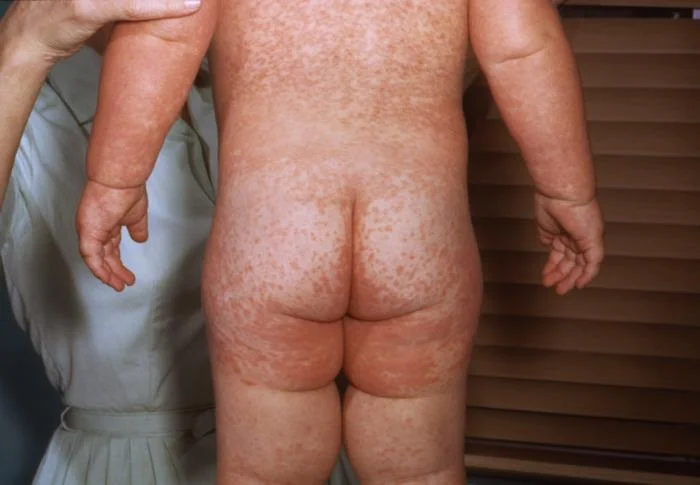
Figure 1Measles rash PHIL 4497 lores
Long description
A child with the characteristic red blotchy maculopapular rash of measles.

Measles is an acute viral respiratory illness. The prodrome is a high stepwise fever, malaise, and cough, coryza and conjunctivitis (the three Cs). Koplik spots are a pathognomonic enanthem of tiny white spots on the buccal mucosa that appear in the prodrome before the rash. The maculopapular rash appears 3 to 5 days after the first symptoms, begins at the hairline and on the face, and spreads down the neck, trunk and limbs to the hands and feet; fever may spike to above 104 degrees Fahrenheit (40 degrees Celsius) when it appears. The rash usually appears about 14 days after exposure. [1] Patients are contagious from 4 days before to 4 days after rash onset. [1]
Complications are common: otitis media, bronchopneumonia, croup and diarrhoea. Acute encephalitis occurs in about 1 in every 1,000 cases. About 1 to 3 of every 1,000 children who contract measles die from respiratory or neurological complications. Subacute sclerosing panencephalitis is a rare, fatal degenerative disease of the central nervous system with behavioural and intellectual deterioration and seizures that develop 7 to 10 years after infection. Immune amnesia, a temporary loss of immunity to other diseases, can persist for months to years. [1] [3]
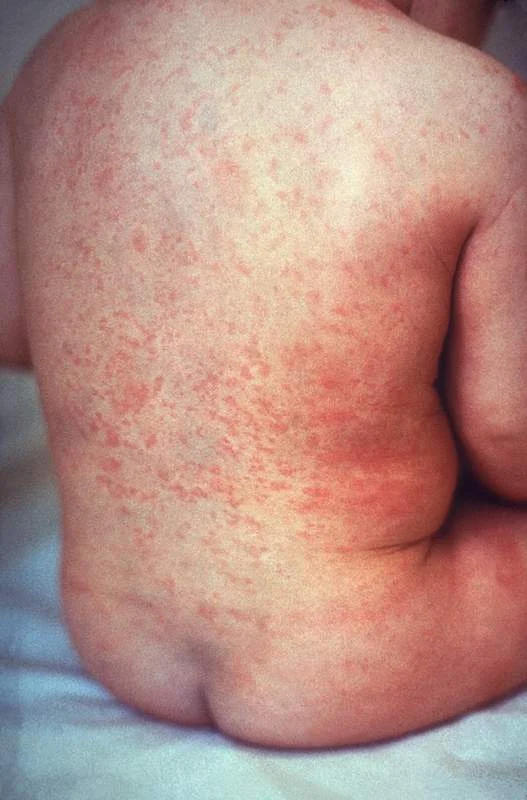
Figure 2Rash of rubella on skin of child's back
Long description
Rash of rubella on the skin of a child's back, similar in distribution to measles but less intense.

Rubella is usually mild. The incubation period averages 17 days (range 12 to 23 days). People are most contagious when the rash is erupting, but can be contagious from 7 days before to 7 days after rash onset. [2] About 25 to 50 percent of infections are asymptomatic. [2] In young children the rash may be the first sign; older children and adults may have a short prodrome of low-grade fever, malaise, lymphadenopathy and upper respiratory symptoms. The maculopapular rash starts on the face, becomes generalised within 24 hours and lasts a median of 3 days. Lymphadenopathy, often posterior auricular or suboccipital, may precede the rash and last 5 to 8 days. [2] Rubella in pregnancy, especially in the first trimester, can cause miscarriage, stillbirth and the birth defects of congenital rubella syndrome. Arthralgia or arthritis may occur in up to 70 percent of adult women. Rare complications include thrombocytopenic purpura and encephalitis. [2] [7]
Roseola is chiefly a disease of infants: most children are infected before 3 years and nearly everyone is seropositive by 3 years. [4] Ten to 45 percent of febrile illness in infants in the United States has been attributed to HHV-6. [4] The classic picture is 1 to 5 days of high fever, sometimes above 104 degrees Fahrenheit (40 degrees Celsius), with only a mild upper respiratory illness, followed by abrupt defervescence and then a rash. The rash is a macular or maculopapular eruption, 2 to 5 millimetres, rose-pink, non-pruritic and blanching, starting on the trunk and spreading to the neck and limbs. It lasts 1 to 2 days. Nagayama spots, erythematous papules on the uvula and soft palate, may occur. Febrile seizures are the commonest complication, reported in 10 to 15 percent of cases and a major cause of febrile seizures in children under 2 years. Reactivation of latent virus in immunocompromised hosts can cause encephalitis, myocarditis, hepatitis, pneumonitis and gastrointestinal disease. [4]
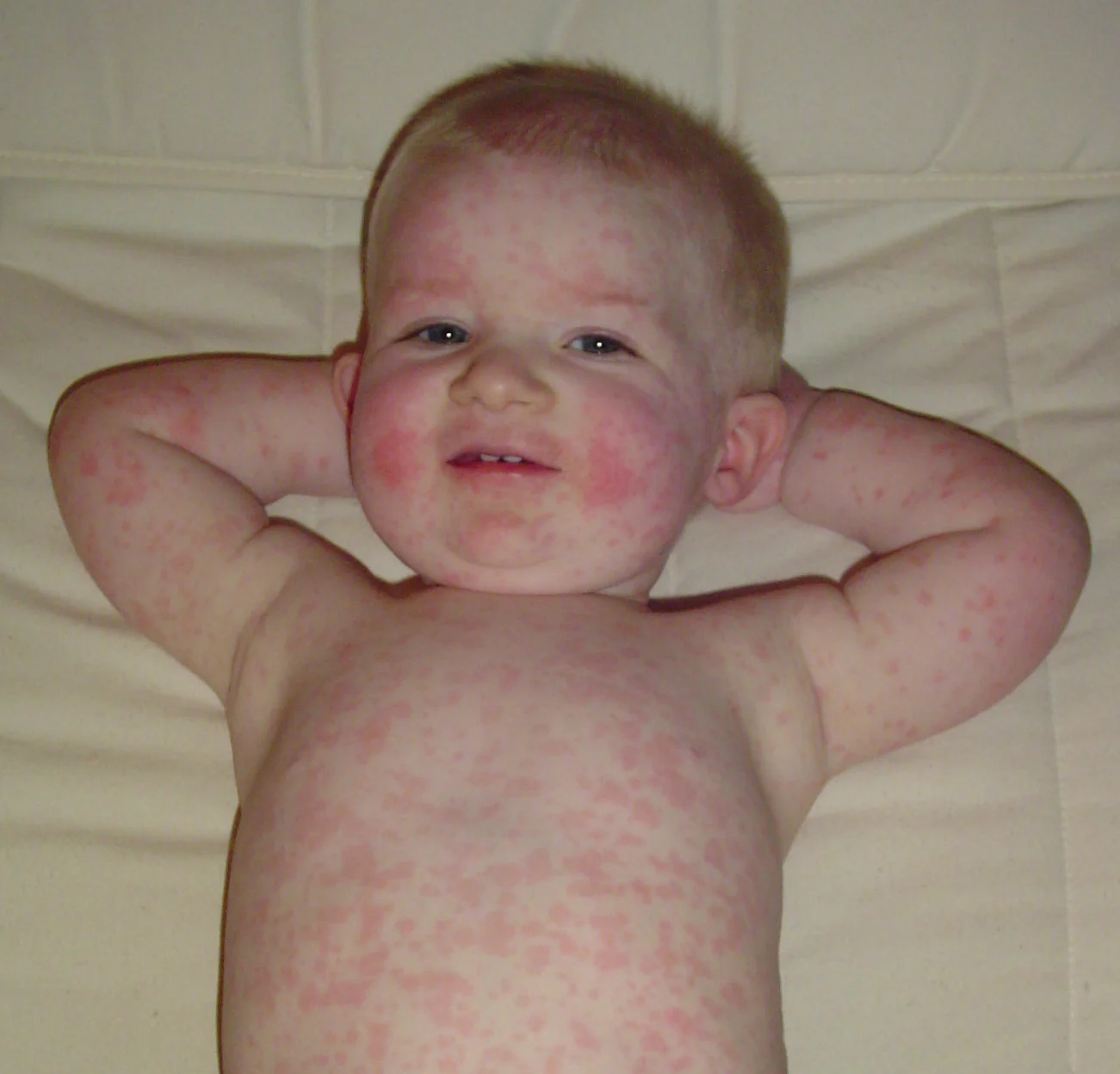
Figure 3Fifth disease cropped
Long description
A 16-month-old child with the slapped-cheek rash of fifth disease (erythema infectiosum, parvovirus B19).

Parvovirus B19 infection ranges from asymptomatic to severe. Erythema infectiosum is its commonest childhood presentation. The affected age group is school-aged children, 4 to 11 years, with winter and spring peaks; the incubation period is usually 4 to 14 days. [5] The prodrome is mild: low-grade fever, headache, malaise and myalgia. The rash has three phases: an erythematous "slapped cheek" rash with circumoral pallor, then a macular rash on the trunk, limbs and buttocks that becomes reticulated or lacy, then evanescence with recurrences triggered by sunlight, heat, exercise or stress. The rash tends to be more intense on extensor surfaces and usually spares the palms and soles. It is itchy in about half of cases; in 80 percent of cases it is reticulated. [5] Joint involvement is commoner in older children and adults. [5]
The dangerous part of parvovirus B19 is haematological. The virus destroys erythroid precursors via the P antigen, and in children with chronic haemolytic anaemia such as sickle cell disease, hereditary spherocytosis and thalassaemia it causes a transient aplastic crisis with severe anaemia, reticulocytopenia, and a fall in haemoglobin concentration of more than 30 percent. Potential complications include heart failure, stroke and acute splenic sequestration. [5] There is no specific antiviral therapy; treatment is supportive, with blood transfusion for aplastic crisis, and immunoglobulin in immunodeficiency. [5] No parvovirus vaccine is available. [5]
In pregnancy, fetal infection occurs in 17 to 33 percent of maternal infections, with the highest risk between 9 and 20 weeks. Complications include miscarriage, stillbirth and non-immune hydrops fetalis. Routine screening in pregnancy is not recommended, but serology is used when recent infection is suspected. [5]
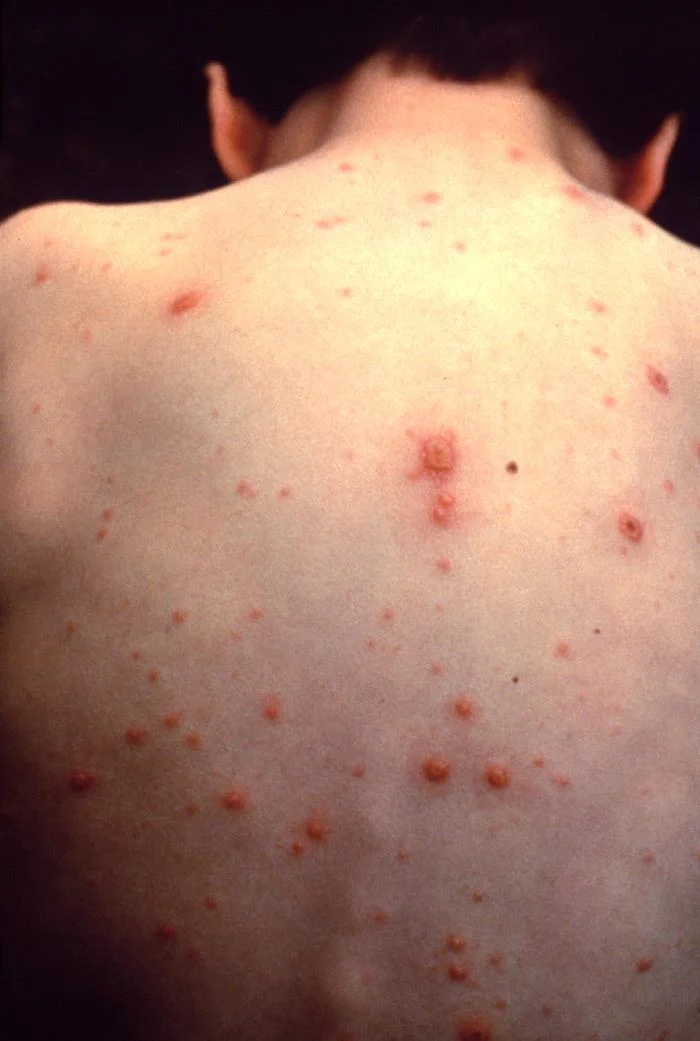
Figure 4Varicella
Long description
A CDC/PHIL photograph described on Wikimedia Commons as varicella simplex (chickenpox) on a child, sourced from phil.cdc.gov.

Varicella is an acute febrile rash illness caused by VZV. The incubation period averages 14 to 16 days (range 10 to 21 days) and may be prolonged to 28 days or more after varicella-zoster immune globulin. [3] Secondary infection occurs in 61 to 100 percent of susceptible household contacts. [3] A mild prodrome of fever and malaise may precede the rash by 1 to 2 days in adults; in children the rash is often the first sign. [3] The rash is pruritic and generalised and progresses from macules to papules to vesicles with an erythematous base, then crusts. Lesions appear in successive crops, often 2 to 4 crops, so that macules, vesicles and crusts exist together; a healthy unvaccinated child may have 250 to 500 lesions, concentrated on the chest and back. Symptoms last 4 to 7 days. [3] A person is contagious from 1 to 2 days before rash onset until all lesions have crusted; vaccinated people whose lesions do not crust are contagious until no new lesions have appeared for 24 hours. [3]
The commonest complications are bacterial skin and soft-tissue infection in children and pneumonia in adults. Neurological complications include cerebellar ataxia (about 1 in 4,000 cases in unvaccinated children) and encephalitis (about 1 in 50,000 cases in unvaccinated children). [3] Varicella in adults, pregnant women and immunocompromised people can be severe and may disseminate to lung, liver and brain. Congenital varicella syndrome can follow infection in early pregnancy, and neonatal varicella is a risk if the mother's rash appears from 5 days before to 2 days after delivery. [3]
HFMD is a common, usually mild illness. It is most common in infants and children younger than 5 years, can spread quickly at nurseries and schools, and outbreaks peak in summer and autumn in the United States. Fever and flu-like symptoms typically appear 3 to 5 days after infection, followed by painful oral ulcers and a rash on the palms, soles, buttocks, legs and arms. The rash is usually not itchy and appears as flat or slightly raised red spots with blisters on a red base. Most people recover in 7 to 10 days. The disease is caused by enteroviruses, most often coxsackievirus A16; coxsackievirus A6 may cause more severe disease and enterovirus 71 is associated with outbreaks and neurological complications in Asia. [6]
Complications are rare, but include dehydration from painful mouth sores, viral meningitis, and encephalitis or paralysis in exceptional cases. A child with extensive vesicles can still transmit the virus from throat secretions, blister fluid and stool for days to weeks after recovery, including without symptoms. [6] No vaccine against the viruses that cause HFMD exists in the United States. [6]
Returning a child to school or nursery depends on symptoms rather than a fixed number of days: the child should be afebrile, well enough to participate and without uncontrolled drooling from mouth sores. Local health departments sometimes require exclusion during an outbreak. [6]
Scarlet fever is a bacterial infection caused by group A streptococcus. It usually takes 2 to 5 days after exposure for symptoms to begin. [7] It typically occurs with pharyngitis: fever, sore throat, swollen tonsils. Early in the illness the tongue may have a yellowish-white coating with red papillae, which later clears to leave a "strawberry" tongue. The rash appears 1 to 2 days (or up to 7 days) after illness begins and has a sandpaper texture; it is brighter in skin creases and the face may be flushed with pallor around the mouth. The rash fades in about 7 days and may be followed by peeling of the skin on the fingers, toes and groin. [7] Diagnosis requires a rapid antigen detection test, nucleic acid amplification test or throat culture because many other organisms cause pharyngitis with a rash. [7] Antibiotic treatment shortens the illness and reduces complications and spread to others. [7] Untreated or delayed disease can lead to rheumatic fever, post-streptococcal glomerulonephritis, ear infection, sinusitis, skin infection and, rarely, septicaemia or meningitis. [7] In the United States diagnosis and reporting should follow local health department requirements and national case definitions. [7]
The table sets the seven illnesses side by side on cause, rash pattern, associated symptoms and the complications a doctor must not miss.
| Illness | Cause | Rash pattern | Associated symptoms | Complications not to miss |
|---|---|---|---|---|
| Measles | Measles virus (Morbillivirus, Paramyxoviridae) | Maculopapular rash, from the hairline and face downwards over the next 3 days | Fever, cough, coryza, conjunctivitis; Koplik spots 2–3 days before rash | Pneumonia, encephalitis (about 1 in 1,000), SSPE (7–10 years later), death (1 to 3 in 1,000 children), immune amnesia [1] |
| Rubella | Rubella virus (Rubivirus, Matonaviridae) | Mild maculopapular rash, face first, generalised within 24 hours, lasts about 3 days | Low-grade fever, posterior auricular/suboccipital lymphadenopathy 5–8 days; arthralgia in up to 70% of adult women | Congenital rubella syndrome with first-trimester infection; rare thrombocytopenia or encephalitis [2] |
| Roseola infantum | HHV-6 (usually HHV-6B), sometimes HHV-7 | Maculopapular, 2–5 mm, rose-pink, blanching, starts on trunk, spreads to neck and limbs; lasts 1–2 days | High fever 1–5 days with mild rhinitis or cough; rash appears as fever falls | Febrile seizures in 10–15% (often under 2 years); severe disease in immunocompromised patients [4] |
| Erythema infectiosum (5th disease) | Parvovirus B19 | Slapped cheeks with circumoral pallor, then lacy reticulated rash on trunk, limbs and buttocks; often itchy in about half; may recur | Low-grade fever, headache, malaise and myalgia; joint pain in older children and adults | Transient aplastic crisis in haemolytic disease (more than 30% fall in haemoglobin); hydrops fetalis in pregnancy [5] |
| Varicella (chickenpox) | Varicella-zoster virus | Generalised pruritic rash in crops from macules to vesicles on an erythematous base, then crusts; often 250–500 lesions concentrated on trunk | Mild fever and malaise 1–2 days before rash in adults; children often rash first | Secondary bacterial skin infection (children), pneumonia (adults), cerebellar ataxia and encephalitis (uncommon) [3] |
| Hand, foot and mouth disease | Coxsackieviruses and other enteroviruses | Oral ulcers plus maculopapular/vesicular rash on palms, soles, buttocks and limbs; rash usually not itchy | Fever 3–5 days before rash, sore throat, poor feeding and drooling; most recover in 7 to 10 days | Dehydration, viral meningitis, encephalitis or paralysis (rare) [6] |
| Scarlet fever | Streptococcus pyogenes (group A strep) | Sandpaper rash starting on neck, spreading over body; flushed cheeks with circumoral pallor; Pastia's lines | Fever, sore throat, strawberry tongue, anterior cervical lymphadenopathy | Rheumatic fever, post-streptococcal glomerulonephritis, skin and soft-tissue infection, sepsis (untreated) [7] |
The comparison table under Clinical features sets the seven illnesses side by side. The decisions that separate them are in the bedside clues below.
- Koplik spots (tiny white buccal spots) are virtually specific for measles and appear before the skin rash. [1]
- Roseola is the only common pattern where the child becomes well as the rash begins; the rash also starts centrally and moves outwards, opposite to measles. [4]
- Parvovirus B19 often looks like slapped cheeks followed by a lacing rash; the child is usually not very ill, but ask about sickle cell disease or other haemolytic anaemia. [5]
- Varicella lesions exist in every stage at once and are intensely itchy; measles fading leaves a brownish desquamation; scarlet fever feels like sandpaper.
- HFMD ulcers hurt and children drool; varicella vesicles are on the body rather than selectively on palms and soles.
- Scarlet fever has pharyngitis, a strawberry tongue and Pastia's lines; a sandpaper rash with a sore throat localises the diagnosis before the swab result.
Most exanthems need no test: the diagnosis is clinical, and many laboratories have no rapid, widely available test for viruses such as HHV-6. Investigations are reserved for the child who is unwell, who has an unusual course, or where infection control requires confirmation.
- Measles. Laboratory confirmation is essential, especially for sporadic cases and outbreaks. Collect a nasopharyngeal or throat swab for RT-PCR and a blood sample for IgM at first contact; urine may also contain virus. [1]
- Rubella. Clinical diagnosis is unreliable, so cases are laboratory confirmed. PCR from nasopharyngeal/throat or urine swabs and rubella-specific IgM and paired IgG serology are used. Virus may be detectable up to 10 days after rash onset. [2]
- Varicella. Because vaccinated children can have mild, modified disease, laboratory confirmation is increasingly needed when the diagnosis is uncertain; PCR of vesicle fluid or scabs is the best method. [3]
- Scarlet fever. Confirm with a rapid antigen detection test, nucleic acid amplification test or throat culture. [7]
- Parvovirus B19. Diagnosis is mainly clinical; B19V-specific IgM/IgG and PCR are used in pregnancy, haemolytic disease and immunocompromised patients. [5]
- HHV-6 and enteroviruses (roseola, HFMD). These are diagnosed clinically. PCR or serology is used in atypical, severe or immunocompromised cases. [4][6]
Useful baseline tests in a child who looks unwell include a full blood count (remember parvovirus can cause reticulocytopenia and a more than 30 percent fall in haemoglobin in children with haemolytic disease), renal and liver tests when systemic involvement is suspected, and a lumbar puncture when meningitis cannot be excluded on clinical grounds.
A febrile child with a rash: working through the common exanthems
- First assess severityAirway, breathing, circulation; rash type; hydration; neurological state
- Question: Red flags?
Yes
- Urgent care and sepsis/meningitis pathwayNon-blanching rash, altered consciousness, respiratory distress, shock, dehydration; do not wait for the rash to declare itself
No
- Take the history of the fever and rashOnset and sequence of fever versus rash; exposures; vaccination; sickle cell or other anaemia; pregnancy contacts
- Examine the mucosaKoplik spots (measles), strawberry tongue (scarlet fever), Nagayama spots (roseola), oral ulcers (HFMD)
- Question: Which rash pattern fits?
Head-to-toe maculopapular with cough, coryza, conjunctivitis
- Probable measlesIsolate, test (RT-PCR and IgM), notify local health department
Trunk-out maculopapular after high fever then defervescence
- Probable roseolaClinical diagnosis; warn about febrile seizures
Slapped cheeks then lacy limb rash in a well child
- Probable erythema infectiosumAvoid pregnant contacts; check haemoglobin if anaemia
Vesicles in crops with all stages at once
- Probable varicellaConsider PCR if vaccinated or uncertain; advise on contagious period
Mouth ulcers plus vesicles on palms/soles/buttocks
- Probable HFMDSupportive care and hydration; apply return-to-school criteria
Sandpaper rash with sore throat and fever
- Probable scarlet feverThroat test; treat with antibiotics if confirmed
Red flags include any child who looks systemically unwell, has a fever that does not settle, neck stiffness, photophobia, a purpuric or non-blanching rash, breathing difficulty, dehydration, immunosuppression, or a rash with arthritis and fever. Measles in particular can deteriorate quickly in malnourished or immunocompromised children.
There is no antiviral for most childhood exanthems; management is supportive and aimed at comfort, hydration and preventing complications.
- General care. Maintain fluid intake, use appropriate antipyresis and analgesia according to age, keep the child clean and dry, and watch for dehydration. For HFMD, pain control and small frequent drinks (sometimes cold fluids) matter, because mouth ulcers make swallowing difficult. [6]
- Measles. Care is supportive. Under the supervision of a healthcare provider, vitamin A may be given to infants and children with measles as part of supportive management, with especially severe children receiving it; if used, it is given on diagnosis and repeated the next day, as two doses: 50,000 IU for infants younger than 6 months, 100,000 IU for infants 6 to 11 months, and 200,000 IU for children aged 12 months and older. [1] Bacterial complications such as pneumonia should be treated promptly.
- Varicella. Avoid aspirin and other salicylates in children with varicella (risk of Reye syndrome); prevent secondary bacterial infection of lesions and treat if it occurs. Immunocompromised patients, pregnant women without immunity and newborn infants require specialist advice and possibly post-exposure prophylaxis. [3]
- Parvovirus B19. Erythema infectiosum itself needs only symptomatic care. Transient aplastic crisis is treated with transfusion until erythropoiesis recovers (usually within 1 to 2 weeks), and with immunoglobulin administration in immunodeficiency. [5]
- Roseola. Treatment is supportive; educate parents about the benign nature of febrile seizures. [4]
- Scarlet fever. Treat with antibiotics once group A streptococcus is confirmed (or is strongly suspected); antibiotics shorten illness, reduce complications such as rheumatic fever and post-streptococcal glomerulonephritis, and reduce spread to contacts. [7]
- Isolation. Measles: 4 days after rash onset, with airborne precautions in healthcare settings. Rubella: 7 days after rash onset, with particular care to protect pregnant women. Varicella: until all lesions have crusted (or no new lesions for 24 hours in vaccinated children). HFMD: follow the return-to-school criteria above rather than a fixed period. [1][2][3][6]
Vaccination is the cornerstone of prevention for the contagious, vaccine-preventable three.
- Measles. The MMR vaccine is the best prevention. CDC recommends children get 2 doses of MMR vaccine, and teens and adults should be up to date. [1] MMRV combination can be used for children aged 12 months through 12 years. [1] Two doses give protection against the measles component for essentially everyone who does not respond to the first dose.
- Rubella. Rubella vaccine is given as MMR (or MMRV for children 12 months to 12 years). One dose of rubella vaccine is about 97 percent effective (range 94 to 100 percent). [2] Women without evidence of immunity should be vaccinated after delivery.
- Varicella. CDC recommends 2 doses of varicella vaccine for children, adolescents and adults without evidence of immunity, with a second dose for those who had only one. [3]
- Erythema infectiosum. No vaccine and no specific therapy exist; prevention relies on hand hygiene and excluding symptomatic children appropriately. [5]
- HFMD. No vaccine exists in the United States; hand washing, surface disinfection and avoiding close contact during illness reduce spread. [6]
- Roseola and scarlet fever. No routine vaccine is used. For scarlet fever, hand hygiene and respiratory etiquette are the practical controls. Community hygiene, overcrowding reduction and prompt treatment of group A strep limit spread. [7]
- Varicella-zoster immune globulin can be given within 10 days of exposure to susceptible people at high risk, but it may prolong the incubation period up to 28 days. [3]
- Vitamin A does not prevent measles and is not a substitute for vaccination. [1]
- Post-exposure vaccination or immunoglobulin strategies for measles, rubella and varicella depend on local protocols and should follow national guidance.
School and childcare rules should follow local public health guidance, which varies by country. A systematic review of exclusion for childhood infections reports typical values that many schedules build on. [8] Measles has an incubation period of 6 to 21 days (median about 13 days) and the virus has been isolated from 4 days before to 4 days after rash onset, with exclusion often recommended for 4 to 5 days. [8] Rubella incubation is commonly 16 to 18 days; the virus has been isolated from 7 days before to 14 days after onset, those infected are most contagious from about 2 days before to 7 days after rash onset, and exclusion is commonly 5 to 7 days. [8] Varicella incubation averages 14 to 16 days (range 10 to 21 days); it is most contagious from 1 to 2 days before rash until crusts form, and exclusion is commonly 5 to 6 days. [3][8] HFMD fever usually begins 3 to 5 days after infection, with most contagiousness in the first week. [6] Scarlet fever has an incubation period of about 2 to 5 days. [7] [1][2]
Return to school should balance stopping transmission against unnecessary absence. For HFMD the practical criteria are: no fever, the child feels well enough to participate, and no uncontrolled drooling from mouth sores. [6] For scarlet fever, after starting antibiotics a child is generally non-contagious within about 24 hours, and many school policies require 24 hours after antibiotics and no fever before return. [7] Roseola is a special case (children often return when well), but febrile or unwell children should not attend.
Notification is part of the clinician's duty. Measles and rubella are reportable: healthcare providers should promptly isolate suspected cases and report them to the local health department. [1][2] Scarlet fever notification depends on local rules and outbreaks (for example, the United Kingdom treats scarlet fever as notifiable), and other jurisdictions list varicella or HFMD among reported diseases. Clinicians should know their local notifiable disease list and reporting deadlines.
- Pregnancy. Rubella in the first trimester can destroy the fetal auditory nerve and heart; congenital rubella syndrome is the reason rubella vaccination programmes exist. [2] Parvovirus B19 threatens the fetus with anaemia and hydrops, most strongly at 9 to 20 weeks. [5] Varicella in early pregnancy can cause congenital varicella syndrome; varicella near delivery endangers the neonate. [3] For a rash illness in a pregnant woman, confirm the diagnosis and involve maternity and infectious diseases teams.
- Infants and young children. Roseola dominates under 3 years; febrile seizures are its commonest complication. [4] HFMD is most dangerous for dehydration in young infants. [6]
- Immunocompromised patients. Measles, varicella and roseola can disseminate or reactivate; varicella pneumonia and encephalitis, parvovirus-aplastic crisis and HHV-6 encephalitis are particular threats. [1][3][4][5]
- Low-resource settings. Diagnosis is clinical. Check for danger signs, give oral rehydration for mouth ulcers, treat suspected bacterial superinfection (including streptococcal disease) with available antibiotics, ensure isolation to protect pregnant contacts, and support vaccination coverage. Where laboratory testing is unavailable, err on the side of notifying public health for a classical measles case and arranging outreach vaccination.
- The seven childhood exanthems are distinguished by cause, sequence of fever versus rash, rash morphology and distribution, mucosal signs and complications.
- Measles is highly contagious, causes Koplik spots and a head-to-toe maculopapular rash, can lead to encephalitis, SSPE 7 to 10 years later and death, and demands isolation, testing and notification. [1]
- Rubella is usually mild but devastating in pregnancy; one dose of vaccine is about 97 percent effective. [2]
- Roseola is high fever followed by a central-to-peripheral rash as the fever breaks; febrile seizures occur in 10 to 15 percent, mostly under 2 years. [4]
- Erythema infectiosum causes slapped cheeks and a lacy limb rash; the real danger is transient aplastic crisis in children with haemolytic anaemia. [5]
- Varicella is a vesicular rash in crops; it is contagious until all lesions crust, and bacterial skin infection and pneumonia are the commonest complications. [3]
- Hand, foot and mouth disease mixes painful mouth ulcers with vesicles on the palms and soles; care is supportive and return depends on fever and well-being. [6]
- Scarlet fever is bacterial (group A strep) with a sandpaper rash and strawberry tongue; antibiotics prevent most complications. [7]
- Incubation and exclusion differ: measles 6 to 21 days (often 4 to 5 days' exclusion), rubella 16 to 18 days (5 to 7 days), varicella 14 to 16 days (5 to 6 days), HFMD fever beginning 3 to 5 days after infection, scarlet fever 2 to 5 days. [3][7][8]
- Measles and rubella should be isolated promptly and reported to the local health department. [1][2]
- Vaccines exist for measles, rubella and varicella; no vaccines exist for HFMD or parvovirus B19. [1][2][3][5][6]
Answer each one in your head first, then open the answer.
A 15-month-old has had fever to 40 degrees Celsius for four days with a mild cough and runny nose, then overnight the fever breaks and a pink rash appears on the chest and spreads to the neck and limbs. The child is now playful. What is the most likely diagnosis and the complication to warn parents about?
Show answerHide answer
Roseola infantum. The high fever that settles as a central-to-peripheral rash begins is characteristic, and HHV-6 infection commonly causes febrile seizures, especially in children under 2 years.
A 6-year-old has slapped red cheeks with a pale ring around the mouth, followed by a fine lacing rash on the arms and legs. Which child in the waiting room is most at risk from the same virus and why?
Show answerHide answer
A child with sickle cell disease or another haemolytic anaemia. Parvovirus B19 destroys erythroid precursors and can cause a transient aplastic crisis with a more than 30 percent fall in haemoglobin and reticulocytopenia.
A school nurse notices a febrile 8-year-old with cough, coryza, conjunctivitis and a rash starting at the hairline. Tiny white spots are seen inside the cheek. What are they, how long was the virus contagious before the rash, and what must be done today?
Show answerHide answer
Koplik spots, which are virtually specific for measles. The child was contagious from 4 days before to 4 days after rash onset, and today the school nurse should isolate the child, arrange testing (RT-PCR and IgM) and notify the local health department.
A preschool child has an itchy rash with lesions in every stage at once—macules, papules, intact vesicles and crusts—mostly on the trunk. The parents ask when the child can return to nursery. What is the contagious period?
Show answerHide answer
Varicella. The child is contagious from 1 to 2 days before the rash until all lesions have crusted; vaccinated children without crusting become non-contagious once no new lesions have appeared for 24 hours.
A toddler has fever, drooling and small ulcers on the tongue, plus a rash on the palms and soles that is not itchy. The parents ask whether antibiotics will help. What is your answer and the return-to-school advice?
Show answerHide answer
No: hand, foot and mouth disease is viral. Return when the child is afebrile, feels well enough to participate and has no uncontrolled drooling from mouth sores; local health departments may require longer exclusion during outbreaks.
A 7-year-old has fever, sore throat, and a rough, sandpaper-like rash that is brightest in the skin creases, with a strawberry tongue. Which complication does prompt antibiotic treatment prevent, and what is the likely origin of the rash?
Show answerHide answer
The rash is scarlatina from pyrogenic exotoxin-producing Streptococcus pyogenes. Antibiotic treatment reduces complications such as rheumatic fever and post-streptococcal glomerulonephritis and reduces spread to contacts.
Which of the seven illnesses in the differential table is not viral, and which viral infection in the table is the one most strongly linked to malignancy-like long-term neurological degeneration years later?
Show answerHide answer
Scarlet fever is the bacterial one (Streptococcus pyogenes). Measles is linked to subacute sclerosing panencephalitis, a fatal degenerative central nervous system disease 7 to 10 years after infection.
Exanthems of childhood; measles, mumps and rubella vaccination; paediatric rash; convulsions with fever; anaemia in childhood; pregnancy infections; infection control.
- Centers for Disease Control and Prevention. Clinical Overview of Measles. CDC Measles (Rubeola) website. Accessed .
- Centers for Disease Control and Prevention. Clinical Overview of Rubella. CDC Rubella website. Accessed .
- Centers for Disease Control and Prevention. Clinical Overview of Chickenpox (Varicella). CDC Chickenpox (Varicella) website. Accessed .
- Pippin M, Laws G. A Classic Presentation of Roseola Infantum. Cureus 2024;16(1):e52504. Accessed .
- Bloise S, Cocchi E, Mambelli L, Radice C, Marchetti F. Parvovirus B19 infection in children: a comprehensive review of clinical manifestations and management. Ital J Pediatr 2024;50:261. Accessed .
- Centers for Disease Control and Prevention. Hand, Foot, and Mouth Disease (HFMD): About. CDC Hand, Foot, and Mouth Disease website. Accessed .
- Centers for Disease Control and Prevention. Clinical Guidance for Scarlet Fever. CDC Group A Strep website. Accessed .
- Czumbel I, Quinten C, Lopalco P, Semenza JC, ECDC expert panel working group. Management and control of communicable diseases in schools and other child care settings: systematic review on the incubation period and period of infectiousness. BMC Infect Dis 2018;18:199. Accessed .
Figure credits
- Figure 1: http://phil.cdc.gov/phil_images/20030825/1/PHIL_4497_lores.jpg, via Wikimedia Commons, Public domain, Public domain.
- Figure 2: http://phil.cdc.gov/PHIL_Images/03052002/00002/PHIL_712_lores.jpg, via Wikimedia Commons, Public domain, Public domain.
- Figure 3: Fifth_disease.jpg: Andrew Kerr derivative work: Berita, via Wikimedia Commons, Public domain, Public domain.
- Figure 4: phil.cdc.gov, via Wikimedia Commons, Public domain, Public domain.
Educational content for medical students and doctors. It is not a substitute for clinical judgement or local guidelines.