Phosphodiesterase inhibitors
PDE inhibitors block cyclic nucleotide breakdown, amplifying intracellular signalling pathways.
Figure 1Mechanism of action of phosphodiesterase enzyme (PDE) inhibitors
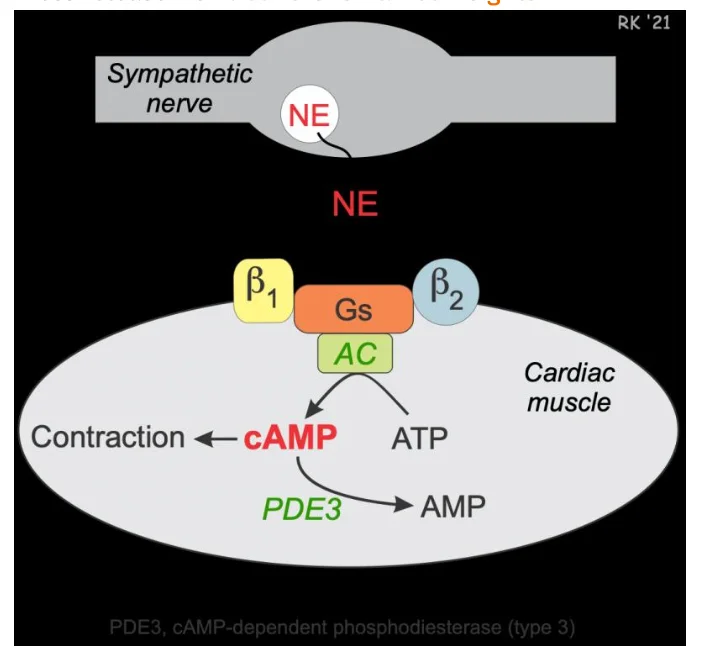
Long description
Inhibition of PDE III results in decrease in myocardial contractility

Phosphodiesterases (PDEs) are a superfamily of enzymes that hydrolyse the cyclic nucleotides cyclic adenosine monophosphate (cAMP) and cyclic guanosine monophosphate (cGMP). These cyclic nucleotides serve as second messengers inside cells, relaying signals from hormones, neurotransmitters and other extracellular stimuli. By breaking them down, PDEs terminate or dampen the intracellular signal. Inhibiting a PDE therefore prolongs and amplifies the effect of the cyclic nucleotide, effectively boosting the signalling pathway without needing more of the original stimulus.
There are at least 11 PDE families, each with distinct tissue distribution, substrate specificity and pharmacological sensitivity. PDE-5 is selective for cGMP and is found in high concentrations in vascular smooth muscle, corpus cavernosum, platelets and, importantly for this topic, the lower oesophageal sphincter (LES). PDE-4 is selective for cAMP and is expressed in inflammatory cells, airway smooth muscle and the brain. [3]
The clinical relevance of PDE inhibition depends entirely on which isoform is targeted. PDE-5 inhibitors were originally developed for angina but found their main use in erectile dysfunction and pulmonary hypertension. PDE-4 inhibitors are used in chronic obstructive pulmonary disease (COPD) and asthma. The common thread is that both families regulate smooth muscle tone and inflammatory responses through cyclic nucleotide signalling. [3]
DefinitioncGMP and PDE-5
cGMP is produced by guanylyl cyclase in response to nitric oxide (NO). PDE-5 selectively hydrolyses cGMP, so inhibiting PDE-5 raises intracellular cGMP levels and enhances NO-mediated relaxation of smooth muscle. [2]
DefinitionPDE‑inhibitor toxicity
Adverse effects arise from the physiological roles of cyclic nucleotide signalling that are amplified when phosphodiesterases are blocked. The pattern of toxicity differs between PDE families because each isoform is distributed in distinct tissues.
Gastro‑intestinal and emetic effects (PDE4 inhibition)
The prototypic PDE4‑I rolipram produces “severe dose‑limiting emetic side effects including headache, gastric hypersecretion, and severe emesis (e.g., nausea) in humans”. Management is symptomatic: anti‑emetics such as ondansetron for nausea, proton‑pump inhibitors for gastric hypersecretion, and analgesics for headache. If emesis persists despite these measures, the drug should be discontinued because the side‑effect profile limits further dose escalation. [4]
Cardiovascular and visual adverse events (PDE5 inhibition)
PDE5‑Is that are currently prescribed (sildenafil, vardenafil, tadalafil) are limited by “cardiovascular effects” that preclude use in patients with existing cardiovascular disease. They also cause “central effects including visual disturbances and headache”. Acute visual disturbances (e.g., transient colour‑vision changes) are managed by dose reduction or cessation; headache is treated with simple analgesics such as paracetamol. In patients with uncontrolled hypertension or recent myocardial in
Systemic exposure and inhaled delivery (PDE4 inhaled agents)
Inhaled PDE4 inhibitors such as CHF 6001 have shown “incidence of gastrointestinal adverse effects was comparable to placebo”. This suggests that the inhaled route markedly reduces systemic toxicity. Nevertheless, any emerging GI symptoms should be evaluated and, if moderate to severe, the inhaled therapy should be paused and reassessed. [5]
Dose‑related toxicity
Rolipram’s emetic profile is described as “dose‑limiting”, indicating that toxicity escalates sharply with increasing dose. No specific numeric thresholds are provided, so clinicians should titrate to the lowest effective dose and monitor for nausea, vomiting, and gastric symptoms.
Management algorithm
- Identify the PDE family – determine whether the patient is on a PDE4‑I (oral or inhaled) or a PDE5‑I.
- Screen for organ‑specific symptoms – nausea/vomiting (PDE4), visual changes or headache (PDE5), GI upset (inhaled PDE4).
- Apply symptomatic therapy – anti‑emetics, PPIs, analgesics as appropriate.
- Re‑evaluate dose – reduce or discontinue if symptoms are severe or persist.
- Consider alternative agents – switch to a second‑generation PDE4‑I with a better tolerability profile, or to a non‑PDE therapy if contraindications exist.
PDE-5 inhibitors include sildenafil, tadalafil, vardenafil, avanafil, udenafil and zaprinast. Their best-known actions are on the corpus cavernosum, where they facilitate penile erection, and on pulmonary vasculature, where they reduce pulmonary artery pressure. However, their effects on gastrointestinal smooth muscle, particularly the oesophagus, are clinically relevant and increasingly studied. [2]
The NO–cGMP pathway is central to smooth muscle relaxation. Nitric oxide activates soluble guanylyl cyclase, which converts GTP to cGMP. cGMP then activates protein kinase G, leading to relaxation of smooth muscle. PDE-5 terminates this signal by hydrolysing cGMP to GMP. By blocking PDE-5, these drugs preserve cGMP levels and prolong NO-mediated relaxation. This mechanism explains their effects on the LES, where NO is the primary inhibitory neurotransmitter.
PDE-5 inhibitors reduce lower oesophageal sphincter pressure and inhibit oesophageal propulsive forces. They also delay gastric emptying. These effects have been studied in both healthy individuals and patients with oesophageal motility disorders. [1]
A meta-analysis of manometry studies found that PDE-5 inhibitors significantly reduced the amplitude of oesophageal contractions, with a standardised mean difference (SMD) of −2.04 (95% CI: −2.97 to −1.11). The heterogeneity between studies was significant (P < 0.01) with considerable heterogeneity (I² = 77%). Subgroup analysis showed that the reduction in contraction amplitude was greater in healthy individuals (SMD −2.50, 95% CI: −3.81 to −1.18) than in those with oesophageal motility disorders (SMD −1.19, 95% CI: −1.84 to −0.55). [1]
| Population | SMD (95% CI) | Interpretation |
|---|---|---|
| All studied individuals | −2.04 (−2.97 to −1.11) | Significant reduction in contraction amplitude |
| Healthy individuals | −2.50 (−3.81 to −1.18) | Larger reduction |
| Oesophageal motility disorders | −1.19 (−1.84 to −0.55) | Smaller but still significant reduction |
PDE-5 inhibitors have been investigated in achalasia, diffuse oesophageal spasm and other motility disorders. In achalasia, the LES fails to relax due to loss of inhibitory neurons, and PDE-5 inhibitors can partially compensate by enhancing the residual NO signalling. However, there is insufficient evidence to recommend one treatment option over another for oesophageal motility disorders. Other medical treatments include nitrates, sedatives, anticholinergics, tricyclic antidepressants, calcium channel blockers and serotonin-reuptake inhibitors. [1]
The complications and adverse events of PDE-5 inhibitors are not well described in the oesophageal literature. In one study, 300 patients received sildenafil for erectile dysfunction, but detailed adverse event data were not reported. Common side effects from clinical use include headache, flushing, dyspepsia and nasal congestion, though these were not specifically quantified in the provided passages. [1]
PDE-5 inhibitors may also affect bone metabolism. By preserving cGMP levels, they may convert osteoclasts to osteoblasts, increase osteoblast maturation, enhance bone calcification and increase angiogenesis in bone tissue. In a rat model of glucocorticoid-induced osteoporosis (GIOP), the PDE-5 inhibitors zaprinast and avanafil significantly reduced markers of oxidative stress and bone atrophy. However, there are no studies on the therapeutic effects of zaprinast or avanafil in humans or animals with osteoporosis. The NO signalling pathway, including endothelial nitric oxide synthase (eNOS), can reduce bone loss and improve osteoblastic activity and bone turnover. [2]
Exam trapNot all PDE inhibitors are the same
PDE-5 inhibitors target cGMP hydrolysis, while PDE-4 inhibitors (e.g. rolipram, cilomilast) target cAMP and are used in COPD and asthma. Do not extrapolate oesophageal or erectile effects to PDE-4 inhibitors.
Although this topic focuses on PDE-5, it is worth noting that PDE-4 inhibitors suppress inflammatory functions in several cell types involved in COPD and asthma, and relax lung smooth muscle in vitro. They down-regulate cytokine production and reduce TNF-α release. Some, including cilomilast and AWD 12-281, inhibit neutrophil degranulation, a property not shared by theophylline. These drugs were originally developed for depression but found their niche in respiratory disease. [3]
PDE-5 inhibition pathway
- NO released from nerves/endotheliume.g. nitrergic neurons in LES
- Guanylyl cyclase activatedConverts GTP to cGMP
- cGMP accumulatesActivates protein kinase G
- Smooth muscle relaxationLES pressure falls; contraction amplitude reduced
- Question: PDE-5 inhibitor present?
Yes
- cGMP hydrolysis blockedRelaxation prolonged and amplified
No
- cGMP hydrolysed to GMPSignal terminated; muscle tone restored
Clinical pearlClinical takeaway
In achalasia and oesophageal spasm, PDE-5 inhibitors offer a pharmacological option by reducing LES pressure and contraction amplitude. However, evidence for superiority over other agents is lacking, and treatment choice remains challenging.
Phosphodiesterase type 4 functions as the primary cyclic adenosine monophosphate hydrolyzing enzyme located within various immune and inflammatory cells, specifically including macrophages, eosinophils, and neutrophils. When these specific cellular enzymes are blocked, intracellular cyclic adenosine monophosphate levels rise significantly, which serves to down-regulate the broader inflammatory response. Because this particular enzyme is also expressed directly within airway smooth muscle, selective agents are actively developed to treat chronic obstructive pulmonary disease. Beyond basic anti-inflammatory actions, these compounds reduce the overproduction of other inflammatory mediators such as arachidonic acid and leukotrienes. Furthermore, they inhibit cellular trafficking, microvascular leakage, the production of reactive oxygen species, and cell adhesion molecule expression. Representative agents such as cilomilast and CI-1044 actively suppress lipopolysaccharide-stimulated tumor necrosis factor-alpha production measured in whole blood samples obtained from chronic obstructive pulmonary disease patients. [3]
DefinitionEnzyme Function
PDE-4 hydrolyzes cAMP in immune cells, meaning its inhibition raises intracellular cAMP to suppress inflammation.
Early compounds in this pharmacological class faced major limitations due to adverse events, possessing a signature side effect profile characterized predominantly by gastrointestinal issues including nausea, vomiting, and increased gastric acid secretion. To overcome these challenges, a second generation of more selective molecules was developed, featuring agents such as cilomilast and roflumilast, which demonstrated improved tolerability alongside confirmed clinical efficacy in both chronic obstructive pulmonary disease and asthma. Nevertheless, even advanced clinical candidates like cilomilast and roflumilast continue to cause some degree of emesis. Experimental models demonstrate that agents such as piclamilast successfully reduce antigen challenge induced cell recruitment in airways of sensitized mice alongside decreasing gelatinase B and matrix metalloproteinase-9 activity. Additional therapeutic candidates include ibudilast, a drug exhibiting inhibitory action against this pathway that is successfully marketed in Japan for asthma treatment. While historical discourse debated whether cilomilast or roflumilast would represent the inaugural breakthrough, roflumilast ultimately emerged as a prominent first drug in the class for chronic obstructive pulmonary disease management. [3]
| Agent | Primary Action | Associated Effects |
|---|---|---|
| Cilomilast | Second-generation selective inhibitor | Reduces TNF-alpha production and matrix metalloproteinase secretion |
| Roflumilast | Advanced clinical candidate | Treats chronic obstructive pulmonary disease with improved tolerability |
| Ibudilast | Marketed therapeutic agent | Used in Japan for the treatment of asthma |
| Piclamilast | Experimental compound | Reduces antigen challenge cell recruitment and gelatinase B activity |
Cellular Mechanism of PDE-4 Inhibition
- Immune and Inflammatory CellsExpressed in macrophages, eosinophils, neutrophils, and airway smooth muscle.
- Question: PDE-4 Active?
Yes
- cAMP HydrolyzedNormal inflammatory cascade proceeds unchecked.
No (Inhibited)
- cAMP AccumulatesIntracellular cAMP levels rise, down-regulating inflammation, reducing leukotrienes and ROS.
Phosphodiesterases (PDEs) are a superfamily of enzymes that hydrolyse the second messengers cyclic adenosine monophosphate (cAMP) and cyclic guanosine monophosphate (cGMP). In mammals, at least 11 gene families of PDE enzymes exist, encoding more than 50 enzymes through alternative splicing and alternative transcriptional start sites. PDE 4, PDE 7, and PDE 8 are specific for cAMP. PDE-3 is distinct because it hydrolyses both cAMP and cGMP, although it has a higher affinity for cGMP, which acts as a competitive inhibitor of cAMP hydrolysis. This dual specificity places PDE-3 at a crossroads between the two major cyclic nucleotide signalling pathways. [3]
DefinitionPDE-3
PDE-3 is a dual-substrate phosphodiesterase that breaks down both cAMP and cGMP, with a higher affinity for cGMP; cGMP binding at a separate site inhibits cAMP hydrolysis.
PDE-3 is highly expressed in platelets, vascular smooth muscle, cardiac myocytes, and adipocytes. Its inhibition raises intracellular cAMP and cGMP concentrations, producing distinct effects depending on the tissue. In platelets, PDE-3 inhibition reduces aggregation; in vascular smooth muscle, it causes vasodilation; in the heart, it increases contractility (positive inotropy) and heart rate (chronotropy). These properties underpin the clinical use of PDE-3 inhibitors such as milrinone and enoximone, which are employed in acute heart failure and during cardiac surgery to support myocardial function.
Clinical pearlClinical relevance
PDE-3 inhibitors (milrinone, enoximone) are positive inotropes and vasodilators ("inodilators") used intravenously in acute decompensated heart failure, not as oral maintenance therapy.
The PDE-3 family is encoded by two genes: PDE3A and PDE3B. PDE3A predominates in platelets, vascular smooth muscle, and cardiac tissue; PDE3B is more abundant in adipocytes and hepatocytes. This tissue distribution explains why PDE-3 inhibitors can affect metabolic pathways, including lipolysis and insulin secretion, in addition to cardiovascular effects. However, the clinical use of non-selective PDE-3 inhibitors is limited by proarrhythmic effects and increased mortality in long-term oral use, so they are reserved for short-term intravenous administration.
Exam trapDo not confuse with PDE-5
PDE-3 and PDE-5 both hydrolyse cGMP, but PDE-5 is selective for cGMP and is the target of sildenafil and tadalafil. PDE-3 inhibitors do not treat erectile dysfunction or pulmonary hypertension; they are cardiovascular agents.
In the context of the oesophagus, PDE-5 inhibitors (not PDE-3 inhibitors) have been studied for their effects on lower oesophageal sphincter (LES) pressure. A meta-analysis found that PDE-5 inhibitor use was associated with a statistically significant reduction in LES pressure (SMD −1.69, 95% CI: −2.39 to −0.99)[1]. However, there was no significant effect on residual pressure (SMD −0.24, 95% CI: −1.20 to 0.72)[1]. These findings relate to PDE-5, not PDE-3, and illustrate the importance of isoenzyme specificity in clinical pharmacology.
| Feature | PDE-3 inhibitors | PDE-5 inhibitors |
|---|---|---|
| Substrates | cAMP and cGMP | cGMP only |
| Main clinical use | Acute heart failure (milrinone) | Erectile dysfunction, pulmonary hypertension |
| Oesophageal effect | Not established | Reduces LES pressure (SMD −1.69)[1] |
| Route | Intravenous | Oral |
Chronic inflammation is recognized as a major factor predominantly in small airways and lung parenchyma, characterized by increased numbers of macrophages, neutrophils, and T-cells. The Global Initiative for Chronic Obstructive Lung Disease guidelines established that chronic inflammation throughout the airways, parenchyma, and pulmonary vasculature plays a central role, altering therapeutic thinking. Corticosteroids fail to inhibit increased concentrations of interleukin-8 and tumour necrosis f [3]
Theophylline is a methylxanthine bronchodilator that has been used for decades in the treatment of asthma. Its principal mechanism is inhibition of cyclic nucleotide phosphodiesterase (PDE), the enzyme that catalyses the hydrolysis of cAMP and cGMP to inactive 5′-nucleotide products. By blocking this breakdown, theophylline raises intracellular cAMP and cGMP concentrations, which relaxes airway smooth muscle and inhibits inflammatory cell activation. Elevated cAMP levels are well established to inhibit several inflammatory processes, making PDE inhibitors attractive therapeutic candidates for inflammatory conditions. [3]
DefinitionPhosphodiesterase enzymes
PDEs are a large family of more than 50 enzymes with differing activities, substrate preferences, and tissue distributions. Theophylline is a non-specific PDE inhibitor, meaning it blocks multiple PDE isoforms rather than a single one. [3]
Theophylline is not merely a bronchodilator. It also causes pulmonary arterial vasodilatation, enhances diaphragmatic contractility, increases CNS respiratory drive, acts as a cardiac inotrope and chronotrope, is a weak diuretic, and increases mucociliary clearance. In COPD, it has anti-inflammatory effects, reducing neutrophil counts, IL-8, and the total number of inflammatory cells in sputum. However, its clinical use is limited by side effects and modest efficacy. It is a difficult drug to use, requiring titration and plasma monitoring because of the risk of cardiovascular and CNS side effects, even at therapeutic doses. It is also subject to many drug interactions and has adenosine receptor antagonist activity. [3]
Exam trapNon-selectivity is a double-edged sword
Because theophylline inhibits many PDE isoforms non-selectively, its therapeutic effects come bundled with unwanted actions—including cardiovascular stimulation and CNS excitation—that constrain its dosing.
The PDE family relevant to platelets is PDE-3, which is abundant in platelets and degrades cAMP. Inhibiting PDE-3 raises platelet cAMP, which suppresses platelet activation and aggregation. While the passages provided focus on PDE-5 inhibitors in other contexts, the principle is the same: PDE inhibition raises cyclic nucleotide levels, and in platelets this translates to reduced aggregability. Theophylline, as a non-specific PDE inhibitor, also affects platelets through this pathway, though its clinical use for this purpose is limited by its systemic effects.
NotecAMP as the common currency
cAMP and cGMP exert many intracellular effects, mediated largely through their stimulatory action on multisubstrate protein kinases. In platelets, elevated cAMP inhibits activation; in airway smooth muscle, it causes relaxation—the same second messenger, different tissues.
The broader PDE-5 inhibitor class (sildenafil, vardenafil, tadalafil) has been studied in oesophageal motility disorders. A systematic review of 14 studies found that PDE-5 inhibitors significantly reduce lower oesophageal sphincter resting pressure and oesophageal peristaltic vigour, meaning that oesophageal body contractility and contraction reserve are inhibited. These studies mostly assessed sildenafil. Separately, in a rat model of glucocorticoid-induced osteoporosis, PDE-5 inhibitors zaprinast and avanafil increased bone mineral density compared with dexamethasone-treated controls and reduced oxidative stress markers. These findings illustrate the expanding therapeutic reach of PDE inhibition beyond the airways. [1] [2]
| PDE inhibitor | Selectivity | Key clinical effects |
|---|---|---|
| Theophylline | Non-specific | Bronchodilation, anti-inflammatory, inotrope, diuretic |
| Sildenafil | PDE-5 | Reduces LES pressure and peristaltic vigour |
| Zaprinast | PDE-5 | Increases BMD in GIOP rat model |
| Avanafil | PDE-5 | Increases BMD, reduces oxidative stress in GIOP rat model |
Phosphodiesterases (PDEs) are intracellular enzymes that hydrolyse the second messengers cyclic adenosine monophosphate (cAMP) and cyclic guanosine monophosphate (cGMP). By breaking these down, PDEs terminate their signalling. Phosphodiesterase inhibitors (PDE-Is) block this breakdown, raising intracellular cAMP and/or cGMP concentrations and thereby amplifying downstream effects. The class is not homogeneous: different PDE isoforms have different tissue distributions, substrate preferences and functions, so the pharmacodynamic effects depend entirely on which isoform is inhibited.
Five PDE isoforms have been implicated in behavioural cognition studies: PDE2, PDE4, PDE5, PDE9 and PDE10[4]. These inhibitors are widely available, can be administered peripherally, and show central effects[4]. Procognitive effects have been described in fish, rodents, monkeys and man[4]. The mechanism is unlikely to be increased cerebral blood flow; rather, long-term potentiation (LTP) appears to be a better substrate for the cognition-enhancing properties of PDE-Is[4]. Inhibitors of PDE2, PDE4, PDE5, PDE9 and PDE10 improve a wide range of cognitive processes, including information processing, attention, learning, memory, executive functioning and response inhibition, in various behavioural models across different species[4].
Clinical pearlIsoform specificity matters
The therapeutic and adverse effects of PDE inhibitors are determined by which isoform is targeted and where that isoform is expressed. PDE3 is found in airway smooth muscle, cardiac and vascular tissue; PDE4 is found in inflammatory cells; PDE5 is found in vascular smooth muscle and platelets.
PDE3 and PDE4 inhibition in the airways. PDE3 is the primary isoenzyme in airway smooth muscle, where it affects airway tone; PDE3 inhibitors have demonstrated acute bronchodilator effects. PDE3 is also found in cardiac and vascular tissue, so PDE3 inhibitors are likely to have undesirable adverse systemic effects, which may be minimised by inhaled delivery. PDE4 inhibitors block the breakdown of cAMP and decrease airway inflammation. Use of oral PDE4 inhibitors has been limited by mechanism-based systemic side effects: nausea, diarrhoea and headache. Inhaled administration applies the drug directly to the site of action, the lungs, and minimises systemic exposure, which can greatly increase the therapeutic index. [5]
Exam trapDual inhibition is not always balanced
Ensifentrine is described as a dual PDE3/PDE4 inhibitor, but it is actually a moderately potent PDE3 inhibitor (IC50 = 0.4 nM) and only a weakly potent PDE4 inhibitor (IC50 = 1479 nM). Most of its clinical effects are likely attributable to PDE3 inhibition alone. [5]
PDE5 inhibition and cognition. Most research on the cognition-enhancing effects of PDE5 inhibitors has focused on preclinical animal models; only two papers have investigated the effects of sildenafil on human cognition[4]. In one study, 100 mg sildenafil given 1 h before testing enhanced performance in a simple reaction time test, but no effects were found on short-term memory, divided attention or other psychomotor tasks[4]. In another study, sildenafil (100 mg, 1 h before testing) had no cognition-enhancing effects on behavioural measures of auditory attention and word recognition[4]. However, sildenafil did change certain components of event-related potentials (ERPs): the Nd component, which indicates focused attention, was increased after treatment (marginally significant); the P3 component, which measures controlled processes of target selection, was significantly enhanced; and a reduced negativity between 150 and 250 ms was found in the word recognition experiment, possibly indicating an effect on information processing[4].
NoteDose-response in respiratory disease
Oral PDE4 inhibitors like roflumilast have only explored the lower end of the efficacy dose-response curve in man. Inhaled delivery may allow higher lung doses while avoiding systemic side effects, potentially revealing the maximum therapeutic potential of PDE4 inhibition. [5]
The pharmacokinetic properties of PDE inhibitors vary considerably by drug and by route of administration. The class includes oral agents (e.g. sildenafil, roflumilast) and inhaled formulations (e.g. ensifentrine, CHF 6001). The route of delivery is a major determinant of both efficacy and tolerability.
Absorption and routes of administration. PDE inhibitors can be administered peripherally and still show central effects, indicating that they cross the blood–brain barrier to a clinically relevant degree[4]. However, not all classes of PDEs have selective inhibitors, and these inhibitors might have poor penetration properties concerning the blood–brain barrier[4]. For respiratory indications, inhaled delivery is a key strategy. Ensifentrine has been formulated for dry powder or nebulized delivery. Inhaled administration of PDE4 inhibitors applies the drug directly to the site of action, the lungs, and minimises systemic exposure. This is an important advantage that can greatly increase the therapeutic index of a drug.
Exam trapInhaled does not mean proven
Many inhaled PDE4 inhibitors highlighted in the literature are discontinued and have produced only modest beneficial clinical effects in respiratory disease patients. Only CHF 6001 is currently advancing through clinical development. None of the discontinued inhaled compounds have convincingly covered the target, so the hypothesis of increased efficacy with avoidance of systemic adverse events was not adequately tested. [5]
Distribution. PDE inhibitors distribute widely after absorption. For drugs targeting the central nervous system, blood–brain barrier penetration is a limiting factor; only five PDE isoforms (2, 4, 5, 9 and 10) have inhibitors that show central effects in behavioural studies[4]. For inhaled agents, the advantage is that drug is delivered directly to the lung, reducing systemic distribution and therefore systemic side effects. PDE3 inhibitors, for example, are likely to have undesirable adverse systemic effects because PDE3 is found in cardiac and vascular tissue; inhaled delivery minimises this.
Metabolism and elimination. The passages do not provide specific metabolic pathways, enzyme systems or elimination half-lives for individual PDE inhibitors. What is clear is that the systemic side-effect profile of PDE4 inhibitors—nausea, diarrhoea and headache—is mechanism-based, meaning it arises from PDE4 inhibition in tissues outside the target organ rather than from the drug's metabolic fate. This is why inhaled delivery, which reduces systemic exposure, is so attractive: it shifts the balance of drug effect toward the lung and away from the gut and brain.
NoteHalf-life and dosing timing in cognition studies
In the human cognition studies, sildenafil was given at a dose of 100 mg, 1 h before testing[4]. This timing reflects the drug's onset of action after oral administration, allowing peak plasma concentrations to coincide with the cognitive testing period.
Half-life and dosing routes. The passages do not give numerical half-life values for any PDE inhibitor. Dosing routes described include oral (sildenafil 100 mg in cognition studies[4]; roflumilast as an oral PDE4 inhibitor) and inhaled (ensifentrine as dry powder or nebulized; CHF 6001 as an inhaled PDE4 inhibitor in development). The choice of route is driven by the target tissue: oral for systemic or central effects, inhaled for respiratory disease where the aim is to maximise lung exposure and minimise systemic side effects.
Clinical pearlTherapeutic index and route
The therapeutic index of a PDE inhibitor is determined by the ratio of desired target-tissue effect to unwanted systemic effect. Inhaled delivery increases this ratio by concentrating drug at the lung while reducing plasma levels.
Unanswered questions. The maximum therapeutic potential of PDE4 inhibition in respiratory disease has not yet been determined because oral agents have only explored the lower end of the efficacy dose-response curve. Assuming toleration issues can be overcome by inhaled delivery, the full efficacy of PDE4 inhibition may become apparent. Answers to questions surrounding the efficacy and safety of an inhaled PDE4 inhibitor are awaited in phase III clinical trials.
Erectile dysfunction and pulmonary arterial hypertension (PDE-5 inhibitors) Sildenafil, vardenafil, tadalafil and udenafil are PDE-5 inhibitors that increase cGMP in vascular smooth muscle, causing vasodilatation. Their best-known indication is erectile dysfunction, but they are also used in pulmonary arterial hypertension. Beyond these classic uses, PDE-5 inhibitors have been explored in oesophageal motility disorders. In one case report, a 37-year-old man with mixed motility abnormality diagnosed by esophageal manometry suffered four or five severe retrosternal chest pain episodes per day for three years. Treatment with 50 mg of sildenafil reduced his chest pain to one mild episode per day; a similar rapid and dramatic response was seen with 10 mg of vardenafil and 10 mg of tadalafil, each given with at least one-week interval between medication changes. In healthy volunteers, 50 mg of sildenafil produced a 100% success rate of complete primary peristalsis, although secondary peristalsis success was significantly lower than with placebo. [1]
Clinical pearlPDE-5 inhibition and the oesophagus
PDE-5 inhibitors relax oesophageal smooth muscle by raising cGMP; this can relieve spastic chest pain but may impair secondary peristalsis, which is why results in healthy subjects and patients must be interpreted separately.
Chronic obstructive pulmonary disease and asthma (PDE-4 inhibitors) PDE-4 inhibitors, such as roflumilast, target the cAMP pathway in inflammatory and airway cells. MUC5AC is a major mucin gene expressed in the airways; its expression is increased in COPD and asthmatic patients. Epidermal growth factor stimulates MUC5AC mRNA and protein expression in vitro, and this can be reversed by PDE 4 inhibitors, which may contribute to their clinical efficacy in COPD and asthma. Adults with asthma are up to 12 times more likely to develop COPD over time than those without. In bronchial biopsies, cilomilast treatment was associated with reductions in CD8+ and CD68+ cells; this was the first report of a reduction in airway tissue inflammatory cells characteristic of COPD by any agent. [3]
Osteoporosis (PDE-5 inhibitors) Glucocorticoid-induced osteoporosis (GIOP) is a major clinical problem, particularly in patients treated for rheumatoid arthritis and bronchial asthma. Current therapy includes bisphosphonates, selective estrogen receptor modulators, hormone-replacement therapy, and calcium and vitamin D supplementation. PDE-5 inhibitors, including sildenafil, vardenafil, tadalafil and udenafil, increased angiogenesis in the bone marrow by activating the NO/cGMP/protein kinase G signaling pathway components in rats with osteoporosis, as well as increasing BMD, epiphyseal bone width, and bone healing. In a rat model of GIOP, zaprinast and especially avanafil increased BMD and growth plate width as well as angiogenesis in the bone marrow. NO can also cause oxidative stress by forming reactive oxygen species such as the peroxynitrite ion (ONOO−), so the net effect of PDE-5 inhibition on bone depends on balancing these pathways. [2]
Other proposed indications PDE 4 inhibitors have been proposed as potentially useful in inflammatory bowel disease, cystic fibrosis, pulmonary arterial hypertension, myeloid and lymphoid malignancies, Alzheimer’s disease, rheumatoid arthritis, multiple sclerosis, infection-induced preterm labor, depression, and allergic disease, though the supporting evidence varies.
Exam trapInterpreting the evidence
Most reviewed studies of PDE-5 inhibitors in oesophageal disease had small sample sizes and used only sildenafil; more trials with vardenafil or tadalafil are needed before firm conclusions can be drawn.
Manometry is the principal laboratory tool for evaluating PDE-5 inhibitor effects on the oesophagus. Three main outcomes are defined for assessment: (1) lower oesophageal sphincter (LES) pressure; (2) amplitude of contractions produced by oesophageal muscles; and (3) residual pressure assessed at the nadir of relaxation after each swallow. These parameters are measured before and after drug administration to quantify changes in motility. PDE-5 inhibitors significantly reduce LES resting pressure and oesophageal peristaltic vigour, decreasing oesophageal body contractility and contraction reserve. In patients with oesophageal motility disorders, this reduction may improve symptom relief and prevent further complications, though larger studies are needed to establish definitive evidence. [1]
Clinical pearlManometry endpoints
When assessing PDE-5 inhibitors in oesophageal disease, report LES pressure, contraction amplitude, and residual pressure at swallow nadir—these are the three standardised outcomes.
Biochemical markers are used to investigate PDE-5 inhibitor effects on bone metabolism, particularly in glucocorticoid-induced osteoporosis (GIOP) models. Key markers include:
- CTX-1 (C-terminal telopeptide of type I collagen) – a bone resorption marker
- DP and DPD (deoxypyridinoline and pyridinoline) – collagen cross-link markers
- MDA (malondialdehyde) – a lipid peroxidation product
- CoQ10 and CoQ10H (ubiquinone-10 and ubiquinol) – markers of mitochondrial damage
- 8-OHdG (8-hydroxy-2′-deoxyguanosine) – a marker of oxidative DNA damage
In rat models, CTX-1 values were significantly increased in dexamethasone + zaprinast and dexamethasone + avanafil groups compared with control and dexamethasone-treated groups. High CTX-1 with low DP and DPD values indicated that osteoblastic activity was increased and bone destruction was decreased by PDE-5 inhibitor treatment. MDA levels were significantly increased in dexamethasone-treated groups compared with groups receiving PDE-5 inhibitors alongside dexamethasone, suggesting a protective antioxidant effect. CoQ10 and 8-OHdG were increased in all dexamethasone-treated groups, indicating mitochondrial and DNA oxidative damage. [2]
Exam trapInterpreting CTX-1
Elevated CTX-1 usually signals bone resorption, but in the context of PDE-5 inhibitor + dexamethasone treatment, high CTX-1 with low DP/DPD reflects increased osteoblastic activity and reduced bone destruction—not resorption.
Imaging complements biochemical assays. Dual-energy X-ray absorptiometry (DEXA) is used to measure whole-body bone mineral density (WB-BMD) in animal models of glucocorticoid-induced osteoporosis. This provides a direct structural correlate to the biochemical markers. [2]
In vitro whole-blood assays are employed to investigate PDE-4 inhibitor activity in COPD. Pre-incubation with PDE-4 inhibitors (such as CI-1044, rolipram, cilomilast) or dexamethasone results in dose-dependent inhibition of LPS-induced TNF-α release in whole blood from COPD patients[1]. Similar inhibition occurs in healthy volunteers but at higher IC50 values[1]. This assay allows direct comparison of drug potency across patient populations. [3]
| System | Investigation | Key parameters measured |
|---|---|---|
| Oesophageal motility | Manometry | LES pressure, contraction amplitude, residual pressure |
| Bone metabolism | Biochemical markers | CTX-1, DP, DPD, MDA, CoQ10, 8-OHdG |
| Bone density | DEXA | Whole-body bone mineral density |
| Inflammation (COPD) | Whole-blood LPS assay | TNF-α release, IC50 values[1] |
Safety monitoring during laboratory investigation is important. Reports indicate that PDE-5 inhibitor use in oesophageal motility studies is accompanied by no serious adverse effects, with headache being the most commonly reported side effect. In one study, only two patients discontinued treatment due to side effects. In animal studies, cilomilast was associated with vasculitis and death at doses lower than the human dose, though rats may be more sensitive to PDE inhibitor toxicity[1]. Vasculitis has also been seen with other PDE inhibitors[1]. [3]
Phosphodiesterase inhibitors have been evaluated globally across diverse geographical locations and study populations, with research articles published from multiple countries, most notably led by Korea and Italy. Clinical investigations in this field encompass a wide methodological spectrum, ranging from randomized clinical trials and observational studies such as cross-sectional, case-control, and cohort designs, to case series, case reports, and congress or conference abstracts serving as a source of grey literature. Participant cohorts in these pooled studies typically include both healthy subjects and patients diagnosed with specific esophageal motility disorders. The primary pharmacological agent assessed across these international investigations is sildenafil, alongside other phosphodiesterase type 5 inhibitors such as tadalafil and vardenafil. [1]
DefinitionGlobal research scope
International evaluations of phosphodiesterase type 5 inhibitors involve both healthy volunteers and patient cohorts across diverse study designs.
When evaluating the therapeutic efficacy of these agents, meta-analytic techniques apply random-effects models because methodology and clinical settings vary substantially across studies. Heterogeneity across included trials is evaluated by assessing I2 values alongside the Cochrane Q test, with a p value less than 0.1 indicating the presence of heterogeneity. Furthermore, researchers perform subgroup analyses to separate studies evaluating drug efficacy in healthy individuals from those assessing patients with established esophageal motility disorders. Sensitivity analyses, specifically utilizing the leave-one-out method by omitting individual studies sequentially, are subsequently conducted to determine the specific effect of each trial on the overall pooled effect size. [1]
| Parameter | Method or Metric |
|---|---|
| Primary Agent Assessed | Sildenafil |
| Additional Agents Included | Tadalafil, Vardenafil |
| Heterogeneity Threshold | p value less than 0.1 for Cochrane Q test |
| Statistical Model | Random-effects meta-analysis |
Beyond gastrointestinal motility applications, phosphodiesterase inhibitors, specifically phosphodiesterase 4 inhibitors, hold significant relevance in global public health concerns such as chronic obstructive pulmonary disease. Chronic obstructive pulmonary disease represents a serious and increasing global public health problem characterized physiologically by progressive, irreversible airflow obstruction, and pathologically by an abnormal airway inflammatory response to noxious particles or gases. Patients suffer reductions in forced expiratory volume in 1 second, reductions in the ratio of forced expiratory volume in 1 second to forced vital capacity compared with reference values, absolute reductions in expiratory airflow, and little improvement after treatment with an inhaled bronchodilator. Airflow limitation results from mucosal inflammation, edema, bronchoconstriction, increased secretions, and loss of elastic recoil, with patients experiencing rapid and prolonged worsening of symptoms known as exacerbations. [3]
Global Research and Disease Context
- International TrialsInvolves healthy subjects and patients with motility disorders across multiple countries.
- Question: What is the primary intervention?
PDE-5
- Sildenafil, Tadalafil, VardenafilAssessed via manometry for esophageal pressures.
PDE-4
- Anti-inflammatory mechanismTargeting matrix metalloproteinases in chronic obstructive pulmonary disease.
Chronic inflammation is recognized as a major factor predominantly in small airways and lung parenchyma, characterized by increased numbers of macrophages, neutrophils, and T-cells. The Global Initiative for Chronic Obstructive Lung Disease guidelines established that chronic inflammation throughout the airways, parenchyma, and pulmonary vasculature plays a central role, altering therapeutic thinking. Corticosteroids fail to inhibit increased concentrations of interleukin-8 and tumour necrosis f
Phosphodiesterase (PDE) inhibitors represent a diverse class of therapeutic agents targeted at various specific enzymatic pathways across different organ systems. In the context of pulmonary disease, non-selective and selective PDE inhibitors have been investigated for obstructive airway conditions such as chronic obstructive pulmonary disease (COPD) and asthma. For instance, cilomilast has been evaluated in phase III clinical trials for COPD management. In a pivotal 24-week trial involving 1411 patients with stable COPD receiving a dosage of 15 mg twice daily, cilomilast maintained FEV1 with a treatment difference of 300 mL compared to placebo. Furthermore, cilomilast achieved a clinically significant reduction of 26% in the risk of moderate-to-severe COPD exacerbations relative to placebo. In two positive pivotal trials, the mean change in FEV1 following cilomilast treatment was 10 mL from baseline, whereas placebo groups experienced reductions of 20 and 30 mL. [3]
DefinitionPDE4 Inhibition in Airway Disease
Drugs like cilomilast and roflumilast target cyclic AMP degradation to suppress inflammatory cascades in chronic respiratory disorders.
Roflumilast is another targeted agent evaluated for respiratory and allergic conditions. When administered orally at repeat doses of 250 or 500 micrograms once daily in patients with mild asthma (defined as FEV1 greater than or equal to 70% of predicted value), roflumilast effectively attenuated late asthmatic reactions and, to a lesser degree, early asthmatic responses. In exercise-induced asthma models, the mean percentage fall in FEV1 was reduced by 41% compared to placebo, while median tumor necrosis factor-alpha levels decreased by 21%. In clinical observations of allergic rhinitis, rhinal airflow improved significantly by study day 9 compared with placebo. Pharmacokinetically, roflumilast is partly metabolized by cytochrome P450 3A4, though therapeutic steady-state concentrations of roflumilast and its active metabolite roflumilast N-oxide do not alter midazolam metabolism, suggesting a low likelihood of affecting CYP3A4 substrate clearance. Another investigational agent, BAY 19-8004, administered at 5 mg once per day for 1 week in patients with COPD (FEV1 approximately 60% predicted) or asthma (FEV1 approximately 70% predicted), did not significantly improve FEV1 or alter sputum cell counts, but did produce small yet significant reductions in sputum levels of albumin and eosinophil cationic protein in COPD patients. [3]
| Drug | Indication | Dose / Regimen | Key Clinical Finding |
|---|---|---|---|
| Cilomilast | COPD | 15 mg twice daily | 26% reduction in risk of moderate-to-severe exacerbations |
| Roflumilast | Mild Asthma | 250 or 500 micrograms daily | Attenuated late asthmatic reactions to allergen challenge |
| BAY 19-8004 | COPD / Asthma | 5 mg once daily for 1 week | Reduced sputum albumin and eosinophil cationic protein in COPD |
Beyond pulmonary indications, PDE inhibitors—specifically PDE5 inhibitors—have been examined for gastrointestinal motility and musculoskeletal investigations. In esophageal motility studies, sildenafil increases the latency for peristalsis, whereas vardenafil significantly decreases resting and residual lower esophageal sphincter pressure, distal esophageal contraction, and esophageal bolus transit in a seated position. Tadalafil exhibits effects lasting up to 36 hours, suggesting potential utility in hypercontractile esophageal motility disorders. In experimental musculoskeletal research, agents such as avanafil and zaprinast have been studied alongside dual-energy X-ray absorptiometry bone mineral density measurements in rat models, utilizing statistical significance thresholds of p less than 0.05. [1]
Clinical Evaluation of PDE Inhibitors
- Identify Target Organ SystemDetermine whether treating pulmonary, gastrointestinal, or skeletal pathology.
- Question: Pulmonary Indication?
Yes
- Assess COPD or Asthma severity using FEV1 metrics (e.g., threshold of 70% predicted).
- Select targeted PDE4 or experimental agent (e.g., cilomilast 15 mg bid or roflumilast).
No
- Evaluate alternative pathways such as PDE5 inhibition for esophageal motility or bone density models.
DefinitionInteraction principles for PDE inhibitors
Drug‑drug and drug‑disease interactions stem from overlapping metabolic pathways (e.g., CYP enzymes) and additive physiological effects on the same organ systems.
Contraindication in cardiovascular disease (PDE5 inhibitors)
Because “cardiovascular effects limit their usefulness as a general treatment for cognitive disorders, since patients with cardiovascular indications cannot be included”, PDE5‑Is are contraindicated in patients with uncontrolled hypertension, recent myocardial infarction, or severe heart failure. In these groups, the risk of hypotension or arrhythmia outweighs any potential cognitive benefit. [4]
Visual disturbance caution (PDE5 inhibitors)
The “central effects including visual disturbances” act as a functional contraindication in patients with pre‑existing retinal disease (e.g., retinitis pigmentosa) or uncontrolled glaucoma, where further visual impairment could be catastrophic.
Gastro‑intestinal caution (oral PDE4 inhibitors)
Severe gastric hypersecretion and nausea from oral PDE4‑Is constitute a contraindication in patients with peptic ulcer disease or active gastritis. If therapy is unavoidable, concurrent use of a proton‑pump inhibitor may mitigate risk, but the underlying ulcer condition remains a relative contraindication.
Inhaled PDE4 inhibitors – minimal systemic interaction
CHF 6001 and related inhaled agents have demonstrated “minimal systemic side effects”, implying a low likelihood of pharmacokinetic interactions. Nevertheless, caution is advised when co‑administering other inhaled bronchodilators that share the same CYP metabolism, as additive bronchodilation could precipitate tachyarrhythmia. [5]
Drug‑drug interaction potential
While the passages do not list specific metabolic pathways, the known metabolism of sildenafil and similar agents via CYP3A4 suggests that strong CYP3A4 inhibitors (e.g., ketoconazole) could raise plasma concentrations, increasing the risk of cardiovascular and visual side effects. Conversely, CYP3A4 inducers (e.g., rifampicin) may reduce efficacy. Clinicians should therefore avoid concomitant use of potent CYP3A4 modulators or adjust the PDE5‑I dose accordingly.
Special populations
- Elderly – heightened susceptibility to visual disturbances and cardiovascular events; start at the lowest dose and monitor closely.
- Renal or hepatic impairment – reduced clearance may amplify systemic exposure, especially for oral PDE4‑Is; dose reduction or avoidance is prudent.
- Pregnancy and lactation – insufficient safety data; PDE inhibitors are generally contraindicated.
Practical checklist for prescribing
| Situation | Action |
|---|---|
| Uncontrolled hypertension / recent MI | Contraindicate PDE5‑I; consider alternative cognition‑enhancing strategies |
| Active peptic ulcer | Contraindicate oral PDE4‑I; prefer inhaled PDE4‑I if respiratory indication exists |
| Retinal disease | Avoid PDE5‑I; monitor visual symptoms if used |
| Concurrent strong CYP3A4 inhibitor | Reduce PDE5‑I dose or select alternative |
| Inhaled PDE4‑I with other bronchodilators | Review for additive bronchodilation; monitor heart rate |
| Elderly patient | Start at lowest dose; assess visual and cardiovascular status frequently |
By adhering to these interaction and contraindication principles, clinicians can maximise therapeutic benefit while minimising harm when employing phosphodiesterase inhibitors.
- Phosphodiesterase inhibitors elevate intracellular cyclic AMP and cyclic GMP, modifying smooth muscle tone and immune cell activation.
- PDE4B is the predominant subtype in monocytes and neutrophils, whereas PDE4D is heavily expressed in lung tissue and T-cells.
- Roflumilast is an oral selective PDE4 inhibitor given once daily at 250 or 500 micrograms for COPD and asthma.
- COPD inflammation is neutrophil-driven and resistant to corticosteroids, making targeted PDE4 inhibition clinically valuable.
- Cilomilast showed high selectivity for PDE4 but faced regulatory hurdles due to vasculitis in animal models and gastrointestinal side effects.
- Ibudilast is a nonselective PDE inhibitor approved in Japan for bronchial asthma and ischemic stroke.
- Sildenafil reduces primary peristalsis amplitude and esophageal body contractility without affecting the proximal esophagus or upper sphincter.
Answer each one in your head first, then open the answer.
Which PDE4 isoform is the predominant subtype found in monocytes and neutrophils?
Show answerHide answer
PDE4BWhat is the standard once-daily oral tablet dose range for roflumilast in clinical studies?
Show answerHide answer
250 or 500 micrograms per dayWhy are inhaled corticosteroids generally ineffective at suppressing inflammation in COPD?
Show answerHide answer
Because COPD inflammation is neutrophil-mediated rather than eosinophil-mediatedWhich nonselective PDE inhibitor is approved in Japan for bronchial asthma and ischemic stroke?
Show answerHide answer
IbudilastWhat specific esophageal manometric parameter is reduced by sildenafil compared to placebo?
Show answerHide answer
Primary peristalsis amplitude
Phosphodiesterase (PDE) inhibitors are a diverse class of pharmacological agents defined by their ability to inhibit the enzymatic breakdown of cyclic nucleotides, specifically cyclic adenosine monophosphate (cAMP) and cyclic guanosine monophosphate (cGMP). Elevated intracellular cyclic nucleotide concentrations modulate numerous cellular pathways, particularly smooth muscle tone, immune cell activation, and inflammatory mediator release. Within this class, selective PDE4 inhibitors have emerged as vital therapeutic candidates for chronic inflammatory respiratory diseases due to the specific distribution of PDE4 gene isoforms within immune and structural cells.
The four distinct PDE4 genes exhibit differential expression patterns across various tissues and cell types. PDE4B is recognized as the predominant PDE4 subtype in monocytes and neutrophils, and it undergoes significant upregulation in response to pro-inflammatory agents, pointing directly to a primary role in inflammatory cascades. Conversely, PDE4D is highly expressed in lung tissue, cerebral cortex, cerebellum, and T-cells, and it plays an important functional role in airway smooth muscle contraction. PDE4A is expressed across many tissues but is absent in neutrophils, while PDE4C is expressed in the lung and testis but notably absent in circulating inflammatory cells. [3]
DefinitionPDE4 Isoform Specificity
PDE4B dominates in monocytes and neutrophils, whereas PDE4D is heavily expressed in lung parenchyma, T-cells, and airway smooth muscle.
Pharmacological inhibition of these enzymes yields distinct anti-inflammatory effects. For instance, roflumilast is a potent and selective PDE4 inhibitor developed as an oral therapy for chronic obstructive pulmonary disease (COPD) and asthma. It acts as an effective anti-inflammatory agent in COPD and asthma, demonstrating favorable efficacy and safety in clinical trials alongside no documented drug interactions. Roflumilast offers convenient once-daily administration as an oral tablet at doses of 250 or 500 micrograms per day. [3]
Another notable agent is cilomilast, a potent with a Ki of 92 nanomolar and selective PDE4 inhibitor. Cilomilast is considerably more selective for the PDE4D isoform, exhibiting an IC50 of 12 nanomolar, compared to 115 nanomolar for 4A, 86 nanomolar for 4B, and 308 nanomolar for 308 nanomolar for 4C. Furthermore, cilomilast is essentially inactive against phosphodiesterase types 1, 2, 3, 5, and 7. At a concentration of 10 micromolar, cilomilast successfully inhibits the degradation of three-dimensional collagen gel by fibroblasts. [3]
Ibudilast is a nonselective PDE inhibitor approved in Japan for treating bronchial asthma and ischemic stroke. It preferentially inhibits PDE3A, PDE4, PDE10, and PDE11, and potently inhibits purified human PDE4A, 4B, 4C, and 4D with IC50 values of 54, 65, 239, and 166 nanomolar, respectively. Beyond respiratory applications, phosphodiesterase modulation also extends to gastrointestinal motility research. Studies evaluating sildenafil, vardenafil, and tadalafil demonstrate that sildenafil reduces primary peristalsis amplitude measured via conventional manometry and inhibits esophageal body contractility and contraction reserve compared to placebo. However, sildenafil exhibits no inhibitory effect on the proximal esophagus or the upper esophageal sphincter. [3] [1]
Clinical pearlRoflumilast Dosing
Roflumilast is administered orally once daily at either 250 or 500 micrograms per day for maximum clinical convenience.
Understanding the limits and adverse effect profiles of PDE inhibitors is essential for safe clinical application. A major challenge in developing and utilizing therapies for chronic respiratory conditions like COPD is that the disease features a long preclinical stage, progresses gradually, and patients generally do not present for treatment until their lung function is already seriously impaired. Furthermore, because COPD involves irreversible loss of elasticity, destruction of the alveolar wall, and peribronchial fibrosis, there is often very little room for clinical improvement. [3]
Exam trapIrreversible Lung Damage
COPD involves permanent structural destruction, meaning anti-inflammatory drugs can halt progression but cannot restore lost elasticity.
Inflammation in COPD presents a distinct therapeutic hurdle. It is characterized by a predominance of CD8+ T-cells, CD68+ macrophages, and neutrophils in the conducting airways, lung parenchyma, and pulmonary vasculature. While corticosteroids successfully reduce the number of mast cells, CD8+ and CD68+ cells, and neutrophils are little affected. Consequently, inflammation in COPD is not suppressed by corticosteroids, as it is neutrophil-mediated rather than eosinophil-mediated. This starkly contrasts with bronchial asthma, where eosinophils play a central role in initiating and continuing the inflammatory state, and where the familiar acute symptoms result from airway smooth muscle contraction responsive to anti-inflammatory corticosteroid therapy. Even so, a significant minority of asthma patients remains poorly controlled and some exhibit accelerated declines in lung function consistent with airway remodeling, implying that reversal or prevention of structural changes may require additional non-corticosteroid therapies. [3]
Early generations of PDE4 inhibitors encountered significant tolerability barriers. Cilomilast was developed as a second-generation PDE4 inhibitor specifically designed to separate activity at the emesis-associated binding site from desired PDE4 inhibition. While cilomilast is as strong an anti-inflammatory agent as rolipram, it causes much less nausea and gastric acid secretion. Additionally, cilomilast is negatively charged at physiological pH, a physicochemical property that limits its penetration into the central nervous system. [3]
Despite these structural refinements, safety concerns persisted. The United States Food and Drug Administration expressed concern about toxicity and side effects associated with cilomilast. Specifically, vasculitis was observed in rats at doses lower than those utilized in phase III clinical trials, and gastrointestinal-related side effects were documented in patients receiving cilomilast at three times the frequency observed in those taking a placebo. These dose-limiting toxicities highlight the fine therapeutic window inherent to early systemic PDE4 inhibition. [3]
| Agent | Primary Target / Selectivity | Key Potency / Dosing Metric | Clinical Indication / Status |
|---|---|---|---|
| Roflumilast | Selective PDE4 inhibitor | 250 or 500 micrograms per day orally | Oral therapy for COPD and asthma |
| Cilomilast | Selective PDE4 inhibitor | Ki = 92 nanomolar; IC50 12 nanomolar for PDE4D | Developed for chronic airway inflammation |
| Ibudilast | Nonselective PDE inhibitor | IC50 values: 54 nanomolar (4A), 65 nanomolar (4B) | Approved in Japan for asthma and stroke |
| Sildenafil | Selective PDE5 inhibitor | Used across 11 clinical trials for motility | Investigated for esophageal motor disorders |
In modern clinical practice, PDE inhibitors are deployed across diverse therapeutic areas, most notably in chronic inflammatory respiratory conditions and select neurological or gastrointestinal investigations. For chronic obstructive pulmonary disease, selective PDE4 inhibitors such as roflumilast provide an essential non-steroidal anti-inflammatory mechanism. Because underlying COPD inflammation is driven by neutrophils, CD8+ T-cells, and CD68+ macrophages that resist corticosteroid suppression, oral PDE4 inhibitors fill a critical management gap. By elevating intracellular cAMP concentrations within inflammatory cells like neutrophils and peripheral blood mononuclear cells, these drugs suppress mediator release and mitigate chronic tissue remodeling. [3]
Clinical Evaluation and Selection of PDE Inhibitors
- Assess patient respiratory symptomsEvaluate for COPD or bronchial asthma presentation.
- Question: Is inflammation neutrophil-mediated (COPD)?
Yes
- Consider oral selective PDE4 inhibitorAdminister roflumilast at 250 or 500 micrograms daily.
- Monitor for gastrointestinal and systemic adverse effectsWatch for tolerability issues common to PDE4 class.
No
- Assess for eosinophilic inflammation or asthmaPrioritise inhaled corticosteroids and bronchodilators.
Beyond pulmonology, phosphodiesterase inhibitors are utilized internationally for distinct indications. Ibudilast, which preferentially inhibits PDE3A, PDE4, PDE10, and PDE11, is approved in Japan for the treatment of bronchial asthma and ischemic stroke. Its broad inhibitory profile and ability to elevate cellular cyclic nucleotide concentrations make it useful across a range of neurological conditions.
In gastroenterology and motility research, PDE5 inhibitors such as sildenafil, vardenafil, and tadalafil are investigated for esophageal motility disorders. Sildenafil administration reduces the amplitude of primary peristalsis and inhibits contraction reserve and body contractility of the esophagus compared to placebo. However, because sildenafil has no inhibitory effect on the proximal esophagus or the upper esophageal sphincter, its clinical utility remains targeted rather than universal. Across all these applications, understanding the precise tissue distribution of PDE isoforms—such as PDE4B in neutrophils and PDE4D in airway smooth muscle—allows clinicians and researchers to anticipate therapeutic efficacy and manage adverse effect profiles effectively.
- Shafiee A, Bahri RA, Teymouri Athar MM, et al. Phosphodiesterase 5 (PDE-5) inhibitors (sildenafil, tadalafil, and vardenafil) effects on esophageal motility: a systematic review. BMC gastroenterology 2023;23(1):170. doi:10.1186/s12876-023-02787-3. Accessed .
- Huyut Z, Bakan N, Yıldırım S, Alp HH. Effects of the Phosphodiesterase-5 (PDE-5) Inhibitors, Avanafil and Zaprinast, on Bone Remodeling and Oxidative Damage in a Rat Model of Glucocorticoid-Induced Osteoporosis. Medical science monitor basic research 2018;24:47-58. doi:10.12659/msmbr.908504. Accessed .
- Brown WM. Treating COPD with PDE 4 inhibitors. International journal of chronic obstructive pulmonary disease 2007;2(4):517-533. Accessed .
- Reneerkens OA, Rutten K, Steinbusch HW, et al. Selective phosphodiesterase inhibitors: a promising target for cognition enhancement. Psychopharmacology 2009;202(1-3):419-443. doi:10.1007/s00213-008-1273-x. Accessed .
- Phillips JE. Inhaled Phosphodiesterase 4 (PDE4) Inhibitors for Inflammatory Respiratory Diseases. Frontiers in pharmacology 2020;11:259. doi:10.3389/fphar.2020.00259. Accessed .
Figure credits
Educational content for medical students and doctors. It is not a substitute for clinical judgement or local guidelines.