Lipoproteins, lipid transport and dyslipidaemias
Physiological overview of lipoprotein particles, lipid transport mechanisms, and dyslipidaemias.
Figure 1Lipoprotein metabolism
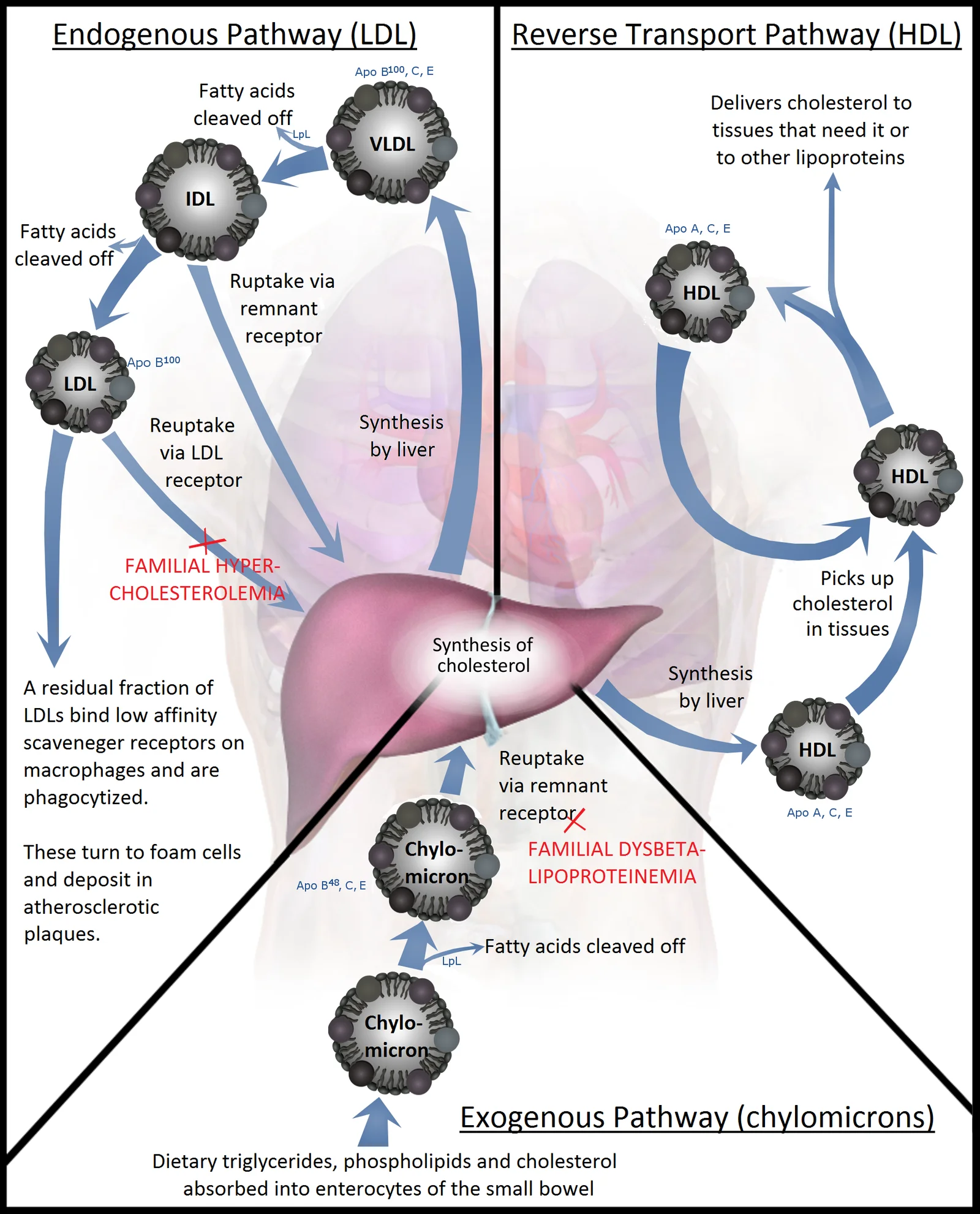
Long description
A diagram to the endogenous and exogenous pathways of lipoprotein metabolism.

Lipids are essential organic molecules that serve multiple physiological functions within the human body. The major lipids include cholesterol, triglycerides, and phospholipids. These substances are utilized extensively for cell membrane formation, hormone synthesis, and bile acid production. However, because lipids are hydrophobic and thus not soluble in blood, they cannot travel freely through the aqueous circulatory system. To overcome this barrier, the body packages lipids into specialized macromolecular complexes of lipid and protein known as lipoprotein particles. [2]
Structurally, lipoproteins are composed of several key constituents: phospholipids, free cholesterols, specialized proteins known as apolipoproteins (or apoproteins), cholesterol esters, and triglycerides. The outer shell of a lipoprotein particle typically consists of a monolayer of amphipathic phospholipids and free cholesterol, alongside apolipoproteins that stabilize the structure, act as enzyme cofactors, and serve as ligands for specific cell-surface receptors. The core of the particle contains hydrophobic cargo, specifically non-polar cholesterol esters and triglycerides. [2]
There are five major classes of lipoprotein particles recognized in human physiology, categorized primarily by their density, lipid composition, and apolipoprotein content. These classes, listed in order of increasing density and decreasing size, are chylomicrons, very-low-density lipoproteins (VLDL-C), intermediate-density lipoproteins (IDL), low-density lipoproteins (LDL-C), and high-density lipoproteins (HDL-C). [2]
DefinitionLipoprotein structure
Each class plays a distinct role in lipid transport. Broadly, lipid transport pathways are divided into exogenous (dietary) and endogenous (hepatic) pathways. The exogenous pathway handles dietary fats absorbed by the intestine, whereas the endogenous pathway manages lipids synthesized by the liver and redistributed to peripheral tissues. Lipoprotein particles undergo continuous intravascular remodeling through the action of circulating enzymes such as lipoprotein lipase and hepatic lipase, as well as lipid transfer proteins like cholesteryl ester transfer protein (CETP). CETP mediates the heteroexchange of neutral lipids, transferring cholesteryl esters from HDL-C to LDL-C or triglyceride-rich lipoproteins in exchange for triglycerides. Partial inhibition of CETP is associated with a dramatic increase in HDL-C of up to 100%, and may also decrease LDL-C levels. Current CETP inhibitors developed or studied for lipid management include JTT-705, torcetrapib, and anacetrapib. [2] [1]
Cardiovascular disease remains a major health burden, and understanding these pathways is critical for clinical management. Since the landmark Framingham Heart Study identified high cholesterol as a primary risk factor for coronary heart disease, numerous trials have elucidated the functions, metabolism, and transport of lipids. We now recognize that elevated LDL-C levels are associated with increased risk of coronary heart disease. Conversely, high HDL-C levels are associated with a reduced risk of coronary heart disease. HDL-C is believed to protect against cardiovascular disease in part due to reverse cholesterol transport, a process involving the transport of HDL-C from peripheral tissues and transfer to VLDL-C and LDL-C back to the liver for secretion in the bile. Furthermore, HDL-C is believed to possess anti-inflammatory, anti-oxidative, platelet anti-aggregatory, anticoagulation, and profibrolytic effects, which help reduce damage mediated by high levels of LDL-C. Despite the potential benefits of HDL-C, clinical studies are needed to bolster recommendations to target HDL-C directly in clinical lipid management. Consequently, current guidelines such as the ATP III guidelines target LDL-C as the primary surrogate goal for lipid management, though the ATP III guideline neglects to identify HDL-C as a therapeutic target. Pharmacologically, several drug classes exist for lipid management, including HMG-CoA reductase inhibitors (statins), bile acid sequestrants, niacin (nicotinic acid), fibric acid derivatives, and cholesterol absorption inhibitors. Because statins have the greatest effect on LDL-C, they are used as first-line therapy for high levels of LDL-C, whereas niacin and fibric acid are more effective in increasing HDL-C and decreasing triglycerides. [2]
Chylomicrons are the largest and least dense of the lipoprotein particles. They are synthesized by the enterocytes of the small intestine and are responsible for the transport of exogenous dietary lipids—primarily triglycerides and cholesterol—from the gut to the peripheral tissues and the liver. Following a dietary meal containing fats, intestinal mucosal cells package ingested triglycerides and cholesterol esters with specialized apolipoproteins, predominantly apolipoprotein B-48 (Apo B-48), along with phospholipids and free cholesterol, to form nascent chylomicrons. These nascent particles enter the lymphatic system before passing into the systemic venous circulation.
Once in the bloodstream, nascent chylomicrons acquire additional apolipoproteins from HDL-C, specifically apolipoprotein C-II (Apo C-II) and apolipoprotein E (Apo E). Apo C-II acts as an essential cofactor for lipoprotein lipase (LPL), an enzyme anchored to the endothelial surface of capillary beds in adipose tissue and skeletal muscle. Activation of LPL by Apo C-II leads to the rapid hydrolysis of triglycerides housed within the chylomicron core, releasing free fatty acids and glycerol for local tissue uptake and utilization or storage. As core triglycerides are progressively depleted, the chylomicron shrinks in size and transforms into a chylomicron remnant. During this whole process of chylomicron metabolism, various components of the chylomicron, such as phospholipids and specific apolipoproteins, are recycled and utilized to construct HDL-C. The resulting chylomicron remnants, which are enriched in cholesterol esters and retain Apo E, are rapidly cleared from the circulation by the liver via receptor-mediated endocytosis involving hepatic LDL receptor-related proteins and the LDL receptor itself. [2]
Clinical pearlChylomicron remnants
Very-low-density lipoproteins (VLDL-C) represent the endogenous counterpart to chylomicrons and are synthesized directly by hepatocytes in the liver. VLDL-C particles are rich in endogenous triglycerides and utilize apolipoprotein B-100 (Apo B-100) as their primary structural apolipoprotein. The primary physiological function of VLDL-C is to distribute endogenously synthesized triglycerides from the liver to extrahepatic tissues, such as adipose and muscle tissue.
| Feature | Chylomicrons | VLDL-C |
|---|---|---|
| Site of synthesis | Intestine (enterocytes) | Liver (hepatocytes) |
| Major structural apolipoprotein | Apo B-48 | Apo B-100 |
| Primary lipid cargo | Exogenous triglycerides | Endogenous triglycerides |
| Main physiological role | Transport dietary fats to tissues | Distribute hepatic lipids |
Like chylomicrons, nascent VLDL-C particles secreted into the bloodstream acquire Apo C-II and Apo E from circulating HDL-C. As VLDL-C circulates through the capillary beds of peripheral tissues, endothelial lipoprotein lipase interacts with Apo C-II, hydrolysing core triglycerides and diminishing the size of the VLDL-C particle. As triglycerides are stripped away and surface remnants are transferred, VLDL-C transitions into intermediate-density lipoproteins. Impairments in the clearance or processing of these triglyceride-rich particles can lead to pathological states; for instance, familial dysbetalipoproteinaemia is a distinct disorder characterized clinically by increased levels of both VLDL-C remnants and chylomicron remnants. [2]
Intermediate-density lipoproteins (IDL) represent a transient, transitional metabolic stage between very-low-density lipoproteins and low-density lipoproteins. As VLDL-C undergoes extensive delipidation by lipoprotein lipase within capillary beds, losing a substantial proportion of its core triglyceride content, its physical density increases while its overall diameter decreases. This transitional particle is classified as an intermediate-density lipoprotein.
IDL particles contain a more balanced mixture of cholesterol esters and triglycerides compared to their precursor VLDL-C particles. On their surface, IDL particles retain Apo B-100 and typically retain Apo E, which allows them to interact with hepatic receptors. Once formed in the circulation, IDL particles generally follow one of two distinct metabolic fates. A significant fraction of circulating IDL is directly removed from the bloodstream by the liver. This hepatic clearance is mediated through receptor-mediated endocytosis, driven by the high-affinity binding of Apo E and Apo B-100 on the IDL surface to hepatic LDL receptors and LDL receptor-related proteins.
Alternatively, the remaining fraction of IDL particles undergoes further intravascular modification. These particles are acted upon by hepatic lipase, an enzyme bound to the sinusoidal endothelium of the liver. Hepatic lipase hydrolyses remaining triglycerides and phospholipids within the IDL core and surface coat. This enzymatic processing strips away virtually all remaining triglycerides, converting the IDL particle into a cholesterol ester-rich, dense low-density lipoprotein (LDL-C) particle.
Pathway from VLDL to LDL
- Liver secretes VLDLParticles rich in triglycerides and Apo B-100.
- Lipoprotein lipase actionHydrolysis of core triglycerides in peripheral capillaries using Apo C-II.
- Question: Intermediate particle state reached?
Yes
- Formation of IDLParticles enriched in cholesterol esters with retained Apo E and Apo B-100.
No
- Continue delipidationFurther triglyceride depletion.
- Hepatic lipase processingConversion of IDL into dense LDL-C via core lipid removal.
This continuous cascade highlights how the body maintains lipid homeostasis. Disruptions anywhere along this continuum—from hepatic synthesis to lipolytic processing and receptor-mediated uptake—result in distinct dyslipidaemias. Understanding these precise biochemical transitions explains why targeted pharmacotherapy is necessary. For example, because different lipid-lowering agents affect these distinct lipoprotein classes and triglyceride levels to varying degrees, specific drug classes are deployed as first-line therapies depending on the exact lipoprotein fraction elevated. [2]
Low-density lipoprotein cholesterol and high-density lipoprotein cholesterol play opposing roles in cardiovascular health. Elevated levels of plasma low-density lipoprotein cholesterol are associated with an increased risk of cardiovascular disease. Consequently, dietary interventions that lower low-density lipoprotein cholesterol are foremost in the mind of health practitioners. Conversely, low levels of high-density lipoprotein cholesterol, such as those observed in the case of metabolic syndrome and in diabetic individuals, also represent a well-established risk for the development of cardiovascular disease. Although it is still not part of the National Cholesterol Education Program Adult Treatment Panel guidelines, the balance between low-density lipoprotein and high-density lipoprotein is considered a key marker of cardiovascular disease risk, making the low-density lipoprotein cholesterol to high-density lipoprotein cholesterol ratio a valuable tool for the assessment and clinical management of individuals at risk for heart disease. [1]
DefinitionLipoprotein balance
Dietary interventions demonstrate variable effects on these lipoprotein fractions. Studies conducted in children, young women and men, and elderly individuals who were assigned to consume an additional 550 mg of cholesterol per day in the case of children and an additional 640 mg of cholesterol in the case of adults for 4 weeks have shown that hyper-responders raise both low-density lipoprotein and high-density lipoprotein, thus the low-density lipoprotein to high-density lipoprotein ratio is maintained. For those individuals who are not hyper-responders, the ratio is also maintained since no significant increases in plasma cholesterol are observed. During weight loss interventions, however, only high-density lipoprotein cholesterol is increased substantially while low-density lipoprotein levels are either maintained or exhibit non-significant increases. [1]
Dietary cholesterol also modifies lipoprotein subpopulations and size. In the context of a low-carbohydrate diet, a challenge of an additional 640 mg of cholesterol per day results in larger low-density lipoprotein diameter, higher concentrations of the large low-density lipoprotein particle, and a reduced number of small atherogenic low-density lipoprotein particles. Furthermore, low-density lipoprotein cholesterol does not increase under all circumstances or in all cases following a cholesterol challenge; a proportion of about two-thirds of individuals do not experience increases in low-density lipoprotein cholesterol even after a challenge of 640 mg per day for 4 weeks. In contrast, consistent findings include decreases in small low-density lipoprotein subfractions, increases in large low-density lipoprotein, and increases in low-density lipoprotein size, with some individuals shifting from the more atherogenic pattern B to pattern A after consuming dietary cholesterol. [1]
| Subclass | Diameter range |
|---|---|
| Large HDL | 8.8–13 nm |
| Medium HDL | 8.2–8.8 nm |
| Small HDL particles | 7.3–8.2 nm |
High-density lipoprotein subclasses can be grouped using nuclear magnetic resonance spectroscopy into large high-density lipoprotein at 8.8 to 13 nm, medium high-density lipoprotein at 8.2 to 8.8 nm, and small high-density lipoprotein particles at 7.3 to 8.2 nm. Large high-density lipoprotein measured by nuclear magnetic resonance has been negatively associated with incident cardiovascular disease with a p-value of less than 0.001. This particle decreases in the case of coronary artery disease in patients with Type 1 diabetes. Increases in high-density lipoprotein cholesterol are associated with increases in the number of large high-density lipoprotein particles. Additionally, high-density lipoprotein particle size increased independent of response classification to dietary cholesterol only in those consuming 3 eggs per day for 4 weeks, compared with egg substitute. However, the concentration of the large high-density lipoprotein was greater in hyper-responders compared to hypo-responders. [1]
Lipoprotein response pathways
- Dietary cholesterol challengeAdditional 640 mg per day in adults
- Question: Is the individual a hyper-responder?
Yes
- Raises both LDL and HDLRatio maintained
- Greater concentration of large HDLNMR subclass evaluation
No
- No significant increase in plasma cholesterolShifts from pattern B to pattern A
- Reduced small atherogenic LDLLarger LDL diameter observed
Lipoprotein metabolism relies on a coordinated network of apolipoproteins, lipolytic enzymes, and transfer proteins. Chylomicrons are the largest lipoprotein particles and transport dietary triglycerides and cholesterols from the intestine to different parts of the body[1]. The metabolism of chylomicrons is mediated by lipoprotein lipase, with apolipoprotein C-II acting as a cofactor and activator[1]. Chylomicrons are usually present in the plasma for 3 to 6 hours after eating and are metabolized after 10 to 12 hours of fasting[1]. After lipoprotein lipase metabolizes the chylomicrons and removes a large portion of the triglycerides, chylomicrons are further metabolized in the liver by hepatic lipase, returning apolipoprotein C-II to high-density lipoprotein cholesterol[1]. Chylomicron remnants, which contain apolipoprotein E and apolipoprotein B-48, are then taken up by remnant receptors in the liver, which liberates free cholesterols intracellularly[1]. [2]
Clinical pearlEnzymatic action
Several key enzymes and transfer proteins further regulate lipid trafficking and reverse cholesterol transport. Dietary cholesterol promotes the formation of larger low-density lipoprotein and high-density lipoprotein particles, and has also been shown to increase lecithin-cholesterol acyltransferase and cholesteryl ester transfer protein activities, while promoting cholesterol efflux from macrophages, indicating an enhancement of reverse cholesterol transport. Lecithin-cholesterol acyltransferase esterifies free cholesterol on high-density lipoprotein particles, allowing the maturation of the particle. Cholesteryl ester transfer protein facilitates the equimolar exchange of cholesteryl esters from high-density lipoprotein for triglycerides in apolipoprotein B-100-containing lipoproteins. Thus, cholesteryl ester transfer protein plays an active role in high-density lipoprotein remodeling. Increases in cholesteryl ester transfer protein activity promote the enrichment of apolipoprotein B-100-containing lipoproteins with cholesteryl esters, and this has been related to a decrease in high-density lipoprotein cholesterol levels, making it pro-atherogenic. However, when increases in cholesteryl ester transfer protein activity are not associated with a reduction in high-density lipoprotein cholesterol levels, this molecule is considered anti-atherogenic by enhancing reverse cholesterol transport through the cholesteryl ester enrichment of low-density lipoprotein, which can be taken up by the liver where cholesteryl esters are metabolized. The relative concentration of high-density lipoprotein subclasses and increases in reverse cholesterol transport are suggested to be more important than high-density lipoprotein cholesterol per se in determining potential anti-atherogenic outcomes. [1]
Genetic evidence also highlights the critical regulatory role of a newly discovered serine protease, proprotein convertase subtilisin-like kexin type 9, in patients suffering from autosomal-dominant hypercholesterolemia[1]. Three gain-of-function single nucleotide polymorphisms in the proprotein convertase subtilisin-like kexin type 9 gene have been identified that increase low-density lipoprotein cholesterol levels[1]. Proprotein convertase subtilisin-like kexin type 9 destroys low-density lipoprotein receptors in the liver, thereby regulating the levels of low-density lipoprotein cholesterol in plasma[1]. Lastly, familial combined hyperlipoproteinemia is a Type IIb disorder that can cause elevated very-low-density lipoprotein cholesterol, low-density lipoprotein cholesterol, or both[1]. [2]
Understanding lipid transport requires exploring both rare monogenic defects and complex primary dyslipidaemias. Abetalipoproteinaemia is a rare autosomal recessive disorder characterized by the complete absence of apolipoprotein B-containing lipoproteins, including chylomicrons, very-low-density lipoproteins, and low-density lipoproteins. This defect stems from mutations in the microsomal triglyceride transfer protein gene, which prevents the proper assembly and secretion of these lipoproteins from the enterocytes and hepatocytes. Consequently, affected individuals suffer from fat malabsorption, severe deficiency of fat-soluble vitamins, acanthocytosis, and progressive neurological manifestations.
Moving beyond monogenic transport failures, primary hyperlipidaemias are classified into specific phenotypes that reflect underlying metabolic disturbances. Hypercholesterolemia typically refers to elevated serum low-density lipoprotein cholesterol levels. Primary hypercholesterolemia includes familial hypercholesterolemia, familial ligand-defective apolipoprotein B, and familial combined hyperlipoproteinemia. Primary hypercholesterolemia is a type IIa dominant disorder that involves mutations in the low-density lipoprotein receptor gene. Homozygotes usually have a worse prognosis than heterozygotes. Familial ligand-defective apolipoprotein B is also a type IIa disorder caused by a mutation in apolipoprotein B-100 that disrupts the binding of low-density lipoprotein cholesterol to the low-density lipoprotein receptor, thereby decreasing metabolism of low-density lipoprotein cholesterol. In both of these disorders, low-density lipoprotein receptor-mediated endocytosis in the liver is decreased, resulting in increased serum low-density lipoprotein cholesterol. [2]
Hypertriglyceridemia usually refers to elevations in very-low-density lipoprotein cholesterol and chylomicrons, both of which carry and transport triglycerides. Primary hypertriglyceridemia includes primary chylomicronemia, familial hypertriglyceridemia, familial combined hyperlipoproteinemia, and familial dysbetalipoproteinemia. Primary chylomicronemia is a genetic disease that is characterized by a deficiency in lipoprotein lipase or cofactor, and results in elevated chylomicrons and very-low-density lipoprotein cholesterol and severe elevation of triglycerides, leading to acute pancreatitis. Familial hypertriglyceridemia is a type IV disorder in which primarily very-low-density lipoprotein cholesterol is affected. It is caused by a number of genetic determinants that result in insufficient removal of triglyceride-rich lipoproteins. Familial combined hyperlipoproteinemia is a disorder characterized by increased levels of very-low-density lipoprotein cholesterol, low-density lipoprotein cholesterol, or both. [2]
DefinitionType IIa vs Type IV
Type IIa hyperlipidaemia involves elevated low-density lipoprotein cholesterol due to receptor or apolipoprotein B defects, whereas Type IV is characterized by elevated very-low-density lipoprotein and triglycerides due to impaired clearance.
Current lipid management guidelines are focused on decreasing low-density lipoprotein cholesterol levels as the primary target for reducing coronary heart disease risk. Yet, many recent studies suggest that low levels of high-density lipoprotein cholesterol are a major independent risk factor for cardiovascular diseases. According to several clinical trials, a 1% increase in high-density lipoprotein cholesterol is associated with a 0.7% to 3% decrease in coronary heart disease events. The direct link between high levels of triglycerides and coronary heart disease, on the other hand, is less well defined. A large reduction in triglycerides is needed to show a difference in coronary heart disease events, especially in men. Evidence for a shift in lipid management toward targeting both low-density lipoprotein cholesterol and high-density lipoprotein cholesterol as primary targets for therapy is presented. [2]
The statins are the most widely used class of drug in lipid management. Hydroxymethylglutaryl-coenzyme A reductase is the rate-limiting enzyme of the mevalonate pathway of cholesterol synthesis. Inhibition of hydroxymethylglutaryl-coenzyme A reductase disrupts cholesterol biosynthesis, thereby lowering total cholesterol in the body. The primary reason why this class of drug is so widely used is that it not only improves lipid profiles and coronary heart disease morbidity and mortality, but has also been shown to decrease all-cause mortality in several clinical trials. [2]
Reports have indicated that the body responds to cholesterol challenges by increasing different steps involved in reverse cholesterol transport. Reverse cholesterol transport is the process involved in the uptake of cholesterol from peripheral tissues including macrophages and its return to the liver where it is targeted for biliary secretion. However, recent data suggests that high-density lipoprotein cholesterol may have a more important role in cholesterol management than is suggested by the guidelines. Furthermore, the issue of whether triglycerides is an independent risk factor for coronary heart disease or should be one of the primary targets of therapy is controversial. To understand each side in the argument, the metabolism and transport of cholesterol and lipoproteins in dyslipidemia and its effect on coronary heart disease, as well as different therapeutic targets, including current and future drug therapies, will be discussed. [2] [1]
Lipid-Lowering Therapeutic Strategy
- Assess Lipid ProfileMeasure LDL-C, HDL-C, and triglycerides.
- Question: Is LDL-C elevated?
Yes
- Initiate HMG-CoA reductase inhibitor (statin)
- Target hepatic LDL receptor upregulation
No
- Question: Are triglycerides severely elevated?
Yes
- Evaluate for chylomicronemia or Type IV hypertriglyceridemia
No
- Assess HDL-C risk factors
Clinicians frequently encounter diagnostic and therapeutic traps when managing dyslipidaemias. One major pitfall is assuming that hypertriglyceridemia and hypercholesterolemia share identical pathophysiological pathways and cardiovascular risk profiles. While elevated low-density lipoprotein cholesterol has a well-established, direct causal relationship with coronary heart disease, the direct link between high levels of triglycerides and coronary heart disease is less well defined, and a large reduction in triglycerides is needed to show a difference in coronary heart disease events, especially in men.
Another common pitfall involves overlooking high-density lipoprotein cholesterol parameters or misinterpreting population thresholds. There is an inverse relationship between high-density lipoprotein cholesterol and coronary heart disease. Recent studies indicate that there is a high prevalence of individuals with low levels of high-density lipoprotein cholesterol in the population. For example, in a European study of 8545 dyslipidemia patients, the prevalence of low levels of high-density lipoprotein cholesterol, defined as less than 40 milligrams per decilitre in men and less than 50 milligrams per decilitre in women, was 33% in men and 40% in women who were treated for dyslipidemia. In a nationwide Mexican study including 15607 subjects aged 20 to 69, it was shown that the prevalence of low high-density lipoprotein cholesterol, meaning below 0.9 millimoles or 35 milligrams per decilitre, was approximately 46% for men and 29% for women. This high prevalence is problematic, because according to the Framingham 10 year coronary heart disease risk assessment derived from the Framingham Heart Study, low high-density lipoprotein cholesterol is linked to worse coronary heart disease outcomes. It is estimated that more than 40% of coronary events occur in individuals with less than 40 milligrams per decilitre high-density lipoprotein cholesterol. Ignoring these thresholds can lead to underestimation of patient risk. [2]
Exam trapTriglyceride Misinterpretation
Assuming that lowering triglycerides yields the exact same per-milligram cardiovascular risk reduction as lowering low-density lipoprotein cholesterol is a frequent clinical error.
In daily clinical practice, understanding lipid transport and dyslipidaemias guides cardiovascular risk stratification, pharmacological intervention, and the management of acute complications. Clinicians apply classification frameworks to identify primary disorders such as familial hypercholesterolemia or familial chylomicronemia syndrome. Recognizing primary chylomicronemia, which is characterized by a deficiency in lipoprotein lipase or its cofactor, is crucial because it results in severely elevated triglycerides that directly lead to acute pancreatitis. Prompt identification of these acute surgical emergencies prevents catastrophic outcomes.
Furthermore, healthcare providers use lipid profiles to determine first-line therapies. Current lipid management guidelines are focused on decreasing low-density lipoprotein cholesterol levels as the primary target for reducing coronary heart disease risk. Clinicians prescribe statins as the most widely used class of drug in lipid management because inhibition of hydroxymethylglutaryl-coenzyme A reductase disrupts cholesterol biosynthesis, lowers total cholesterol, improves lipid profiles and coronary heart disease morbidity and mortality, and decreases all-cause mortality in clinical trials. Managing these parameters effectively requires integrating reverse cholesterol transport principles and monitoring both low-density lipoprotein cholesterol and high-density lipoprotein cholesterol levels to optimize long-term patient outcomes.
Clinical pearlClinical Application
Always correlate severe hypertriglyceridemia with the risk of acute pancreatitis, and use statins to target hydroxymethylglutaryl-coenzyme A reductase for reducing overall mortality.
- Abetalipoproteinaemia is caused by microsomal triglyceride transfer protein mutations, leading to absent apolipoprotein B lipoproteins and fat malabsorption.
- Primary hypercholesterolemia encompasses Type IIa dominant disorders involving low-density lipoprotein receptor or apolipoprotein B-100 mutations.
- Hypertriglyceridemia involves elevations in very-low-density lipoprotein and chylomicrons, with severe cases precipitating acute pancreatitis.
- Current guidelines focus on decreasing low-density lipoprotein cholesterol as the primary target to reduce coronary heart disease risk.
- Statins inhibit hydroxymethylglutaryl-coenzyme A reductase, the rate-limiting enzyme of cholesterol synthesis, reducing total cholesterol and all-cause mortality.
- A 1% increase in high-density lipoprotein cholesterol associates with a 0.7% to 3% decrease in coronary heart disease events.
- Low high-density lipoprotein cholesterol is highly prevalent and linked to worse Framingham 10 year coronary heart disease risk outcomes.
Answer each one in your head first, then open the answer.
What is the primary genetic defect underlying abetalipoproteinaemia?
Show answerHide answer
Mutations in the microsomal triglyceride transfer protein gene.Which enzyme is inhibited by statins in cholesterol synthesis?
Show answerHide answer
Hydroxymethylglutaryl-coenzyme A reductase.What severe abdominal complication is directly linked to primary chylomicronemia?
Show answerHide answer
Acute pancreatitis.What is the primary target of current lipid management guidelines for reducing coronary heart disease risk?
Show answerHide answer
Low-density lipoprotein cholesterol.What percentage decrease in coronary heart disease events is associated with a 1% increase in high-density lipoprotein cholesterol?
Show answerHide answer
0.7% to 3% decrease.
- Barona J, Fernandez ML. Dietary cholesterol affects plasma lipid levels, the intravascular processing of lipoproteins and reverse cholesterol transport without increasing the risk for heart disease. Nutrients 2012;4(8):1015-1025. doi:10.3390/nu4081015. Accessed .
- Lin Y, Mousa SS, Elshourbagy N, Mousa SA. Current status and future directions in lipid management: emphasizing low-density lipoproteins, high-density lipoproteins, and triglycerides as targets for therapy. Vascular health and risk management 2010;6:73-85. doi:10.2147/vhrm.s8725. Accessed .
Figure credits
Educational content for medical students and doctors. It is not a substitute for clinical judgement or local guidelines.