Hyperprolactinaemia and prolactinoma
Hyperprolactinaemia and prolactinoma: causes, symptoms, diagnosis and treatment, from dopamine biology to dopamine agonists, surgery, and pregnancy.
- Hyperprolactinaemia is a serum prolactin level that is raised outside pregnancy and the immediate postpartum period, when it is normally high. Prolactin drives breast development and milk production, so excess mainly shows itself through the reproductive axis.
- Prolactin secretion is under constant braking by dopamine from the hypothalamus (the "prolactin-inhibiting factor"). Anything that removes that brake (a lactotroph tumour, stalk compression, dopamine-blocking drugs) or adds a stimulus (pregnancy, hypothyroidism, renal failure) can raise prolactin.
- The commonest pathological cause is a prolactinoma, a benign lactotroph tumour of the pituitary. Others include pregnancy and lactation, antipsychotics and other dopamine antagonists (including metoclopramide), primary hypothyroidism, chronic kidney disease, the "stalk effect" of any sellar mass, and macroprolactin ("big-big" prolactin).
- Women present with non-puerperal galactorrhoea, oligo- or amenorrhoea, anovulatory infertility and low oestrogen; men with hypogonadism, erectile dysfunction, low libido, infertility and sometimes gynaecomastia. Large tumours cause headache, visual loss and hypopituitarism.
- Diagnosis is a low-stress prolactin (repeated if borderline), pregnancy, drug and thyroid or renal review, a macroprolactin test, and dedicated sellar MRI when a tumour is suspected. Markedly high levels make a prolactinoma more likely.
- Most prolactinomas are treated with a dopamine agonist (cabergoline preferred), with transsphenoidal surgery, radiotherapy and careful pregnancy planning for the rest. A high prolactin is not a cancer marker and many patients do very well.
By the end of this page you should be able to:
- Explain why prolactin is normally kept low and how loss of dopaminergic inhibition produces hyperprolactinaemia.
- List the causes of hyperprolactinaemia (physiological, drug-related and pathological) and the clinical clues that separate them.
- Interpret a prolactin result, including macroprolactin testing and the hook effect, and plan first-line investigations.
- Dose, titrate and monitor cabergoline and bromocriptine, and know the valve, fibrosis and impulse-control cautions.
- Outline pregnancy planning, management during pregnancy and the postpartum period in prolactinoma.
- Adapt the approach when tests, drugs or surgery are not available.
DefinitionHyperprolactinaemia
Serum prolactin that is raised outside pregnancy and the immediate postpartum period, when it is normally high. It is both a laboratory abnormality and a syndrome: the raised level suppresses the gonadal axis and produces hypogonadism, galactorrhoea and, with large tumours, mass effects.
A prolactinoma is a pituitary tumour (a lactotroph adenoma, now often called a lactotroph pituitary neuroendocrine tumour) that secretes prolactin autonomously. It is the commonest functioning pituitary tumour. The useful anatomical split is by size: a microprolactinoma is under 10 mm, a macroprolactinoma is 10 mm or more, and a giant prolactinoma is generally 40 mm or more with substantial extrasellar extension.[2] In practice size is only one factor: suprasellar extension, cavernous sinus invasion, growth rate and proximity to the optic apparatus change the risk and the management.
Other terms you may see:
- Idiopathic hyperprolactinaemia: a raised prolactin with no tumour on MRI and no other cause found; usually mild and often stable.
- Stalk (disconnection) hyperprolactinaemia: any lesion or process that interrupts the hypothalamic dopaminergic fibres reaching the pituitary.
- Macroprolactinaemia: a raised total prolactin because large, low-activity complexes ("big-big" prolactin) accumulate while the bioactive monomer is often normal.
Prolactinomas cluster in young adults and are far more common in women of reproductive age, because they present with menstrual disturbance and are therefore sought. In people with hyperprolactinaemia overall, macroprolactin accounts for a substantial minority: one meta-analysis reported a mean prevalence of 18.9% (95% confidence interval 15.8% to 22.1%).[5] Macroprolactin is found more often with mildly to moderately raised levels (most cases sit below 200 ng/mL), with normal sellar imaging and with fewer symptoms.[5]
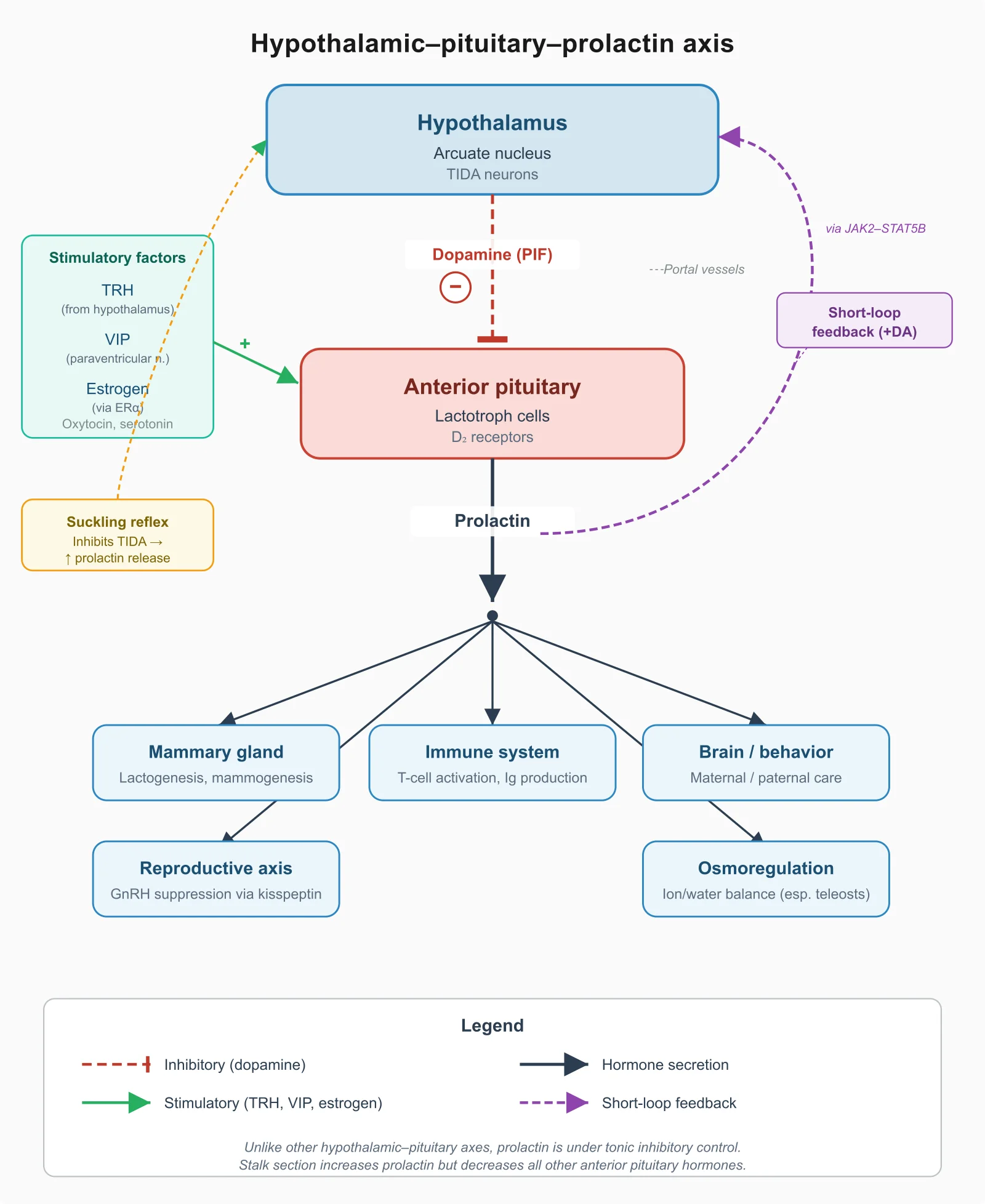
Prolactin is made by the lactotroph cells of the anterior pituitary. Its main role is breast development and milk synthesis. The key fact is that prolactin is under tonic inhibition, not tonic stimulation: dopaminergic neurones in the tuberoinfundibular pathway (arcuate nucleus to median eminence) release dopamine into the portal blood, which activates D2 receptors on lactotrophs and suppresses prolactin release.[4] The product label for bromocriptine summarises it: the dopaminergic neurones of the tuberoinfundibular process "modulate the secretion of prolactin from the anterior pituitary by secreting a prolactin inhibitory factor (thought to be dopamine)".[4]
Loss of that brake therefore raises prolactin. Any dopaminergic or intrasellar problem does this; prolactin also rises in response to physiological stimuli such as sleep, stress, chest wall stimulation, nipple stimulation, sexual activity and meals.
| Cause | Typical features |
|---|---|
| Prolactinoma (lactotroph adenoma) | Prolactin often very high; pituitary adenoma on MRI; hypogonadism and sometimes visual loss with larger tumours.[2][5] |
| Pregnancy and lactation | Physiological: oestrogen-driven lactotroph hyperplasia raises prolactin markedly and sustains it through gestation and breastfeeding. No treatment needed unless a prolactinoma was present beforehand.[5] |
| Drugs (dopamine antagonists and others) | Antipsychotics (especially risperidone and other high-potency agents), metoclopramide, domperidone, phenothiazines, butyrophenones, sulpiride; also verapamil, methyldopa, oestrogens and opioids.[6] The rise is time-linked to the drug and resolves when it is stopped if that is clinically possible. |
| Primary hypothyroidism | Low thyroid hormone raises thyrotropin-releasing hormone, which stimulates both thyrotrophs and lactotrophs. Check thyroid-stimulating hormone and free thyroxine; treat the thyroid failure.[2] |
| Chronic kidney disease | Impaired metabolic clearance of prolactin plus altered secretion; common in dialysis-dependent renal failure and usually a moderate rise.[6] |
| Stalk effect | Any non-lactotroph sellar or suprasellar mass, cyst, empty sella, trauma, surgery or infiltrative lesion disrupting dopaminergic delivery. Prolactin is usually mild to moderate and there is no single diagnostic cut-off.[2] |
| Macroprolactinaemia | Benign "big-big" prolactin; the bioactive monomer is usually normal. No infertility or osteoporosis from the macroprolactin itself; no treatment needed.[5] |
| Idiopathic | No cause found on full work-up; often mild and stable. |
Two points follow. First, the distinction between prolactinoma and stalk effect matters because management differs: a prolactinoma is treated as a tumour, whereas stalk hyperprolactinaemia is treated by addressing the compressing lesion. Prolactin level alone cannot decide it, because the ranges overlap. Second, drugs are among the commonest remediable causes in psychiatric and gastroenterology practice; dopamine antagonism is the mechanism, and these agents also blunt the response to a dopamine agonist.
Most prolactinomas are small, slowly growing and respond well to drugs. Aggressiveness is uncommon but recognised. Predictors of drug resistance include younger age, male sex, larger or more invasive tumours, cavernous sinus invasion and poor early response; histological red flags include a mitotic count greater than 2 and a Ki-67 index of 3% or more.[1]
Figure 1Hypothalamic–pituitary–prolactin (HPP) axis diagram
Long description
A diagram of regulation of prolactin secretion by the hypothalamic-pituitary-prolactin (HPP) axis, including dopaminergic inhibition from TIDA neurons, stimulatory factors (TRH, VIP, estrogen), short-loop feedback and prolactin's major target tissues.

Everything in hyperprolactinaemia follows from a raised signal and, in prolactinoma, from a space-occupying lesion.
Gonadal suppression. Prolactin suppresses the pulsatile release of gonadotrophin-releasing hormone from the hypothalamus. Luteinising hormone and follicle-stimulating hormone fall, so oestradiol and testosterone fall. In women this means anovulation, luteal phase defects, oligo- or amenorrhoea, infertility, hot flushes and dyspareunia from low oestrogen, and accelerated bone loss. In men it means hypogonadism with low testosterone, reduced libido, erectile dysfunction, infertility and sometimes gynaecomastia.[2][6]
Galactorrhoea. Prolactin stimulates milk production directly. Non-puerperal milk production is more obvious in women but can occur in men.
Local (mass) effects. A macroprolactinoma compresses the optic chiasm from below, typically producing a bitemporal hemianopia, and can extend into the cavernous sinuses, causing cranial nerve palsies. Headache is common. Compression of the pituitary itself, or of the stalk, can produce hypopituitarism, including secondary adrenal or thyroid failure. Very large tumours can cause cerebrospinal fluid rhinorrhoea (often after surgery or radiotherapy, sometimes spontaneously).
Why treatment works. Dopamine agonists activate the same D2 receptors that normally brake lactotrophs: prolactin falls, often within days, and tumour volume shrinks in most patients. Surgery removes the source. Pregnancy raises oestrogen, so a pre-existing prolactinoma can enlarge during gestation; that is why planning matters.
- Women: irregular or absent periods; difficulty conceiving; non-puerperal milky nipple discharge (often bilateral and expressible, usually not blood-stained); symptoms of low oestrogen (hot flushes, vaginal dryness, dyspareunia); breast tenderness.
- Men: low libido, erectile dysfunction, infertility, fatigue, loss of morning erections, gynaecomastia or milky discharge, reduced beard growth.
- Both sexes: headache, visual symptoms (blurring, field loss, diplopia), symptoms of other hormone deficiencies from a large tumour.
- Children and adolescents: delayed puberty, growth failure, headache, visual disturbance. Prolactinomas occur in adolescents.
- Breast inspection and gentle expression to elicit galactorrhoea (with care to distinguish true milky discharge from nipple eczema or duct ectasia), best avoided where pregnancy or early postpartum physiology might explain it.
- Pubertal assessment and secondary sexual characteristics; testicular volume in men.
- Visual fields to confrontation, and formal perimetry when a lesion approaches or touches the chiasm.
- Signs of other pituitary failure: cold intolerance, hypotension, loss of body hair, reduced growth velocity in a child.
Red flagDo not miss these
A patient with hyperprolactinaemia plus a severe or worsening headache, any visual field defect or diplopia, cranial nerve palsy, or signs of acute adrenal insufficiency needs same-day neuro-ophthalmic review and pituitary imaging, because a macroprolactinoma can enlarge or undergo apoplexy.
The differential is really a differential of hyperprolactinaemia causes, summarised in the aetiology table. Two clinical traps are worth naming:
- Physiological prolactin rises (sleep, stress, a single high value taken after venepuncture) can mimic disease. A level drawn after 15 minutes of rest, fasting, without vigorous exercise in the previous 30 minutes, is much more reliable.[5]
- Non-functioning pituitary adenomas with stalk effect present with a modestly raised prolactin and a large sellar mass. A "prolactinoma" mislabelled and treated with a dopamine agonist will show falling prolactin but no tumour shrinkage, and that mismatch is a clue.
- Repeat prolactin in a low-stress, morning, fasting sample, ideally after resting quietly; one clearly abnormal result is usually enough, but borderline or clinically discordant values must be repeated.[2][5]
- Exclude pregnancy and lactation clinically and with a pregnancy test where indicated.[2]
- Take a full drug history (all prescription, over-the-counter and herbal agents), particularly antipsychotics, antiemetics, antihypertensives and opioids.[2][6]
- Check renal function (urea and creatinine, estimated glomerular filtration rate) and liver function; chronic kidney disease causes moderate hyperprolactinaemia.[6]
- Check thyroid-stimulating hormone and free thyroxine for primary hypothyroidism.[2]
Because macroprolactin accounts for around a fifth of apparent hyperprolactinaemia, the repeat sample is the moment to exclude it.[5] The gold standard is gel filtration chromatography; in practice the sample is treated with polyethylene glycol (PEG) and prolactin is re-measured in the supernatant. Interpretation: if fewer than 40% of prolactin survives PEG, macroprolactin is the predominant form; above 60% essentially excludes macroprolactinaemia; 40% to 60% is indeterminate and calls for gel filtration.[5] Isolated macroprolactinaemia needs no further investigation and no treatment.[5]
- Dedicated thin-section contrast-enhanced sellar MRI is the diagnostic study for a suspected tumour: size, suprasellar extension, relation to the optic apparatus, cavernous sinus invasion, cystic or haemorrhagic change.[2]
- A small hypoenhancing focus should never be read in isolation from the biochemistry; plenty of incidental microadenomas exist.
- An unexpectedly modest prolactin with a large sellar mass means repeat the assay after serial dilution to exclude the high-dose hook effect before attributing the rise to stalk effect.[2]
- During pregnancy routine MRI is not recommended; new visual or neurological symptoms prompt MRI without gadolinium.[2]
Follow-up MRI timing: repeat MRI 3 to 6 months after starting a dopamine agonist for a macroprolactinoma; for a microprolactinoma imaging depends on the clinical and biochemical course and may be done around a year or before withdrawal.[2]
- Baseline automated perimetry for any lesion near or touching the optic chiasm, or any visual symptom.[2]
- For macroadenomas: morning cortisol (with dynamic testing if indicated), thyroid function, IGF-1 and the gonadal axis. Adrenal insufficiency and hypothyroidism must be corrected before conception.[2]
No single number diagnoses a prolactinoma; the level modifies probability and must be read alongside MRI and clinical context. The following aids are widely used:
- Above 200 ng/mL is considered more suggestive of prolactinoma than stalk or physiological causes; earlier guidance uses above 250 ng/mL and above 500 ng/mL as increasingly specific for macroprolactinoma.[2]
- Levels below 200 ng/mL show the greatest overlap with microprolactinoma, stalk effect, macroprolactinaemia, medications and systemic disease.[2]
- In established disease, a fall in prolactin after a dopamine agonist can occur with stalk effect too; measurable tumour shrinkage is the stronger evidence of lactotroph origin.[2]
Normal ranges are assay-specific (most laboratories take roughly up to 20 ng/mL in women and somewhat lower in men, against the laboratory's own reference interval).[3] Report results against the laboratory's own reference interval, and remember that pregnancy, the postpartum state, stress, sleep and exercise all confound a single value.
Treat the underlying cause. The approach depends on the finding:
- Pregnancy or lactation: physiological. Do not chase the number.
- Drug-induced: review whether the causative drug can be changed or the dose reduced, in discussion with the prescribing clinician (for example switching an antipsychotic). A woman's mental health and an antiemetic that protects her from aspiration both matter, so do not stop psychiatric medication abruptly. If the drug cannot be altered, monitor prolactin and consider a dopamine agonist when there is clinically meaningful hypogonadism or symptoms, with awareness that D2 antagonists reduce agonist efficacy.[6] Remember that bromocriptine and cabergoline are contraindicated in many postpartum situations involving lactation suppression; see below.
- Primary hypothyroidism: replace thyroid hormone and recheck prolactin once euthyroid.[2]
- Macroprolactinaemia: reassure; no treatment and no repeated imaging if asymptomatic.[5]
- Chronic kidney disease: treat the renal disease; routine treatment of asymptomatic CKD-related hyperprolactinaemia is not evidence-based, and dopamine agonists are reserved for a true prolactinoma or for selected symptomatic hyperprolactinaemia.[6]
Dopamine agonists are first-line for most prolactinomas: they normalise prolactin and shrink the tumour in the large majority of patients.[1][2] Cabergoline is generally preferred for greater efficacy and tolerability; bromocriptine is an older, acceptable alternative, especially when pregnancy is the goal.[2]
Cabergoline (US label)
- Start 0.25 mg by mouth twice weekly.
- Titrate to normal prolactin by increasing 0.25 mg twice weekly at intervals of at least 4 weeks. [3]
- Maximum 1 mg twice weekly.[3]
Cabergoline has a long half-life and is taken with or without food.
Bromocriptine (US label, Parlodel)
- Start 1.25 mg to 1.5 mg by mouth daily; add 2.5 mg every 2 to 7 days as tolerated until the response is optimal. [4]
- Effective regimens range from 2.5 mg to 15 mg daily.[4]
Give bromocriptine with food because nausea is common (reported in about 49% of patients).[4] Take the first dose on retiring to limit dizziness.
Monitoring and cautions (these are not optional):
- Valve disease: the labels require a cardiovascular evaluation including echocardiography before starting cabergoline, and cabergoline is contraindicated in valvular or fibrotic disease. Repeat echocardiography is advised at 6 to 12 month intervals during treatment. In addition, baseline transthoracic echocardiography is recommended before any dopamine agonist, with repeat imaging every 5 years for doses under 2 mg per week and annually for doses above 2 mg per week. Stop the drug if there is a new valvular regurgitation, restriction, leaflet thickening or pericarditis.[2][3] The cardiac risk was defined with high antiparkinsonian doses above 2 mg per day, but valve problems have occasionally been reported at the lower hyperprolactinaemia doses, so echocardiography for patients on higher or long-term regimens is sensible.
- Fibrosis: cabergoline is contraindicated with a history of pleural, pulmonary or retroperitoneal fibrosis, and bromocriptine labels treat fibrosis as a reason to stop or avoid the drug (check the local product information); both can cause these disorders with long-term high-dose use and must be stopped if they occur. Bromocriptine is also associated with constrictive pericarditis over long-term treatment.[3][4]
- Impulse control disorders and compulsive behaviours: patients on dopaminergic therapy can develop intense urges to gamble, spend, eat or engage in sexual behaviour, and may not recognise them as abnormal. Ask specifically at every visit, and reduce or stop the drug if these emerge.[3][4]
- Hypotension: check blood pressure at baseline and during treatment, especially in the first weeks; patients should rise slowly.[3][4]
- Postpartum lactation suppression: neither drug should be used to suppress physiological postpartum lactation; serious events including hypertension, stroke, myocardial infarction and seizures have been reported with bromocriptine in this setting, including fatalities.[3][4]
- Bromocriptine-specific: sudden sleep onset (patients on bromocriptine should not drive or operate machinery until tolerated), and frequent nausea and dizziness. Bromocriptine should be withdrawn once pregnancy is diagnosed, with caveats for a rapidly expanding macroadenoma.[4]
- Interactions: dopamine agonists should not be given with D2 antagonists such as phenothiazines, butyrophenones, thioxanthenes or metoclopramide, which will counteract them. Bromocriptine is metabolised by CYP3A4.[3][4]
- Side-effect burden: nausea, headache and dizziness lead to drug discontinuation in roughly 5% to 30% of patients, which is why adherence and slow titration matter.[1]
When to try stopping treatment. The Endocrine Society guideline considers it safe to attempt withdrawal after 2 years of treatment in patients who have achieved normal prolactin and substantial tumour shrinkage; the Pituitary Society suggests a 3-year period.[1] Success is more likely with cabergoline for at least 2 years, the lowest maintenance dose and no visible residual tumour on MRI, and even then persistent normal prolactin occurs in only about 21% of microprolactinomas and 16% of macroprolactinomas.[1] If recurrence happens, 91% of recurrences appear within a year of stopping.[1] After withdrawal, check prolactin every 3 months in the first year and yearly if stable; treat again if recurrence is accompanied by hypogonadism, symptoms or tumour growth.[2]
Transsphenoidal adenomectomy (microscopic or endoscopic) is the standard operation.
- Indications: dopamine-agonist resistance or intolerance; tumour growth or visual compromise despite medical therapy; cerebrospinal fluid leak; apoplexy with visual deterioration; acute hydrocephalus; and, at an experienced pituitary centre, a well-circumscribed non-invasive microprolactinoma or selected intrasellar macroprolactinoma when a patient prefers a potentially definitive alternative to years of medication.[1][2]
- Outcomes: in a 210-patient retrospective cohort treated primarily by transsphenoidal surgery, 78.1% achieved hormonal remission and 92.4% complete tumour removal (84.5% when removal was complete). Predictors of a good result were smaller tumours (under 1 cm), no cavernous sinus invasion, female sex and no preoperative dopamine-agonist exposure (the last of these being debated as a reason to consider surgery earlier). For Hardy type 1 (microadenoma) tumours, total resection was achieved in 100% and endocrine remission in 89.3%.[1]
- Bromocriptine can be given before surgery to reduce tumour mass in selected patients. After surgery, may produce new pituitary deficits (hypothyroidism, adrenal insufficiency), which must be monitored and replaced.[4]
Radiotherapy (fractionated or stereotactic) and other systemic therapy are reserved for the rare aggressive tumour or for residual or recurrent disease that is uncontrolled by optimised medication and surgery.[2]
- Prolactin every 3 to 6 months.
- MRI: 3 to 6 months after starting a dopamine agonist for a macroprolactinoma; for microprolactinomas the schedule depends on the clinical and biochemical course and may be about yearly or before withdrawal.[2]
- Repeat echocardiography on cabergoline as above, plus clinical screens for impulse-control problems and hypotension at every visit.
- Bone-density assessment individualised to the duration of hypogonadism and fracture risk. Low-dose oestrogen-progestin therapy may be used in premenopausal women with microprolactinoma and hypogonadism who do not want pregnancy when tumour shrinkage is not required, with continued clinical and prolactin surveillance.[2]
Approach to an adult with a raised prolactin
- Raised prolactin reportedRepeat a low-stress morning fasting sample; exclude venepuncture stress, sleep and exercise
- Question: Pregnant or breastfeeding?
Yes
- Physiological hyperprolactinaemiaManage obstetrically; investigate only if a prolactinoma is already known
No
- Review drugs, thyroid and kidneysStop or change dopamine antagonists if clinically possible; check TSH, free T4, renal and liver function
- Macroprolactin test (PEG)Recovery under 40% suggests macroprolactin predominance; above 60% excludes it; 40 to 60% is indeterminate and needs gel filtration
- Question: Is there a tumour?
No tumour and macroprolactin or cause found
- Treat the causeReassure in isolated macroprolactinaemia; treat hypothyroidism or renal disease; review drugs
Adenoma or large mass
- Stratify by size and symptomsMicro under 10 mm vs macro 10 mm or more; check visual fields and pituitary function for macro
- Start a dopamine agonistCabergoline 0.25 mg twice weekly, titrate; or bromocriptine 1.25 to 1.5 mg daily rising
- Reassess at 3 to 6 monthsProlactin and MRI; escalate to transsphenoidal surgery if resistant, progressive or visually compromised
- Hypogonadism and infertility: the commonest consequence in both sexes.
- Bone loss from prolonged oestrogen or testosterone deficiency; this can be significant even in young women.
- Mass effects: headache, visual loss, cranial nerve palsies, hypopituitarism and, rarely, apoplexy or cerebrospinal fluid rhinorrhoea.
- Dopamine-agonist side effects: nausea, hypotension, fibrosis and impulse-control disorders.
- Aggressive change: uncommon; molecular and histological markers (mitotic count greater than 2, Ki-67 of 3% or more, and related markers) identify some of these.[1]
- Surgical complications: hypopituitarism, diabetes insipidus, vision change, infection.
Most patients are controlled medically. Pregnancies are usually uncomplicated with planning. There is evidence that pregnancy itself may improve control: in one cohort, pregnancy normalised prolactin in two-thirds of patients treated with cabergoline before gestation.[1] Persistent remission after dopamine-agonist withdrawal is the exception rather than the rule, so many patients need long-term, often low-dose, treatment. Reported postpartum remission rates vary widely (about 41% to 68%), so individualise.[2]
There is no role for population screening. Secondary prevention consists of reviewing medications that raise prolactin, correcting hypothyroidism, and treating chronic kidney disease. Where hyperprolactinaemia has caused hypogonadism, protect bone health (calcium and vitamin D, weight-bearing exercise, and menopausal hormone therapy or testosterone replacement where indicated under the relevant guidelines).
This is where modern care has changed most.
- Before conception: restore ovulation and establish anatomical safety. Cabergoline is generally preferred at the lowest effective dose until pregnancy is confirmed; bromocriptine remains an acceptable alternative.[2] Waiting for several regular cycles before trying to conceive gives better monitoring of missed periods.[1] Fertility may return before cycles fully normalise, so test for pregnancy promptly if a period is missed.
- Macroprolactinomas, invasive disease or tumours near the optic chiasm need adequate shrinkage and stability before conception, with baseline visual fields documented.[2]
- Surgery before pregnancy is reasonable for dopamine-agonist resistance or intolerance, persistent optic risk, inadequate shrinkage before conception, apoplexy with visual compromise or suspected aggressive growth.[2]
- Once pregnancy is confirmed, stop dopamine agonists for a microadenoma or a non-compressive macroprolactinoma. Continue or restart them for an invasive macroprolactinoma, a tumour near the optic apparatus or previous growth after withdrawal.[2]
- Growth during pregnancy: clinically significant enlargement requiring intervention occurs in about 2.4% of microadenomas, 21% of macroadenomas without prior surgery or radiotherapy, and 4.7% of macroadenomas with prior surgery or radiotherapy.[1][2]
- If a woman develops new or progressive headache, visual blurring, diplopia or a field defect, arrange neuro-ophthalmic review and MRI without gadolinium. Most patients respond to restarting a dopamine agonist; transsphenoidal surgery in the second trimester (or delivery if far enough advanced) is rarely needed.[2]
- Breastfeeding: generally regarded as safe, does not accelerate tumour growth, and should not by itself trigger treatment. Dopamine agonists are usually deferred during lactation because they suppress milk. If genuine regrowth occurs, maternal safety takes priority and dopamine-agonist treatment is restarted, with lactation stopped if needed.[2]
- Postpartum: reassess prolactinoma status before resuming routine treatment; measure prolactin and, if imaging would change management, MRI. Prolactin measured during active lactation should not on its own define remission. Persistent hyperprolactinaemia without clinically meaningful hypogonadism, symptoms or tumour growth does not require treatment.
Prolactinomas occur in young people and are usually macroadenomas at presentation. Dopamine agonists (bromocriptine has paediatric label data in adolescents aged 11 to 15 years) are effective; surgery is reserved for resistance or intolerance. Fertility, growth and puberty must be monitored and bone density protected. [4]
Cabergoline and bromocriptine are both more likely to cause hypotension and confusion with age; start low and rise slowly. Secondary causes (drugs, hypothyroidism) are proportionally more common; vestibular and cardiovascular comorbidity matters.
- A prolactin assay, not an MRI, is the starting point. Many services have only total prolactin; if macroprolactin testing is unavailable, remember that isolated macroprolactinaemia needs no treatment and try to avoid unnecessary imaging on the basis of a modestly raised value in an asymptomatic patient.
- Repeat a carefully taken low-stress morning fasting sample before labelling someone. If the elevation is mild and the patient is well with normal imaging unavailable, recheck rather than commit to lifelong treatment.
- Cabergoline may be unavailable or too expensive; bromocriptine is older, cheaper and widely available, although the nausea is significant and it needs divided dosing. Keep it with food.
- If sellar MRI is unavailable, a lateral skull X-ray or CT gives little useful information. A patient with headache, visual loss and a high prolactin deserves referral to a centre that can image and operate.
- Shared care with psychiatry is essential where antipsychotic-induced hyperprolactinaemia is unavoidable.
- Transsphenoidal surgery and radiotherapy require a regional neurosurgical service; refer early rather than late when there is visual compromise.
- Prolactin is kept low by tonic hypothalamic dopamine; loss of that brake raises it.
- Common causes: prolactinoma, pregnancy and lactation, dopamine-blocking drugs (antipsychotics, metoclopramide), primary hypothyroidism, chronic kidney disease, stalk effect, macroprolactin, idiopathic.
- Women: galactorrhoea, amenorrhoea or oligomenorrhoea, infertility, low oestrogen and bone loss. Men: hypogonadism, low libido, erectile dysfunction, infertility and gynaecomastia.
- Large tumours cause headache, visual field loss and hypopituitarism.
- Confirm with a low-stress morning fasting prolactin; repeat if borderline. Exclude pregnancy, drugs, hypothyroidism and renal disease. Test for macroprolactin in discordant cases; dilute the assay if a large mass has a modest prolactin.
- Sellar MRI is the imaging of choice; dedicated thin-section contrast-enhanced.
- Prolactin above 200 ng/mL is increasingly suggestive of prolactinoma; below 200 ng/mL there is wide overlap. Macroprolactinaemia is defined as more than 60% macroprolactin on PEG testing, with under 40% recovery suggesting it. [5]
- First-line treatment for most prolactinomas is a dopamine agonist: cabergoline 0.25 mg twice weekly titrating in 0.25 mg steps every 4 weeks to a maximum of 1 mg twice weekly; bromocriptine 1.25 to 1.5 mg daily rising to 2.5 to 15 mg daily. [3]
- Check echocardiography before cabergoline and repeat every 6 to 12 months; stop for new valve disease, fibrosis, or impulse-control problems.
- Drug withdrawal can be considered after 2 years (Endocrine Society) to 3 years (Pituitary Society) of control; success is roughly 21% for micro- and 16% for macroprolactinomas.
- Surgery is reserved for resistance, intolerance or visual compromise, and may be a first-line alternative for some well-circumscribed non-invasive tumours.
- Pregnancy planning: aim for normal prolactin and tumour shrinkage before conception; stop dopamine agonists once pregnant except in selected macroprolactinomas. Breastfeeding is safe.
- Tumour growth requiring intervention in pregnancy occurs in about 2.4% of micro-, 21% of macro- without prior treatment and 4.7% of macro- with prior surgery or radiotherapy. Most growth responds to restarting a dopamine agonist.
Answer each one in your head first, then open the answer.
A 28-year-old woman has secondary amenorrhoea and galactorrhoea. Her prolactin is 85 ng/mL. She takes no medication. MRI shows a 6 mm pituitary lesion. What is the most likely diagnosis, and how should it be treated initially?
Show answerHide answer
The most likely diagnosis is a microprolactinoma. First-line treatment is a dopamine agonist, usually cabergoline 0.25 mg twice weekly, titrated to normalise prolactin. Surgery is not first-line.
Why does a stalk (suprasellar) tumour raise prolactin even though it is not a prolactinoma?
Show answerHide answer
It interrupts the dopaminergic fibres that travel from hypothalamus to pituitary and tonically inhibit prolactin release; the loss of that brake (disconnection) raises prolactin. Levels are usually mild to moderate and overlap with other causes.
A PEG macroprolactin test shows 25% recovery. What does that mean and what should you do?
Show answerHide answer
Fewer than 40% recovery means macroprolactin is the predominant form (macroprolactinaemia). If the bioactive monomer is normal, no further investigation and no treatment are needed; look for another explanation for any symptoms.
A woman on cabergoline 0.5 mg twice weekly for a prolactinoma wants to become pregnant. What should be achieved before conception and what should happen when the pregnancy test is positive?
Show answerHide answer
Aim for normal prolactin and substantial tumour shrinkage (and documented visual fields if the tumour approaches the chiasm) before conception. Once pregnancy is confirmed, stop cabergoline for a microadenoma or non-compressive macroprolactinoma; continue or restart only for an invasive or optic-apparatus-threatening tumour.
A patient reports new cravings to gamble and shop since starting cabergoline. What is the most likely cause and what should be done?
Show answerHide answer
Dopamine-agonist-induced impulse-control disorder. Ask about gambling, spending, sexual and eating urges at every visit. Reduce or stop the drug; consider switching to bromocriptine or surgery if needed.
A 35-year-old man has a prolactin of 18 ng/mL on a resting morning sample, normal MRI, and erectile dysfunction. What should you do next?
Show answerHide answer
A mildly raised prolactin with a normal MRI most often reflects physiological, drug-related or macroprolactin causes. Check the drug history, renal and thyroid function, and arrange macroprolactin testing. Do not start a dopamine agonist or MRI surveillance without a cause.
Hypothyroidism; Acromegaly; Chronic kidney disease; Erectile dysfunction; Infertility (ovulatory disorders); Polycystic ovary syndrome; Osteoporosis; Galactorrhoea and breast discharge; Pituitary incidentaloma; Hypopituitarism; Antipsychotic-associated hyperprolactinemia; Fertility preservation.
- Lee MH, Hong JW, Kim K, Ku CR, Lee EJ. Elucidating Clinical Queries for Tailored Therapy in Patients with Prolactinoma. Endocrinol Metab (Seoul) 2024;39(6):819-26. Accessed .
- Sun R, Xu X, Wei S. Prolactinomas in women of reproductive age: a proposed reproductive-intent-based framework for diagnosis and management. Front Endocrinol (Lausanne) 2026;17:1946204. Accessed .
- Teva Pharmaceuticals USA, Inc (DailyMed/FDA). CABERGOLINE tablet prescribing information. US product label, revised 2025-06-16. Accessed .
- Validus Pharmaceuticals LLC (DailyMed/FDA). PARLODEL (bromocriptine mesylate) prescribing information. US product label, revised 2023-12-15. Accessed .
- Glezer A, Elias PCL, Nogueira VDSN, et al. Position statement on macroprolactinemia from SBEM and SBPC/ML. Arch Endocrinol Metab 2025;69(6):e250152. Accessed .
- Barbera V, Di Lullo L, Bellasi A, et al. The Neuroendocrine-Cardiovascular Axis in Chronic Kidney Disease: The Role of Prolactin and Gonadal Dysfunction. Cardiorenal Med 2026;16(1):500-15. Accessed .
Figure credits
Educational content for medical students and doctors. It is not a substitute for clinical judgement or local guidelines.